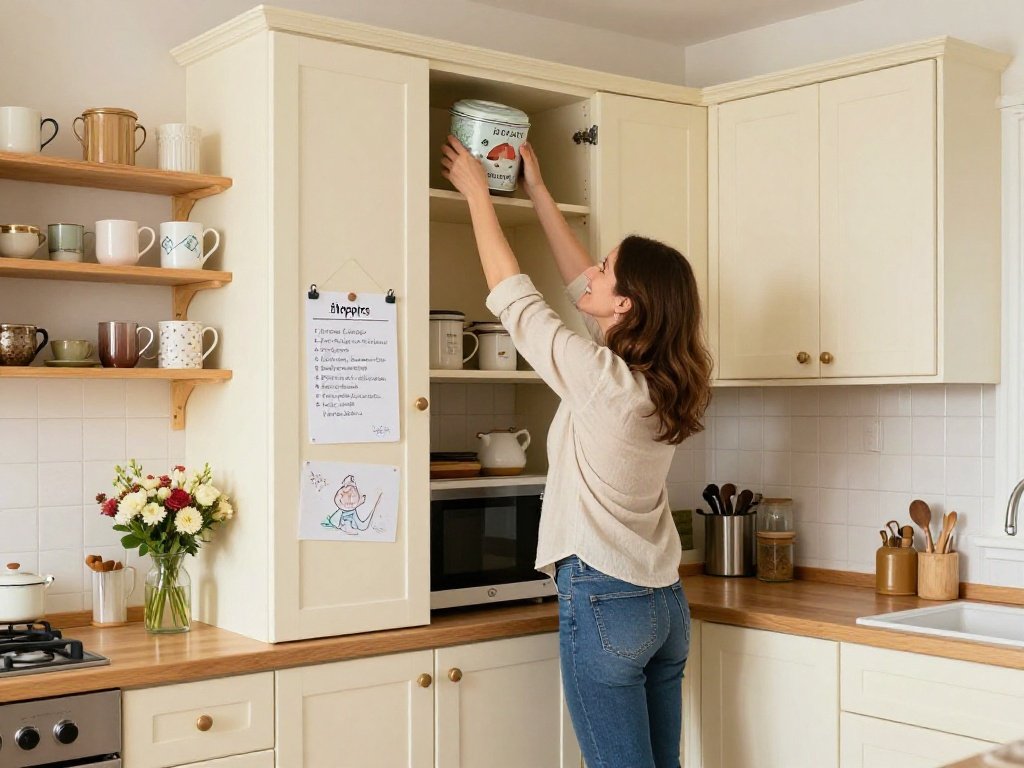
Introduction
A family kitchen has two jobs that can pull in opposite directions. It has to be a place where adults can cook hot, sharp, and heavy things safely, and it has to be a place where children can be present, help, and learn without getting hurt. Most kitchen safety advice focuses on only one side of that balance, either locking everything away or letting children roam free. The best family kitchens do both: they make the dangerous things hard to reach and hard to open, and they make the safe things easy, visible, and fun.
This guide focuses on the gap most childproofing guides skip: safety that still lets a kitchen work as a family room. You will find ideas for stove and oven safety, locked and safe storage, a child friendly zone, and routines that teach children where they can and cannot go. The goal is not a kitchen that looks like a fortress. It is a kitchen where a toddler can play safely on the floor, a school age child can help with washing and stirring, and an adult can cook without constantly worrying about the next accident. Start with the biggest risks, not the smallest details. Hot surfaces, boiling water, sharp knives, cleaning chemicals, and heavy items falling from height cause most serious kitchen injuries to children. Fix those first, then move on to corners, cords, and clutter.
Idea 1: Make the stove, oven, and hot surfaces safe

The stove is the highest risk area in a family kitchen, because it combines heat, hot liquid, and curious hands at exactly the height a toddler can reach. A stove guard, a heat resistant barrier that sits in front of the hob, stops small hands touching hot pans and stops pans being pulled down. It is not a substitute for supervision, but it buys you the seconds that matter when you turn away to get a plate. Cooking habits matter as much as guards. Use the back burners first whenever you can, turn pan handles inward so they cannot be grabbed or knocked, and never leave a pan of hot oil or boiling water unattended while a child is in the room. Teach older children a clear rule early: the stove area is a no go zone unless an adult says it is safe, and hot things are never touched, even if they look cool. A simple floor line, made with tape or a small rug edge, can mark that zone for toddlers who cannot yet understand words alone. Ovens need the same attention. A cool touch oven door helps, but many ovens still get hot on the outside, so use an oven lock if your oven door opens easily, and keep oven mitts and tea towels away from the hob, where they can catch fire or be pulled down. Kettles deserve special care too, because a kettle cord hanging over a counter edge is an easy pull for a toddler, and boiling water scalds in seconds. Use a short cord kettle, keep it at the back of the counter, and never fill it while a child is standing beside you at the counter edge.
Idea 2: Lock chemicals and sharp things, keep safe things low
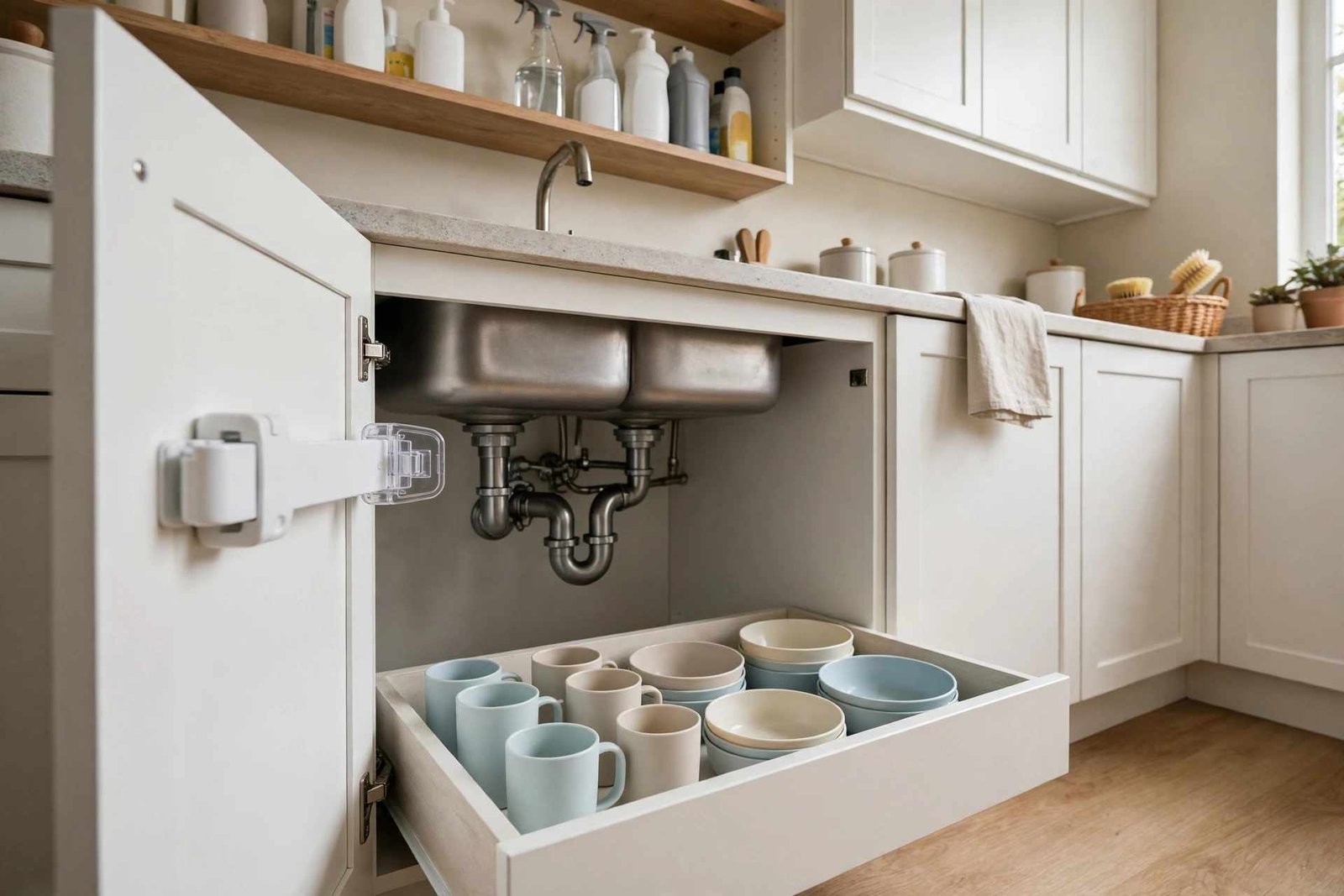
Cleaning chemicals, medicines, and sharp tools should be locked, high, or both, never just out of sight. A magnetic cabinet lock on the cupboard under the sink, where cleaning sprays usually live, is the single most useful child safety purchase in a kitchen. Magnetic locks are strong, invisible from outside, and easy for adults to open with a key, while a simple plastic latch is often defeated by a determined toddler within weeks. Move the most dangerous items out of the under sink cupboard altogether if you can. Keep only mild, child safer cleaners there, and store bleach, oven cleaner, dishwasher tablets, and medicines in a high, locked cabinet, ideally above adult eye level. Dishwasher tablets look like sweets to a small child, so never leave them in an open box on a counter, and always close the dishwasher door after loading, because the detergent dispenser is easy to open and tempting to explore. Sharp things need a similar rule. Knives should live in a locked drawer, a high knife block, or a wall magnetic strip well above child height, never loose in a low drawer a child can pull open. Scissors, peelers, and graters belong in the same locked or high place. At the same time, keep safe things low: plastic cups, bowls, and spoons in a low drawer or cupboard that children are allowed to open. When children have their own safe drawer, they are less likely to explore the locked ones, because they already have something that is theirs.
Idea 3: Create a child friendly zone for helping and playing
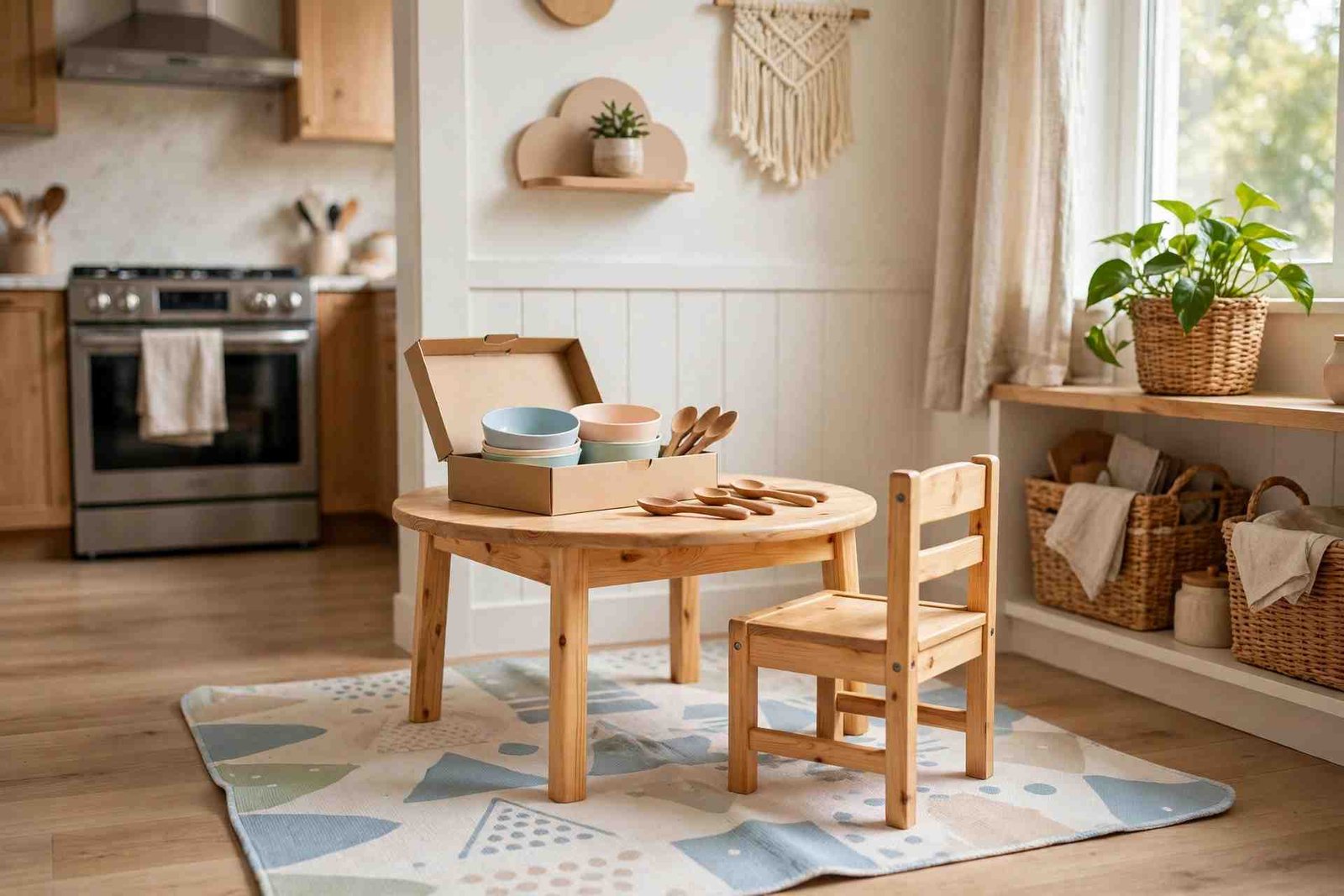
A child friendly zone is a small area where children are welcome, safe, and busy, so they are less likely to wander into dangerous areas out of boredom. A low table and chair, a washable mat on the floor, and a box of safe kitchen toys, plastic bowls, wooden spoons, and measuring cups, can keep a toddler happily occupied while you cook nearby. The zone should be away from the stove, the oven, and the main walkway, but close enough that you can see and talk to your child while you work. For school age children, a helping zone works better than a play zone. A sturdy step stool with a rail, or a learning tower with sides, lets a child stand safely at the counter to wash vegetables, stir a cold mixture, or tear lettuce. Keep hot, sharp, and heavy jobs for adults. Keep the zone tidy and predictable, with the same mat and box each time, so children learn where they belong and are less likely to climb counters or open cupboards elsewhere.
Idea 4: Safe storage, seating, and floor routines for busy families
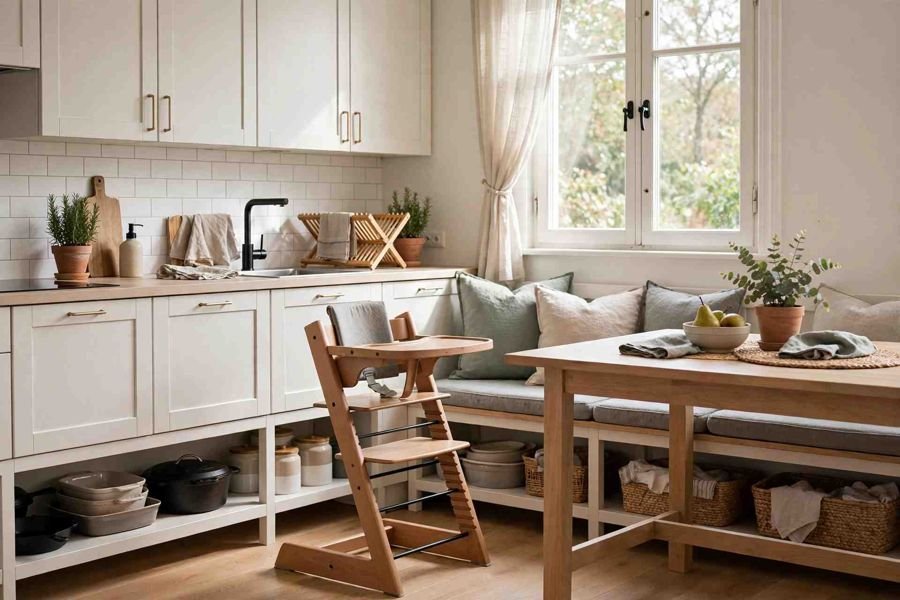
Family friendly storage is about weight, height, and reach. Heavy items, like a stand mixer, a large pot, or a stack of plates, should live at waist height or lower, never on a high shelf where they can fall if pulled. Light, everyday items, like cereal boxes and plastic containers, can live higher, because they are less dangerous if they fall and easier for older children to reach safely. Breakable glass and ceramics should be in closed cupboards, not on open shelves at child height, where a bump can send them crashing to the floor. Seating needs the same thinking. High chairs should be stable, with a wide base, a harness that is actually used, and no wheels that let a child push themselves around the kitchen. Booster seats on adult chairs need a strap and a non slip base, and they should never be used on a bar stool or a chair near a stove. For older children, a chair that is the right height for the table, with feet that reach the floor or a footrest, stops fidgeting and climbing, because children who cannot reach the floor will often climb to get comfortable. Floor routines complete the picture. Wipe spills immediately, keep the floor clear of toys and bags, especially between the sink, stove, and fridge, and use a non slip mat by the sink. A tidy floor in a family kitchen is a safety system, not just about looks. For more organisation ideas, see kitchen organisation zones, kitchen pantry organisation, kitchen storage for small kitchens without a pantry, and kitchen trash and recycling organisation.
Related kitchen organisation ideas: kitchen organisation zones, kitchen pantry organisation, kitchen storage for small kitchens without a pantry, kitchen trash and recycling organisation, and renter kitchen decor.
Safety by age
Toddlers, roughly one to three years, explore by touching, pulling, and putting things in their mouths. For this age, locks, guards, and moving dangerous items high matter most, because rules and warnings do not work yet. Keep floor level cupboards locked except for a safe drawer, keep cords short and out of reach, and never leave a toddler alone in a kitchen, even for a minute, because a minute is enough to pull a kettle cord or open a low cupboard.
Preschool children, roughly three to five years, can learn simple rules, but they still act on impulse. Teach a stove no go zone, a hot means do not touch rule, and an ask before opening rule, and give them safe jobs like washing fruit or stirring a cold bowl.
School age children, roughly six years and up, can learn real kitchen skills step by step, starting with cold preparation, then simple cooking with close supervision. Independence should grow with demonstrated safety, not with age alone.
Small kitchens and rented homes
Small kitchens need the same safety rules, but with less space to separate zones. In a small kitchen, a child zone might be just a mat on the floor by the door, or a single low drawer, rather than a separate table. That is enough, as long as the zone is consistent and away from the stove. Use vertical storage for dangerous items, high and locked, and keep counters as clear as possible, because clutter in a small kitchen quickly becomes a hazard. Renters can childproof without drilling or permanent changes. Adhesive cabinet locks, magnetic locks that use adhesive rather than screws, stove guards that clamp or stand freely, and cord shorteners can all be used without damage. Avoid drilling into cabinets or walls without landlord permission, and keep original fittings so you can restore the kitchen at move out. A freestanding step stool, a washable floor mat, and a safe drawer need no installation at all, and they make a rental kitchen much safer immediately.
Budget matters too. Start with a magnetic lock under the sink, a stove guard, a short cord kettle habit, and a safe drawer. Add corner protectors, drawer locks, and a learning tower later, as budget allows.
Teaching kitchen safety without fear
Children learn safety best when rules are clear, consistent, and explained in simple terms. Hot means do not touch, sharp means ask an adult, and chemicals stay locked are rules a young child can remember, especially if every adult uses the same words. Talk about safety while you cook, narrating what you are doing, so children learn to think that way themselves. The goal is respect for heat, sharpness, and chemicals, not fear of the kitchen itself.
What to avoid
- Leaving cleaning chemicals, medicines, or dishwasher tablets in a low, unlocked cupboard, especially under the sink.
- Keeping knives loose in a low drawer, or on a low magnetic strip within a toddler’s reach.
- Cooking on front burners with pan handles pointing out, where they can be grabbed or knocked.
- Leaving a kettle with a long cord hanging over a counter edge, within reach of a small child.
- Placing heavy items on high shelves, where they can fall if pulled by a curious child.
- Using a high chair without a harness, or a booster seat on a bar stool near a stove.
- Relying on corner protectors and outlet covers alone, while stove, chemicals, and knives remain unsecured.
- Giving inconsistent rules, where different adults allow and forbid the same kitchen behaviour.
Frequently asked questions
How do I childproof a kitchen without drilling?
Use adhesive magnetic cabinet locks, freestanding stove guards, cord shorteners, and a safe low drawer for children. A washable floor mat and a freestanding step stool need no installation, and they make a rental kitchen safer immediately without damaging cabinets or walls.
What is the most important kitchen safety item for toddlers?
A magnetic lock on the under sink cupboard, where cleaning chemicals usually live, and a stove guard for the hob. Those two items address the highest risks, chemicals and hot surfaces, and they are more important than corner protectors or outlet covers alone.
At what age can children help in the kitchen?
Toddlers can play safely in a child zone and help with washing fruit. Preschool children can stir cold mixtures and tear lettuce with supervision. School age children can learn cold preparation first, then simple cooking with close supervision, with independence growing as they prove they can follow safety rules.
Should I lock every kitchen cupboard?
No, lock only cupboards with chemicals, medicines, sharp tools, or heavy breakables, and keep one low cupboard or drawer unlocked for safe items like plastic cups and bowls. Children with their own safe drawer are less likely to explore locked cupboards out of curiosity.
How do I keep a child safe around a stove?
Use back burners first, turn pan handles inward, use a stove guard, mark a no go zone on the floor, and never leave hot pans unattended while a child is in the room. Teach older children that hot means do not touch, even if a pan looks cool.
Is a learning tower safe in a kitchen?
Yes, if it has sides, a stable base, and is used on a flat floor away from the stove and oven, with an adult supervising. A learning tower lets a child stand safely at counter height to help, which is safer than climbing on a chair or counter, but it should never be used as a way to reach the stove or hot items.
Conclusion
A family friendly kitchen is not about locking everything away, it is about making the dangerous things hard to reach and the safe things easy to enjoy. Guard the stove, lock chemicals and sharp tools high, give children their own safe zone and real jobs, store heavy items low and breakables in closed cupboards, and keep the floor clear and dry. Teach the same simple rules every time, hot means do not touch, sharp means ask an adult, and chemicals stay locked, and let children help in ways that match their age. Start with the highest risks this week: a magnetic lock under the sink, a stove guard, pan handles turned in, and a safe drawer for your child. Those four changes alone make a kitchen far safer, and they cost less than a single emergency visit. From there, add a child zone, a sturdy step stool, and safe helping jobs, and your kitchen will become a place where the whole family can cook, learn, and spend time together, safely.