Introduction
A kitchen rug is the easiest way to make a hard, cold kitchen floor feel comfortable, but it is also the item most likely to go wrong. The wrong rug slides, bunches underfoot, stains on the first spill, and holds cooking smells. The right rug, in the right size and material, softens the room, protects the floor where you stand most, and can be washed or wiped clean in minutes.
This guide focuses on the gap most rug guides skip: how a rug actually survives in a working kitchen, not just how it looks in a photo. You will find ideas for runners by the sink and cooker, rugs under a table, flatweave versus pile, washable versus wipe clean, and sizes that fit galley, L shaped, and open plan kitchens. The goal is a rug you can live with, not one you have to tiptoe around.
Start where you stand longest. In most kitchens that is the sink, then the cooker, then a prep counter. A rug that covers those spots, stays flat, and cleans easily will do more than a large decorative rug in the middle of the floor that no one walks on.
Idea 1: A washable runner by the sink
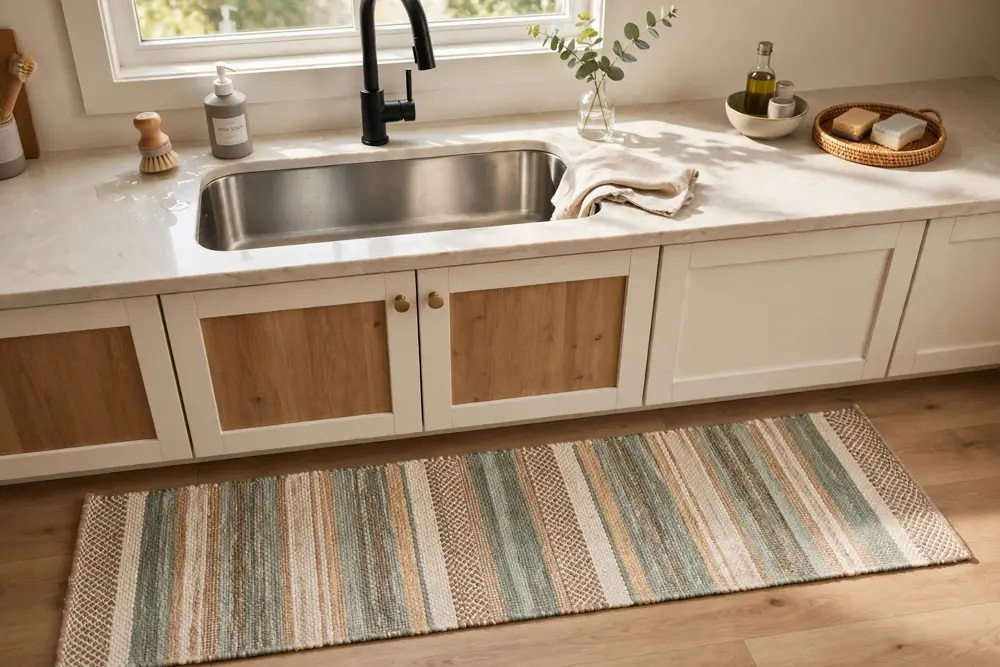
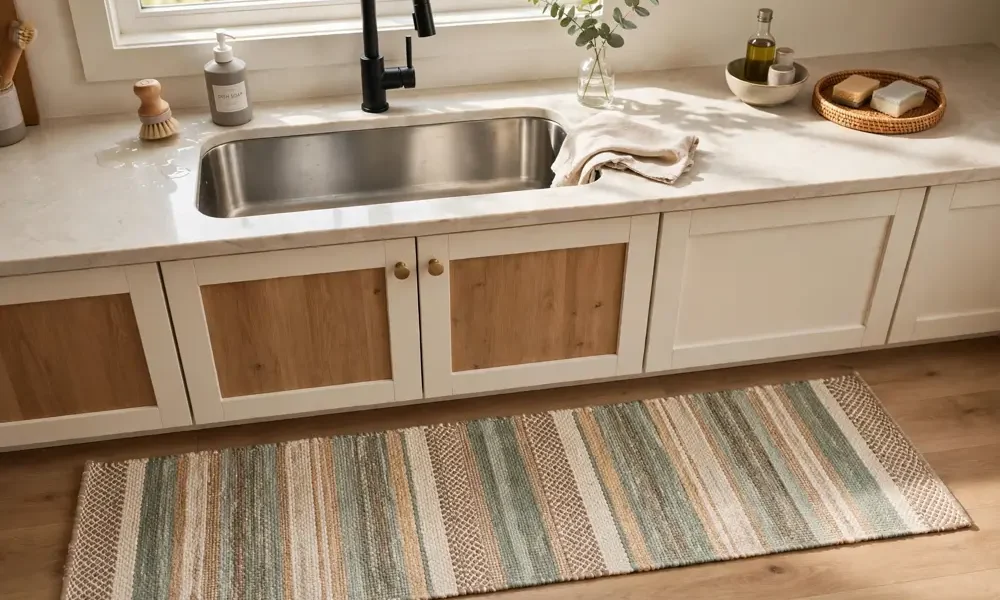
The sink run is the hardest working spot in a kitchen, and it is where a washable runner earns its place. Water, soap, and food splash here every day, so a runner by the sink must be machine washable, quick drying, and thin enough to go under a dishwasher or a door. Cotton flatweave, low pile polypropylene, and specially made washable runners are the best choices here, because they can go in the machine on a regular cycle and come out flat.
Size matters more than pattern. A runner by the sink should be at least as long as the sink run, usually 120 to 180 centimetres, and wide enough to stand on comfortably, about 60 to 75 centimetres. Too narrow, and your feet hang off the edge. Too wide, and it curls against cabinets or a bin. Leave a small gap at each end so the runner does not get caught under a door or a step stool.
Use a non slip pad under any runner, even one sold as non slip. Kitchen floors get wet, and a pad stops the runner creeping forward when you step on it with wet feet. Wash the pad too, or replace it when it loses grip, because a worn pad is worse than no pad at all.
Idea 2: A flatweave runner along a galley or cooker run
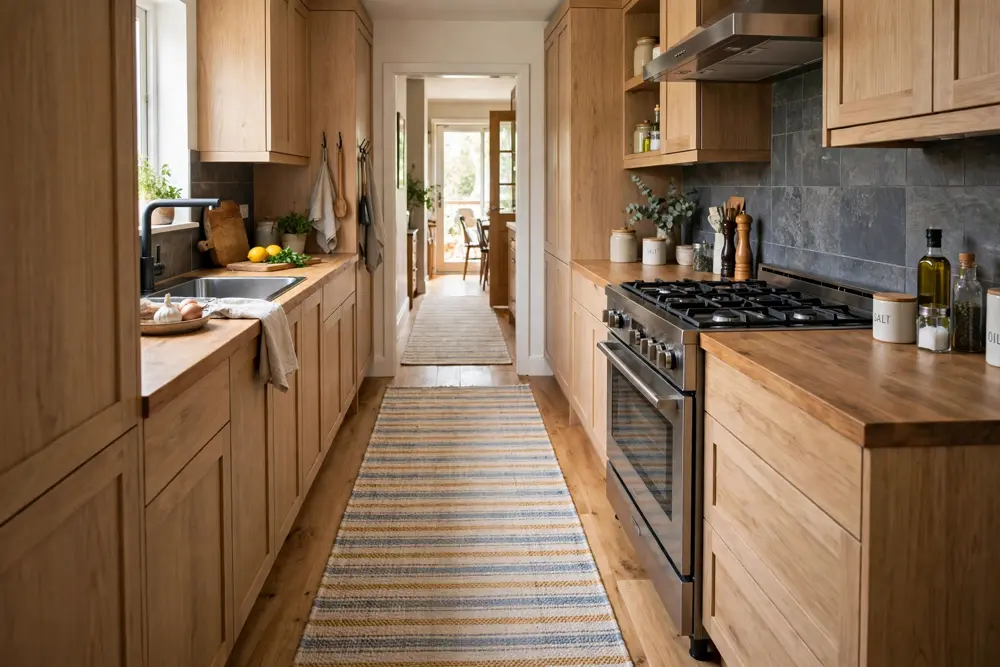
In a galley kitchen, or along a long cooker run, a flatweave runner is usually better than a thick pile rug. Flatweave lies flat, does not catch on a stool or a trolley, and is easy to sweep and spot clean. It also makes a narrow kitchen feel longer, because the eye follows the runner down the room, especially if the pattern runs lengthways.
Choose a dark or patterned flatweave for a cooker run, because tomato, oil, and turmeric stains show less on pattern than on a plain light rug. A bordered pattern, with a darker edge and a lighter centre, hides marks well and still looks clean. Avoid long pile, shag, or high loop pile near a cooker, because crumbs and oil get trapped in the pile and are hard to get out, and a thick rug near a heat source is a trip risk.
Length is the key decision in a galley. One long runner, 240 to 300 centimetres, looks better than two short rugs with a gap in the middle, where you step on bare floor and then rug again. Measure the full run, including the space in front of the fridge and the oven door swing, and choose a runner that stops short of both, so doors open freely.
Idea 3: A rug under a kitchen table or breakfast nook
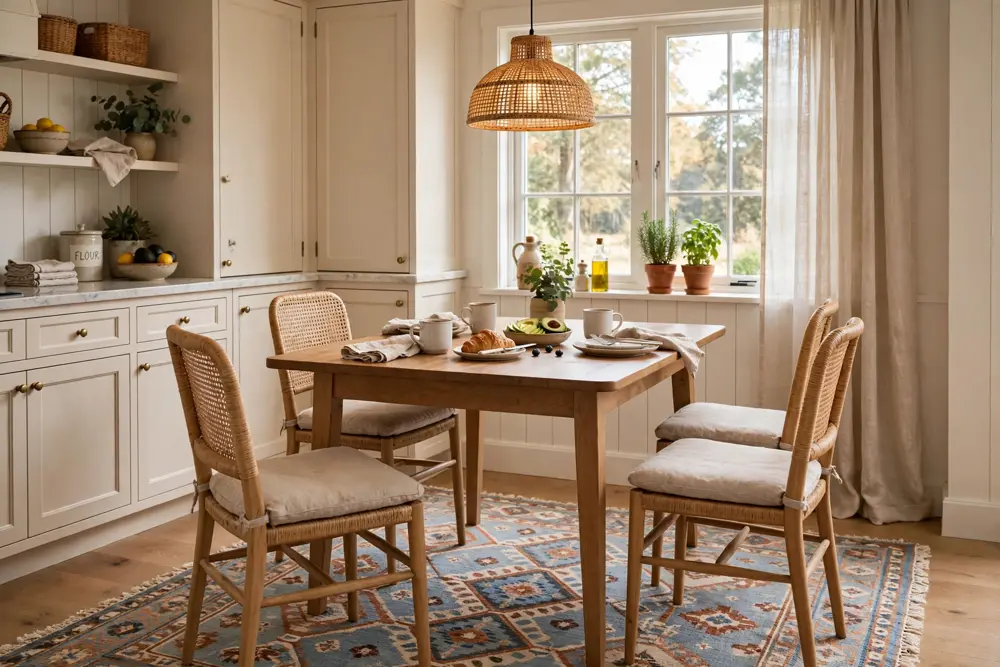
A rug under a kitchen table changes the dining area from a hard corner to a room of its own, but it only works if the chairs stay on the rug when you pull them out. Measure the table, then add at least 60 centimetres on every side for chair movement. For a four person table, that usually means a rug at least 240 by 180 centimetres. A rug that is too small, where back chair legs slide off the edge, is annoying every meal and wears the rug edge quickly.
Low pile is essential under a table. Chairs need to slide easily, crumbs need to sweep up, and a thick pile rug will make chairs wobble and trap food. A flatweave, a low loop, or an indoor outdoor rug works best here. Indoor outdoor rugs, made from polypropylene, are a smart kitchen table choice, because they wipe clean, resist stains, and come in patterns that look like wool or cotton without the upkeep.
Pattern and colour should connect to the rest of the kitchen, not fight it. If your cabinets are white and your backsplash is patterned, choose a simple rug. If your kitchen is plain, a patterned rug under the table can be the main colour in the room. Either way, keep the rug flat, keep the chairs on it, and vacuum or shake it weekly so crumbs do not grind into the fibres.
Idea 4: Layered rugs and runners for open plan kitchens
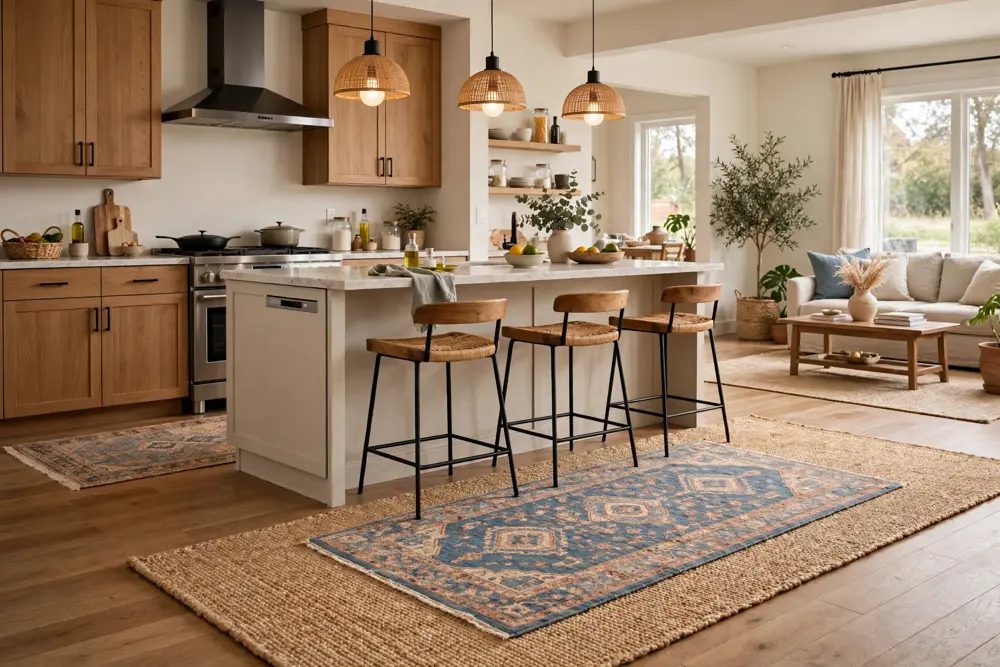
In an open plan kitchen, rugs do a job that walls used to do: they mark where the kitchen ends and the living area begins. A runner by the sink, a rug under a table, and a small rug by a back door can each mark a zone, as long as they share a colour family. Two or three rugs in completely different styles will make an open plan room feel scattered, while rugs in the same tones, for example warm neutrals with one accent colour, will tie the zones together.
Layering works in larger kitchens, but keep it simple. A large flat base rug with a smaller washable runner on top, by the sink, gives you softness underfoot and a top layer you can wash often. Do not layer thick rugs on thick rugs, because the top layer will slide and bunch. A thin top layer on a flat, non slip base is the safe version.
In an open plan kitchen, also think about transitions. A rug that stops right at a step, a threshold, or a change from tile to wood will trip people. End rugs a few centimetres before a threshold, use a low profile edge, and use a pad that grips both the rug and the floor. A rug that stays put is more important than a rug that looks perfect in a photo.
Choosing a material that survives a kitchen
Cotton is soft, washable, and affordable, but it absorbs water and stains, and it can shrink in a hot wash. It suits a low splash area, like a breakfast nook, better than a sink run. Polypropylene and other synthetic flatweaves resist stains, dry quickly, and wipe clean, which is why they dominate kitchen runners. They can feel less soft than cotton, so look for a synthetic with a cotton like weave if softness matters.
Wool is warm and durable, but it is hard to clean after a cooking spill, it holds smells, and it is not ideal by a sink or cooker. Save wool for a dining rug in a kitchen you use lightly, or for a rug that can be professionally cleaned. Jute and sisal look natural and suit a rustic kitchen, but they stain easily, are hard to wash, and can be rough under bare feet. They work best in a low traffic corner, not a main work run.
Washable rugs, made in two parts with a removable top layer, are the newest kitchen option and the most practical for a busy household. The top layer goes in the machine, the base stays put, and the rug looks like a normal rug when laid. They cost more upfront, but they save a rug that would otherwise be replaced after a year of spills.
Sizes by kitchen layout
Galley kitchen: one long runner, 60 to 75 centimetres wide, 240 to 300 centimetres long, along the main work run, stopping short of doors.
L shaped kitchen: a runner by the sink, plus a second runner or small rug by the cooker if the L is long, in the same colour family, not a single rug that tries to turn the corner.
U shaped kitchen: a runner on the main sink run is usually enough. A rug in the middle of a U will get in the way of turning and opening cupboards.
Open plan with island: a runner by the sink and cooker, and a rug under a table if there is one, with a clear gap around the island so stools move freely.
Small kitchen: one runner only, by the sink, in a light or patterned flatweave. A large rug in a small kitchen will make the floor feel crowded and will be hard to clean around cabinets.
Always measure before you buy, including door swings, bin pull outs, and dishwasher doors. A rug that looks right online but blocks a door in your kitchen will end up rolled up in a cupboard.
Cleaning and safety
Vacuum a kitchen rug twice a week, shake it outside weekly if you can, and spot clean spills immediately with cold water and a mild soap. Do not use bleach on a coloured rug, and do not use a steam cleaner on a synthetic rug unless the label says it is safe. Machine wash washable runners on a cool cycle, and air dry them flat, because a hot dryer can shrink cotton and warp a non slip backing.
Safety is not optional in a kitchen. Use a non slip pad under every rug, check that edges lie flat, and replace a rug that curls at the corners, because curled edges are the main trip risk in a kitchen. Keep rugs away from a direct heat source, like an oven vent or a radiator, and never use a thick, loose rug in front of a cooker where you step back quickly with a hot pan.
For pets and children, a washable, low pile rug is the safest choice. It cleans after muddy paws and spilled drinks, it does not trap allergens as much as high pile, and it stays flat when children run across it. Avoid tassels and long fringes in a kitchen with small children or pets, because they catch, fray, and get pulled.
What to avoid
- Buying a rug before measuring door swings, bin pull outs, and dishwasher doors
- Using high pile, shag, or wool rugs by a sink or cooker, where they trap crumbs, oil, and smells
- Skipping a non slip pad, even on a rug sold as non slip, on a wet kitchen floor
- Choosing a rug so small that chair legs slide off the edge at a table
- Layering thick rugs on thick rugs, which slide, bunch, and trip
- Using light plain colours on a main work run, where stains show immediately
- Leaving curled edges unrepaired, which is the main trip risk in a kitchen
Frequently asked questions
What is the best rug for a kitchen?
A low pile, washable flatweave runner, usually polypropylene or cotton, with a non slip pad. It lies flat, cleans easily, and survives spills by a sink or cooker better than wool, shag, or jute.
Can you machine wash a kitchen rug?
Yes, if the label says washable. Wash on a cool cycle, air dry flat, and wash the non slip pad separately. Cotton washable runners can shrink in a hot wash, so keep the temperature low and do not tumble dry unless the label allows it.
What size runner do I need for a kitchen?
By a sink, 120 to 180 centimetres long and 60 to 75 centimetres wide. In a galley, 240 to 300 centimetres long. Under a table, add 60 centimetres on every side of the table so chairs stay on the rug when pulled out.
Do kitchen rugs need a non slip pad?
Yes, always. Even rugs sold as non slip can creep on a wet tile or wood floor. A pad stops sliding, adds a little cushion, and protects the floor underneath. Replace the pad when it loses grip.
Are jute rugs good for kitchens?
Jute looks natural, but it stains easily, is hard to clean, and feels rough under bare feet. It suits a low traffic corner better than a sink or cooker run. For a main work area, choose a washable synthetic flatweave instead.
How do I stop a kitchen rug from sliding?
Use a good non slip pad, choose a flatweave that lies flat, keep the floor clean and dry underneath, and avoid rugs with curled edges. If a rug still slides, try a different pad, or a rug with a rubber backing, rather than tape, which leaves residue on floors.
Conclusion
A good kitchen rug is not the prettiest rug you can find, it is the rug you can live with. Choose a washable flatweave runner by the sink, a flat runner along a galley or cooker run, a low pile rug under a table that is big enough for chairs, and layered rugs in the same colour family in an open plan kitchen. Measure first, use a non slip pad always, and clean spills straight away.
Start with one runner where you stand longest, usually the sink. If it stays flat, washes well, and feels good underfoot after a month, you have found your kitchen rug formula, and you can add a second rug in the same family with confidence. A kitchen floor that is soft, safe, and easy to clean makes cooking feel easier, and that is the real point of a rug in a kitchen.