Introduction
A bedroom without a closet can feel like a problem before you have even unpacked. There is nowhere to shut the door on a pile of clothes, nowhere to hide the laundry chair, and every storage choice is suddenly on display. The good news is that a closet is only one way to store clothes. A clear system can work just as well, and in a small room it can sometimes work better, because you are forced to decide what you actually own, what you actually wear, and where each thing belongs.
The mistake most people make is to start by buying storage. They buy a rack, a set of bins, and a shoe organiser, then try to fit their wardrobe into them. The result is usually a room that looks busy and still does not work. A better order is to count, zone, and only then buy. When you know how many hanging items you have, how many folded items you have, and how much floor and wall space you can use, the right furniture almost chooses itself.
This guide is written for real rooms: older homes with no built in storage, rentals where you cannot drill into every wall, converted rooms, and small bedrooms where floor space is precious. It gives you a five zone system, a capsule first method, rules for open storage that looks intentional, and a clear choice between a renter version and an owner version. You do not need a full wardrobe set, a walk in closet, or a renovation to make it work.
Key takeaways
- A bedroom without a closet works with a system, not with more storage boxes: count, zone, then buy.
- Use five zones for hanging, folded clothes, shoes, laundry, and daily essentials.
- Capsule first, containers second, so open storage looks intentional rather than cluttered.
- In a rental, use freestanding and removable storage; owners can add fitted options.
Idea 1: Start With Five Zones, Not Five Shopping Trips

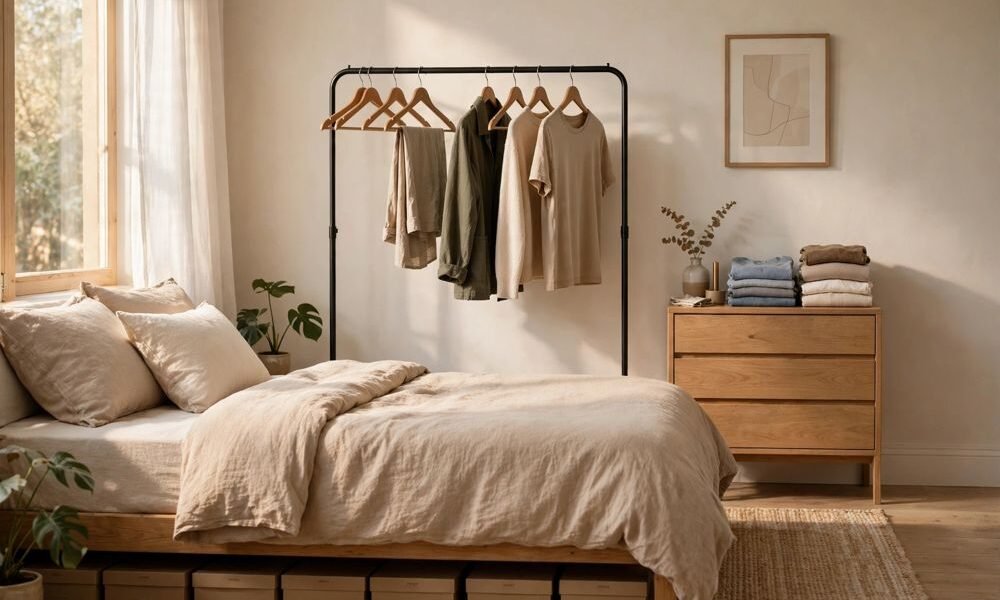
Think of your bedroom as five zones rather than one big storage problem. The primary wall is the longest uninterrupted wall, usually the one the bed does not block. This is where your main hanging or wardrobe furniture should go. The door zone is the wall beside the door, which is ideal for hooks and a small landing spot for a bag, a coat, and tomorrow’s outfit. The low traffic corner is the corner you do not walk through often, which suits a tall chest, a laundry basket, or a freestanding wardrobe. The vertical wall is the space above head height and above doors, which is perfect for seasonal items you do not need every day. The under bed zone is for flat, shallow storage that you can slide out without moving furniture.
Start by walking the room and naming each zone out loud. In a 10 by 10 room, the primary wall might be only 120 inches long, and once you allow 24 to 30 inches of walkway beside the bed, you may have room for a 48 inch garment rack or a 40 inch wardrobe and nothing else on that wall. That is useful information, not a failure. It tells you to use the door zone for hooks, the vertical wall for a high shelf, and the under bed zone for shoes and out of season clothes, rather than trying to squeeze a second wardrobe into a walkway. For more ideas for a room this size, see Small Bedroom Layout Ideas for a 10 by 10 Room.
In a larger room, the same five zones still help, but the balance changes. You might have room for a freestanding wardrobe on the primary wall and a dresser in the low traffic corner, while still keeping a clear path to the door and the window. The rule stays the same: one main storage piece per zone, a clear job for each zone, and no zone doing two jobs badly. For the bigger picture on layout, light and style, see Small Bedroom Ideas: The Complete Guide to Layout, Storage, Light and Style.
Idea 2: Capsule First, Containers Second
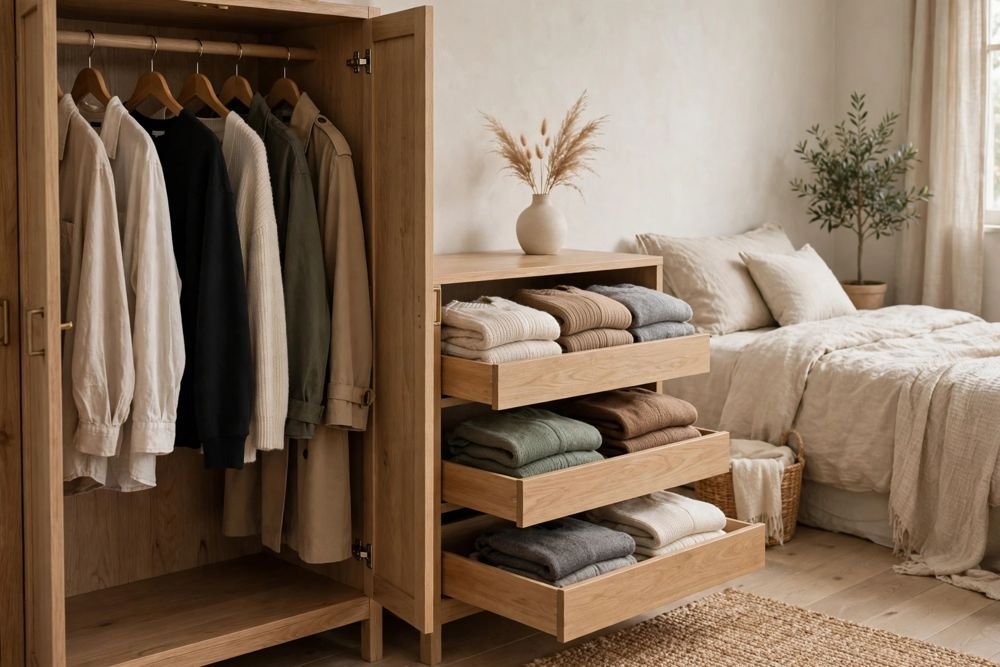
Before you buy a single bin, count your clothes. Count hanging items separately from folded items, because they need different storage. A typical capsule might include 20 to 30 hanging items, such as shirts, blouses, jackets, and dresses, and 30 to 40 folded items, such as knitwear, T shirts, and trousers. Your numbers will be different, and that is the point. If you have 45 hanging items and only a 36 inch rack, the system will fail no matter how tidy the hangers look.
Capsule first means you decide a limit for each category before you choose containers. For example, you might allow 12 work shirts, 8 casual tops, 4 jackets, and 6 dresses or formal items. Anything above the limit goes into a separate decision pile: keep in seasonal storage, donate, repair, or sell. This is not about owning as little as possible. It is about owning an amount that your room can actually hold without looking crowded.
Once the capsule is set, containers become easy to choose. Hanging items need a rail that is at least 60 inches high for shirts and jackets and about 72 inches high for dresses and coats, with enough width for each hanger to move freely. Folded items need drawers or boxes that are shallow enough to see everything at a glance, ideally no deeper than 12 inches for knitwear. Shoes need a flat zone, either under the bed or on a low shelf, with one pair per space rather than a pile. When a container is full, it is a signal to review the capsule again, not to buy a bigger container.
Idea 3: Make Open Storage Look Intentional

Open storage fails when it looks accidental. It succeeds when it follows a few simple visual rules. First, use matching hangers. Mixed plastic, wire, and wooden hangers make even a small wardrobe look messy, while one type of hanger creates a calm line across the rail. Wooden hangers suit heavier items, while slim velvet hangers save width for shirts and blouses. Leave a small gap between groups so you can pull one item out without disturbing the rest.
Second, group clothes by type and then by colour. Hang all shirts together, then jackets, then dresses, and within each group move from light to dark. This makes it faster to find what you need in the morning and makes the rack look organised from across the room. Folded clothes should follow the same logic: one drawer for knitwear, one for T shirts, one for trousers, and no drawer that mixes three categories.
Third, decide what never goes on display. Underwear, socks, gym clothes, and anything stained, stretched, or rarely worn should live in closed drawers or boxes. Open shelves are for items that look good and that you reach for often: a few folded sweaters, a neat row of shoes, or a basket for scarves. If an open shelf starts to look cluttered, remove one category rather than adding a decorative item to distract from it. Calm comes from fewer visible categories, not from more decoration.
Idea 4: Choose the Renter Version or the Owner Version

Renters and owners can use the same five zones, but they should not use the same fixings. In a rental, start with furniture that does not need the wall at all. A freestanding wardrobe is the closest replacement for a closet, and it can move with you. A sturdy garment rack is cheaper and lighter, but it needs a stable base and should not be overloaded, especially on carpet. A leaning ladder shelf or a freestanding shelf unit can add vertical storage without holes, as long as it does not block a door or a heater. For more rental-friendly ideas, see our guide to decorating a rental bedroom without drilling holes.
If you do use adhesive hooks or rails in a rental, test them first. Put one hook on a hidden patch of wall, leave it for 24 hours with a light load, then remove it and check for paint lift before you hang anything heavy. Painted drywall, textured paint, and older plaster behave differently, and a hook that holds well on one wall can damage another. Photograph the walls when you move in, keep the original paint colour if you have it, and plan a removal order when you move out: hooks first, then rails, then any shelf that needs patching.
Owners have more options, and the best one is usually a wall mounted rail or a built in wardrobe on the primary wall, fixed into studs so it can hold real weight. A wall rail with a high shelf above it gives you hanging space below and seasonal storage above, without taking up floor space for a wardrobe carcass. A fitted wardrobe can use an awkward wall or alcove more efficiently than a freestanding piece, but measure door swing, drawer swing, and window clearance before you order. See also our small bedroom storage ideas that do not use floor space.
What to Avoid
Do not buy matching storage sets before you have counted your clothes. A set that looks good in a shop may give you six small boxes when you need two large drawers, or a tall shelf when you need hanging space. Buy for the category you actually have, not for the look you want in a photograph.
Do not overload a garment rack or a wall rail. A rack that leans, a rail that pulls away from the wall, or hangers so tight that you cannot remove a shirt without a struggle will make you avoid using the system. Leave breathing room, fix rails into studs if you own the home, and use a freestanding wardrobe for heavy coats and dresses if a rack feels unstable.
Do not store everything in sight. Open storage works for a capsule, not for an entire wardrobe plus out of season clothes, bags, and accessories. Close the lid on seasonal boxes, use drawers for small items, and keep one open shelf calm rather than five open shelves busy. If you can see everything you own from the bed, the room will feel like a shop, not a bedroom.
Do not block light, air, or walkways for the sake of storage. A wardrobe in front of a window, a rack across a radiator, or a chest that forces you to climb over the bed to reach the door will make daily life harder, even if it adds storage. A slightly smaller system that leaves the room usable will last longer than a larger system that you resent. For lighting ideas that do not need a ceiling fitting, see Cozy Bedroom Lighting Ideas Without an Overhead Light.
FAQs
Where do I put clothes if my bedroom has no closet?
Start with the five zones in this guide. Use the longest wall for a freestanding wardrobe or garment rack, a dresser or tall chest in a low traffic corner, hooks in the door zone, high shelves for seasonal items, and flat under bed boxes for shoes and out of season clothes. Count hanging and folded items first, so the furniture you choose matches what you actually own.
How do I make a bedroom without a closet look tidy instead of messy?
Use matching hangers, group clothes by type and then by colour, and keep small or rarely worn items in closed drawers. Leave space between groups, keep dresser tops clear except for one lamp and one tray, and limit open shelves to items that look neat and that you use often. A calm room usually comes from fewer visible categories, not from more storage products.
Can a room without a closet still count as a bedroom?
In many places, a bedroom definition depends on local rules about size, windows, heating, and escape routes, not only on whether it has a closet. Older homes often have bedrooms without closets, and a freestanding wardrobe is a normal solution. Check your local building or rental rules if you need a formal answer for a sale or a tenancy, but for daily living, a room with a bed, storage, and a clear layout functions as a bedroom.
How much hanging space do I need in a bedroom without a closet?
It depends on your capsule. Measure your hanging items and allow enough width for each hanger to move freely, plus height for shirts and jackets and extra height for dresses and coats. As a starting point, a 48 inch rail suits a small capsule, while a larger wardrobe or two rails may be needed if you have many hanging items. If a rail is full and tight, reduce the capsule or move seasonal items to high or under bed storage rather than squeezing more hangers in.
What is the best wardrobe alternative for a rental bedroom?
A freestanding wardrobe is usually the best rental alternative because it needs no wall fixings, can move with you, and closes the door on visual clutter. A sturdy garment rack is a cheaper option for a small capsule, while a wall rail is better if you own the home and can fix it into studs. In a rental, test any adhesive fixing on a hidden patch first and photograph the walls when you move in.
How do I store shoes in a bedroom without a closet?
Use flat under bed boxes or a low shoe shelf in the door zone or low traffic corner, with one pair per space. Keep daily shoes easy to reach and move out of season or rarely worn shoes to high shelves or under bed storage. Avoid piling shoes by the door, which blocks walkways and makes the room feel untidy even when the rest of the system works.
Conclusion
A bedroom without a closet does not need to feel like a compromise. It needs a system that fits your room, your clothes, and your life. Start with five zones, set a capsule limit before you buy containers, make open storage look intentional with matching hangers and clear groups, and choose a renter or owner solution that you can actually live with. If you do have a small built-in closet, our small reach-in closet organisation ideas will help you make the most of it.
Count first, buy second, and keep the floor clear. When every item has a zone, the room will feel calmer and easier to keep tidy, even on a busy morning.