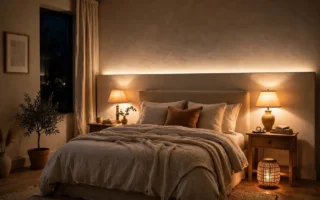
Renting does not mean living in a blank room until you move. A rental bedroom can look finished, personal, and calm, without drilling holes, painting walls, or risking your deposit, if you choose removable, freestanding, and portable decor, and you plan the move-out from the start. The trick is not to buy less decor, it is to buy decor you can take with you, remove cleanly, and reuse in the next place.
This hub guide brings together the renter bedroom ideas on this site in one place, so you can start with the room you have, pick the changes that matter most, and skip the ones that do not fit your tenancy, your budget, or your room size. It covers no-drill walls, removable wallpaper, freestanding storage, lighting and bedding, a room-by-room starting plan, a budget order, and a move-out checklist, plus what to avoid and answers to the questions renters ask most.
Key takeaways: check your tenancy agreement before you start, and get permission in writing for anything that touches walls; use removable and freestanding pieces first, because they protect your deposit and move with you; change one area at a time, starting with the bed wall and lighting, because those change how the room feels most; and keep every removable item’s instructions, spare strips, and original packaging, so removal is quick when you move.
Start Here: The Renter Bedroom Plan
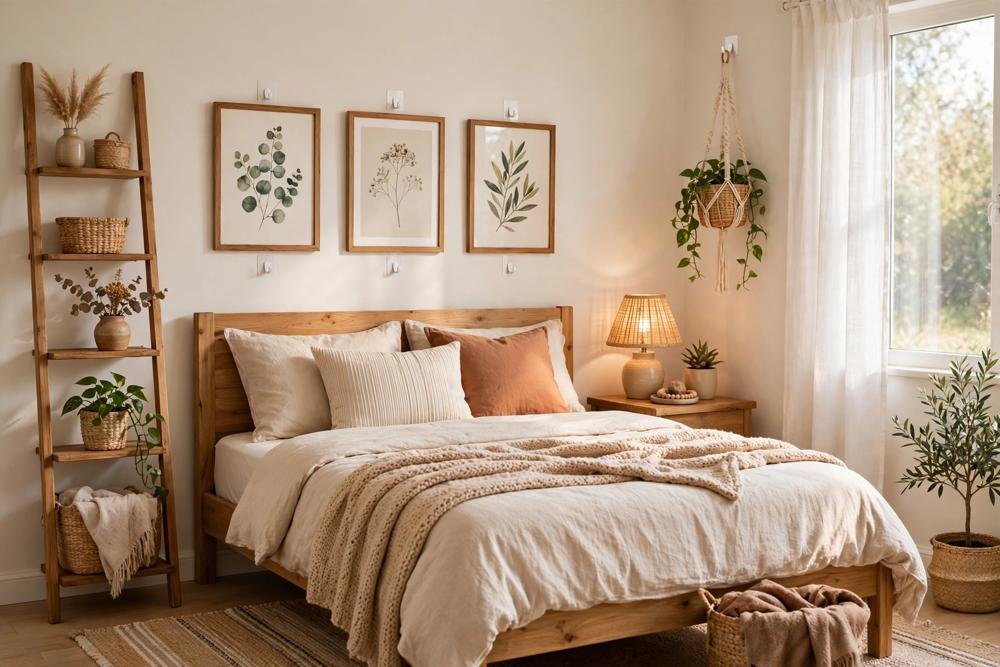
Before you buy anything, walk the room and note three things: what the tenancy agreement allows, what the room already has, and what bothers you most. The agreement matters first, because it decides whether you can use removable wallpaper, adhesive hooks, or tension rods, and whether you need written permission. If the agreement is unclear, ask the landlord or agent by email, and keep the reply. A short email now is much cheaper than a deposit dispute later.
Next, note what the room already gives you: bed size, wardrobe, window light, wall colour, floor, and storage. A room with a large window and plain walls needs colour and texture, not more furniture. A room with a dark corner needs light, not another dark wardrobe. A room with no wardrobe needs freestanding storage, not wall shelves you cannot install. Decor that works with the room, rather than fighting it, looks better and costs less.
Finally, pick the one change that will make the biggest difference for you. For most renters, that is the bed wall, because you see it first and it anchors the room, or the lighting, because overhead light alone makes a bedroom feel cold. Start there, live with it for a week, then add the next change. A room decorated in one weekend, all at once, often feels busy, while a room built in layers feels personal.
Measure before you order anything, especially for wallpaper, curtains, and freestanding storage. Measure wall width and height, window width and height, bed width, and the walkway around the bed. A wardrobe that blocks a door, a curtain rod that is too short, or wallpaper that runs out one strip short, all cost time and money, and they are easy to avoid with a tape measure and a note on your phone.
Idea 1: No-Drill Walls That Still Look Finished
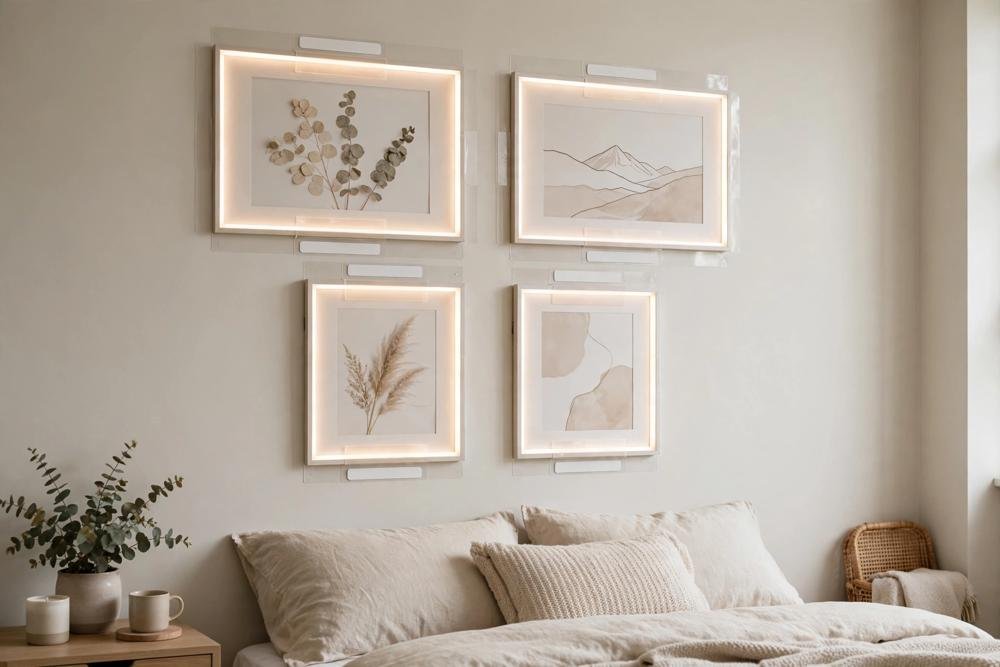
No-drill walls are the foundation of renter bedroom decor, because walls are usually the biggest surface and the biggest deposit risk. Adhesive strips and hooks, tension rods, leaning frames, and freestanding shelves can give you art, mirrors, and storage without a single hole, if you choose the right weight rating and the right wall surface. Check the strip or hook weight limit, and do not hang a heavy mirror on a strip rated for a light frame. For heavy items, use a leaning mirror or a freestanding easel instead, which needs no wall fixing at all.
Use a small number of larger frames, rather than many tiny ones, because a gallery of small frames can look cluttered in a small bedroom, and each one is another strip to remove later. Hang frames at eye level, in a simple row or a loose grid, with equal spacing, rather than scattering them. If you are unsure about spacing, lay the frames on the bed first, in the arrangement you want, measure the total width, and mark the wall lightly with painter’s tape before you stick anything.
Test adhesive products in a hidden area first, especially on freshly painted, textured, or old paint, because some adhesives can lift weak paint on removal, even when they are marketed as removable. Follow the product instructions for surface preparation, wait time before hanging, and removal: most strips need to be pulled slowly, straight down, at the angle shown, not yanked outwards. Keep spare strips, so you can rehang a frame that falls, without buying a whole new pack.
If your landlord does not allow adhesive products, or your walls will not hold them, use leaning and freestanding decor instead: a large leaning mirror, a ladder shelf, a freestanding coat rack, and art propped on a dresser or shelf. These give you height, reflection, and personality, with no wall contact at all, and they move with you in one piece.
For a full guide to no-drill decorating, including weight limits, surface checks, and removal, see How to Decorate a Rental Bedroom Without Drilling Holes, and for accent wall ideas that do not need paint or drilling, see Renter Friendly Bedroom Accent Wall Ideas.
Idea 2: Removable Wallpaper and Accent Walls
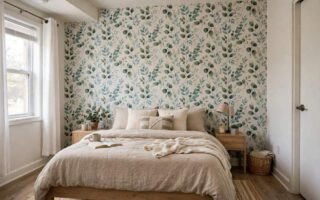
Removable wallpaper, especially peel and stick wallpaper, is the fastest way to add colour and pattern to a rental bedroom, without paint. One accent wall, usually behind the bed, changes the whole room, while papering all four walls in a small room can feel busy and cost much more. Choose a pattern that works with your bedding and curtains, not against them: a floral or botanical pattern with plain bedding, or a subtle geometric with one colour picked up in cushions, works better than three competing patterns.
Measure the accent wall carefully, width times height, minus windows and doors, plus 10 percent extra for pattern matching and mistakes. Order all rolls from the same batch, because colour can vary slightly between batches. Test a small piece in a hidden area for a week before papering the main wall, especially if the paint is fresh, textured, or old. Fresh paint should cure for 2 to 4 weeks before wallpaper, because it can peel with the paper on removal.
Apply slowly, from the top, smoothing as you go, with a level line for the first strip, because the first strip sets the line for the whole wall. Match the pattern at eye level, trim with a sharp blade, and check edges once a month, pressing them back down before dust gets under them. Remove slowly, at a low angle, with gentle heat from a hair dryer on low if a section resists, and wipe residue with a damp cloth. Take photos before you apply and after you remove, for your deposit record.
If wallpaper is not allowed, or your walls are heavily textured, a framed panel gives you the same look with no wall contact: paper stuck to a board, hung with removable hooks or leaned against the wall. A panel behind the bed, or a pair of panels on either side, creates a headboard effect, and it moves with you. For step-by-step application, removal, and what to avoid, see Peel and Stick Wallpaper Bedroom Ideas for Renters.
Idea 3: Freestanding Storage That Moves With You
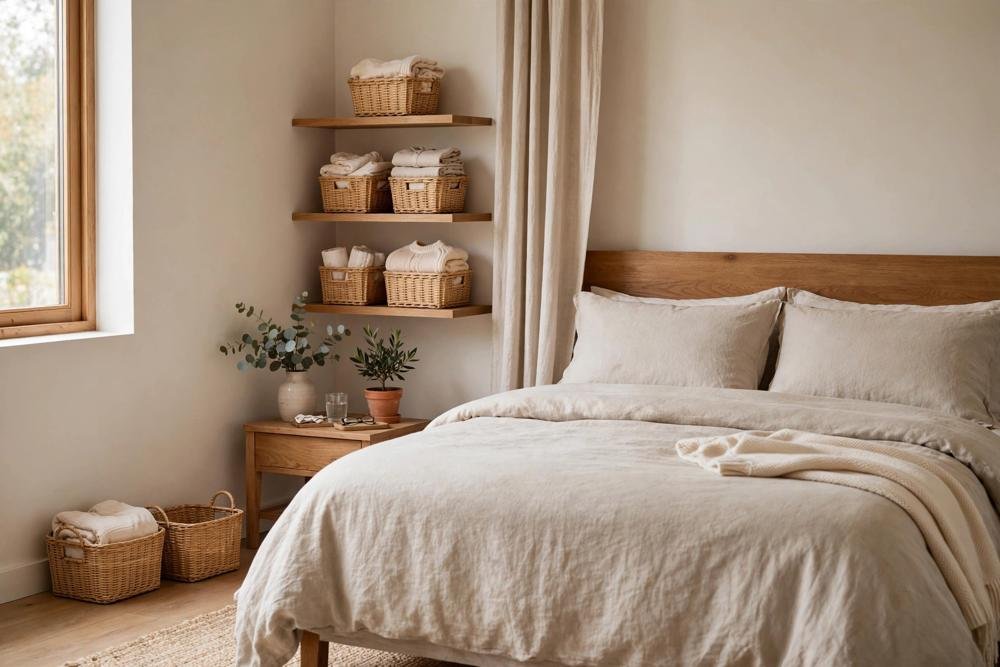
Freestanding storage is the renter’s best friend, because it adds storage without wall fixings, and it moves to the next place. A freestanding wardrobe, an open shelving unit, a ladder shelf, and baskets can replace built-in storage, if you choose pieces that fit the room and the walkway. Measure the space, including door swing and drawer opening, before you buy, because a wardrobe that blocks a door or a shelf that blocks a window will be moved, and moved often.
Use closed storage for clutter and open storage for display, not open storage for everything, because open shelves full of random items look messy, while a mix of closed baskets and a few displayed items looks calm. Label baskets, so you can find things without pulling everything out, and keep only current-season clothes and daily items in the bedroom, with out-of-season items in labelled boxes elsewhere, if you have space.
If you have no wardrobe, a freestanding wardrobe with hanging space and drawers, plus under-bed boxes, can work well in a small bedroom, without drilling. Under-bed storage, in flat boxes or baskets that slide easily, uses space that is otherwise wasted, and it keeps the room tidy without adding furniture. For dresser alternatives that save floor space, including tall chests, wardrobes with drawers, and wall shelves that use vertical space, see Small Bedroom Dresser Alternatives That Save Floor Space.
Keep storage near where you use it: clothes near the bed and wardrobe, bedding near the bed, and daily items near the door, rather than one large storage unit across the room that you have to cross the room to use. A small basket by the bed for night essentials, a basket by the door for keys and bags, and a laundry basket that is easy to carry, will save more time than a large unit that is hard to reach.
Rotate storage as seasons and needs change, and do not let storage become a dumping ground. If a basket has not been opened in three months, check whether its contents are still needed in the bedroom, or whether they belong elsewhere. A renter bedroom stays calm only if things leave as regularly as they arrive.
Idea 4: Lighting and Bedding That Make a Rental Feel Like Home
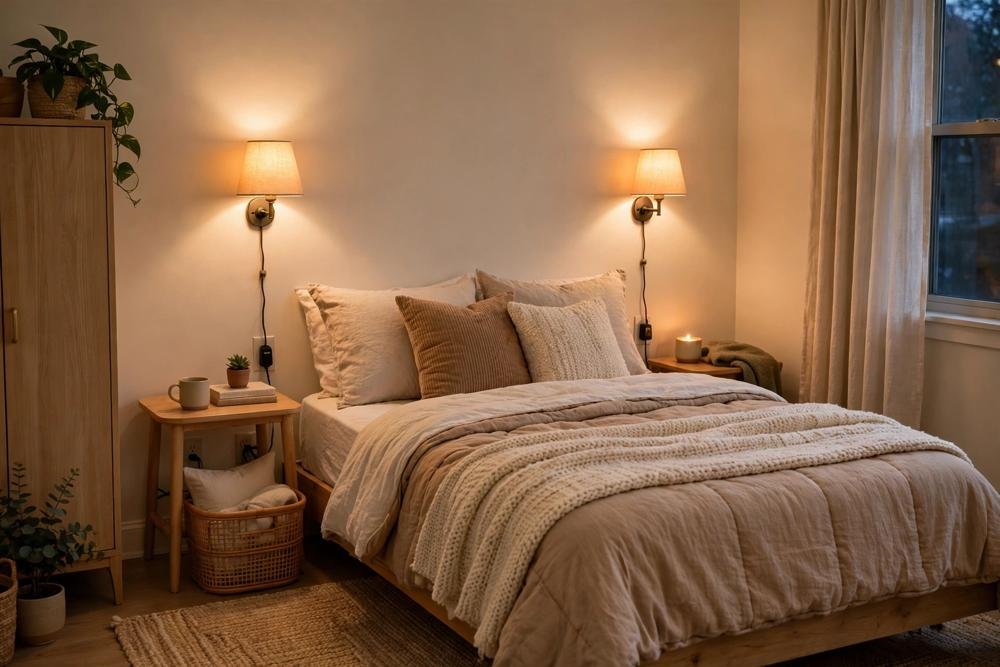
Lighting and bedding change how a rental bedroom feels more than any other single change, because they affect light, warmth, and comfort every night. Most rentals have one overhead light, which is bright, cold, and unflattering. Replace it, in effect, with layers: a bedside lamp, a plug-in wall lamp, or a floor lamp, all with warm bulbs, so you can turn off the overhead light and use soft light in the evening. Plug-in lamps need no wiring and no drilling, if you choose a model with a cord and a plug, rather than a hardwired wall light.
Choose warm white bulbs, around 2700 Kelvin, for bedroom lamps, because cool white bulbs can feel clinical in a bedroom, especially in the evening. Use a dimmer, or a lamp with multiple brightness settings, so you can lower the light for reading and for winding down. Keep a small light near the bed for reading, and a soft light near the door for night trips, rather than one bright light that wakes the whole room.
Bedding is portable, personal, and high impact: a duvet cover, pillowcases, and a throw in colours you love can transform a plain rental bed, and they move with you to the next place. Choose breathable natural fabrics, cotton percale or linen, in light colours for summer and warmer layers for winter, and wash them often, because fresh bedding makes a room feel clean even when the walls are plain. A throw folded at the foot of the bed, and two or three cushions in colours picked from your art or wallpaper, tie the room together without buying new furniture.
If you share the bed and one person is hot and the other is cold, use separate light duvets, or layers each person can adjust, rather than fighting over one duvet. Keep a light blanket within reach for the early morning cool, and keep the bed made loosely, not tightly tucked, so air can circulate. For reading light that does not wake a partner, and for temperature and bedding ideas for hot sleepers, see the related guides linked at the end of this article.
Idea 5: A Move-Out Checklist That Protects Your Deposit

A move-out checklist, started on the day you move in, is the most boring and most valuable part of renter decor. Take photos of every wall, floor, window, and fixture on move-in day, with dates, and keep them in a folder, so you can show the room’s original condition later. Note any existing marks, scuffs, or damage in writing to the landlord or agent, even if they seem small, because a mark you did not report can be charged to you later.
Keep a small box for every removable item’s spare parts: adhesive strips, wallpaper samples, curtain rod parts, lamp bulbs, and product instructions. When you move out, you will need them to remove items cleanly and to repair small marks. Remove items in reverse order: take down art and hooks first, then wallpaper, then freestanding furniture, then curtains, so you can see the walls clearly and touch up as you go.
Remove adhesive strips slowly, at the angle shown in the instructions, with gentle heat if needed, and wipe residue with a damp cloth. Remove wallpaper slowly, at a low angle, strip by strip, and check for paint lifting at corners and around switches. Fill small nail holes, if any were allowed, with filler, sand lightly when dry, and touch up with matching paint if you have it, or ask the landlord for the paint colour. Clean the room thoroughly, including windows, floors, and inside wardrobes, because a clean room looks cared for, even if there are small wear marks.
Take photos again on move-out day, after cleaning and removal, in the same angles as the move-in photos, so you have a before-and-after record. Return keys, remotes, and manuals, and keep a copy of the move-out inventory, if one is provided. If a deposit deduction is proposed, ask for an itemised list and evidence, and compare it with your photos. A calm, documented move-out is much easier to dispute than a rushed one with no photos.
What to Avoid
Do not drill, paint, or use strong adhesives without checking your tenancy agreement and getting permission in writing, because even a small hole can be a deposit issue. Do not hang heavy items on adhesive strips rated for light frames, and do not use adhesive on fresh, textured, or peeling paint without a hidden test first. Do not paper all four walls in a small bedroom, because it can feel smaller and cost much more, and do not buy a full furniture set before measuring, because it may block doors and walkways.
Do not buy decor that only works in one room, if you plan to move soon, because portable, freestanding, and removable pieces will save you money in the next place. Do not keep all seasons, sizes, and supplies in the bedroom at once, because it will feel crowded, and do not use bright overhead light alone in the evening, because it makes a bedroom feel cold. Finally, do not skip move-in photos, because they are your best protection, and they take ten minutes.
FAQs
Can I decorate a rental bedroom without losing my deposit?
Yes, if you check your agreement, get permission in writing for wall items, use removable and freestanding decor, test adhesives in a hidden area, and remove everything cleanly with photos before and after. Keep spare strips and product instructions for removal day.
What is the best first change in a rental bedroom?
For most renters, the bed wall or the lighting, because they change how the room feels most. A no-drill accent wall, a peel and stick wallpaper panel, or warm bedside lamps, plus fresh bedding, will transform a plain room without drilling or painting.
Are adhesive hooks safe for rental walls?
Usually yes, if you follow weight limits, surface preparation, and removal instructions, and test in a hidden area first, especially on fresh or old paint. For heavy mirrors or shelves, use leaning or freestanding pieces instead, which need no wall fixing.
Can I use peel and stick wallpaper in a rental?
Often yes, but check your agreement first, because some require written permission. Test a small piece in a hidden area, use one accent wall, apply slowly, and remove slowly at a low angle with gentle heat if needed. A framed panel is a no-wall-contact alternative.
How do I make a small rental bedroom feel bigger?
Use light colours, one accent wall rather than four patterned walls, freestanding storage that fits the walkway, mirrors that reflect light, and warm layered lighting rather than one bright overhead light. Keep walkways clear and only current-season items in the room.
What should I do on move-out day?
Remove items in reverse order, clean thoroughly, touch up small marks if allowed, take photos in the same angles as move-in photos, and keep a copy of the inventory and key return. Ask for an itemised deposit deduction list if one is proposed, and compare it with your photos.
Conclusion
Bedroom decor for renters works best when it is removable, freestanding, and portable: no-drill walls, one removable accent wall, freestanding storage, warm layered lighting, and bedding you love, all planned with move-out in mind. Start with your tenancy agreement and a tape measure, change one area at a time, keep spare strips and move-in photos, and choose pieces that will move with you to the next place. Done that way, a rental bedroom can feel finished and personal, without drilling, without painting, and without a deposit dispute when you move out.