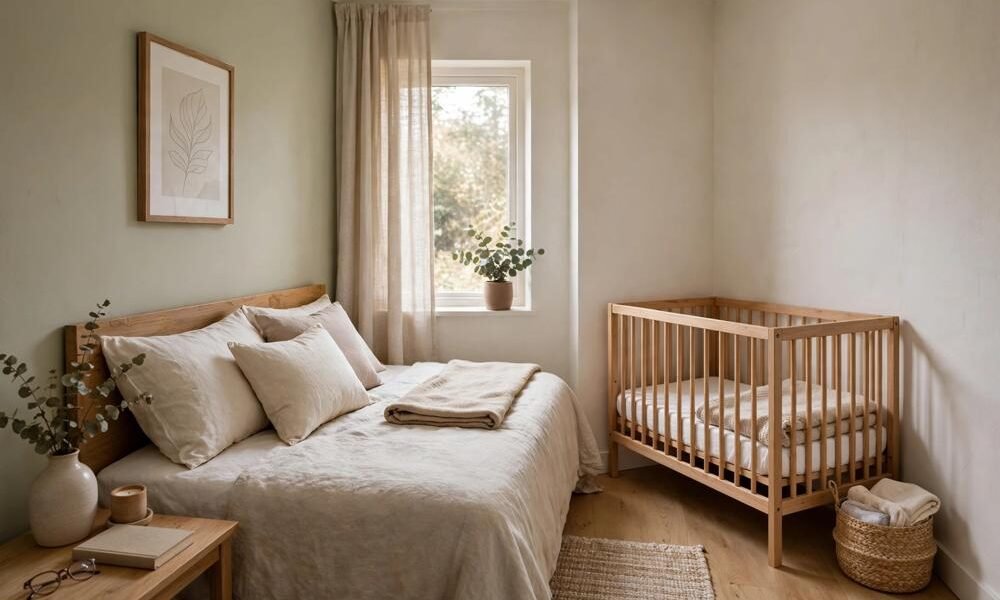
A small nursery in a parents room does not need a separate room, a full nursery set, or a remodel. It needs a safe crib corner, a changing spot within reach, storage that keeps baby things tidy, and a quiet corner for night feeds, all fitted into the bedroom you already have, without blocking walkways or making the room feel crowded.
This guide covers those four areas, plus safety basics and what to avoid. It is general home setup advice only, not medical or safety-certification advice: always follow the crib, mattress, and product instructions for your specific items, and check current safe-sleep guidance from your local health authority.
Key takeaways: keep the crib corner clear, safe, and away from windows, cords, and heaters; use furniture you already own for changing and storage; keep night-feed essentials within arm’s reach; and keep the parents bed and walkways clear, so everyone can move safely at night.
Idea 1: A Compact Crib Corner
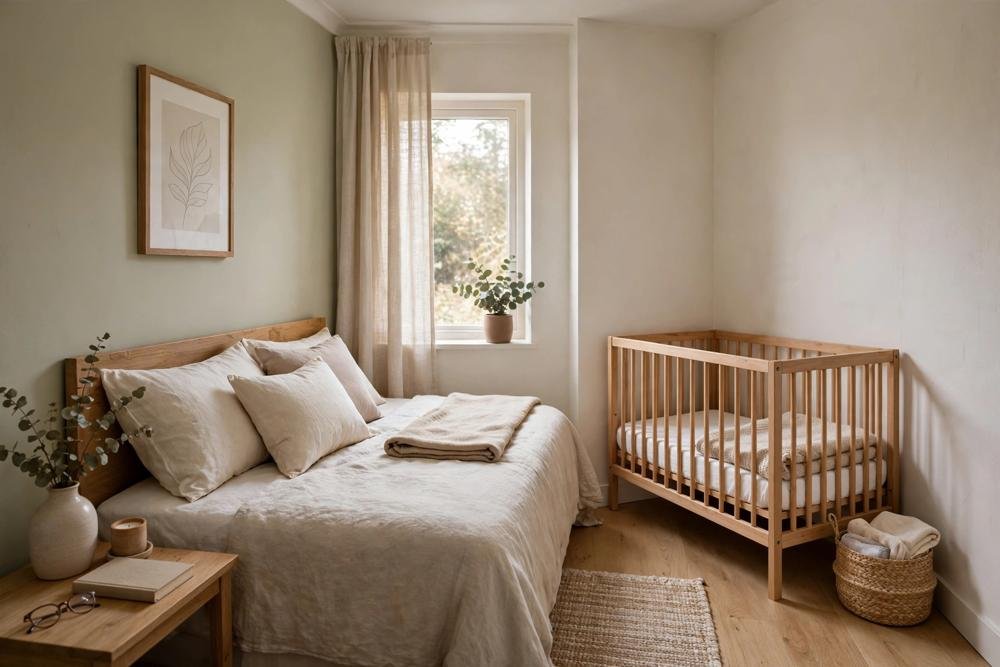
A compact crib, a mini crib, or a bassinet, depending on your baby’s age and size and the product guidance, fits a parents room much better than a full-size crib, and it leaves room for the parents bed and a walkway. Place it in a corner, away from windows, curtains, cords, heaters, and radiators, and away from shelves or wall decor that could fall. Keep the crib area clear: a firm mattress that fits snugly, a fitted sheet, and nothing else in the crib for sleep, no pillows, blankets, bumpers, or toys, following safe-sleep guidance.
Measure before you buy: crib length and width, plus space to walk around it, plus space to open drawers or doors nearby. A crib that blocks a wardrobe door or a walkway will be moved, and moved often, which is unsafe and tiring. If the room is very small, a mini crib that folds or a bassinet for the early months can work, then move to a larger crib when the baby outgrows it, rather than buying a full-size crib that does not fit now.
Keep the crib corner calm and consistent: same place every night, dim light, low noise, and a simple routine. A crib corner that changes every night, or that doubles as a storage pile during the day, will not feel like a sleep space. Keep a small basket nearby for a spare fitted sheet and a sleep sack, so a night change does not mean a trip across the room in the dark.
Check the crib regularly: slats, rails, and mattress fit, and no loose parts. Follow the manufacturer’s age, weight, and height limits, and move to the next sleep space when your baby reaches them, even if the crib still looks fine.
Idea 2: A Changing Station on a Dresser
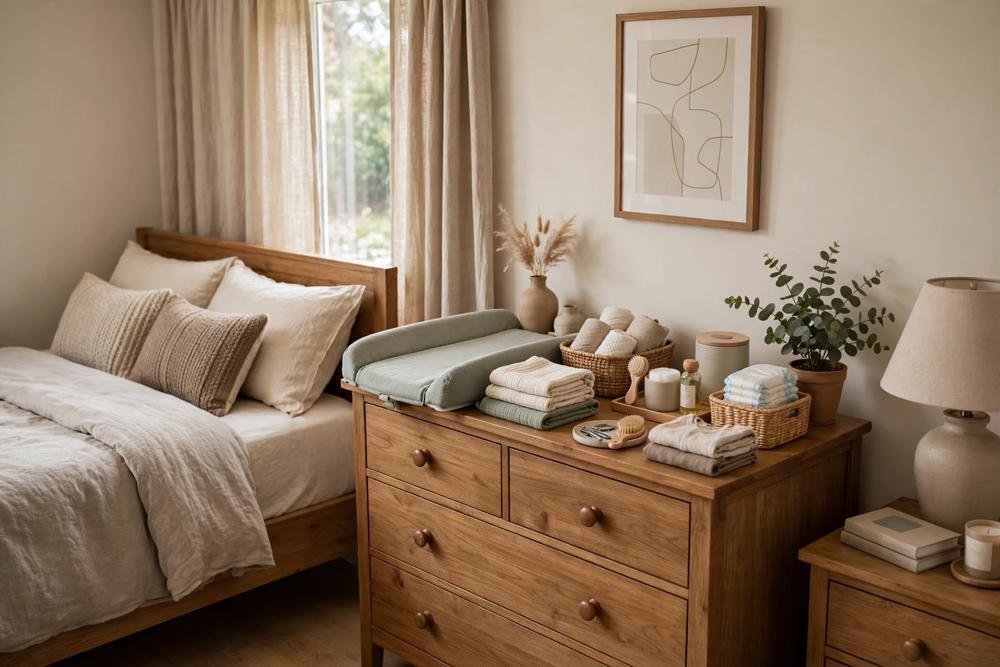
You do not need a separate changing table in a small parents room. A sturdy dresser with a changing pad on top, secured according to the pad and dresser instructions, works well, and the dresser drawers hold nappies, wipes, and clothes within reach. Choose a dresser that is stable, anchored to the wall if needed, and at a comfortable height, so you are not bending or reaching awkwardly during a change.
Keep changing supplies in the top drawer or in a small basket on the dresser, not scattered across the room: nappies, wipes, a change of clothes, and a small bag for soiled items. A changing station that is organised saves time at night, when you are tired and working in dim light, and it keeps the rest of the room tidy during the day.
Keep the changing area safe: never leave a baby unattended on a raised surface, even for a second, and keep the pad’s safety strap and the dresser’s stability in mind. Keep creams and small items out of reach, in a closed basket or drawer, not loose on the dresser top where a curious baby could grab them later.
If you have no dresser space, a small changing pad on a low, stable table, or a portable changing mat used on the bed, can work, with supplies in a nearby basket. The key is one fixed spot, with everything within reach, not a new setup every time.
Idea 3: Nursery Storage That Does Not Take Over the Room
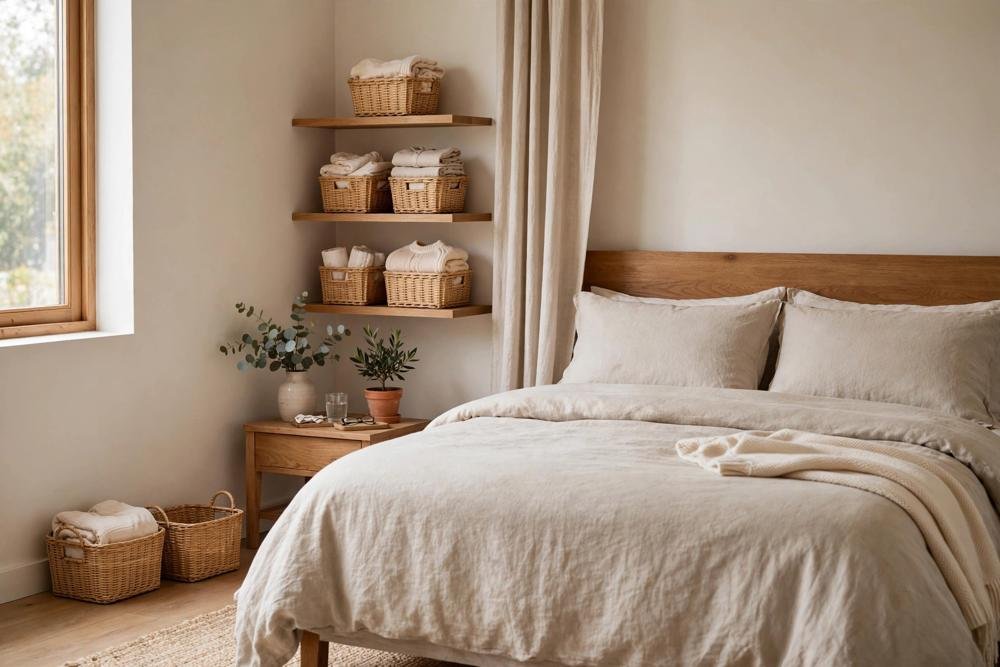
Nursery storage in a parents room should be small, closed, and near the crib and changing station, not spread across the whole room. Use baskets on shelves, labelled bins in a wardrobe, and a small basket by the bed for night essentials. Wall shelves, above adult reach and away from the crib, can hold spare clothes and supplies, but keep heavy items low and shelves away from the crib, so nothing can fall into it.
Sort by size and by use, not by colour or by buying a full set at once: newborn, 0 to 3 months, 3 to 6 months, and so on, with only the current size in the room and the next size in a labelled box elsewhere. Babies outgrow sizes quickly, and a room full of all sizes at once will feel crowded and make it hard to find what you need at night.
Use the space you already have: the top of a wardrobe, under the bed in flat boxes, and a door organiser for small items, rather than buying new furniture for every category. Keep a laundry basket for baby clothes separate from adult laundry, so small items do not get lost, and wash new clothes before first use according to the care labels.
Rotate storage as the baby grows: when a size is outgrown, move it out of the room, to storage or to donate, rather than keeping it in the parents room. A small nursery stays small only if things leave as regularly as they arrive.
Idea 4: A Quiet Nursing and Night Feed Corner

A quiet corner for night feeds does not need a full glider and ottoman set, though a comfortable chair helps. A sturdy armchair, a small side table, and a soft light, in a corner away from the door and the crib, give you a place to feed, settle, and rest without fully waking the room. Keep a small basket nearby with water for yourself, a muslin, and a spare top, so you do not need to get up and turn on bright lights.
Use dim, warm light for night feeds, not bright overhead light, because bright light can wake both you and the baby fully, making it harder to settle back to sleep. A small lamp with a warm bulb, a dimmer, or a night light, placed low and away from the crib, is enough to see safely without waking the room.
Keep the nursing corner calm and uncluttered: one chair, one table, one basket, not a pile of books, devices, and supplies that need tidying every morning. If the chair is also your reading chair during the day, keep the night basket separate, so night essentials are always in the same place, even if the chair is used for other things during the day.
If space is very tight, the parents bed itself can be the feed spot, with a firm pillow for support and a small side table within reach, rather than a separate chair that blocks a walkway. Safety first: follow safe feeding and sleep guidance, and do not fall asleep holding a baby in a chair or on a sofa, which carries risks; if you feel drowsy, place the baby back in the crib on their back.
What to Avoid
Do not place a crib near windows, curtains, cords, heaters, or shelves that could fall. Do not put pillows, blankets, bumpers, or toys in a crib for sleep. Do not leave a baby unattended on a raised changing surface. Do not buy a full nursery set for a small parents room before measuring, because it may block walkways and doors. Do not keep all baby sizes and supplies in the room at once, because it will feel crowded and hard to use at night. And do not use bright overhead light for night feeds, because it can wake everyone fully and make settling harder.
FAQs
How small can a nursery in a parents room be?
A corner for a compact crib or bassinet, a dresser top for changing, and a basket or two for storage is enough, if walkways stay clear and the crib area is safe. Measure the crib and the walkway before buying, rather than assuming a full-size crib will fit.
Is it safe for a baby to sleep in the parents room?
Many health authorities recommend a baby sleeps in the parents room for the first months, in their own crib or bassinet, on their back, on a firm mattress, with nothing else in the crib. Follow your local health authority’s current guidance and your product instructions.
Do I need a separate changing table in a small bedroom?
No. A sturdy dresser with a secured changing pad on top, with supplies in the top drawer or a nearby basket, works well and saves floor space. Never leave a baby unattended on a raised surface.
How do I keep a small nursery tidy?
Use small, closed storage near the crib and changing station, sort by current size only, and move outgrown sizes out of the room regularly. Keep night essentials in one basket, in the same place every night.
What light is best for night feeds?
Dim, warm light, low and away from the crib, enough to see safely without waking the room fully. Avoid bright overhead light at night, which can make settling back to sleep harder.
When should a baby move out of the parents room?
When the baby outgrows the bassinet or mini crib, or when the family is ready, following product age, weight, and height limits. There is no single age that fits every family; move when the sleep space no longer fits safely, or when you have a safe next room ready.
Conclusion
A small nursery in a parents room works when it is compact, safe, and organised: a clear crib corner away from windows and cords, a changing station on a dresser you already own, small storage near the crib, and a quiet dim corner for night feeds. Measure first, keep walkways clear, keep only the current size and night essentials in the room, and follow safe-sleep and product guidance for your specific items. Done that way, the parents room stays a bedroom for everyone, not a crowded nursery, and nights stay calmer for the whole family.