A forest themed bedroom for adults works best when it feels calm and grown-up, not like a themed kids room or a dark fairy forest. The answer is a restrained palette, warm wood, soft layered light, and one or two natural textures, kept in a small room by using green on bedding and cushions rather than on every wall.
Key takeaways
- Keep the look adult and calm: deep or sage green, warm wood, cream, and plain linen, with no cartoon trees or fairy lights on every wall.
- Three looks cover most rooms: misty morning for bright small rooms, dark forest for rooms with good daylight, and sunny woodland for warm family bedrooms.
- A renter-friendly canopy can be made from a curtain rod and sheer fabric, with no drilling into the ceiling.
- Lighting needs three layers: a soft main light, bedside lamps for reading, and a low warm accent light in the evening.
- Small rooms suit this look, because a green bed, wooden furniture, and plants make a tight bedroom feel sheltered rather than cramped.
1. Misty Morning: The Bright Small-Room Look
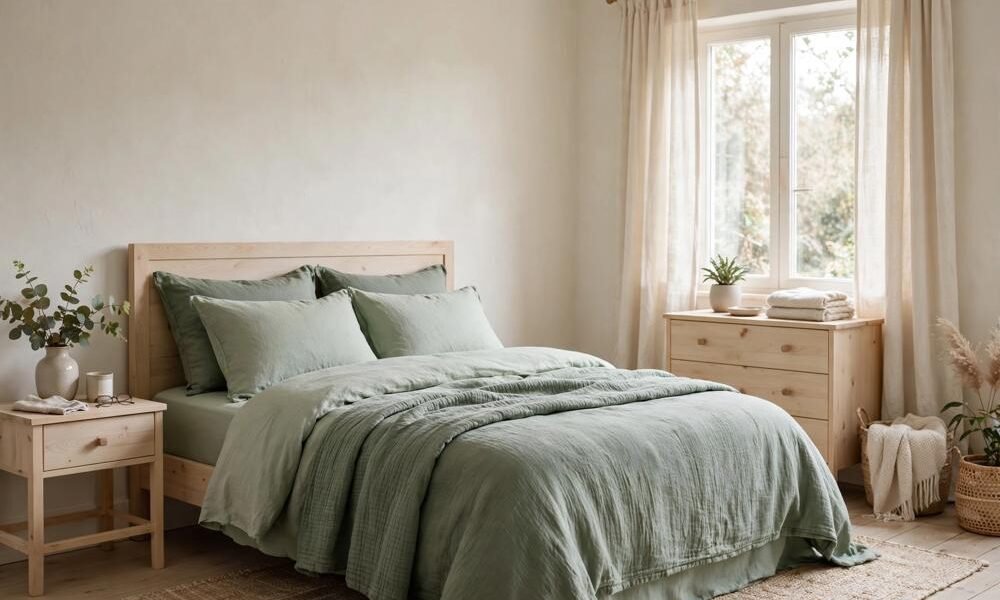
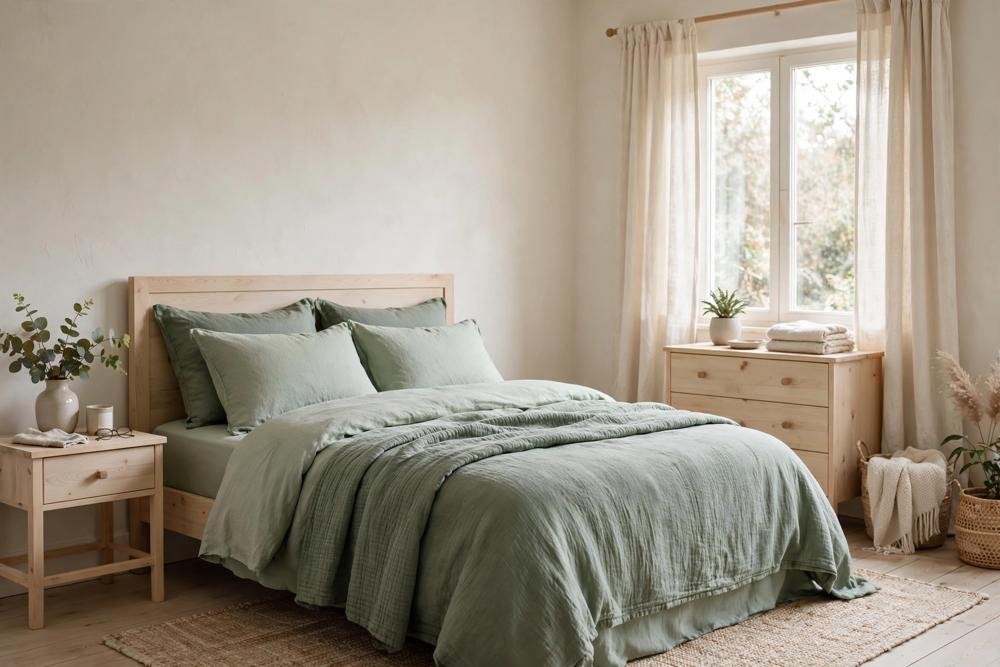
Misty morning is the safest forest bedroom for a small or north-facing room. It uses pale sage green, cream, pale wood, and soft grey, so the room stays light even with green bedding. Start with cream walls, which you probably already have, and add sage green bedding, a cream throw, and pale wooden bedside tables. A single leafy plant in a corner and a simple wooden frame complete the look without crowding the room.
This look works because the green is light enough to read as a colour accent rather than a dark wall. If your room has one small window, keep the curtains sheer and pale, so daylight reaches the bed. Avoid dark green curtains in this look, because they will block light and make the room feel smaller. A mirror opposite the window, in pale wood or a simple frame, will bounce light back into the room and make the green bedding look softer.
For renters, misty morning is almost entirely reversible. Bedding, cushions, a throw, plants, and a freestanding mirror need no permission at all. If you want a wall accent, a single peel-and-stick wallpaper panel behind the bed, or a large forest print in a simple frame, gives the effect without paint. Test any adhesive on a hidden spot first, and follow the maker’s removal instructions, so you do not damage the wall when you leave.
2. Dark Forest: Deep Green Without a Cave Feel
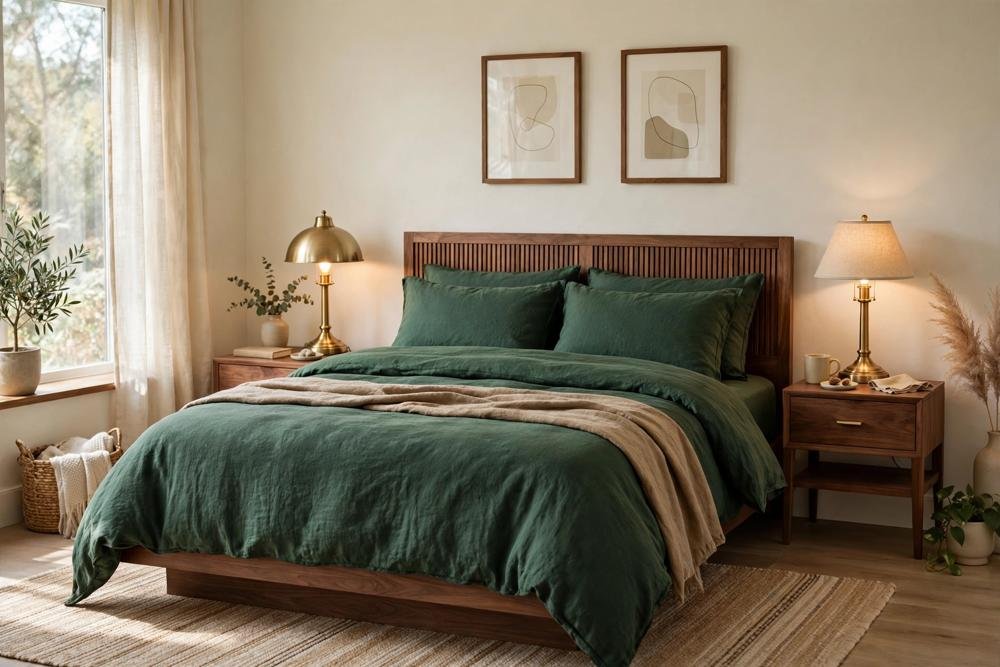
Dark forest is the most dramatic of the three looks, and it needs the most care in a small room. It uses deep forest green, warm walnut wood, cream, and brass, and it works best in a room with good daylight, a large window, or a large mirror. The rule is simple: keep dark green to one strong element, such as the bedding, one accent wall, or a green headboard, and keep everything else cream, pale, or warm wood.
If you paint, paint only the wall behind the bed, and keep the other walls cream. If you do not want to paint, a deep green duvet cover, green cushions, and a dark green throw give the same depth without a permanent change. Add warm walnut bedside tables or a wooden headboard, and use brass for small accents only, such as a lamp base or a picture frame. Too much brass will look shiny rather than warm.
Lighting is what stops a dark forest bedroom from feeling like a cave. Use warm white bulbs, not cool white, because cool light makes deep green look cold. Put a bedside lamp on each side of the bed if you have space, or one larger lamp on the side you read on, and add a low warm light in the evening, such as a small table lamp on a dresser. A mirror beside the bed or opposite the window will reflect lamplight and daylight, and keep the dark green from closing the room in.
3. Sunny Woodland: Warm, Soft, and Family Friendly
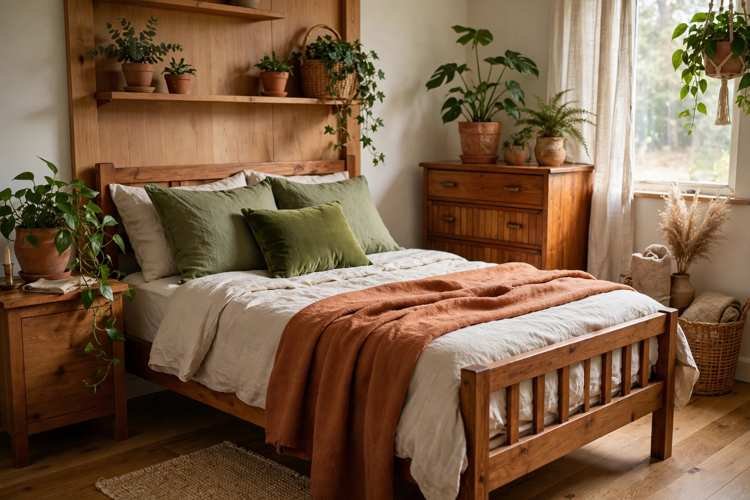
Sunny woodland is the warmest of the three looks, and it suits a bedroom that gets strong daylight or a bedroom shared with a partner who prefers a lighter, softer room. It uses moss green, honey wood, warm white, and a touch of terracotta, so the room feels like a sunlit clearing rather than a deep forest. Start with warm white walls, add moss green bedding, honey wood furniture, and one terracotta cushion or throw for warmth.
This look is forgiving in a small room, because none of the colours is very dark. A wooden bed frame, a honey wood dresser, and a woven basket for extra blankets give the woodland texture without heavy furniture. Plants suit this look well: a trailing pothos on a high shelf, a medium plant on a dresser, and a small plant on a bedside table. Keep the plant count to two or three in a small room, so the room does not feel crowded or hard to clean.
Sunny woodland also works well if you want to mix forest decor with bedding and furniture you already own. Cream or warm white bedding, a wooden frame, and a single moss green throw can be enough to change the mood of the room, and you can add more green gradually. If you share the room, agree on one green tone and one wood tone, and keep everything else neutral, so the room feels calm for both people.
4. A Renter-Friendly Bed Canopy From a Curtain Rod
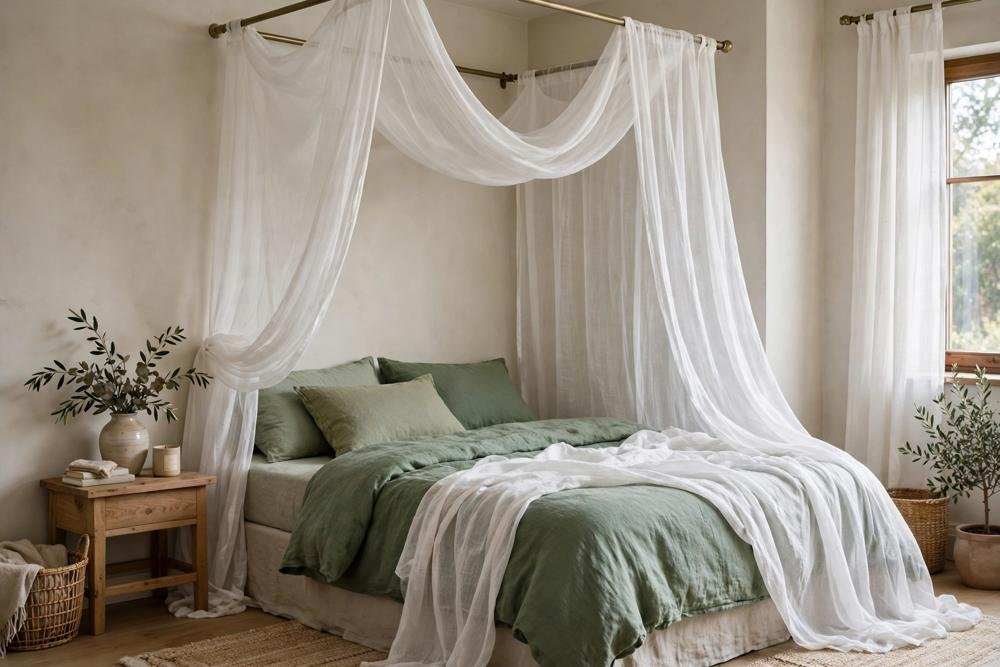
A bed canopy can make a forest bedroom feel sheltered and soft, and it can be done without drilling into the ceiling. The simplest renter method uses a curtain rod, sheer fabric, and existing wall fixings or a tension rod, depending on your room. Always check your lease, get landlord permission before drilling, and check the weight limit of any adhesive hook or tension fitting you use.
Method, step by step. First, measure the bed. For a standard double bed, about 54 inches wide, a rod about 60 to 72 inches long, mounted on the wall above the headboard, gives a gentle drape on each side. For a queen bed, about 60 inches wide, a rod about 72 to 84 inches long works well. Mount the rod about 12 to 18 inches above the top of the headboard, or about 75 to 85 inches from the floor if you have no headboard, so the fabric falls without touching your face when you sit up.
Second, choose sheer fabric in cream, pale sage, or soft white, in a lightweight cotton or linen blend. You will need two panels, each about 54 inches wide, so they meet in the middle and can be drawn to the sides. Hem or clip the fabric to the rod with curtain rings, so it can be removed for washing. Third, drape the panels so they fall beside the bed, not across it, and tie them back during the day with a simple cotton tie. This keeps the canopy as a soft frame, not a tent, and it keeps the bed easy to make.
If you cannot mount a rod on the wall, a freestanding canopy frame that stands on the floor, or a tension rod between two walls in a very small alcove, can work, but check that it is stable and does not block a door, a window, or an exit route. Never hang fabric from a ceiling light fitting, and keep all fabric away from lamps, candles, and heaters. Wash the fabric regularly, because sheer fabric collects dust, and take it down if it starts to feel heavy or gloomy in a small room.
5. Lighting Layers for a Forest Bedroom
A forest bedroom needs three layers of light, and each layer has a job. The main light should be soft and warm, not bright and white. A ceiling light with a warm white bulb and a simple shade, or a central pendant in wood or fabric, gives general light without glare. If your only ceiling light is harsh, use a lower wattage warm bulb and rely more on lamps in the evening.
The second layer is bedside light for reading. A bedside lamp with a warm white bulb, placed at about shoulder height when you sit in bed, lets you read without waking a partner. If you share the bed, a small clip-on reading light or a lamp with a focused shade is kinder than a bright lamp that lights the whole room. Keep the lamp base stable and the cord tidy, so it is not a trip hazard in a small room.
The third layer is low, warm accent light in the evening. A small lamp on a dresser, a warm LED string light along a shelf, or a mushroom lamp on a bedside table can give the room a forest glow. Use LED fairy lights and low-heat bulbs only, keep them away from fabric, dried plants, and curtains, and never leave them on unattended or overnight. In the morning, open the curtains fully and let daylight do the work, because a forest bedroom should feel fresh in the day and warm at night, not dark all the time.
6. Renter-Safe Walls, Shelves, and Storage
Renters can get a full forest bedroom without paint or permanent fixings, if they choose the right methods. Peel-and-stick wallpaper on one wall behind the bed is the strongest renter option, but test it first. Apply a small piece in a hidden spot, leave it for a few days, and remove it carefully to check for damage before you cover a whole wall. Follow the maker’s instructions for removal, and avoid peel-and-stick wallpaper in a damp room or on a freshly painted wall unless the maker says it is safe.
Removable shelving is the second renter tool. A leaning shelf that stands on the floor, a freestanding bookshelf, or a small wall shelf on adhesive strips rated for the weight can hold plants, books, and wooden accessories. Check each adhesive strip’s stated weight limit, do not overload a shelf, and anchor tall furniture to the wall if you can do so with permission, especially if you have children or pets. If you cannot drill, keep tall units low and stable, and put heavier items at the bottom.
Storage should stay natural. Woven baskets under the bed, a wooden box on a dresser, and a rattan tray for small items hide clutter while fitting the forest palette. Avoid shiny plastic boxes in a forest bedroom, because they break the natural texture story. If you must use plastic storage, hide it inside a basket or under the bed, so the visible room stays calm and natural.
7. Small-Room Layouts That Actually Work
A small forest bedroom needs a layout that leaves room to move, not just a colour scheme. Start by placing the bed against the longest wall, or under a window if the room is very narrow, and leave at least 24 inches of walkway on the side you get out of bed. If the bed must go against a wall, leave the other side clear and use a small bedside shelf instead of a table on the wall side.
Next, put the largest storage against one wall, not scattered around the room. A single wardrobe, a dresser, or a set of baskets in one place keeps the rest of the room open. Use the wall above the bed for a shelf or art, and the wall opposite the bed for a mirror, so the room feels balanced. Keep the floor visible where you can: a bed with legs, a small bedside table with legs, and a rug that does not cover the whole floor all help a small room feel larger.
Finally, keep the forest elements to a few strong pieces. A green bed, a wooden dresser, two plants, and warm lamps are enough. If you add a canopy, a wallpaper accent, and a large plant collection as well, the room can feel crowded. Add one element at a time, live with it for a week, and then decide whether the room needs more. A calm forest bedroom is better than a busy one, especially in a small space.
8. What to Avoid
Do not mix kids, fairy, and dark forest themes in one adult bedroom. A fairy light canopy, a cartoon tree decal, and a dark green wall together will feel confused, not magical. Pick one direction, misty, dark, or sunny, and keep the rest of the room plain.
Do not paint every wall dark green in a small bedroom, and do not combine dark walls, dark furniture, and dark bedding in the same room. One dark element is a statement; three dark elements can make sleep feel heavy and the room feel small.
Do not hang fabric, garlands, or dried plants near lamps, candles, or heaters. Dried material and sheer fabric catch fire easily, and a canopy should never touch a light bulb. Use LED lights, keep fabric clear of heat, and follow fixture ratings. Do not block a door, a window, or an exit route with a canopy frame, a tall shelf, or a large plant, especially in a shared building.
Conclusion
A forest themed bedroom for adults is calm, not costume. Choose one of the three looks, misty morning, dark forest, or sunny woodland, keep green to bedding and a few strong pieces in a small room, and layer warm light for reading and for evening. Use a curtain-rod canopy, peel-and-stick wallpaper, and removable shelving if you rent, and keep fabric and dried decor away from heat. Done that way, the bedroom feels like a sheltered clearing: green, warm, and easy to sleep in, without a remodel or a theme-park look.
Related reading
- Forest Home Decor: The Complete Guide to Bringing the Woods Indoors
- Sage Green Bedroom Ideas and Paint Colours That Work in Real Light
- Warm Neutral Bedroom Colour Schemes With Beige and Greige
Frequently Asked Questions
What is a forest themed bedroom for adults?
A forest themed bedroom for adults uses deep or sage green, warm wood, cream, and plants in a calm, grown-up way, without cartoon trees or fairy themes. The look is built from bedding, wood furniture, layered warm light, and a few natural textures, kept restrained in a small room.
How do I make a forest bedroom without painting the walls?
Use green bedding and cushions, warm wood furniture, plants, and warm lamps, which need no paint. For a wall accent, peel-and-stick wallpaper behind the bed or a large forest print in a simple frame gives the effect, but test any adhesive on a hidden spot first and follow the maker’s removal instructions.
How do I make a bed canopy without drilling into the ceiling?
Mount a curtain rod on the wall above the headboard, about 12 to 18 inches above the headboard, and drape two sheer panels from it so they fall beside the bed. Check your lease and get landlord permission before drilling, check weight limits for any adhesive fitting, and keep fabric away from lamps and heaters.
What lighting works best in a forest bedroom?
Three layers work best: a soft warm main light, bedside lamps for reading, and a low warm accent light in the evening. Use warm white bulbs, not cool white, because cool light makes deep green look cold. LED fairy lights are safe only if kept away from fabric and dried plants and never left on unattended.
Is a dark green bedroom too dark for a small room?
Not if you keep dark green to one strong element, such as the bedding or one accent wall, and keep the other walls cream with pale wood and a mirror. Good daylight and warm lamplight stop a dark forest bedroom from feeling like a cave, but painting every wall dark in a small room usually does feel gloomy.
What plants are best for a forest bedroom?
Choose plants that suit your light and your care routine. Low-light bedrooms suit snake plants, pothos, and ZZ plants. Bright bedrooms suit ferns and larger leafy plants if you have space. Keep the count to two or three in a small bedroom, so the room stays calm and easy to clean.