Introduction
A reading nook does not need a spare room, a bay window, or a large budget. In a small bedroom, it needs a comfortable seat, good light, and a home for your current book. When those three things are in place, even an unused corner can become the most loved spot in the room.
Start with the space, not the chair. Notice where light falls when you usually read, then choose a nook that fits that spot. A window nook suits a low window with a little depth. A corner chair suits an empty corner near a plug socket. An alcove bench suits a recess or wardrobe gap that can hold a seat with storage underneath.
This guide covers all three, plus a renter friendly version that needs no building work. It also covers minimum footprints, light, storage, and the trade offs that matter in a small room. Measure first, then set up your nook in a weekend without blocking the bed, door, or wardrobe. For the rest of the room, see Small Bedroom Ideas: The Complete Guide to Layout, Storage, Light and Style.
Key takeaways
- Build a window reading nook if the window is free.
- Set up a corner chair nook for the smallest rooms.
- Turn an alcove into a bench nook for built-in storage.
- Create a renter friendly nook with no building work.
Idea 1: Build a Window Reading Nook
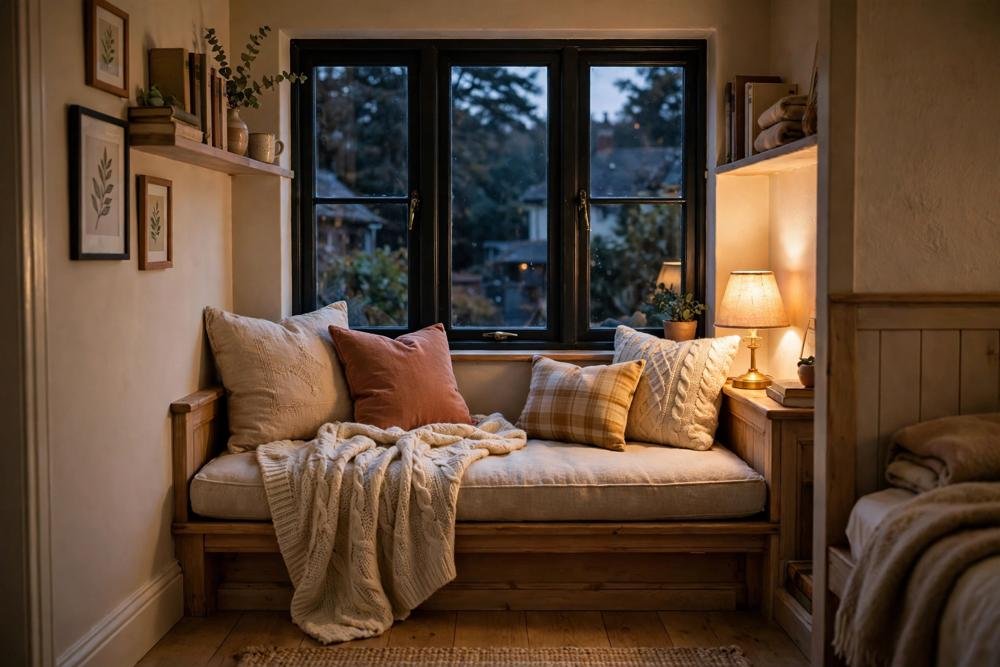
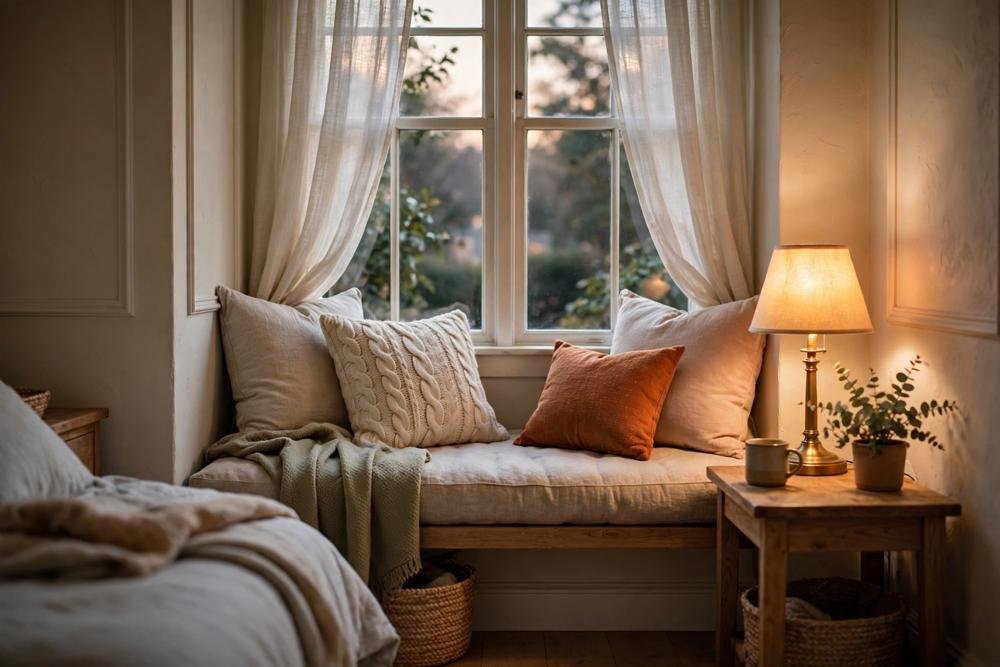
A window nook is a classic choice. Daylight is kind to the eyes, the view gives your mind a rest between chapters, and a bench under a window uses space that is often wasted. Keep the bench shallow and the seat firm enough to sit upright for an hour.
A bench about 45 to 55 centimetres deep is usually enough, with a seat height near 45 centimetres. If the sill is low, the bench can sit neatly underneath it. If the sill is high, do not raise the bench to meet it. Keep the seat comfortable and choose another wall if needed.
Use the space under the bench well. A hinged lid, cubbies, or baskets can hold books, a throw, and chargers without adding furniture. Keep only your current books in the nook. One firm base cushion, one back cushion, and one lumbar pillow are enough. Too many pillows leave nowhere for your elbows or your book.
Daylight fades, so add a small swing arm sconce or clip on light beside the window. It should shine from beside or slightly behind your shoulder, not from in front of you. Hang curtains wider than the window, or use a blind inside the frame, so the seat stays usable when the curtains close.
Idea 2: Set Up a Corner Chair Reading Nook
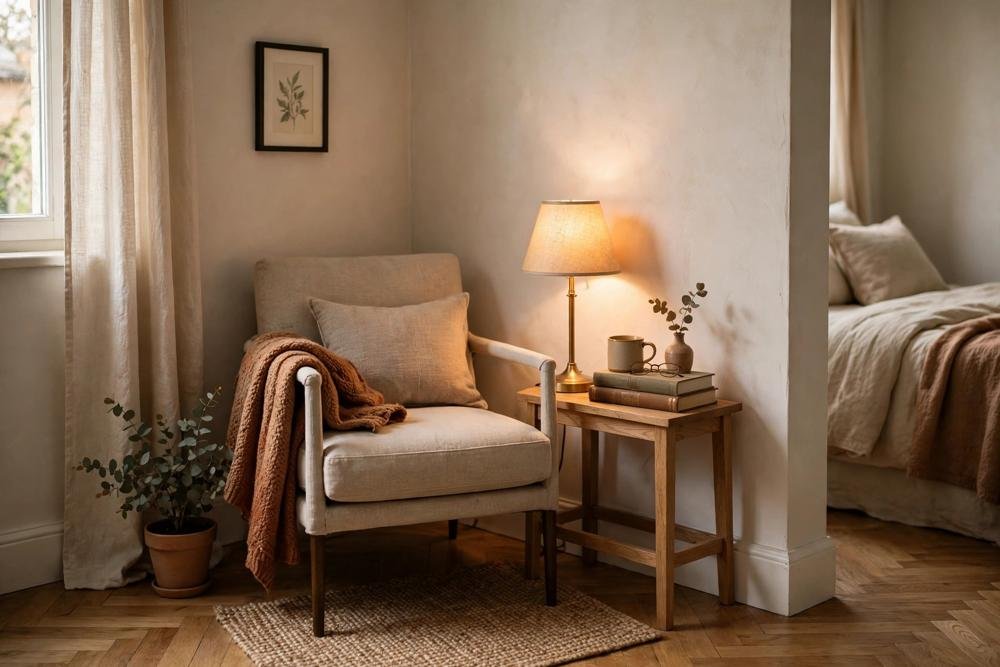
A corner chair nook is the easiest to create and often the best choice for a rented or already full room. You need a chair that fits, a light at the right height, and a surface within reach for a book and a drink.
Size matters more than style. Look for a narrow armchair or tub chair about 60 to 75 centimetres wide. Sit in it with a book before you buy if you can. A chair that feels fine for five minutes can feel stiff after forty minutes of reading.
Leave a clear entry path of at least 60 centimetres, so you can sit down and stand up without moving a table. If the chair is squeezed between bed and wall, it will become a clothes chair. Try the opposite corner, or swap a bulky bedside table for a wall shelf.
A table about 30 to 40 centimetres across is plenty, and a round table is easier to walk past than a square one. If even that is too much, a narrow wall shelf at elbow height will hold the essentials. For light, a plug in swing arm sconce beside the chair leaves the floor clear. Use a warm bulb, around 2700K, so evening reading feels calm.
Add one throw and one lower back cushion, then stop. A storage ottoman can double as a footrest, but measure chair plus ottoman together before you commit.
Idea 3: Turn an Alcove Into a Bench Nook
An alcove nook feels intentional because the walls frame the seat. Alcoves appear beside wardrobes, between cupboards, under sloped ceilings, or beside a chimney breast. If you have one, it may already be the right size for a bench.
Measure width, depth, height, plug sockets, radiators, and skirting boards first. A bench about 45 centimetres high and 50 to 60 centimetres deep works for most adults. The minimum footprint is roughly 90 centimetres wide by 50 centimetres deep, plus room to step in and out. If your alcove is narrower, a chair nook may fit better.
Storage is where an alcove bench earns its place. Drawers can hold spare bedding or out of season clothes. Cubbies suit books and baskets, but use matching baskets for anything you do not want on display. A hinged lid suits a deep alcove, while sliding drawers suit a shallow one.
Back support is often forgotten. A flat wall is not comfortable for long, so add firm cushions along the back, a padded panel, or a long bolster for renters. Keep any shelf above the bench shallow and reachable while seated. For light, use a wall light on each side or one swing arm light on your reading side, so the page is lit, not just the bench.
Idea 4: Create a Renter Friendly Nook With No Building Work
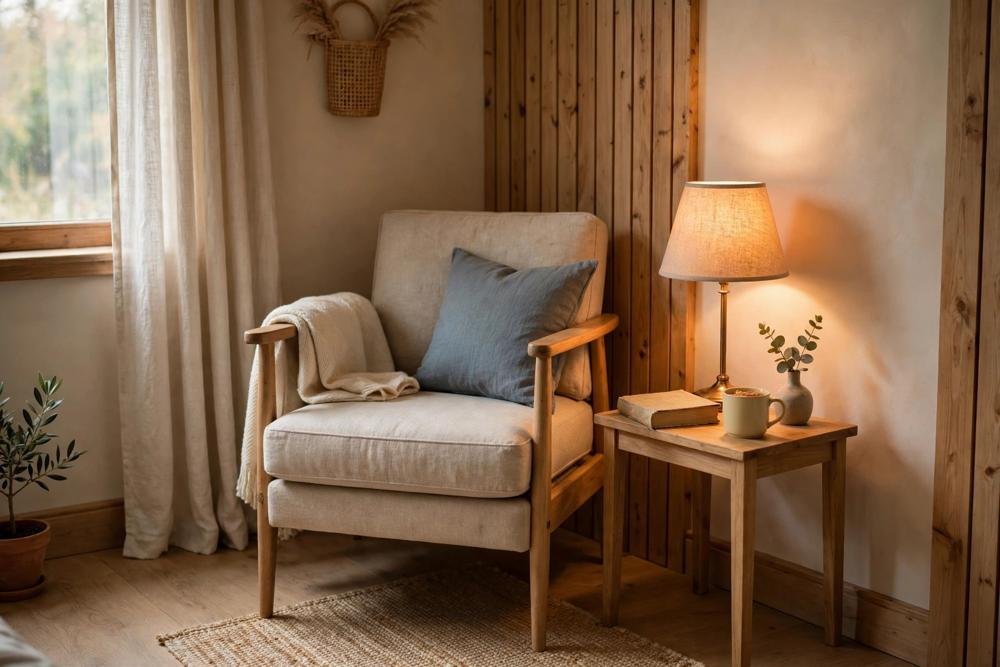
A renter nook uses furniture you already own plus a few portable pieces, and it can be taken apart in an afternoon. The goal is the same: a defined spot, a comfortable seat, good light, and a place for your book.
Start with a movable chair or storage bench. Place it near a plug socket, add a small table or stool, and give it a throw and cushion that belong to the nook, not to the bed. Those small signals mark it as a reading spot.
Use plug in lighting only, such as a swing arm sconce, clip on book light, or small table lamp. If adhesive hooks are allowed, test one on a hidden patch of wall first and check its weight limit. A rug under the chair, even a small one, marks the spot without fixing anything to the floor. A basket beside the chair can hold your book, charger, and throw.
Keep the nook to one chair, one light, one small surface, and one basket. The best part is that you can test it. Try one corner for a week, then another, and keep the spot you actually sit in.
How Much Space Do You Really Need
A window or alcove bench needs roughly 90 centimetres of width and 50 centimetres of depth, plus room to step in. A corner chair needs roughly 75 centimetres by 75 centimetres, plus a clear path. A side table adds about 30 to 40 centimetres, and a floor lamp adds a similar amount unless you use a wall light.
Mark the footprint on the floor with masking tape before you buy. Live with it for a day. Walk past it, open the wardrobe, and make the bed. If the tape gets in the way, the nook will too. Check door swing, drawer swing, and wardrobe doors as well.
If the numbers do not add up, do not force a chair into the room. A bench at the foot of the bed, a cushion on a wide windowsill, or a good backrest and lamp on the bed can work better than a cramped chair. If you also need a study spot in the room, see How to Fit a Desk in a Small Bedroom.
A Simple Light Plan for Evening Reading
Most reading happens in the evening, when a bedroom needs warm, focused light that does not disturb sleep. Keep the main room light soft and dim. Add a focused reading light beside the seat, at about seated head height, that shines onto the page. If you can, add a tiny warm glow elsewhere, such as a bedside lamp on low. For light that lets you read without waking anyone, see Best Bedroom Lighting for Reading in Bed Without Waking Anyone.
Position matters more than brightness. A light behind you casts your shadow on the page. A light in front of you shines into your eyes. A light from the side, slightly behind your shoulder, is usually most comfortable. A swing or tilt light is useful if you also read in bed.
Choose warm bulbs, around 2700K, for evening reading. A bulb above 4000K can feel harsh and make winding down harder. For shift workers or readers with a sleeping partner, a clip on light or directional lamp can light your book without lighting the whole room.
Storage That Keeps a Small Nook Tidy
A nook collects books, bookmarks, chargers, mugs, and throws fast. Give everything a small home. One basket for your current and next book, one shelf or cubby for a small stack, and one basket for a throw are usually enough. When you finish a book, move it to a main shelf the same week.
Use vertical space where you can, such as a narrow shelf above a bench or a slim bookcase in a corner. Do not overload a small room with shelves. One full shelf looks intentional. Under seat storage is ideal for spare bedding or books you are not reading now, while only your current book stays within reach.
What to Avoid
Do not choose a chair too big for the corner. If it blocks the wardrobe, door, or walkway, it will become a clothes chair, not a reading chair. Measure first, fall in love second.
Do not rely on the ceiling light alone. It creates shadows and lights the whole room when you only need one page lit. A focused reading light is the difference between reading for ten minutes and reading for an hour.
Do not fill the nook with decor before you test it. Start with seat, light, and a small surface. Add decor one piece at a time and remove anything that gets in the way. Also test for glare and draughts at your usual reading time. A sheer blind or heavier curtain can fix both without a renovation.
Do not copy a large room design into a small bedroom. Scale every piece down, keep walkways clear, and choose one focal piece, the chair or the bench, rather than three.
FAQs
How much space do I need for a bedroom reading nook?
A bench nook can work in about 90 centimetres of width and 50 centimetres of depth, and a corner chair nook in about 75 centimetres by 75 centimetres, plus a clear path to sit and stand. Mark the footprint with tape first and test the walkway, door swing, and wardrobe access.
What chair is best for a small bedroom reading nook?
A narrow armchair, tub chair, or well cushioned chair about 60 to 75 centimetres wide usually works best. It should support your back, let you sit upright with a book, and leave room to get in and out without moving furniture.
How do I light a reading nook without an overhead light?
Use a focused light beside the seat, at about seated head height, shining from the side or slightly behind your shoulder. A plug in swing arm sconce, clip on light, or small table lamp all work. Choose a warm bulb, around 2700K, for evening reading.
Can I create a reading nook in a rental bedroom?
Yes. Use a portable chair or storage bench, a plug in or clip on light, a small side table or stool, and a basket for books and a throw. A rug can mark the spot without fixing anything to the floor. Keep everything removable.
What is the cheapest way to make a reading nook in a small bedroom?
Start with what you already own. Move a comfortable chair near a plug socket, add a cushion and throw from another room, and use a lamp you already have. Spend first on light and comfort, not decor, because those make you actually use the nook.
Should a reading nook be by the window or in a corner?
It depends on your room and when you read. A window nook suits daytime reading and a low window with depth. A corner nook suits evening reading, a plug socket for a lamp, and a spot that does not depend on daylight. Try both for a few days and keep the one you sit in.
Conclusion
A small bedroom reading nook is not about size, budget, or a perfect photo corner. It is about a seat that fits, light that falls on the page, and a small, tidy home for your current book. Choose the type that matches your room, whether a window bench, corner chair, alcove bench, or portable renter setup, and measure it before you buy.
Start simple. Put the seat in place, add a focused warm light, and use it for a week. Adjust one thing at a time, such as the light, a cushion, or a basket, but do not add furniture until the basic nook feels easy to use. A few quiet pages in a corner you love can turn a room you only sleep in into a room you enjoy spending time in.