A forest kitchen does not need new cabinets, new worktops, or a remodel. The answer is a calm green accent, warm wood accessories, living herbs, and soft light, added to the kitchen you already have, with renter-friendly versions for every change that would normally need paint or drilling.
Key Takeaways
- Forest kitchen decor works without a remodel: change colour, wood, plants, and hardware, not the kitchen itself.
- Painted cabinets suit owners, wrapped or peel-and-stick cabinets suit renters, and both need a test patch first.
- Butcher block boards, wooden utensils, and open wood shelving give the woodland feel faster than any single large change.
- Herbs and plants belong on a windowsill or a shelf away from the stove, not above heat or steam.
- Keep dried decor, pinecones, and garlands away from the stove, and never use open flames near them.
Cabinets: Painted, Wrapped, and Left Alone
Cabinets set the tone of a kitchen, and they are also the change most people fear. You do not need to replace them. For owners, painting cabinets in a forest or moss green is the strongest forest change, but it is also the most work. If you paint, remove the doors and hardware, clean and sand lightly, use a primer made for cabinets, and paint in thin coats. Paint only the lower cabinets or one run of cabinets first, and keep the upper cabinets cream or pale wood, so a small kitchen stays bright.
For renters, peel-and-stick cabinet wrap or removable vinyl in a wood or green tone is the safer version. Test it first: apply a small piece inside a door or on a hidden edge, leave it for a few days, and remove it carefully to check for damage. Follow the maker’s instructions, avoid wrapping near the oven or hob where heat can loosen adhesive, and get landlord permission before you change a permanent finish. If wrapping feels risky, leave the cabinets alone entirely and get the forest look from accessories instead. A kitchen with cream cabinets, wooden boards, green herbs, and a green tea towel can feel just as woodland as a painted kitchen, without any risk to your deposit.
If your cabinets are already wood, you may need no change at all. Clean them, oil or wax them if the maker recommends it, and change the hardware instead. New wooden knobs, brass pulls, or simple black handles can change the whole kitchen for a small cost, and they are easy to swap back when you move.
Worktops, Boards, and Wood Accessories
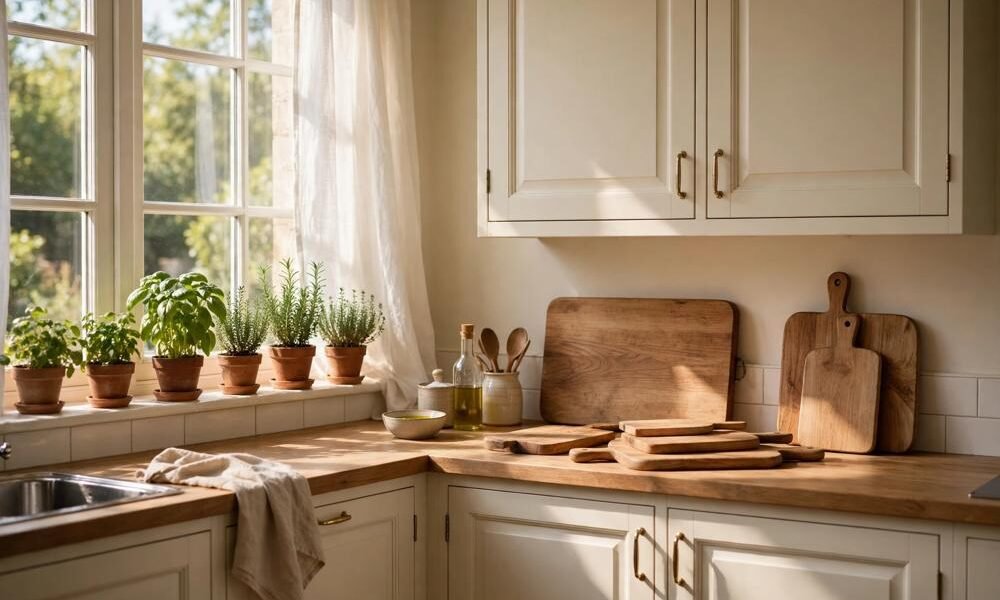
Wood is the fastest way to make a kitchen feel like a forest, because it is warm, natural, and useful every day. Start with a butcher block board on the worktop, wooden utensils in a crock, and a wooden tray for oils and spices. A butcher block board can also cover a stained or dated section of worktop, and it gives you a beautiful surface for chopping and serving.
Next, add wood where you see it most. A wooden bread box, a wooden knife block, a set of wooden spoons, and a wooden fruit bowl all add texture without clutter, if you keep the count low. In a small kitchen, choose one wooden hero, such as a large board or a bread box, and keep the rest simple. Too many wooden items in a tiny kitchen can feel crowded, especially if they are all different wood tones. Pick one warm wood tone and repeat it, rather than mixing pale, honey, and dark wood in the same view.
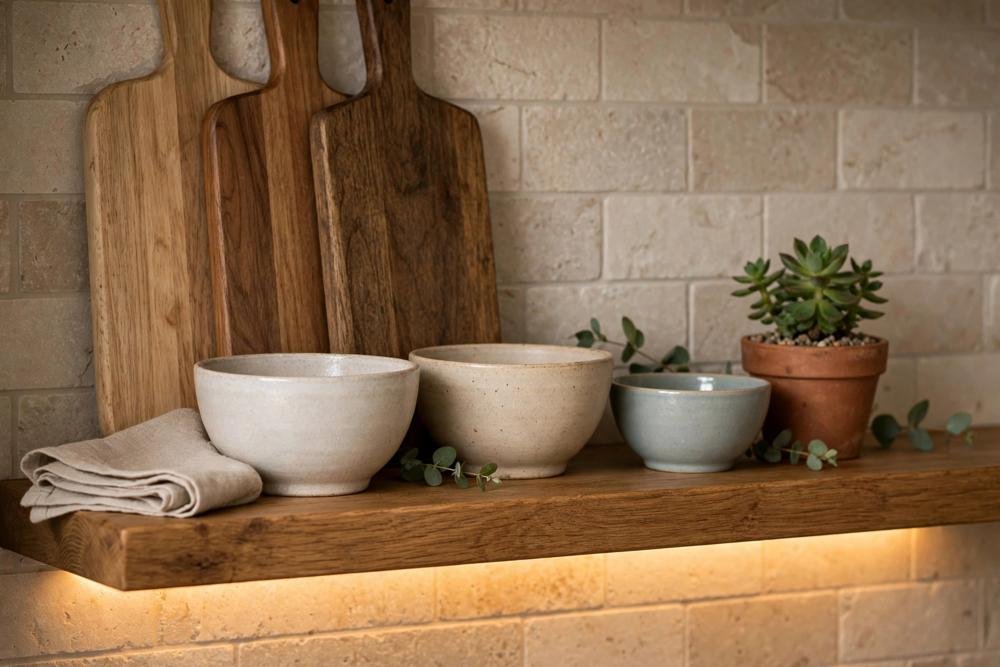
Open shelving in wood suits a forest kitchen, but only if you have the wall space and the shelf will not be overloaded. A single wooden shelf for everyday bowls, mugs, and a plant can open up a small kitchen, while a wall of shelves can feel busy. Check the weight limit of any shelf or adhesive fitting, anchor a wall shelf properly with permission if you drill, and keep heavy items low. If you rent and cannot drill, a freestanding wooden shelf unit or a wooden trolley gives the same warm wood without wall fixings.
Herbs, Plants, and Green That You Can Eat
Herbs are the most practical plants for a forest kitchen, because they are green, fragrant, and useful. Basil, mint, parsley, chives, and rosemary all grow well on a bright windowsill, in small pots with drainage. Mint grows fast and spreads, so keep it in its own pot, not in a shared planter. Basil likes warmth and regular water, while rosemary likes drier soil and good light, so check the needs of each herb rather than watering them all the same way.
Place herbs where they get light but stay away from heat and steam. A windowsill is ideal, a shelf beside a window is good, and a spot directly above the hob is not, because heat and steam will stress the plants and dry the soil quickly. Keep herbs away from the sink splash zone if the pots have no drainage tray, and wipe leaves gently if they collect cooking grease. If your kitchen has little natural light, a small grow light on a shelf can help, but follow the maker’s instructions and keep it away from water.
Larger plants suit a forest kitchen too, if you have floor or shelf space. A pothos trailing from a high shelf, a small fern on a windowsill, or a snake plant in a corner all add woodland green without taking worktop space. Keep plants out of walkways, away from the stove, and away from any place where leaves could fall into food. Wash your hands after handling soil, and keep plant pots clean, so the kitchen stays hygienic as well as green.

Hardware Swaps and Small Changes That Matter
Hardware swaps are the smallest change with the largest effect in a kitchen. Changing cabinet knobs and drawer pulls from plain or dated fittings to wooden knobs, brass pulls, or simple matte black handles can make old cabinets look intentional. Keep the old hardware in a labelled bag, so you can put it back when you move, and check that new screws fit the existing holes before you buy a full set.
Other small changes matter just as much. A green tea towel, a forest-green apron, a wooden soap dish by the sink, and a simple ceramic vase with a few fresh stems can change the mood of a kitchen in an afternoon. A plain cream or moss green curtain on a kitchen window, a woven runner on the table, and a wooden fruit bowl on the worktop all add forest texture without a remodel.
Lighting also matters in a kitchen, but it must stay practical. Warm white bulbs under cabinets or in a pendant over a table make wood and green look warm, while cool white light can make a forest kitchen feel clinical. If you use a pendant, keep it away from steam and heat, follow the fixture rating, and choose a shade that is easy to clean. Battery-operated LED lights under a shelf can help in a rental, but keep them away from the hob and follow the maker’s instructions.
Mushroom and Pinecone Accents, Used Lightly
Mushroom and pinecone accents are part of the forest trend, and they can be charming in a kitchen if they are used very lightly. One small mushroom lamp on a shelf away from heat, one pinecone in a bowl on a dining table, or a single small mushroom planter on a windowsill is enough. Do not fill a kitchen with mushroom ornaments, pinecone garlands, and dried branches, because a kitchen needs clear worktops, clean surfaces, and space to cook.
If you collect pinecones yourself, check local rules first, never take from protected land, and clean them first to remove insects, following a reliable method before you use any temperature or time. Keep pinecones and dried decor well away from the stove, the oven, and any open flame. Dried material catches fire easily, and a kitchen is the worst place for a fire risk. In a kitchen, fresh herbs, wooden accessories, and a single living plant are safer and more useful than dried decor.
A mushroom lamp, if you use one, should be a small accent on a shelf or a side table, not a main kitchen light. Keep it away from water, steam, and heat, and use LED and low-heat bulbs only. If the lamp is near a sink or a worktop where it could be splashed, choose a different spot. The kitchen must stay safe and easy to clean first, and decorative second.
Colour in a Forest Kitchen
Colour in a forest kitchen should be calm and practical. Cream, warm white, and pale wood are the best base colours, because they keep a small kitchen bright and show dirt less harshly than pure white. Forest or moss green works as an accent: green cabinets on one run, a green tea towel, green herbs, or a green rug runner. A single green wall, if you have one that is not tiled, can work in a larger kitchen, but in a small kitchen, green on bedding-style textiles and plants is usually enough.
Avoid painting a kitchen dark green on every wall, and avoid dark green worktops in a small kitchen, because they can make the room feel smaller and show water marks and crumbs more clearly. If you love deep green, use it on lower cabinets only, with cream upper cabinets and a pale worktop, so the room stays light. Terracotta, brass, and warm wood all pair well with forest green, and they add warmth without clutter.
If your kitchen is already tiled in a strong colour, work with it rather than fighting it. A cream tile kitchen suits forest green and wood perfectly. A white tile kitchen suits moss green and honey wood. A coloured tile kitchen, such as blue or pink, can still take a forest look if you keep the forest elements to wood, herbs, and cream textiles, rather than adding another strong colour on top.
Cost Table: Three Budgets Without a Remodel
Prices below are approximate ranges only, and they vary by shop, size, and material. Check the current price before you buy, and start with the smallest budget that gives you the look you want.
Cost table:
- Under $50: wooden board, wooden utensils, green tea towels, herb pots and herbs, a small plant. This budget gives a clear forest feel in an afternoon, with no paint or drilling.
- Under $200: add a wooden shelf unit or trolley, new cabinet hardware, a pendant or under-shelf light, a larger plant, and a woven runner. This budget suits a kitchen you plan to stay in for a while, and it is still fully reversible if you keep old hardware.
- Over $200, still no remodel: add cabinet paint or wrap for one run of cabinets, a butcher block worktop section, a larger wooden shelf, and a set of ceramic bowls and mugs. This budget suits owners or long-term renters with permission, and it should be done slowly, one change at a time.
Start with the under $50 plan, live with it for a few weeks, and then decide whether you need more. A forest kitchen that grows slowly, with pieces you use every day, will feel more like a home than a kitchen redecorated in a weekend with items you never touch.

Do Not Do in a Kitchen
Do not use open flames near dried decor, pinecones, garlands, fabric, or paper. Candles, oil burners, and open flames belong away from the stove, away from curtains, and never near dried plant material. If you use candles in a kitchen dining corner, keep them on a stable, heatproof surface, away from fabric and plants, and never leave them unattended.
Do not place flammable dried decor near the stove, oven, or hob. Pinecones, dried herbs hung above a hob, garlands, and dried flower bunches can catch fire from heat or a spark, even if they look dry and harmless. Keep dried decor in a dining area or on a shelf far from cooking heat, or use fresh herbs and living plants instead.
Do not hang fabric, garlands, or fairy lights above the hob or near a gas flame. Fabric can catch fire, and fairy lights can melt or short if they get hot or wet. Use LED lights only where the maker says they are safe, keep them away from heat and water, and follow fixture ratings in kitchens. Do not block a door, a window, or an exit route with a trolley, a shelf unit, or a large plant, and keep walkways clear so you can move safely while cooking.
Conclusion
A forest kitchen without a remodel is built from small, useful changes: green on one run of cabinets or on textiles, warm wood boards and accessories, living herbs on a windowsill, and a hardware swap that makes old cabinets feel intentional. Keep dried decor and open flames far from the stove, keep plants away from heat and steam, and start with the under $50 plan before you spend more. Done that way, the kitchen feels like a woodland clearing, warm, green, and easy to cook in, without new cabinets or a builder.
Related Reading
- Forest Home Decor: The Complete Guide to Bringing the Woods Indoors
- Forest Themed Bedroom Ideas for Adults
- Kitchen Island Seating and Breakfast Bar Ideas
Frequently Asked Questions
Can I get a forest kitchen look without a remodel?
Yes. Change colour, wood, plants, and hardware, not the kitchen itself. Green textiles and herbs, wooden boards and utensils, a hardware swap, and warm lighting give a clear forest feel, and painted or wrapped cabinets are optional, not essential.
Should I paint or wrap my kitchen cabinets for a forest look?
Owners can paint cabinets in forest or moss green, starting with lower cabinets only and keeping upper cabinets cream. Renters should use peel-and-stick wrap only after a test patch, away from oven heat, and with landlord permission. If wrapping feels risky, leave cabinets alone and use accessories instead.
What plants work best in a forest kitchen?
Herbs work best, because they are useful and green. Basil, mint, parsley, chives, and rosemary grow well on a bright windowsill, in pots with drainage. Keep mint in its own pot, keep herbs away from hob heat and steam, and check each herb’s water and light needs rather than treating them all the same.
Is it safe to use pinecones and dried decor in a kitchen?
Only far from heat. Pinecones and dried decor catch fire easily, so keep them away from the stove, oven, hob, and open flames. Do not hang dried herbs or garlands above a hob, and do not use candles near dried material. Fresh herbs and living plants are safer in a kitchen.
How much does a forest kitchen makeover cost without a remodel?
Prices vary, but a clear forest feel is possible under $50 with a wooden board, utensils, tea towels, and herb pots. Under $200 adds hardware, a shelf unit or trolley, and lighting. Over $200, still without a remodel, can include cabinet paint or wrap and a butcher block section, done slowly and with permission where needed.
What colours suit a small forest kitchen?
Cream, warm white, and pale wood are the best base colours, because they keep a small kitchen bright. Forest or moss green works as an accent on textiles, herbs, or one run of cabinets. Avoid dark green on every wall or worktop in a small kitchen, because it can make the room feel smaller.