Mushroom decor is the most whimsical part of a forest home, and the easiest to overdo. One mushroom lamp, one mushroom print or one small mushroom accent can make a room feel magical, while a room full of mushrooms on every surface will feel like a display, not a home. The secret is to treat mushrooms as an accent, in the same green and wood palette as the rest of the room, and to let the rest of the room stay calm.
Key takeaways
- Mushrooms work best as one accent per room, such as a lamp, a print or a small shelf piece, not as a theme on every surface.
- Mushroom lamps should be LED and low-heat, with safe placement away from fabric, paper and dried material.
- Mushroom prints, textiles and ceramics in soft, natural colours suit a forest home better than bright, cartoon mushrooms.
- Real mushrooms are for nature, not for decor: never eat a wild mushroom, and do not use foraged mushrooms as home decor.
- A mushroom accent should match the room palette, green, cream and warm wood, rather than introducing a new bright colour.
- Small rooms suit small mushroom accents, such as a lamp on a shelf or a print on a wall, not a large mushroom display.
- Keep mushroom decor easy to clean, easy to move and easy to remove, so the room stays liveable.
- One or two mushroom pieces per home, in different rooms, is usually enough; a mushroom in every room is not.
1. Mushroom Lamps: The Hero Accent, Used Safely
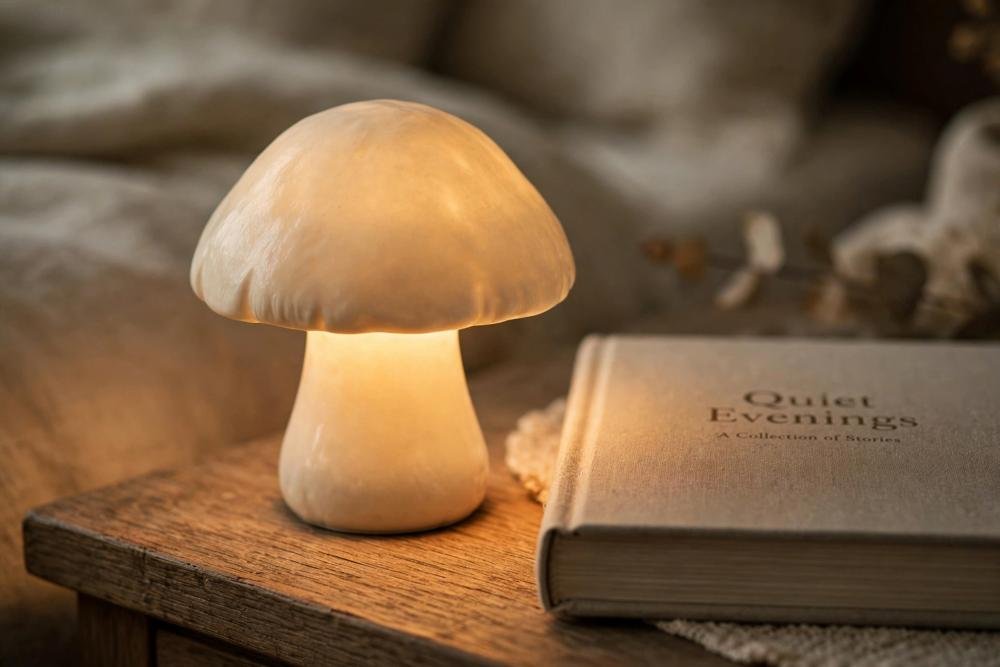
A mushroom lamp is the classic mushroom decor piece, and the best place to start. A small mushroom lamp on a bedside table, a shelf or a desk, with a warm, low-heat LED light, will give a soft, woodland glow in the evening, without needing a whole room of mushrooms. A lamp with a warm bulb, a soft shade and a stable base is better than a lamp that is bright, top-heavy or hard to clean.
Safety matters with any lamp, especially near fabric, paper and dried material. Use LED and low-heat lights, keep a mushroom lamp away from curtains, throws, dried leaves and pinecones, and keep it where it will not be knocked by doors, pets or children. A lamp that is stable, with a cord that is not a trip hazard, and with a bulb that can be replaced, is a better buy than a lamp that is beautiful but unsafe or hard to maintain.
A mushroom lamp should also suit the room, not fight it. A soft, natural mushroom lamp, in cream, sage or warm wood tones, will suit a forest living room or bedroom, while a bright, cartoon mushroom lamp will suit a child’s room better than an adult room. In a small room, one small mushroom lamp is enough; two or three lamps together will make the room feel themed, not calm. A mushroom lamp that is used every evening, and loved, is a better mushroom lamp than one that is only for show.
2. Mushroom Prints and Art: Whimsy on the Wall
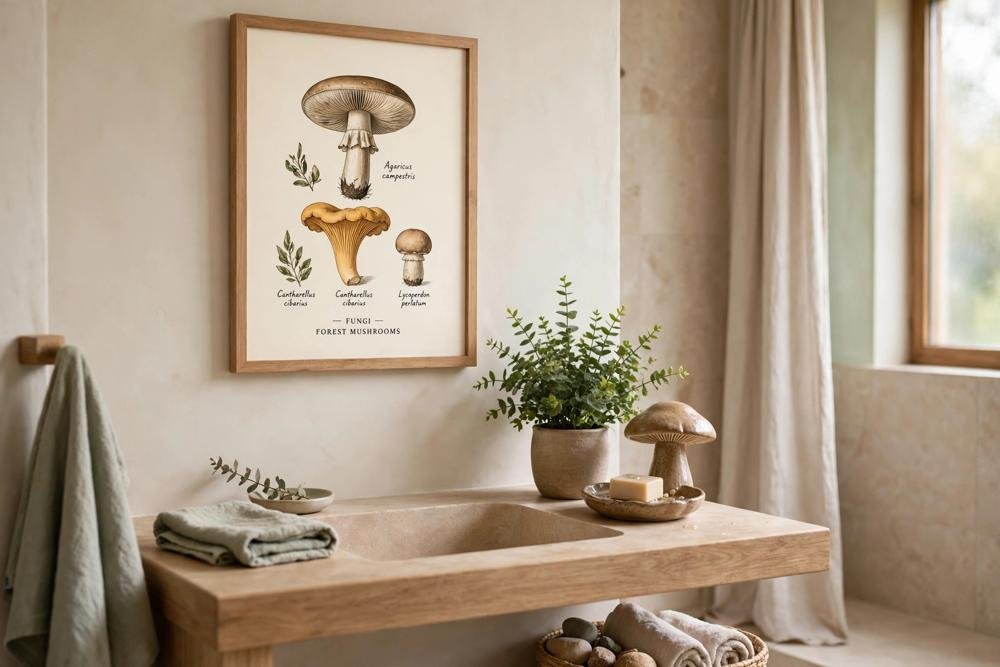
Mushroom prints and art are a calm way to add whimsy, without a new object on every surface. A botanical mushroom print, a framed mushroom illustration or a large mushroom photograph, hung at eye level, can anchor a wall, give a room character and be removed without a trace, which makes it ideal for renters. A print in soft, natural colours, with green, cream and warm wood, will suit a forest home better than a bright, cartoon print.
Choose one mushroom print per room, in a simple wooden frame, with glass to protect it from dust and handling. A print hung away from direct sunlight will fade slower, because sunlight fades green and soft colours quickly, and a print hung away from radiators and damp walls will last longer. A mushroom print on a shelf, leaning against a wall, is a renter-friendly option that needs no drilling at all.
Mushroom art can also be made at home, from a pressed leaf frame, a botanical print or a simple mushroom drawing, if it suits your skill and taste. A home-made mushroom print, in the same palette as the room, can be more personal than a bought print, and it can be changed easily. A mushroom print should be a piece you enjoy looking at every day, not a piece that is only for a photo, so choose a print that suits the room, not just the trend.
3. Mushroom Textiles: Cushions, Throws and Bedding
Mushroom textiles are a soft way to add whimsy, because they can be changed, washed and removed easily. A mushroom cushion cover, a mushroom throw or a mushroom bedding set, in soft, natural colours, can give a bedroom or living room a whimsical touch, without needing a new piece of furniture. A single mushroom cushion, with the rest plain in cream, green or natural linen, is usually enough; a mushroom sofa, mushroom bedding and mushroom curtains together will feel busy.
Choose washable mushroom textiles, because cushion covers, throws and bedding will need cleaning, especially in a home with pets or children. A mushroom cushion cover that can be washed, a throw that can be cleaned and a bedding set that can be changed with the seasons are all better buys than mushroom textiles that cannot be washed, however beautiful they are at first. A mushroom textile in a small, natural pattern, such as a small mushroom, a leaf or a fern, will suit a forest home better than a large, bright mushroom pattern.
In a bedroom, mushroom bedding should be the accent, not the whole room. A mushroom duvet cover, with plain green or cream pillows, or a mushroom cushion on a plain green bed, will give whimsy without making the room feel themed. In a living room, a mushroom cushion on a green sofa, with a wool throw, will give the same effect. A mushroom textile should be a textile you enjoy using every day, not one you are afraid to sit on or sleep in.

4. Mushroom Ceramics and Small Accents
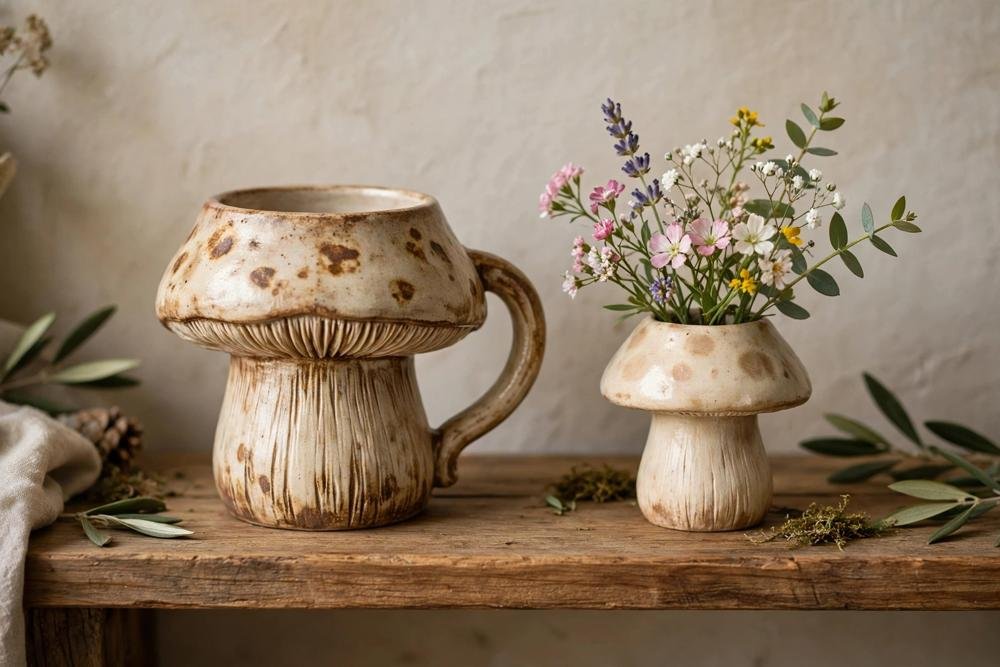
Mushroom ceramics and small accents are the easiest mushroom decor to overdo, because they are small, cheap and easy to buy. A mushroom mug, a mushroom vase, a mushroom candle holder or a small mushroom ornament, on a shelf or a table, can be a charming accent, if it is one piece, in the same palette as the room. A shelf full of mushroom ornaments, however, will feel like a collection, not a home, and it will collect dust and be hard to clean.
Choose one or two mushroom ceramics, in soft, natural colours, with a useful purpose, such as a mug, a vase or a trinket dish, rather than a purely decorative ornament. A mushroom mug that is used every morning, a mushroom vase with fresh flowers, or a mushroom dish for keys, will feel part of the home, while a mushroom ornament that is only for show will feel like a display. A mushroom ceramic should be sturdy, easy to clean and easy to move, so it can be used, cleaned and enjoyed, not just looked at.
Keep mushroom accents away from heat and flames. A mushroom candle holder should only be used with LED and low-heat lights, never an open flame near dried material, fabric or paper, and a mushroom ceramic should be kept where it will not be knocked by doors, pets or children. A mushroom accent that is safe, useful and easy to clean is a better accent than one that is beautiful but fragile or unsafe.
5. Mushroom Shelves and Displays: One Shelf, Not a Shrine
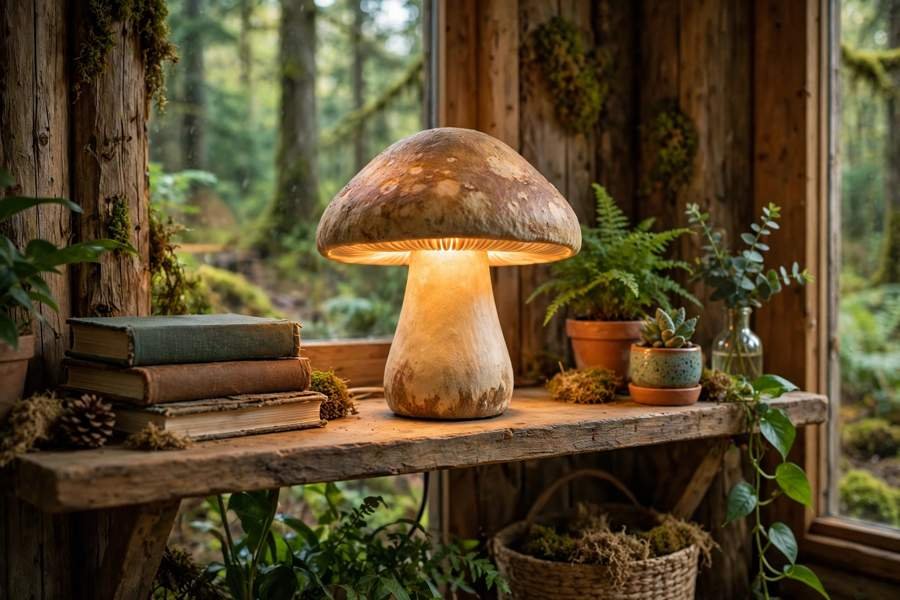
A mushroom shelf can be a beautiful display, if it is one shelf, with one or two mushroom pieces, plants and books, rather than a whole wall of mushrooms. A wooden shelf, with a mushroom lamp, a plant, a book and a small mushroom ceramic, will give a woodland feeling, with height, green and warmth, without needing many pieces. A shelf with a mix of tall, trailing and small plants, plus one mushroom piece, will give a layered, lived-in look.
A mushroom display should be planned for light, cleaning and safety. Place a mushroom lamp where it gives warm light, but away from fabric, paper and dried material, place plants where they get light, and keep the shelf clear enough to clean, with a tray or a saucer under each pot, so watering does not damage wood. A shelf that is too crowded will be hard to clean, hard to enjoy and easy to knock, especially in a home with children or pets.
In a small room, a mushroom shelf should be low and open, rather than tall and closed, because it lets light through and gives plants room to trail. A low, open shelf is better than a tall, closed bookcase for a mushroom display, because it keeps the room feeling open. A mushroom shelf should be a shelf you enjoy looking at and using every day, not a shrine that you are afraid to touch.

6. Mushroom Decor by Room: Living Room, Bedroom and Bathroom
In a living room, mushroom decor should be one accent, such as a mushroom lamp on a shelf, a mushroom print on a wall, or a mushroom cushion on a green sofa, with the rest of the room calm in cream, green and warm wood. A living room with a mushroom lamp, a plant and a wooden tray will feel woodland, while a living room with mushrooms on every surface will feel themed. A mushroom lamp in a living room should be LED and low-heat, with safe placement away from curtains, throws and dried material.
In a bedroom, mushroom decor should be soft and restful, such as a mushroom lamp on a bedside table, a mushroom print on a wall, or a mushroom cushion on a green bed, with cream walls and sage bedding. A bedroom with a mushroom lamp and a mushroom print will feel whimsical, while a bedroom with mushroom bedding, mushroom curtains and mushroom ornaments together will feel busy and hard to sleep in. A mushroom lamp in a bedroom should be warm and dimmable, if possible, so it can be used for reading and relaxing, not just for show.
In a bathroom, mushroom decor should be small and safe, such as a mushroom print, a mushroom soap dish or a mushroom towel, with no electrical items near water unless they are rated for that use. A bathroom with a mushroom print and a plant, if it gets light and is not too damp, will feel woodland, while a bathroom with a mushroom lamp near water, or a mushroom ornament that cannot be cleaned, will be unsafe or hard to maintain. Keep mushroom decor in a bathroom easy to clean, easy to move and safe from water and steam.
7. Mushroomcore, Cottagecore and Forestcore: Where Mushrooms Fit
Mushroom decor sits at the overlap of mushroomcore, cottagecore and forestcore, but it should be used differently in each. In mushroomcore, mushrooms are the main theme, with mushroom lamps, prints, textiles and ornaments together, in a soft, whimsical palette. In cottagecore, mushrooms are one accent, with floral touches, linen and warm wood, in a soft, domestic palette. In forestcore, mushrooms are one part of a woodland palette, with moss, bark, plants and wood, in a deeper, more natural palette.
For most homes, the cottagecore or forestcore version works better than full mushroomcore, because it keeps mushrooms as an accent, not as a theme. A mushroom lamp, a mushroom print and a mushroom cushion, in different rooms, will give a mushroom feeling, without making any one room feel themed. A mushroom in every room, on every surface, will feel like a mushroomcore display, not a home, however beautiful each piece is on its own.
Choose the version that suits your home, not just the trend. If you love mushrooms, choose one mushroom piece per room, in the same palette as the rest of the room, and let the rest be calm. If you love forest, choose a mushroom lamp as the one whimsical accent, with plants, wood and green as the main palette. A mushroom accent should be a piece you enjoy every day, not a piece that only suits a photo.

8. What to Avoid
Mushroom decor fails most often by being too much, too bright, or unsafe. Avoid a room full of mushrooms, with a mushroom lamp, mushroom bedding, mushroom curtains, mushroom ornaments and mushroom wallpaper together, because it will feel like a display, not a home. Choose one mushroom accent per room, in the same palette, and let the rest be calm.
Avoid bright, cartoon mushrooms in an adult room, unless it is a child’s room, because they will fight with a soft, natural forest palette. A soft, natural mushroom, in cream, sage or warm wood tones, will suit a forest home better than a bright red, cartoon mushroom, however fun it is on its own. Avoid mushroom decor that cannot be cleaned, moved or removed, because a forest room should be easy to live in, clean and enjoy, not a room you are afraid to use.
Avoid unsafe mushroom decor. Never use an open flame near dried material, fabric or paper, never use an electrical item near water unless it is rated for that use, and never eat a wild mushroom, or use a foraged mushroom as decor. Mushroom decor should be bought, made or printed, not foraged, and it should be safe, easy to clean and easy to remove. A mushroom piece that is safe, useful and loved is a better mushroom piece than one that is beautiful but unsafe.

Conclusion
Mushroom decor works best as a whimsical accent, not as a theme. Start with one mushroom lamp, one mushroom print or one mushroom cushion, in soft, natural colours, with a green, cream and warm wood palette, and keep the rest of the room calm. Use LED and low-heat lights, keep mushroom pieces away from fabric, paper and dried material, and keep everything easy to clean, easy to move and easy to remove. Done that way, mushrooms will give a room magic, warmth and personality, without making it cluttered, themed or unsafe. The other guides in this series will help you carry the same calm into every room, room by room.
Related reading
- Forest Home Decor: The Complete Guide to Bringing the Woods Indoors
- Forest Themed Bedroom Ideas for Adults
- Forest Kitchen Decor Ideas Without a Remodel
- Forestcore vs Cottagecore vs Cabincore vs Goblincore vs Mushroomcore
- Forest Living Room Ideas for a Calm Woodland Home
- Forest Green and Moss Colour Palettes for Every Room
- Forest Lighting Ideas for a Warm Woodland Glow
- Easy Forest DIY Decor Ideas for a Woodland Home
- Forest Cottage Decor Ideas for a Cosy Woodland Home
- Forest Decor on a Budget: Affordable Woodland Finds
Frequently Asked Questions
How many mushroom pieces should a room have?
One mushroom accent per room is usually enough, such as a mushroom lamp, a mushroom print or a mushroom cushion, with the rest of the room calm in cream, green and warm wood. A room full of mushrooms will feel themed, not woodland, however beautiful each piece is on its own.
Are mushroom lamps safe?
Mushroom lamps can be safe, if they are LED and low-heat, with a stable base, a safe cord and placement away from curtains, throws, dried material and paper. Keep a mushroom lamp where it will not be knocked by doors, pets or children, and use a qualified person for any wiring, rather than guessing.
Can mushroom decor work in an adult room?
Yes, if it is soft and natural, rather than bright and cartoon. A mushroom lamp, a mushroom print or a mushroom cushion, in cream, sage or warm wood tones, will suit an adult forest room, while a bright, cartoon mushroom will suit a child’s room better.
What is the difference between mushroomcore and forestcore?
Mushroomcore makes mushrooms the main theme, with mushroom lamps, prints, textiles and ornaments together, while forestcore makes mushrooms one part of a woodland palette, with moss, bark, plants and wood. For most homes, the forestcore version, with mushrooms as an accent, works better than full mushroomcore.
Can I use real mushrooms as decor?
No, not as a safe decor choice. Never eat a wild mushroom, and do not use foraged mushrooms as home decor, because they can be unsafe, unclean and hard to keep. Use bought, made or printed mushroom decor, such as a lamp, a print or a ceramic, instead.
How do I keep mushroom decor from looking themed?
Lead with one mushroom accent per room, in the same palette as the rest of the room, and keep everything else calm. Use living plants, natural textiles and warm light, and limit mushroom pieces to one or two per home, in different rooms, rather than a mushroom in every room.