Small corners are usually the first spots people try to make useful, and they are also the easiest to get wrong. A corner that is only 24 to 36 inches wide can look cluttered with the wrong unit, or it can hold a surprising amount of storage with the right one. The two most common fixes are floating shelves and bookcases, and they work in very different ways.
Floating shelves mount to the wall and leave the floor open, which keeps a tight corner feeling larger and makes cleaning underneath easy. Bookcases stand on the floor and carry more weight, but they also take up floor space and need to be anchored so they cannot tip. This guide compares floating shelves vs bookcases for small corners on the points that matter most: weight limits, cost, safety, styling, and renter rules. By the end, you will know which one fits your corner, and where a narrow bookcase or a pair of shelves wins.
Key takeaways
- Floor space: Floating shelves keep the floor clear, which helps corners under 36 inches wide feel open. Bookcases need real floor area, so measure first.
- Weight limits: A single floating shelf usually holds 15 to 30 pounds when it is fixed into studs, while a small bookcase often carries 100 pounds or more per unit.
- Cost: A pair of floating shelves is often cheaper than a bookcase, but brackets, anchors, and a level add up. Solid wood bookcases cost more than flat-pack ones.
- Safety: Bookcases must be anchored to the wall in homes with kids or pets. Floating shelves must hit studs or use the right wall anchors for the load.
- Renters: Freestanding bookcases are the renter-safe pick. Floating shelves need drilled holes, so check the lease and plan on patching.
- Best fit: Use floating shelves for display and light storage in living rooms and hallways. Use a small corner bookcase for heavy books and kids’ rooms.
Floating Shelves: No Floor Space, Less Weight
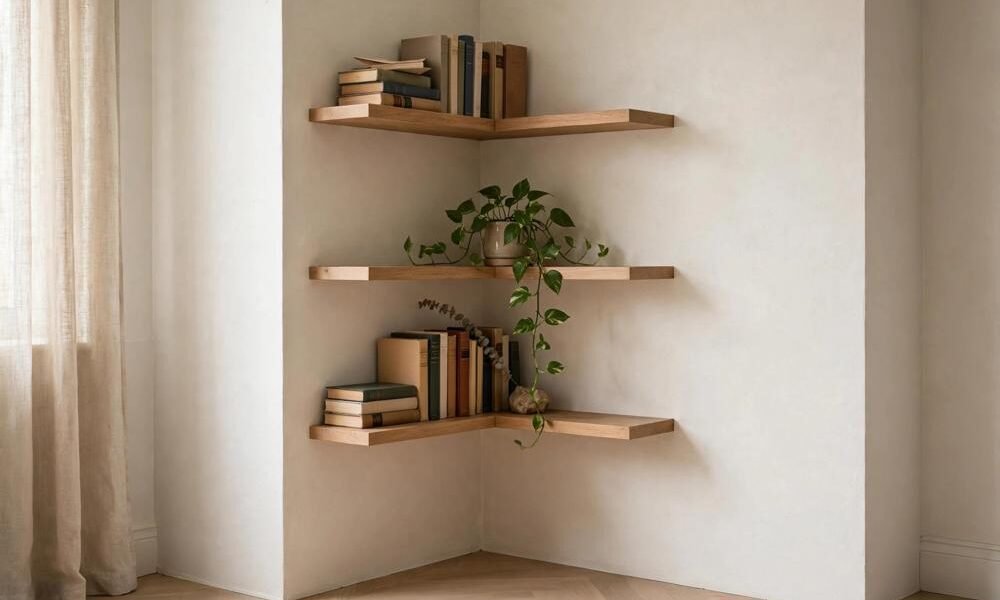
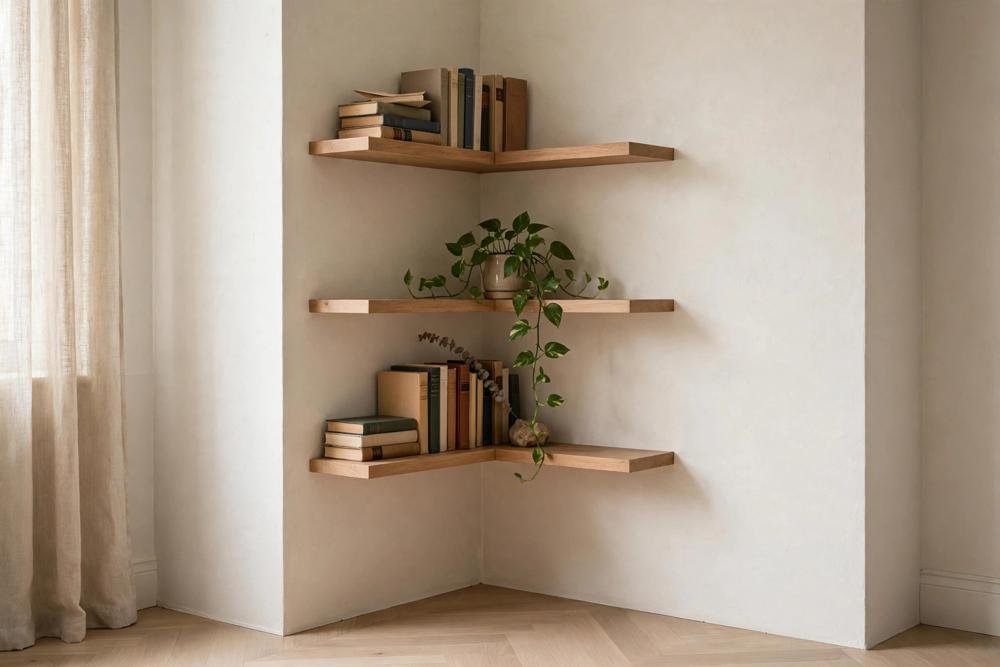
Floating shelves are boards that fix to the wall with hidden brackets or rods, so there are no visible supports and no legs touching the floor. That makes them ideal for small corners where every inch of floor matters, such as beside a sofa, in a hallway nook, or above a desk. Because the floor stays clear, the corner looks bigger and you can still vacuum or mop underneath without moving anything.
The trade-off is weight. A single floating shelf fixed into wall studs usually holds 15 to 30 pounds, which covers books in a single row, small plants, and framed photos. Drywall anchors alone hold far less, so heavy items need studs or special toggle bolts. Spreading weight across two or three shelves works better than loading one shelf, and keeping the heaviest items closest to the brackets reduces strain.
Installation is the other cost to plan for. You need a level, a stud finder, a drill, and the right anchors for your wall type, and the shelves must be level or the whole corner looks off. For renters, floating shelves mean drilled holes that need patching later, so check the lease first. If drilling is allowed, they are one of the cheapest ways to make an awkward corner useful.
Bookcases: More Weight, More Floor Space
Bookcases are freestanding units with fixed shelves that stand on the floor, so they carry far more weight than floating shelves. A small bookcase often holds 100 pounds or more per unit, with each shelf rated for 25 to 50 pounds, which makes them the right pick for full rows of books, baskets of toys, or a media corner. Narrow and corner-shaped bookcases fit into tight spots, but they still need real floor area, so measure the corner before you buy.
The floor footprint is the main downside. Even a slim bookcase takes up 10 to 14 inches of depth, which can block a walkway in a narrow hallway or crowd a small bedroom corner. Tall bookcases also change how a room feels, because they add visual weight where floating shelves would leave the wall open. If the corner is under 30 inches wide, a tall narrow bookcase can work, but a wide one will overwhelm it.
Safety is non-negotiable with bookcases. Any bookcase that a child could climb, or that stands in a home with pets, must be anchored to the wall with straps or brackets so it cannot tip forward. This applies even to small bookcases, because a climbing toddler can pull one over. Anchoring needs drilled holes too, so renters should check the lease, though many landlords accept small anchor holes more readily than shelf brackets.
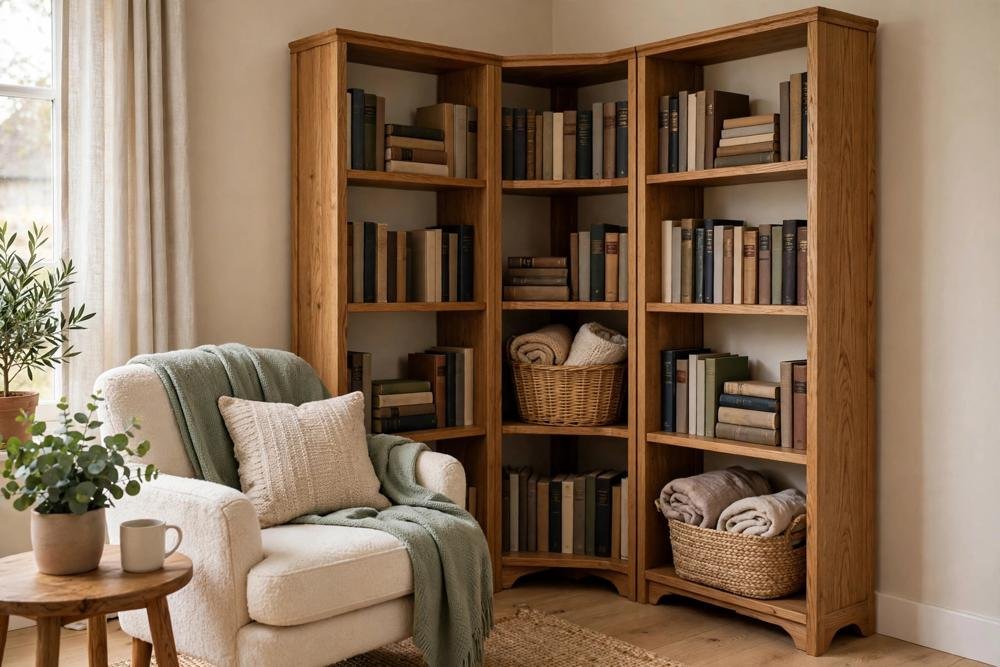
Comparison: Weight, Cost, Safety, and Flexibility
Weight is the clearest split. Floating shelves suit light loads: a few books per shelf, plants, candles, and framed art. Bookcases suit heavy loads: full book collections, storage baskets, and anything a child might pull on. If your corner needs to hold more than about 30 pounds per shelf level, a bookcase is the safer and simpler answer.
Cost depends on what you count. A pair of floating shelves can cost less than a bookcase upfront, but once you add quality brackets, wall anchors, a stud finder, and your time, the gap narrows. Flat-pack bookcases are cheap and fast to assemble, while solid wood bookcases cost more but last longer and look better in a living room. For flexibility, bookcases win: you can move them to another corner or another room, while floating shelves leave holes behind and must be reinstalled.
Choosing by Room: Living, Bedroom, Hallway, and Desk Corner
In a living room corner, the choice depends on what the corner has to do. Floating shelves work well beside a sofa or a reading chair for books you are using now, a plant, and a lamp, keeping the floor clear for foot traffic. A small corner bookcase fits better when the corner is the room’s main book storage, or when you want baskets that hide clutter behind a tidy front.
Bedrooms and kids’ rooms favor bookcases, because they hold more and their weight sits low, but every bookcase in a child’s room must be anchored. Floating shelves in a bedroom work for display above a dresser or beside the bed, as long as nothing heavy sits above pillows. Hallway corners are usually too narrow for bookcases, so a pair of floating shelves for keys, mail, and a small plant is the practical pick.
Desk corners are a split decision. Floating shelves above a desk keep supplies and books within reach without eating desk space, which suits small home offices. A narrow bookcase beside the desk works when you need deep storage for binders and files. Measure the desk plus chair clearance first, because a bookcase that blocks the chair defeats the purpose.
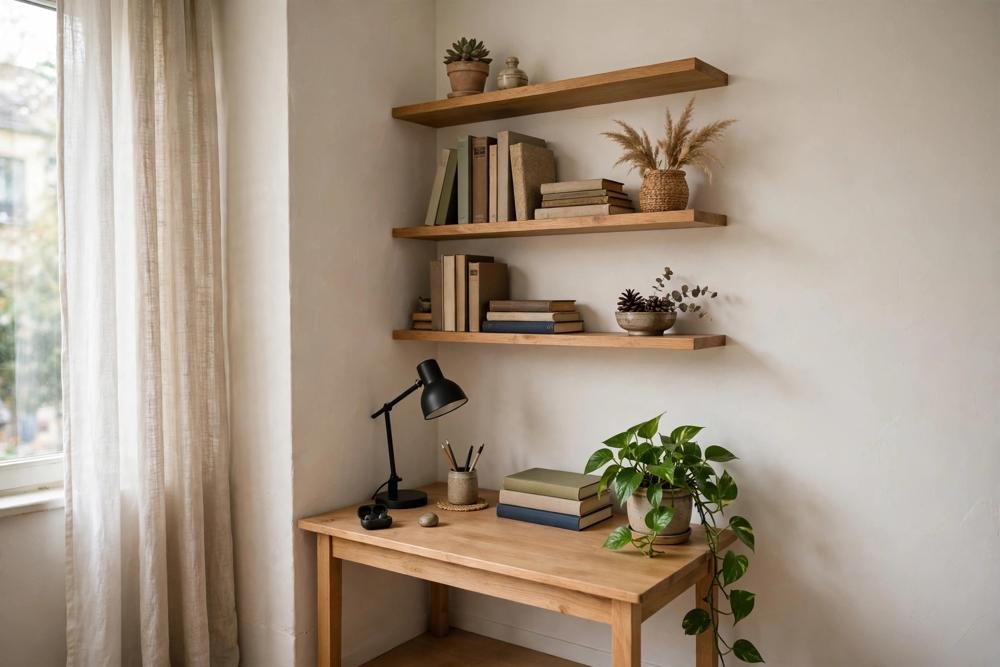
What to Avoid With Floating Shelves and Bookcases
The most common floating shelf mistake is trusting drywall anchors with heavy books. Anchors pull out over time, and a shelf of books can come down in the night. Always fix into studs for book loads, or use toggle bolts rated for the weight, and keep the shelf depth under 10 inches so leverage does not work against the brackets. The second mistake is hanging shelves where doors swing or chairs recline, because the corner becomes a bump zone.
With bookcases, the big mistakes are skipping the anchor and buying too deep. An unanchored bookcase in a home with kids or pets is a tipping hazard, no matter how small it looks. A bookcase deeper than 12 inches in a tight corner eats walkway space and makes the room feel cramped. Measure twice: the corner width, the walkway clearance, and the door swing, before the unit arrives.
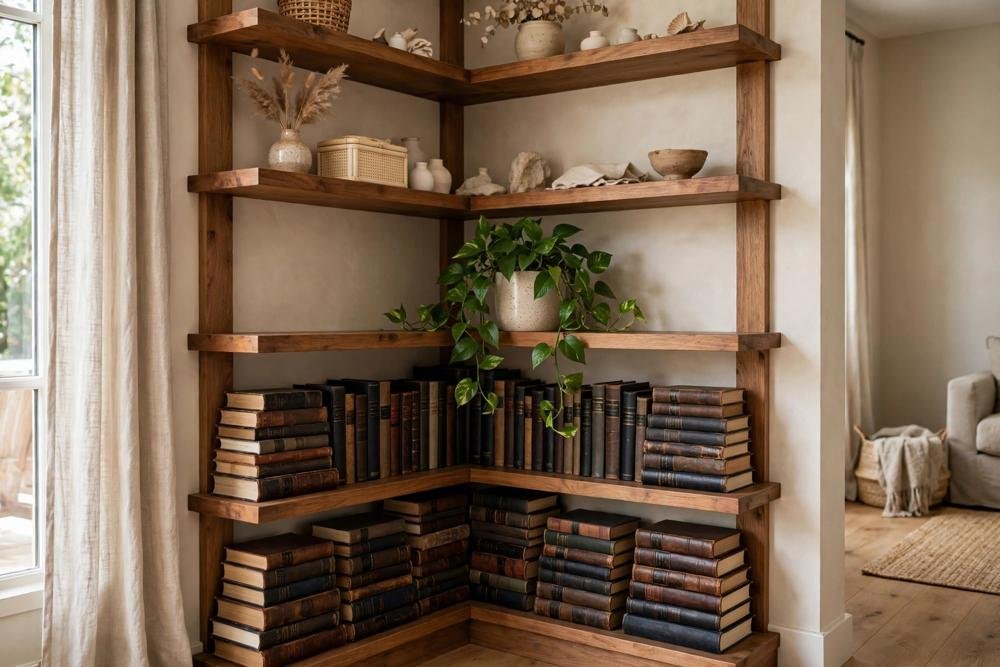
Checklist: Floating Shelves vs Bookcases Without Waste
- Measure the corner: Width, depth, door swing, and walkway clearance decide which option fits before you spend anything.
- Weigh the load: Under 30 pounds per level points to floating shelves; full book rows point to a bookcase.
- Check the walls: Studs make floating shelves strong; plaster or tile walls need special anchors and more care.
- Plan for safety: Anchor every bookcase in homes with kids or pets, and fix shelf brackets into studs for book loads.
- Confirm renter rules: Freestanding bookcases need no holes; floating shelves and anchors need landlord approval and patching.
- Style in thirds: Leave one third of shelf space empty so the corner looks styled, not stuffed.
- Buy once: A solid small bookcase or well-bracketed shelves outlast cheap units that sag or tip.
Conclusion
Floating shelves and bookcases both solve small corners, but they solve different problems. Floating shelves keep the floor clear and suit light display and storage in living rooms, hallways, and above desks, as long as they are fixed into studs. Bookcases carry real weight and suit book collections and kids’ rooms, as long as they are anchored and the corner has the floor space.
Start with the corner’s measurements and the weight of what it must hold, then match the unit to those numbers. A 30-inch corner with a dozen books wants shelves; a reading nook with a full library wants a narrow anchored bookcase. Either way, the corner stops being wasted space and starts working for the room.
Related reading
- Awkward Corner Ideas for Every Room in a Small Home
- Corner Bookshelf Ideas for Small Spaces and Awkward Corners
- Expandable Dining Tables for Small Spaces and Corners
- How to Measure a Corner for Furniture in a Small Home
- Corner Shelf Styling Ideas for Small Spaces and Bookshelves
- Space Saving Tables Compared for Small Homes and Corners
- Narrow and Slim Storage Ideas for Small Corners
- Corner Entryway Ideas for a Tight Corner
- Rug Calculator
- More in this series: How to Anchor Bookshelves Safely, Cube Storage Layouts, Corner Desk and Work Nook, and Corner Storage for Each Room.
Frequently Asked Questions
Are floating shelves strong enough for books in a small corner?
Yes, for a row or two of books, as long as the shelf is fixed into wall studs or rated toggle bolts. A single shelf usually holds 15 to 30 pounds this way. For a full book collection, a small anchored bookcase is the better pick.
Do small bookcases need to be anchored to the wall?
Yes, in any home with children or pets. Even a small bookcase can tip if a child climbs it, so use wall straps or brackets. Anchoring is the single most important safety step for freestanding storage.
What is cheaper for a small corner: floating shelves or a bookcase?
A pair of floating shelves is often cheaper upfront, but brackets, anchors, and tools narrow the gap. Flat-pack bookcases are budget-friendly and movable, while solid wood bookcases cost more but last longer.
Can renters use floating shelves in a corner?
Only with landlord approval, because they need drilled holes. Freestanding bookcases are the renter-safe choice since they need no holes, though wall anchors for safety should still be discussed with the landlord.
How deep should corner shelves or a corner bookcase be?
Keep floating shelves under 10 inches deep so leverage does not strain the brackets. For bookcases in tight corners, 10 to 12 inches of depth usually fits without blocking walkways.
Where should the heaviest items go on shelves or in a bookcase?
Low and close to the supports. On floating shelves, put heavier items near the brackets; in a bookcase, put heavy books on the lowest shelves. This keeps the unit stable and reduces strain on fixings.