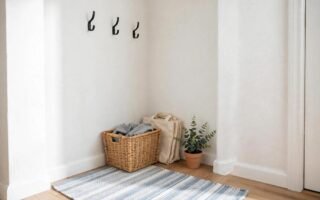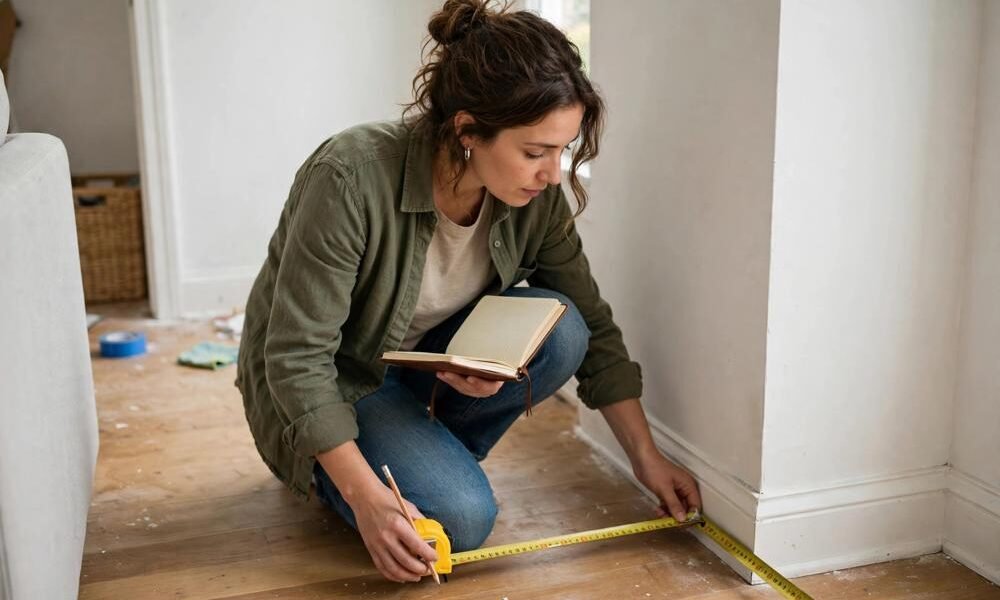
Measuring a corner for furniture means measuring width, depth, height, door arcs, sockets, switches, radiators, skirting boards, and walkway, in inches and cm, with tape on the floor for any furniture footprint, and walking through it, opening doors, and checking at night and in daylight, before you buy, so a piece that fits on paper, also fits in the room, with doors open, chairs pulled out, and a walkway clear. A corner that is measured well will hold a bookshelf, a desk, a dining table, or a storage unit, that is used every day, without blocking a walkway, a door, or an exit route, and a corner that is guessed, will hold a piece that is too large, too deep, or too tall, that must be moved, returned, or replaced, however good it looks. All measurements in this guide are in inches and cm, as approximate ranges only, and sizes vary by product, so check listings before you buy, and measure your corner first, as in the guides in this series.
Key takeaways
- Measure width at floor, at seat height, and at shelf height, because walls are not always straight, and a piece that fits at floor level may not fit at shelf height.
- Measure depth from the corner to the walkway, and height from floor to ceiling, or to a window sill, picture rail, or light switch, that the piece must not block.
- Use tape on the floor for any furniture footprint, and walk through it, open doors, pull out chairs, and check at night and in daylight, before you buy.
- Use a walkway of approximately 30 to 36 inches, 75 to 90 cm, as a comfort guide, not a building code, so you can walk past easily, even in the dark.
- Use a chair pull out of approximately 24 inches, 60 cm, behind each chair, as a comfort guide, so chairs can be pulled out, without hitting a wall, or a walkway.
- Record every measurement, in inches and cm, with a sketch, a photograph, and a list, so you can check listings, without measuring again, and so a second person can check your measurements, without guessing.
Tools You Need: Tape, Pencil, Paper, and a Helper
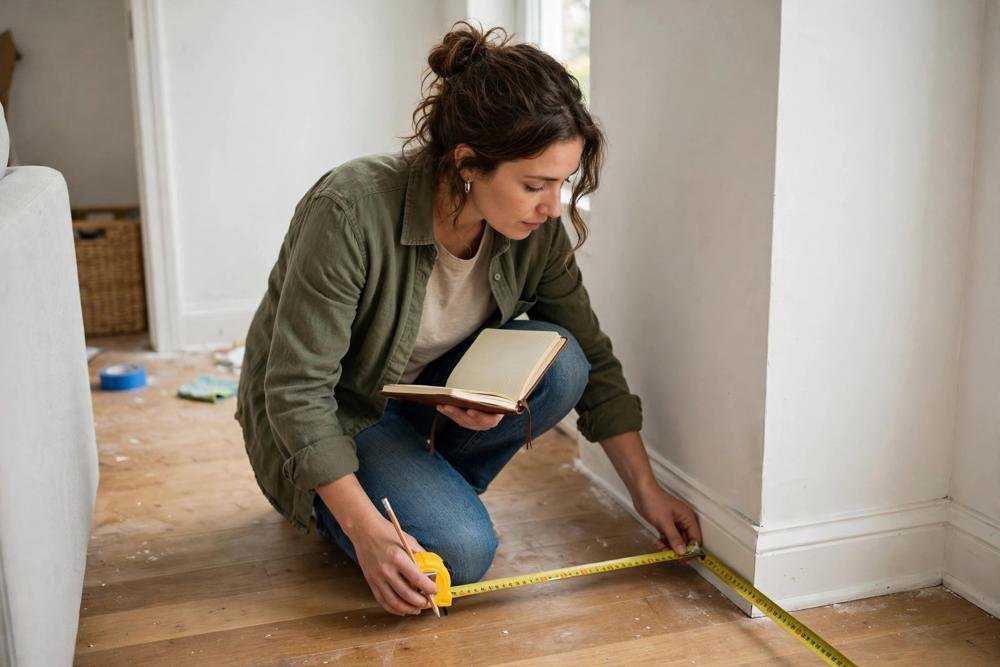
Measuring a corner needs only a few tools, but it needs them all, before you start, because a measurement that is guessed, or that is taken with the wrong tool, will be wrong, and a piece that is bought on a wrong measurement, will not fit, however good it looks. Tape measure: a tape measure, at least 25 feet, 7.5 metres, long, with a lock, so it can be held, without slipping, and with inches and cm, so measurements can be recorded, in both, without converting, and without error. Pencil and paper: a pencil, and paper, or a notebook, with a sketch of the corner, with width, depth, height, door arcs, sockets, switches, radiators, skirting boards, and walkway, marked, in inches and cm, so measurements can be checked, without measuring again, and so a second person can check your measurements, without guessing.
Helper: a helper, if you can, to hold the tape, at the corner, while you read it, at the other end, because a tape that is held alone, will slip, sag, or bend, and a measurement that is taken alone, will be wrong, by an inch, or two, and a piece that is bought on a wrong measurement, by an inch, or two, may not fit, especially in a small corner, where every inch matters. Photograph: a photograph, of the corner, with the tape on the floor, for any furniture footprint, and with a ruler, or a coin, for scale, if you want, so you can check the corner, without going back, and so you can show a shop, or a second person, what the corner looks like, without describing it, in words, that may be misunderstood.
Avoid measuring with a phone app, alone, without a tape, because a phone app can be wrong, by inches, especially in a corner, with poor light, or with a wall that is not straight, and a measurement that is wrong, by inches, will buy a piece that does not fit, however good the app looks. Avoid measuring once, and buying, without checking, because a measurement that is taken once, may be wrong, and a measurement that is checked, by a second person, or by measuring again, will catch an error, before it becomes a return, or a replacement, that costs time, money, and effort. Measure with a tape, a pencil, paper, and a helper, record every measurement, in inches and cm, with a sketch, and a photograph, and check every measurement, before you buy, so a piece that fits on paper, also fits in the room.
Width, Depth, and Height: Three Heights, Three Widths
Width, depth, and height, are the three basic measurements for a corner, but each needs to be taken at three heights, because walls are not always straight, and a piece that fits at one height, may not fit at another height, if a wall bulges, a skirting board sticks out, a socket sits at shelf height, or a picture rail runs at eye level. Width: measure width along each wall, from the corner, to the next door, window, socket, switch, radiator, or piece of furniture, at floor level, at seat height, approximately 17 to 19 inches, 43 to 48 cm, and at shelf height, approximately 48 to 60 inches, 120 to 150 cm, in inches and cm, and record the smallest width, at each height, because a piece that fits the smallest width, will fit at all heights, and a piece that fits the largest width, may not fit at a smaller width, at another height.
Depth: measure depth from the corner, into the room, to the walkway, to the next piece of furniture, or to a door swing, at floor level, and at seat height, in inches and cm, and record the depth that leaves a walkway clear, approximately 30 to 36 inches, 75 to 90 cm, as a comfort guide, not a building code, so you can walk past easily, even when carrying bags, or a child, and so you can get out easily, even in the dark, and so a door can open fully, without hitting the piece. Height: measure height from floor to ceiling, or to a window sill, a picture rail, a light switch, or a socket, that the piece must not block, in inches and cm, and record the height that leaves a window, a picture, or a light, clear, so the piece does not block light, or a view, and so the room does not feel dark, however tidy the piece looks.
Check skirting boards, because a skirting board, approximately 3 to 5 inches, 7 to 12 cm, high, and approximately 0.5 to 1 inch, 1 to 2 cm, deep, will push a piece away from the wall, by that depth, and a piece that is measured to the wall, without skirting, will be that depth too deep, when it is placed, and it will block a walkway, by that depth, and it will feel cramped, even if it is tidy, on paper. Check sockets, switches, and radiators, because a piece that blocks a socket will need an extension cord, which will become a trip hazard, a piece that blocks a switch will be moved, or ignored, rather than used, and a piece that blocks a radiator will block heat, and will make the room cold, however tidy it looks. Measure width, depth, and height, at three heights, in inches and cm, with skirting, sockets, switches, and radiators, marked, on your sketch, so a piece that fits on paper, also fits in the room, with doors open, and chairs pulled out.
Door Arcs, Sockets, Switches, and Radiators: What Blocks a Corner
Door arcs, sockets, switches, and radiators, are the four things that block a corner, most often, because they are not furniture, but they take up space, in a corner, and a piece that is placed without checking them, will block them, and it will be moved, or ignored, rather than used, however good it looks. Door arcs: measure a door arc, by opening the door, fully, and marking the arc, on the floor, with tape, or chalk, in inches and cm, from the hinge, to the door handle, when open, and record the arc, on your sketch, so a piece that is placed inside the arc, will be hit by the door, when it is opened, and a piece that is placed outside the arc, will be safe, and a door that can open fully, without hitting a piece, will be used every day, without worry, and without damage, to the door, or the piece.
Sockets: measure sockets, by marking their position, on your sketch, in inches and cm, from the corner, and from the floor, and record whether a piece will block a socket, or whether a socket will be accessible, behind, or beside, a piece, because a piece that blocks a socket will need an extension cord, which will become a trip hazard, and a piece that leaves a socket accessible, will be used, without an extension cord, and without a trip hazard, and a socket that is accessible, will be used, for a lamp, a charger, or a laptop, without moving the piece. Switches: measure switches, in the same way, by marking their position, on your sketch, in inches and cm, from the corner, and from the floor, and record whether a piece will block a switch, or whether a switch will be accessible, because a piece that blocks a switch will be moved, or ignored, rather than used, and a switch that is accessible, will be used, without moving the piece, and without fumbling, in the dark, for a switch, that is hidden, behind a bookshelf, or a desk.
Radiators: measure radiators, by marking their position, size, and depth, on your sketch, in inches and cm, from the corner, and from the floor, and record whether a piece will block a radiator, or whether a radiator will be clear, because a piece that blocks a radiator will block heat, and will make the room cold, however tidy it looks, and a piece that leaves a radiator clear, will let heat flow, and will keep the room warm, without moving the piece, and without blocking heat, with a bookshelf, a desk, or a storage unit, that is placed too close, to a radiator, and that becomes hot, or damaged, by heat, over time. Avoid a piece that blocks a door arc, a socket, a switch, or a radiator, because it is a safety problem, not just a tidy problem, and it must be moved, however tidy it looks, and however much you want it in that corner.
Tape Footprints and Walk Throughs: Test Before You Buy
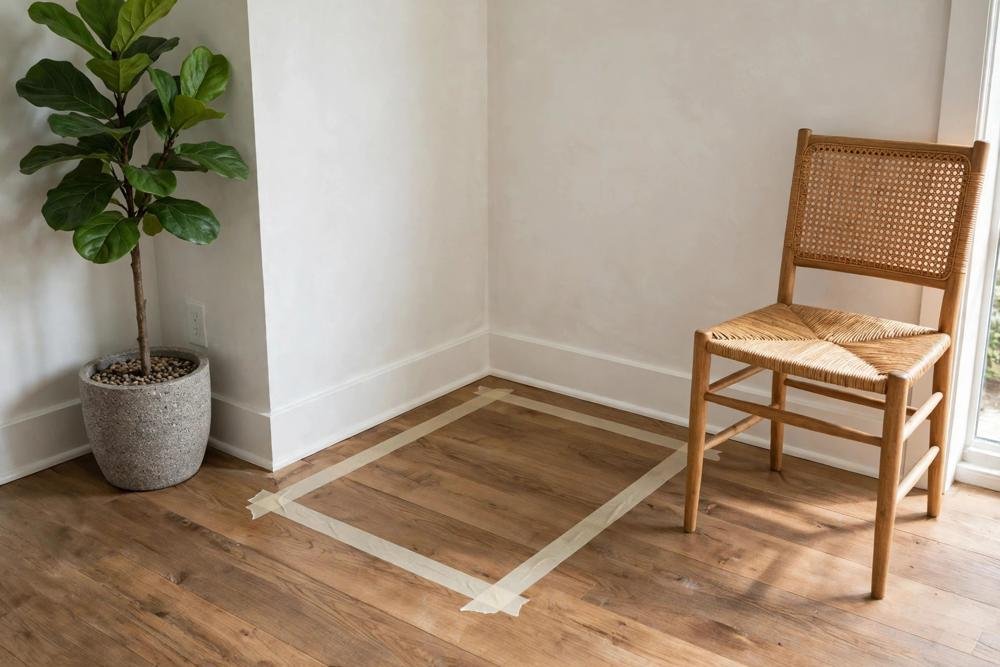
Tape footprints and walk throughs are the test, before you buy, that a piece that fits on paper, also fits in the room, with doors open, chairs pulled out, and a walkway clear, because a piece that is bought without a tape footprint, may fit on paper, but may not fit in the room, when it is placed, with doors open, and chairs pulled out, and it will need to be moved, returned, or replaced, however good it looks, on paper. Tape footprint: tape the footprint, of any piece, on the floor, with masking tape, or painter’s tape, in inches and cm, width, depth, and height, marked, on the tape, if you want, so you can see the piece, in the room, without buying it, and so you can walk around it, sit beside it, and open doors, without hitting it, and so you can check, at night and in daylight, whether the piece blocks light, a view, or a walkway, when it is placed, in the corner.
Walk through: walk through the taped footprint, as you would walk through the room, every day, carrying bags, or a child, opening doors, pulling out chairs, and sitting down, and standing up, without moving the tape, or pushing a chair into a wall, and check, whether the walkway is clear, approximately 30 to 36 inches, 75 to 90 cm, as a comfort guide, whether a door can open fully, without hitting the taped footprint, whether a chair can be pulled out, approximately 24 inches, 60 cm, behind the chair, without hitting a wall, or a walkway, and whether a person can sit down, and stand up, without moving the taped footprint, or pushing a chair into a wall. Check at night, and in daylight, because a piece that fits in daylight, may block light, at night, when a lamp is on, and a piece that fits at night, may block light, in daylight, when the sun is shining, through a window, that the piece blocks, and a piece that is checked, at night and in daylight, will be used, every day, without worry, and without blocking light, or a view.
Live with the taped footprint, for a day, if you can, before you buy, so you can see, whether the piece blocks a walkway, a door, or a window, when it is used, every day, and so you can adjust the footprint, by an inch, or two, before you buy, rather than after you buy, when it is too late, to adjust, without returning, or replacing, a piece, that does not fit. Avoid buying without a tape footprint, because a piece that is bought without a test, may not fit, however good it looks, on paper, and avoid buying without a walk through, because a piece that is bought without walking through it, may block a walkway, a door, or a chair, when it is used, every day, and it will be moved, or ignored, rather than used, however good it looks, in a photograph.
Measuring for Each Type: Bookshelf, Desk, Table, and Storage
Measuring for each type, bookshelf, desk, table, and storage, needs a different checklist, because each type has a different size, a different job, and a different way, of being used, in a corner, and a measurement that works for one type, may not work for another type, however good it looks, on paper. Bookshelf: measure width, depth, and height, at floor, at seat height, and at shelf height, in inches and cm, with a shelf depth, approximately 8 to 10 inches, 20 to 25 cm, for most books, and approximately 10 to 12 inches, 25 to 30 cm, for larger books, and with a height, that you can reach, without climbing, for daily books, and with higher shelves, for display items, you do not use every day, and with a walkway clear, approximately 30 to 36 inches, 75 to 90 cm, as a comfort guide, so you can walk past, easily, even when carrying books, and so you can get out, easily, even in the dark, as in the corner bookshelf guide.
Desk: measure width, depth, and height, in inches and cm, with a desk top, approximately 36 to 48 inches, 90 to 120 cm, wide, and approximately 20 to 24 inches, 50 to 60 cm, deep, for most corner desks, and with a chair, that can be pulled out, approximately 24 inches, 60 cm, behind the chair, without hitting a wall, a door, or a walkway, and with a socket, nearby, with cords, secured, out of reach, and with no loose cords, in the walkway, because cords can be a trip hazard, and a desk that is far from a socket, will need an extension cord, which will become a trip hazard, and a desk that is near a socket, with cords secured, will be used, every day, without tripping, as in the corner desk guide, in this series, to follow.
Table: measure folded and expanded, width, depth, height, chair pull out, and walkway, in inches and cm, with tape on the floor, for the folded footprint, and for the expanded footprint, and walk through both, pull out chairs, open doors, and check at night and in daylight, before you buy, as in the expandable dining tables guide, with a table height, approximately 29 to 30 inches, 74 to 76 cm, and a chair height, approximately 17 to 19 inches, 43 to 48 cm, so a person can sit comfortably, with knees under the table, and with feet on the floor, without the table being too high, or too low, for the chair. Storage: measure width, depth, and height, in inches and cm, with a narrow storage depth, approximately 10 to 12 inches, 25 to 30 cm, for a hallway, bathroom, or bedroom corner, where space is tight, and with a cube storage size, approximately 12 to 14 inches, 30 to 35 cm, square, for a living room, bedroom, or children’s corner, where items can be grouped, in baskets, one per cube, labelled, so each person, or each type of item, has a place, as in the narrow storage, and cube layouts, guides, in this series, to follow.
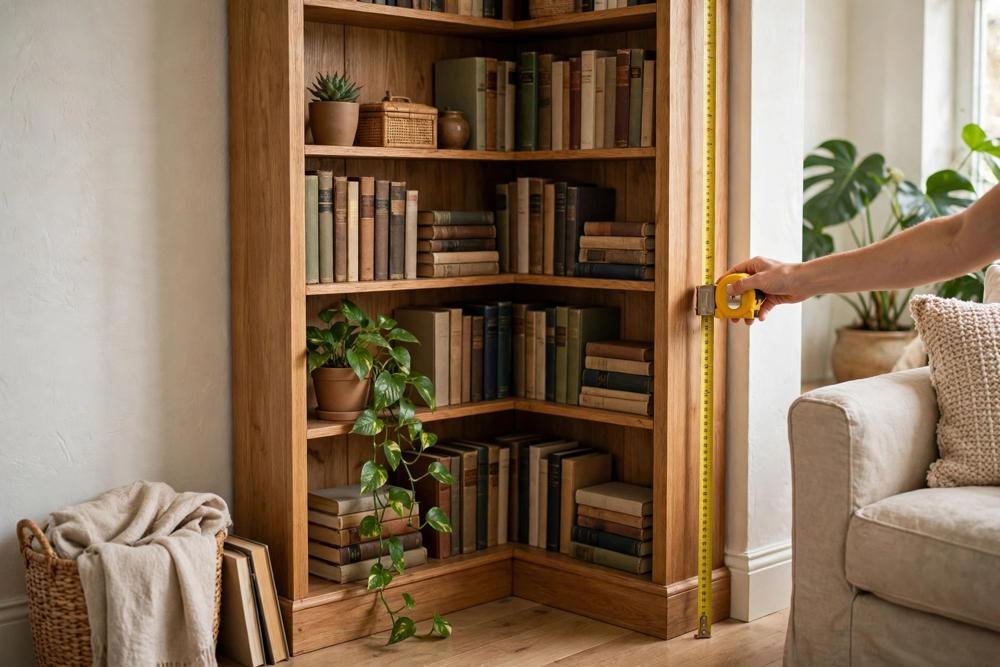
Common Measuring Mistakes: Skirting, Angles, and Guessing
Common measuring mistakes, skirting, angles, and guessing, are the three mistakes, that buy a piece, that does not fit, however good it looks, on paper, and however carefully it was measured, in one place, because a mistake, in one measurement, will make a piece, that is too large, too deep, or too tall, for the corner, and it will need to be moved, returned, or replaced, however much you like it. Skirting: forgetting skirting boards, approximately 3 to 5 inches, 7 to 12 cm, high, and approximately 0.5 to 1 inch, 1 to 2 cm, deep, will push a piece, away from the wall, by that depth, and a piece that is measured, to the wall, without skirting, will be that depth, too deep, when it is placed, and it will block a walkway, by that depth, and it will feel cramped, even if it is tidy, on paper, and a piece that is measured, with skirting, marked, on your sketch, will fit, with skirting, in mind, and it will not block a walkway, by skirting depth, when it is placed.
Angles: assuming a corner is 90 degrees, when it is not, will buy a triangular, or L shaped, piece, that does not fit, because a corner that is 85 degrees, or 95 degrees, will leave a gap, on one side, or will push a piece, away from the wall, on the other side, and a piece that does not fit, the angle, will look wrong, however good it looks, in a photograph, and it will wobble, or tip, if it is not flush, against the wall, and it must be measured, with an angle finder, or with a cardboard template, cut, to the corner angle, so a piece that fits, the angle, will sit flush, against the wall, without a gap, and without wobbling. Guessing: guessing a measurement, without a tape, or measuring once, without checking, will buy a piece, that does not fit, by an inch, or two, and a piece that does not fit, by an inch, or two, may not fit, especially in a small corner, where every inch matters, and a measurement that is guessed, or that is taken once, without checking, by a second person, or by measuring again, will be wrong, and a piece that is bought, on a guessed measurement, will need to be moved, returned, or replaced, however good it looks.
Avoid skirting mistakes, by measuring, with skirting, marked, on your sketch, in inches and cm, and by measuring, width, at floor, at seat height, and at shelf height, so a piece that fits, at floor level, with skirting, will fit, at shelf height, without skirting, and avoid angle mistakes, by measuring, the corner angle, with an angle finder, or a cardboard template, before you buy, a triangular, or L shaped, piece, and avoid guessing, by measuring, with a tape, a pencil, paper, and a helper, and by checking, every measurement, before you buy, so a piece that fits, on paper, also fits, in the room, with doors open, and chairs pulled out.
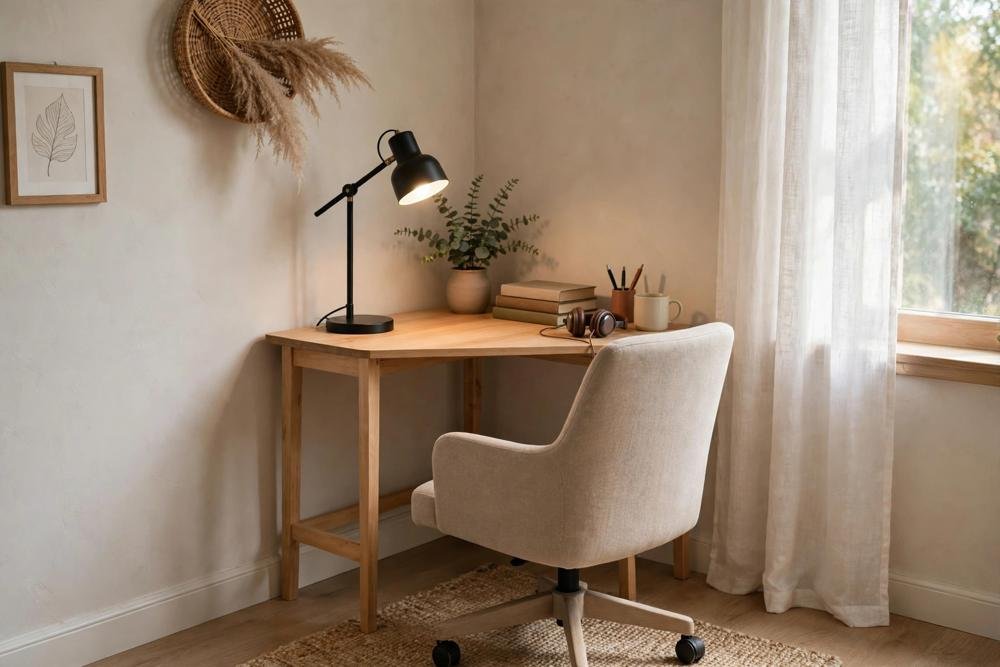
What to Avoid When Measuring a Corner
Avoid measuring once, and buying, without checking, because a measurement that is taken once, may be wrong, and a measurement that is checked, by a second person, or by measuring again, will catch an error, before it becomes a return, or a replacement, that costs time, money, and effort, and a piece that is bought, on a wrong measurement, will not fit, however good it looks, on paper. Avoid measuring with a phone app, alone, without a tape, because a phone app can be wrong, by inches, especially in a corner, with poor light, or with a wall that is not straight, and a measurement that is wrong, by inches, will buy a piece, that does not fit, however good the app looks, on a screen.
Avoid measuring to the wall, without skirting, because a skirting board, approximately 3 to 5 inches, 7 to 12 cm, high, and approximately 0.5 to 1 inch, 1 to 2 cm, deep, will push a piece, away from the wall, by that depth, and a piece that is measured, to the wall, without skirting, will be that depth, too deep, when it is placed, and it will block a walkway, by that depth, and it will feel cramped, even if it is tidy, on paper. Avoid assuming a corner is 90 degrees, when it is not, because a corner that is 85 degrees, or 95 degrees, will leave a gap, on one side, or will push a piece, away from the wall, on the other side, and a piece that does not fit, the angle, will look wrong, and will wobble, or tip, if it is not flush, against the wall.
Avoid buying without a tape footprint, and without a walk through, because a piece that is bought, without a test, may fit, on paper, but may not fit, in the room, with doors open, chairs pulled out, and a walkway clear, and it will need to be moved, returned, or replaced, however good it looks, in a photograph, and avoid buying without checking, door arcs, sockets, switches, and radiators, because a piece that blocks, a door arc, a socket, a switch, or a radiator, is a safety problem, not just a tidy problem, and it must be moved, however tidy it looks, and however much you want it, in that corner.
Checklist: Measure a Corner Without Waste
- Gather tools: tape measure, at least 25 feet, 7.5 metres, long, with inches and cm, pencil, paper, or notebook, with a sketch, and a helper, if you can, to hold the tape, while you read it.
- Sketch the corner, with width, depth, height, door arcs, sockets, switches, radiators, skirting boards, and walkway, marked, in inches and cm, and photograph the corner, with the tape on the floor, for any furniture footprint.
- Measure width along each wall, from the corner, to the next door, window, socket, switch, radiator, or piece of furniture, at floor level, at seat height, and at shelf height, in inches and cm, and record the smallest width, at each height.
- Measure depth from the corner, into the room, to the walkway, to the next piece of furniture, or to a door swing, at floor level, and at seat height, in inches and cm, and record the depth that leaves a walkway clear, approximately 30 to 36 inches, 75 to 90 cm, as a comfort guide.
- Measure height from floor to ceiling, or to a window sill, picture rail, light switch, or socket, that the piece must not block, in inches and cm, and record the height that leaves a window, a picture, or a light, clear.
- Mark door arcs, by opening each door, fully, and marking the arc, on the floor, with tape, or chalk, in inches and cm, from the hinge, to the door handle, when open, and record the arc, on your sketch.
- Mark sockets, switches, and radiators, on your sketch, in inches and cm, from the corner, and from the floor, and record whether a piece will block them, or whether they will be accessible, behind, or beside, a piece.
- Tape the footprint, of any piece, on the floor, with masking tape, or painter’s tape, in inches and cm, width, depth, and height, marked, on the tape, if you want, and walk through it, open doors, pull out chairs, and check at night and in daylight, before you buy.
- Check every measurement, by a second person, or by measuring again, before you buy, so a piece that fits, on paper, also fits, in the room, with doors open, and chairs pulled out, and live with the taped footprint, for a day, if you can, before you buy.
- Avoid skirting, angle, and guessing mistakes, by measuring, with skirting, marked, with an angle finder, or a cardboard template, for a triangular, or L shaped, piece, and with a tape, not a phone app, alone, without a tape.
Conclusion
Measuring a corner for furniture works when you measure width, depth, and height, at three heights, in inches and cm, with tape on the floor for any furniture footprint, and walk through it, open doors, pull out chairs, and check at night and in daylight, before you buy, so a piece that fits on paper, also fits in the room, with doors open, chairs pulled out, and a walkway clear. Use a tape measure, a pencil, paper, and a helper, record every measurement, in inches and cm, with a sketch, a photograph, and a list, and check every measurement, before you buy, so a second person can check your measurements, without guessing, and so a piece that is bought, on your measurements, will fit, without returning, or replacing, a piece, that does not fit, however good it looks.
Use the guides in this series for each type and job: awkward corner pillar, corner bookshelf, expandable dining tables, shelf styling, tables compared, narrow storage, anchoring, floating shelves versus bookcases, cube layouts, corner desk, and corner storage per room, each with its own measurements, safety, and styling, so you can choose the right type for each corner, rather than forcing one type into every corner, and so you can measure, for each type, with a checklist, that matches that type, rather than a checklist, that matches no type, in particular. Done that way, measuring a corner will feel simple, tidy, and easy to use, in every room, without waste, damage, or a large piece that does not fit.
Related reading
- Awkward Corner Ideas for Every Room in a Small Home
- Corner Bookshelf Ideas for Small Spaces and Awkward Corners
- Expandable Dining Tables for Small Spaces and Corners
- Corner Entryway Ideas for a Tight Corner
- Rug Calculator
- Corner Shelf Styling, Space-Saving Tables Compared, Narrow and Slim Storage, How to Anchor Bookshelves Safely, Floating Shelves vs Bookcases, Cube Storage Layouts, Corner Desk and Work Nook, and Corner Storage for Each Room, in this series, to follow.
Frequently Asked Questions
What is the first step to measure a corner for furniture?
First, sketch the corner, with width, depth, height, door arcs, sockets, switches, radiators, skirting boards, and walkway, marked, in inches and cm, and photograph the corner, with the tape on the floor, for any furniture footprint, because a sketch, and a photograph, will let you check listings, without measuring again, and will let a second person, check your measurements, without guessing, and a corner that is sketched, before it is measured, will be measured, completely, without missing, a door arc, a socket, or a radiator, that blocks the corner.
How do I measure width, depth, and height for a corner?
Measure width along each wall, from the corner, to the next door, window, socket, switch, radiator, or piece of furniture, at floor level, at seat height, approximately 17 to 19 inches, 43 to 48 cm, and at shelf height, approximately 48 to 60 inches, 120 to 150 cm, in inches and cm, and record the smallest width, at each height. Measure depth from the corner, into the room, to the walkway, to the next piece of furniture, or to a door swing, at floor level, and at seat height, in inches and cm, and record the depth that leaves a walkway clear, approximately 30 to 36 inches, 75 to 90 cm, as a comfort guide. Measure height from floor to ceiling, or to a window sill, picture rail, light switch, or socket, that the piece must not block, in inches and cm, and record the height that leaves a window, a picture, or a light, clear.
What is a tape footprint, and why does it matter?
A tape footprint is the footprint, of any piece, taped, on the floor, with masking tape, or painter’s tape, in inches and cm, width, depth, and height, marked, on the tape, if you want, so you can see the piece, in the room, without buying it, and so you can walk around it, sit beside it, and open doors, without hitting it, and so you can check, at night and in daylight, whether the piece blocks light, a view, or a walkway, when it is placed, in the corner. It matters, because a piece that is bought, without a tape footprint, may fit, on paper, but may not fit, in the room, with doors open, chairs pulled out, and a walkway clear, and it will need to be moved, returned, or replaced, however good it looks, in a photograph.
What are the most common measuring mistakes?
The most common measuring mistakes are skirting, angles, and guessing. Skirting: forgetting skirting boards, approximately 3 to 5 inches, 7 to 12 cm, high, and approximately 0.5 to 1 inch, 1 to 2 cm, deep, will push a piece, away from the wall, by that depth, and a piece that is measured, to the wall, without skirting, will be that depth, too deep, when it is placed. Angles: assuming a corner is 90 degrees, when it is not, will buy a triangular, or L shaped, piece, that does not fit, because a corner that is 85 degrees, or 95 degrees, will leave a gap, on one side, or will push a piece, away from the wall, on the other side. Guessing: guessing a measurement, without a tape, or measuring once, without checking, will buy a piece, that does not fit, by an inch, or two, especially in a small corner, where every inch matters.
How much walkway should I leave around corner furniture?
Use a walkway of approximately 30 to 36 inches, 75 to 90 cm, as a comfort guide, not a building code, so you can walk past easily, even when carrying bags, or a child, and so you can get out easily, even in the dark, and so a door can open fully, without hitting the piece. Use a chair pull out of approximately 24 inches, 60 cm, behind each chair, as a comfort guide, so chairs can be pulled out, without hitting a wall, or a walkway, and so a person can sit down, and stand up, without moving the piece, or pushing a chair into a wall.
Should I measure in inches or cm?
Record every measurement, in inches and cm, with a sketch, a photograph, and a list, because listings may use, either inches, or cm, and a measurement that is recorded, in both, can be checked, against any listing, without converting, and without error, and a second person, can check your measurements, without guessing, whether you meant, inches, or cm, and a piece that is bought, on measurements, in inches and cm, will fit, without returning, or replacing, a piece, that was bought, on a converted measurement, that was wrong, by rounding, or by error.