Introduction
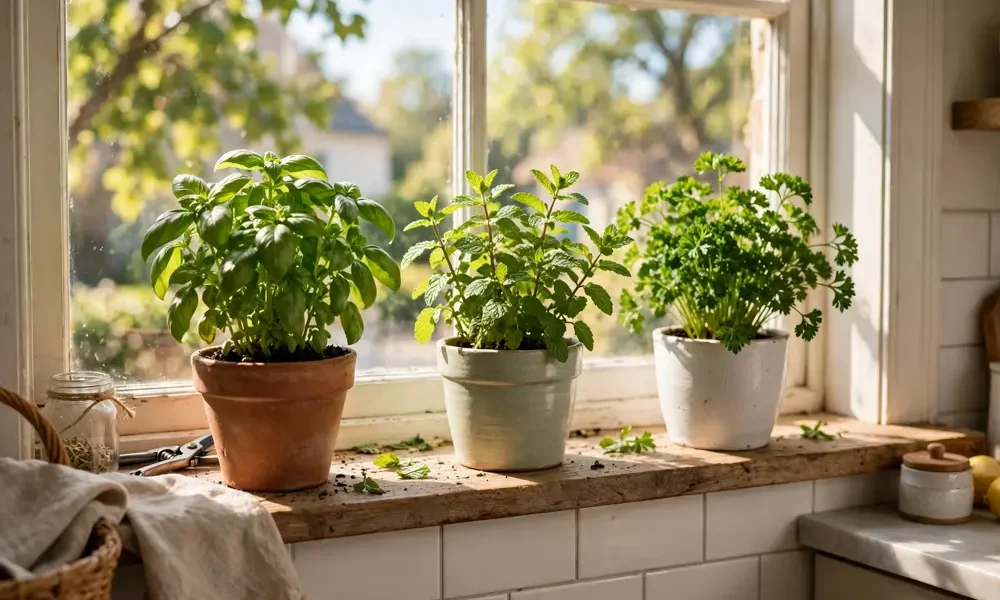
Fresh herbs are the cheapest luxury in cooking, but only if they are alive when you need them. A bunch from the shop wilts in the fridge in three days, while a small plant on a windowsill can give you basil, mint, and parsley for months. The problem is that most indoor herb gardens fail in the first month, not because herbs are hard, but because they get the wrong light, the wrong water, or the wrong pot.
This guide focuses on the gap most herb guides skip: how to grow herbs in a real kitchen, with limited light, steam from cooking, and a busy routine. You will find ideas for a windowsill garden, a wall garden, a hydroponic kit, and a simple pot garden, plus the light, water, and harvesting rules that keep plants alive. The goal is herbs you actually cook with every week, not a display that looks good for a photo and dies by Sunday.
Start with light. Find the brightest spot in your kitchen, usually a south or west facing window, and put your herbs there first. If you have no bright window, you will need a grow light, or you should choose herbs that tolerate low light, like mint, parsley, and chives, rather than basil and rosemary, which need strong sun.
Idea 1: A windowsill herb garden in pots
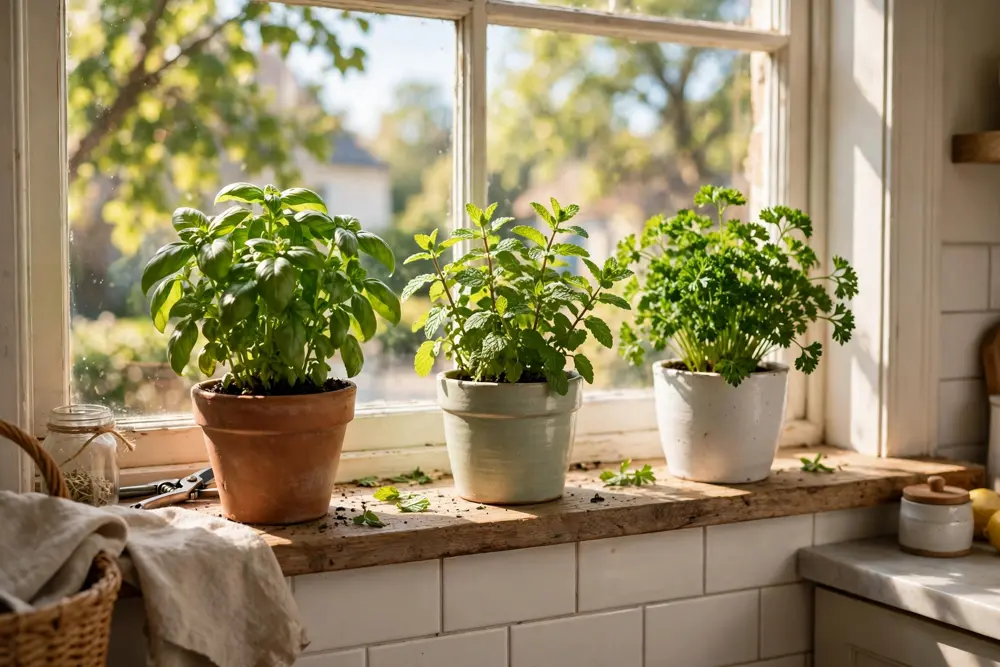
A windowsill garden is the simplest herb garden, and it works best with individual pots, not one long trough. Individual pots let you water each herb differently, move a struggling plant to better light, and replace one plant without disturbing the others. Use pots with drainage holes, a saucer underneath, and a light, free draining compost, not heavy garden soil, which stays wet and rots roots indoors.
Basil, mint, parsley, and chives are the best windowsill starters. Basil needs the most light and warmth, and it hates cold draughts, so keep it on the sunniest sill, away from a window that is opened in winter. Mint is vigorous and will take over a shared pot, so always give mint its own pot. Parsley is slower to grow but very forgiving, and chives will regrow after cutting if you leave at least five centimetres of growth.
Watering is where windowsill gardens fail most. Herbs in small pots dry out fast in a warm kitchen, but they also rot if they sit in water. Check the top two centimetres of soil with a finger: if it is dry, water thoroughly until water runs from the drainage hole, then empty the saucer. If it is still damp, wait. In winter, that might mean watering once a week. In summer, it might mean every other day. A fixed watering schedule, without checking the soil, is the fastest way to kill herbs.
Idea 2: A wall herb garden with planters and rails
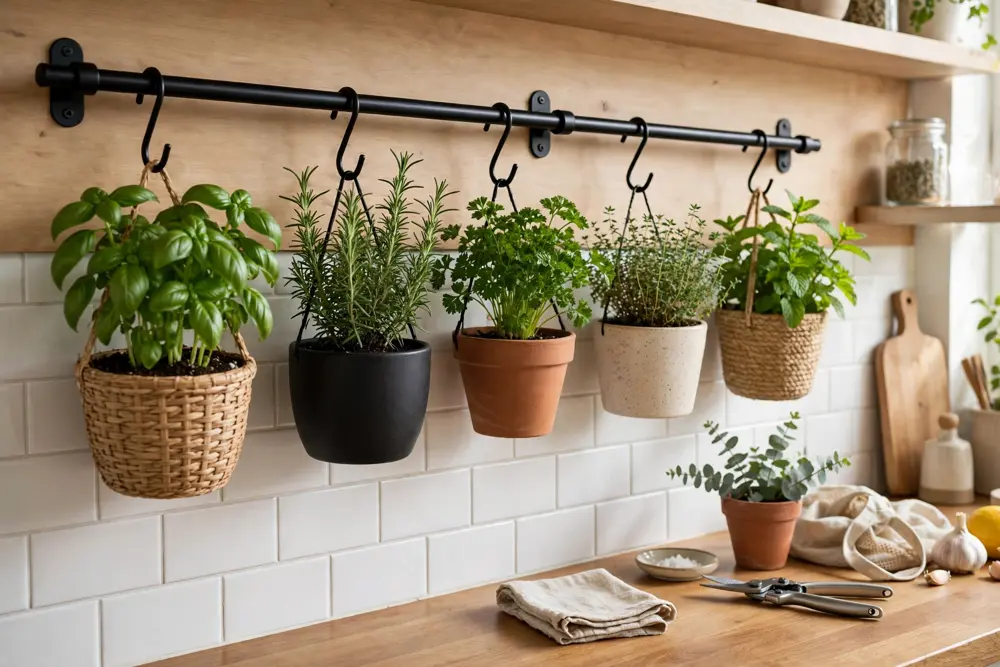
A wall herb garden saves counter space and puts herbs at eye level, where you will remember to use them. A rail with hanging pots, a pocket planter, or a small shelf with pots all work, as long as the wall gets light and the pots can drain. Wall gardens fail when they are hung on a dark wall far from a window, because herbs will stretch towards the light, grow leggy, and lose flavour.
Choose a wall near a window, not opposite it, so plants get side light for part of the day. Use lightweight pots, because a wall full of wet soil is heavy, and fix rails into studs or solid wall, not just plasterboard, especially above a work surface where a falling pot could be dangerous. Put a tray or a shelf below the lowest pots to catch drips when you water, and water slowly, a little at a time, so soil absorbs it instead of running straight through.
Wall gardens suit trailing and compact herbs best. Mint, thyme, oregano, and trailing rosemary look good hanging, and they are less likely to outgrow a small wall pot than basil, which wants a bigger pot and more light. Rotate wall pots every week, turning them a quarter turn, so growth stays even and plants do not lean permanently towards the window.
Idea 3: A hydroponic or self watering herb kit
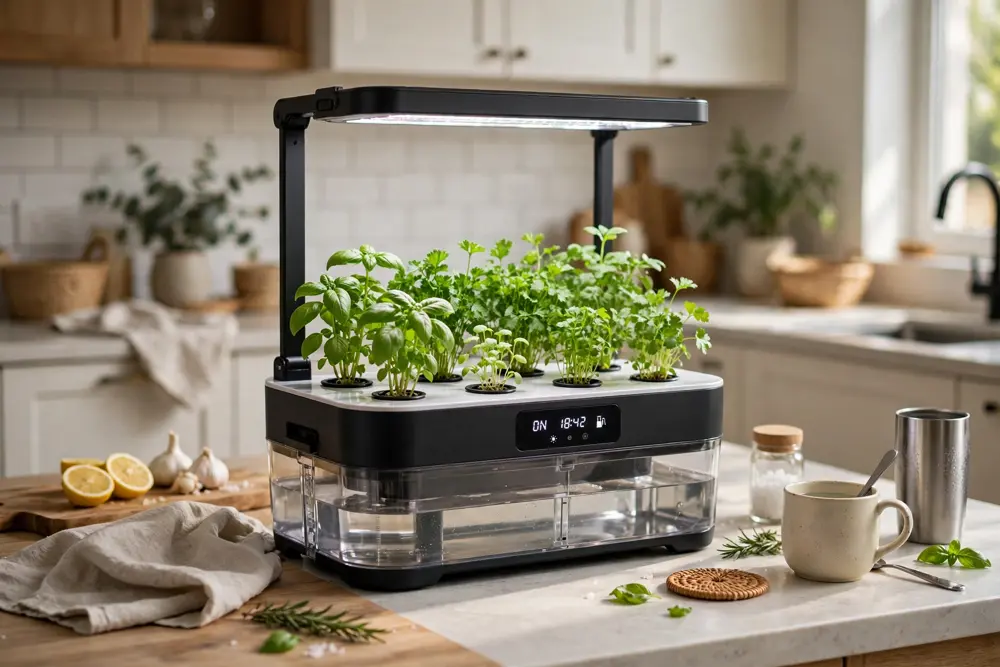
Hydroponic kits, with a built in grow light and a water tank, are the most reliable option for a kitchen with poor natural light. They control light hours, they water automatically, and they grow herbs faster than soil, because roots get constant nutrients. They are also the most expensive option, and they need power, regular cleaning, and replacement pods or nutrients, so they suit a cook who uses herbs daily and wants a low effort system.
If you choose a hydroponic kit, start with the herbs it is designed for, usually basil, mint, and lettuce, and do not mix slow and fast growers in one tank, because fast growers will shade slow ones. Keep the water tank topped up, clean it when you change pods, and do not let algae build up in the tank, which blocks nutrients and smells. A grow light should run about fourteen to sixteen hours a day for herbs, and the kit should be away from a hot cooker, because heat plus a grow light can dry plants out quickly.
Self watering pots are a cheaper middle option. They have a reservoir at the bottom that wicks water up to the soil, so plants do not dry out if you forget to water for a few days. They do not solve light problems, and they can overwater herbs that like dry soil, like rosemary and thyme, so use them for basil, parsley, and mint, which like consistent moisture, and use normal pots with drainage for Mediterranean herbs.
Idea 4: A counter herb garden for cooking every day
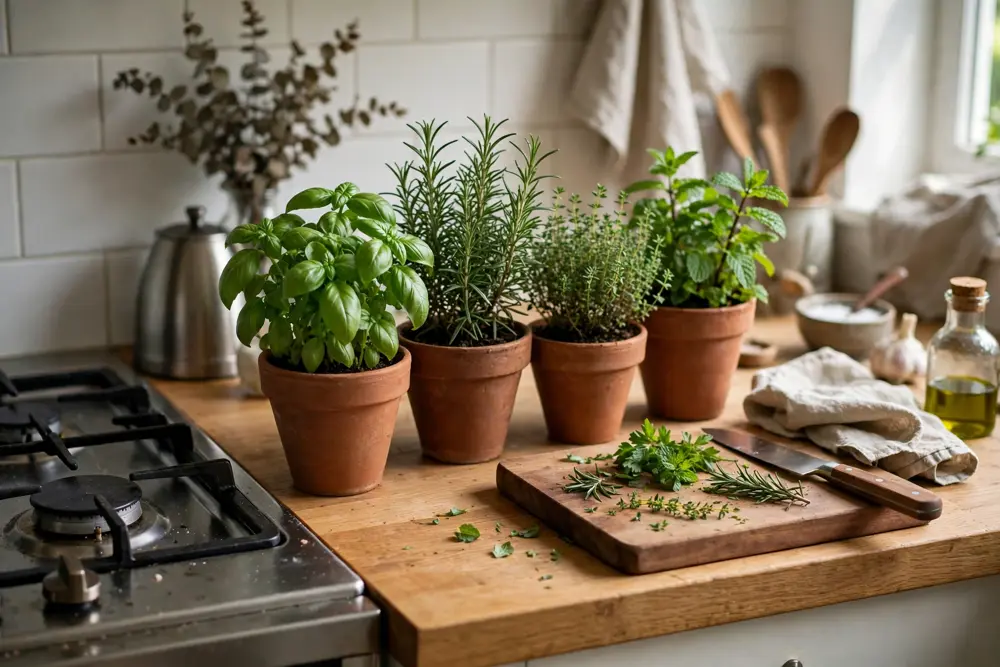
A counter herb garden is about convenience: herbs within arm’s reach of where you chop and cook. A small tray with three or four pots, near the prep area but not right next to the cooker, means you will snip herbs while you cook, instead of forgetting them on a distant windowsill. The trade off is light, because a prep counter is often away from a window, so a counter garden needs either a bright spot or a small grow light on a timer.
Keep a counter garden small. Three pots, basil, parsley, and mint, cover most cooking, and a fourth pot can rotate with the season, chives in spring, coriander in summer, thyme in autumn. More than four pots on a counter will crowd prep space and get knocked over. Use a tray to contain soil and water, keep scissors or snips at the garden, and harvest little and often, because regular snipping encourages bushy growth and stops herbs going to seed.
Steam and heat are the risks on a counter. Do not put herbs directly next to a hob or an oven vent, where hot steam will scorch leaves. A metre away, with good air flow, is fine. If your kitchen gets very steamy, wipe leaves occasionally, because a film of grease on leaves blocks light and slows growth. A counter garden that is used daily will stay healthy, because you will notice problems, dry soil, pests, or yellowing leaves, before they become fatal.
Light, water, and feeding in plain terms
Light is the most important factor, and it is also the one most people underestimate. Herbs need at least four to six hours of bright light a day, and basil and rosemary need more. A north facing window in winter is not enough for most herbs, no matter how well you water them. If leaves are pale, stems are long and thin, and growth is slow, your herbs need more light, not more water or feed.
Water little and often in small pots, thoroughly and less often in larger pots, and always let excess water drain away. Never let a pot sit in a saucer full of water for more than an hour. Feed lightly, about once a month in growing season, with a weak liquid feed, and do not feed in winter when growth slows. Overfeeding makes herbs grow fast but taste weak, because flavour compounds develop more slowly than leaves.
Pests indoors are usually small: aphids on new growth, fungus gnats in wet soil, and whitefly on basil. Remove aphids by hand or with a strong spray of water, let soil dry a little more to deter gnats, and isolate a badly affected plant so pests do not spread to the whole garden. Avoid chemical sprays on herbs you will eat, unless the label specifically says it is safe for edible plants, and always wash herbs before cooking.
Harvesting so herbs keep growing
Harvest from the top, not the bottom. Pinching the top leaves encourages side shoots and bushy growth, while stripping lower leaves leaves a bare stem that will not regrow well. For basil, pinch just above a pair of leaves, and the plant will branch into two new stems. For parsley and chives, cut outer leaves first, leaving the centre to keep growing. For mint, cut stems regularly, because mint that is left to flower loses flavour.
Harvest little and often, never more than a third of a plant at once, and harvest in the morning, when flavour oils are strongest. Wash herbs gently, shake them dry, and use them straight away for the best flavour. If you have more than you can use, freeze herbs in ice cube trays with water or oil, or dry thyme, oregano, and rosemary by hanging small bunches upside down in a dry, airy spot. Fresh herbs that are harvested regularly will outlast a shop bunch by months, and they will taste better every time.
What to avoid
- Putting herbs on a dark wall or a north facing sill in winter and expecting them to thrive without a grow light
- Watering on a fixed schedule without checking soil, which rots roots in winter and dries plants in summer
- Planting mint in a shared pot, where it will take over and crowd out other herbs
- Using pots with no drainage holes, or leaving pots sitting in water in a saucer
- Placing herbs right next to a hob or oven vent, where steam and heat scorch leaves
- Harvesting more than a third of a plant at once, or stripping lower leaves and leaving a bare stem
- Overfeeding herbs, which makes fast, weak growth with poor flavour
Frequently asked questions
Which herbs are easiest to grow indoors?
Mint, parsley, chives, and basil are the easiest starters. Mint and parsley tolerate lower light, chives regrow after cutting, and basil grows fast in bright light. Rosemary and thyme are harder indoors, because they need strong light and dry soil.
How much light do indoor herbs need?
At least four to six hours of bright light a day, more for basil and rosemary. A south or west facing window is best. If you do not have a bright window, use a grow light for fourteen to sixteen hours a day, or choose mint, parsley, and chives, which tolerate lower light.
How often should I water indoor herbs?
When the top two centimetres of soil feel dry, water thoroughly until water runs from the drainage hole, then empty the saucer. In winter this might be once a week, in summer every other day. Do not water on a fixed schedule without checking the soil.
Why do my indoor herbs keep dying?
Usually light, water, or drainage. Too little light makes leggy, pale growth. Too much water, or no drainage, rots roots. Too little water in a warm kitchen dries small pots quickly. Check light first, then soil moisture, then pot drainage, in that order.
Can I grow herbs in a kitchen with no window?
Yes, with a grow light or a hydroponic kit with a built in light. Choose mint, parsley, and chives first, because they tolerate lower light better than basil and rosemary, and keep the grow light on for fourteen to sixteen hours a day.
How do I harvest herbs so they keep growing?
Pinch from the top, cut outer leaves first for parsley and chives, and never take more than a third of a plant at once. Regular, light harvesting encourages bushy growth. Harvest in the morning for the best flavour, and wash herbs before cooking.
Conclusion
A kitchen herb garden does not need to be big, expensive, or perfect. It needs bright light, pots with drainage, soil that is checked before watering, and regular, light harvesting. Start with three pots on a bright windowsill, basil, mint, and parsley, in separate pots, and use them every week. If they thrive, add a wall planter or a counter tray. If light is a problem, add a small grow light or a hydroponic kit, rather than buying more plants that will struggle in the dark.
The reward is simple: fresh herbs, snipped while you cook, that taste better than anything from a shop packet, and a kitchen that smells green and alive. Start with one pot this week, water it only when the soil is dry, and snip from the top. Your cooking will taste better, and your herb garden will last far longer than the last bunch you bought.