Introduction
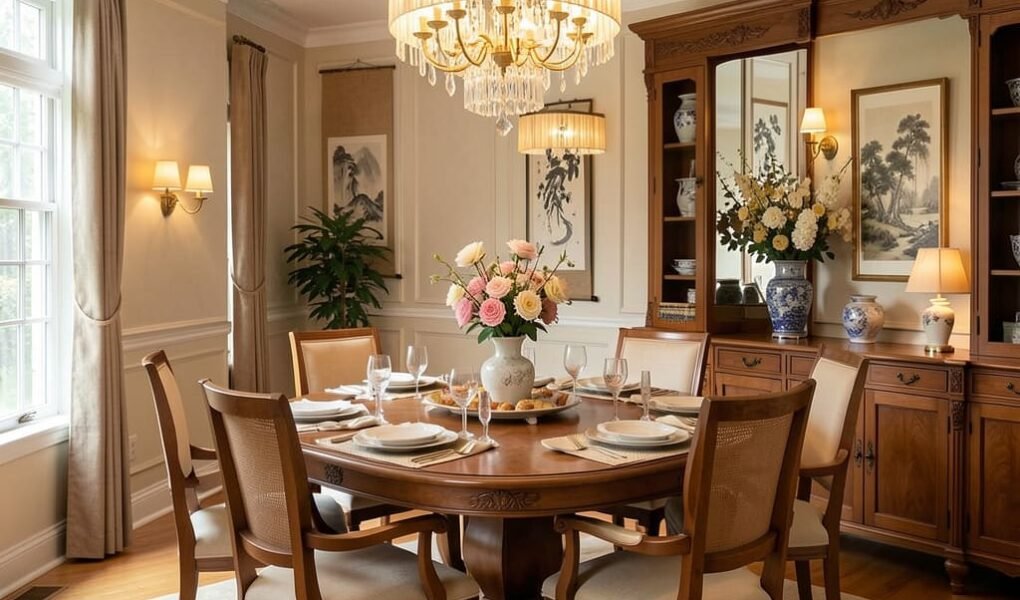
The dining room is, by a clear margin, the single best room in any home for a statement mirror — and the reasons are both practical and, depending on which tradition you follow, genuinely symbolic.
Practically, dining rooms are often the rooms that receive the least natural light in a home, the rooms most likely to feel small relative to how often they are used, and the rooms where guests spend the most concentrated, attentive time looking around them while seated at a table. A well-placed mirror solves all three problems at once: it bounces available light back into the room, it visually doubles the sense of space, and it gives seated guests something beautiful to glance toward rather than a blank wall.
There is also a long-standing feng shui tradition specifically built around the dining room. The dining room represents the household’s wealth “vault” — its capacity to hold and grow abundance — and a mirror placed to reflect the dining table is considered one of the single most effective feng shui placements anywhere in the home, doubling the visual abundance of the table and the gathering around it.
This guide covers exactly where to place a dining room mirror, what size and shape to choose, the feng shui principles behind the placement, styling ideas by aesthetic, and the specific mistakes that turn a good idea into an awkward one.
🔗 Continue decorating your home — read our feng shui home decorating guide and our economy home decor guide for more.
Where Exactly to Place a Dining Room Mirror
This is the single most searched and most practically important question in this entire topic, and there is a clear, consistent answer across both interior design and feng shui traditions.
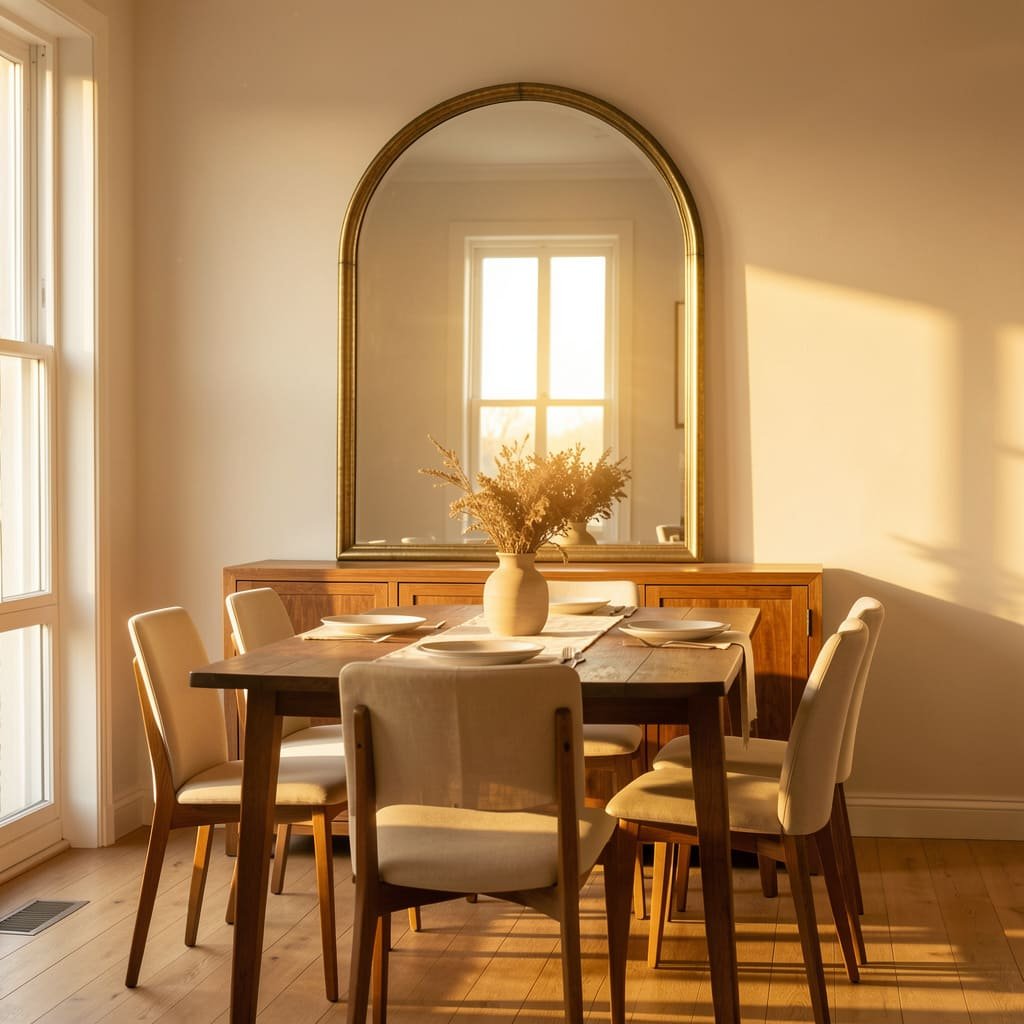
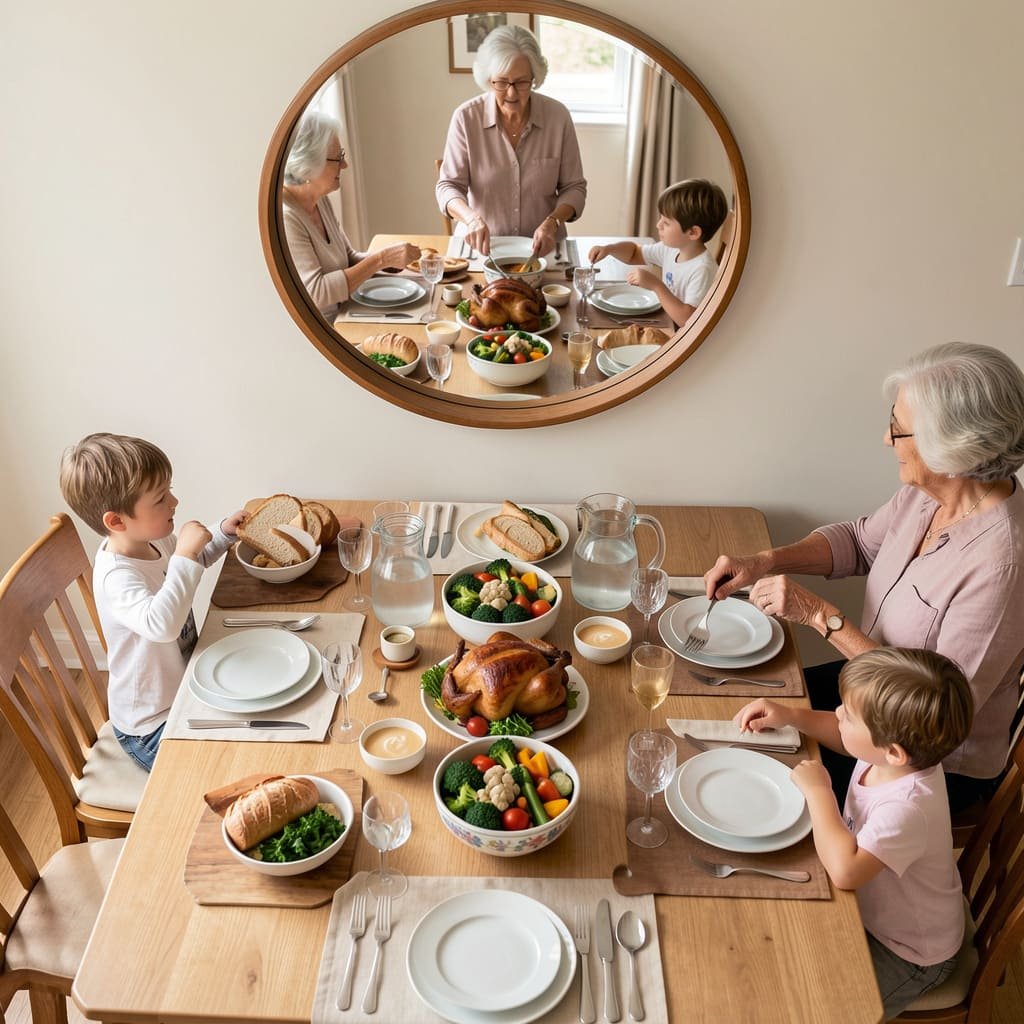
The mirror should be positioned to reflect the dining table — ideally the whole table, not a fragment of it. A mirror overlooking the dining table visually doubles the food and the people gathered around it, which in feng shui terms amplifies abundance, and in plain interior design terms simply makes a shared meal look more generous and a room look fuller than it actually is.
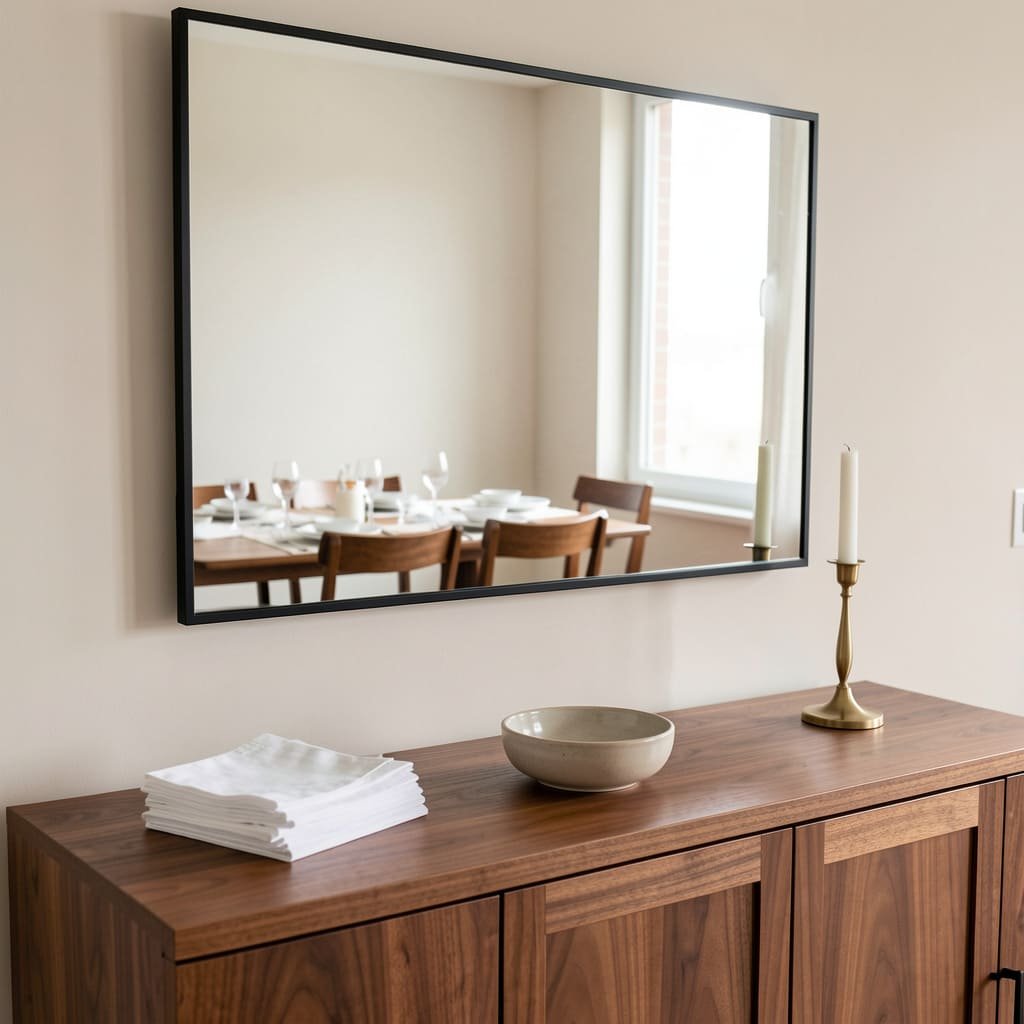
The most common and most successful placement is above a buffet, sideboard, or console table positioned along the wall opposite or perpendicular to the dining table. This placement achieves several things simultaneously: it gives the mirror a sensible piece of furniture to anchor to rather than floating awkwardly on a bare wall, it sits at a height that naturally reflects the table and the people seated at it, and it adds a useful surface below for serving dishes, candles, or table linens.
What to avoid reflecting: Avoid positioning a mirror so that it directly reflects the front door, the kitchen stove, a bathroom door, or any visible clutter — all are considered problematic in feng shui terms, and all look genuinely less attractive in plain decorating terms too. Equally, avoid a mirror position low enough that it awkwardly “slices” seated guests in half in their own reflection, or so high that it only catches the tops of heads.
Height guidance: When mounting above a buffet or console, leave roughly 4 to 8 inches of space between the top of the furniture and the bottom of the mirror frame. The mirror’s centre point should generally land somewhat above average seated eye level, so guests catch a flattering reflection of the table and themselves without staring directly into their own face throughout the meal.
You can also read Split Level House Kitchen Remodel Ideas: The Complete Guide
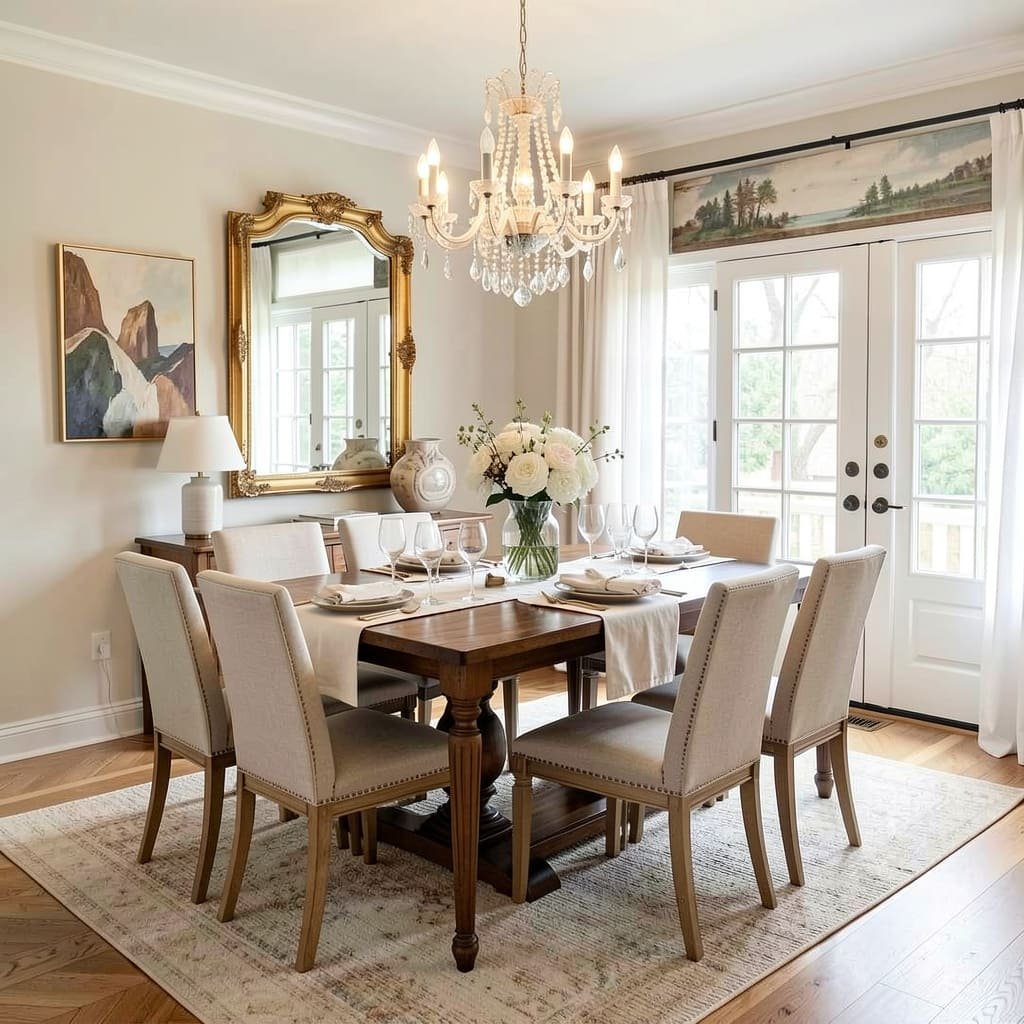
What Size and Shape Mirror Works Best
Size: As a general sizing rule, a dining room mirror should be roughly two-thirds to three-quarters the width of the furniture it hangs above — wide enough to feel proportionate to a buffet or console, but not so wide it overwhelms the wall or competes with adjacent furniture. For a mirror hung independently on a bare wall rather than above furniture, scale it to feel substantial within the wall’s available space — a small mirror on a large bare wall reads as an afterthought rather than a statement.
Shape and what it communicates:
- Round and oval mirrors are the most consistently recommended shape for dining rooms in feng shui guidance, since their soft, curved lines promote smooth, gentle energy flow around the room — fitting for a space centred on gathering and conversation rather than focused individual work. In plain styling terms, a round mirror also softens a room full of rectangular furniture (the table, the buffet, the chair backs), creating useful visual contrast.
- Rectangular mirrors are the most common practical choice above a buffet or console, since their proportions naturally echo the furniture beneath them and they are the easiest shape to source in a wide range of sizes.
- Arched mirrors sit between round and rectangular — they pair beautifully with a rectangular buffet while softening the room’s overall geometry, and they are one of the strongest shape trends in dining and entryway mirrors going into 2026.
- A large single statement mirror versus a grouped gallery of smaller mirrors is a genuine style choice rather than a right-or-wrong decision. A single large mirror reads as calmer and more classic; a cluster of smaller mirrors in varied shapes and frames reads as more eclectic and collected, and works particularly well in maximalist or boho dining rooms.
You can also read Flower Home Decor Ideas: Fresh, Dried, and Artificial Arrangements for Every Room and Aesthetic
Dining Room Mirror Feng Shui — The Complete Principles
The dining room holds a specific and consistently agreed-upon place in feng shui tradition, and it is worth understanding the actual reasoning rather than just the rule.
The core principle: The dining room represents the household’s wealth “vault” — its capacity to hold abundance, much like the size of a purse determines how much money it can carry. With that in mind, the dining room is considered one of the single most suitable rooms in the entire home for a mirror, because the reflection effectively increases the size of that vault.
It is important to be precise about what this means. Placing a mirror in the dining room is not believed to directly attract new wealth into the household — rather, it amplifies and supports the household’s existing capacity to hold and enjoy abundance, primarily through the symbolism of a doubled, fuller-looking table.
The specific feng shui placement rules for a dining room mirror:
- Position the mirror to reflect the full dining table, not a partial or awkwardly cropped view of it
- Choose round or oval shapes where possible, since they support smooth, harmonious energy circulation appropriate to a room centred on shared meals and conversation
- Never position the mirror to reflect the front door directly — this is believed to send energy straight back out of the home rather than allowing it to settle
- Avoid reflecting the kitchen stove, a bathroom, or visible clutter in the mirror’s frame, since the mirror amplifies whatever it reflects
- Keep the mirror and its frame clean and well-maintained — a dusty, smudged, or chipped mirror is considered to amplify neglect rather than abundance
- Ensure the mirror allows diners to see the room’s main entrance from their seat where possible, which is considered to support a sense of safety, inclusion, and easier conversation during meals
An important clarification worth including: this dining room mirror principle is genuinely different from the bedroom mirror rule. Where a mirror facing the bed is widely considered disruptive to rest in feng shui, the dining room is treated as the opposite case — a mirror actively facing the table is the recommended placement, not something to avoid.
You can also read Preppy Living Room Ideas: How to Get the Look (Even on Zero Budget)
Dining Room Mirror Ideas by Aesthetic
| Aesthetic | Best Mirror Style | Best Frame Material |
|---|---|---|
| Farmhouse | Round or arched, simple lines | Aged wood, black metal |
| Modern minimalist | Large rectangular or frameless | Thin black, brushed brass, or no visible frame |
| Traditional / classic | Oval or rectangular with detail | Carved wood, gold leaf |
| Romantic | Arched or scalloped | Antiqued brass, soft gold |
| Boho / eclectic | Gallery cluster of varied shapes | Mixed materials, rattan, mixed metals |
| Dark academia | Rectangular, substantial frame | Dark wood, aged bronze |
| Coastal | Round or oval, light frame | Whitewashed wood, light rattan |
| Maximalist | Oversized statement or gallery wall | Ornate gold, mixed and layered |
Mirror Over a Buffet — The Most Popular Dining Room Placement
Since this is consistently the most asked specific placement question, it deserves its own focused guidance.
Centring: Centre the mirror horizontally over the buffet, not over the room as a whole — if the buffet is offset from the centre of the wall, the mirror should follow the buffet’s centre line rather than the wall’s.
Width: Aim for the mirror to span roughly 75–90% of the buffet’s width for the most proportionate look. A mirror noticeably narrower than the buffet beneath it tends to look undersized; one noticeably wider can look top-heavy.
Leaning versus hanging: A mirror leaned against the wall behind a buffet, rather than mounted, is an increasingly popular and entirely renter-friendly alternative — it creates a slightly more relaxed, collected look and is simple to reposition or swap out.
What to add beneath: A pair of table lamps or candlesticks flanking the mirror, with a low centrepiece object such as a bowl or small vase between them, creates the most balanced and most photographed buffet-and-mirror styling combination.
You can also read Retro Console Table Ideas: The Complete Styling Guide for Every Era and Aesthetic
Common Dining Room Mirror Mistakes
Hanging it too high. A mirror positioned so high that it only reflects the ceiling or the tops of heads defeats the entire purpose of the placement — both the practical light-bouncing benefit and the feng shui table-reflection principle depend on the mirror actually capturing the table and the people at it.
Choosing a mirror too small for the wall or furniture beneath it. An undersized mirror on a large wall or above a substantial buffet reads as an afterthought rather than an intentional design choice.
Forgetting what is reflected from the opposite side of the room. Before finalising placement, stand at the dining table and look toward where the mirror will go — check that the reflection captures something worth seeing rather than a cluttered shelf, an open door to another room, or a stack of stored items.
Mismatching the frame finish to the rest of the room’s hardware. A mirror frame finish that clashes with the room’s existing light fixtures, drawer pulls, and chair hardware is a small detail that nonetheless reads as slightly unconsidered. Matching or deliberately complementary metal tones tie a dining room together noticeably.
You can also read Vintage Nautical Home Decor: A Sophisticated Styling Guide
Frequently Asked Questions
Q: Where should a mirror be placed in a dining room?
A: The mirror should be positioned to reflect the dining table as fully as possible, most commonly hung above a buffet, sideboard, or console table along a wall opposite or perpendicular to the table itself. This placement allows the mirror to visually double the table setting, bounce natural light into the room, and give seated guests a pleasant reflection rather than a blank wall to look at during a meal.
Q: Is it good feng shui to have a mirror in the dining room?
A: Yes — the dining room is considered one of the most suitable rooms in the entire home for a mirror in feng shui tradition, since the room represents the household’s capacity to hold wealth and abundance, often described as a “vault.” A mirror positioned to reflect the full dining table is believed to amplify that abundance symbolically by visually doubling the meal and the gathering. This is notably different from the feng shui bedroom rule, where a mirror facing the bed is generally discouraged — in the dining room, facing the table is the recommended placement.
Q: What shape mirror is best for a dining room?
A: Round and oval mirrors are the most frequently recommended shape for dining rooms, since their soft, curved lines are associated with smooth, harmonious energy flow appropriate to a room centred on shared meals and conversation. Rectangular mirrors are the most common practical choice when hanging above a buffet or console, since their proportions naturally echo typical dining furniture. Arched mirrors offer a popular middle ground, softening a room’s geometry while still pairing well with rectangular furniture beneath them.
Q: What size mirror should go over a dining room buffet?
A: As a general guide, the mirror should span roughly 75 to 90 percent of the buffet’s width for the most proportionate look — narrower than this can look undersized, and significantly wider can look top-heavy relative to the furniture beneath it. Leave a gap of approximately 4 to 8 inches between the top of the buffet and the bottom edge of the mirror frame.
Q: Can a mirror make a small dining room look bigger?
A: Yes — a well-placed mirror is one of the most effective and most affordable ways to make a small dining room feel noticeably larger. By reflecting the table, the room’s light source, and the open floor area, a mirror creates genuine visual depth and bounces available natural light further into the room, both of which contribute to a more spacious feeling without any structural changes.
Q: Should a dining room mirror face the window or the table?
A: Ideally both, where the layout allows — positioning the mirror so it reflects the dining table while also catching light from a nearby window achieves the strongest combined effect, maximising both the feng shui table-reflection principle and the practical benefit of bounced natural light. If a true compromise is needed, prioritise reflecting the table fully over catching the window, since the table reflection is the more consistently emphasised principle across feng shui guidance.
🔗 Continue decorating your home — read our feng shui home decorating guide and our economy home decor guide for more.