Introduction
Most attic bedroom guides assume you are starting from a space where the main challenge is styling around the slope. A gently angled ceiling, a cosy platform bed tucked under the eaves, a skylight flooding the room with light — that version of the attic bedroom is well covered. If your attic is genuinely low, the kind where you are ducking the moment you step away from the centre of the room, most of what exists online will skip past your actual situation within the first paragraph.
A genuinely constrained attic — peak height under seven feet, large sections of the floor sitting well under five — is a different design problem from a merely sloped one. The usable floor plan is determined not by where the walls are but by where a person can actually stand, sit, and sleep without hitting their head. That constraint has to be mapped first, from the measurements outward, before any furniture is chosen or any inspiration image is consulted. Choosing a bed before you know exactly where it can go in a low ceiling small attic room is how people end up with a beautiful piece of furniture that physically cannot fit where they imagined it.
This guide starts from the measurements — the three numbers that determine everything else about how a low attic bedroom can actually work. Once those are clear, it moves into the furniture placement logic, the lighting approach, and the decorating principles that make a constrained attic feel like a considered room rather than a solved storage problem.
🔗 Already have the layout figured out? Read our economy home decor guide and our feng shui home decorating guide for more.
The Measurements That Actually Matter First
Before any decorating decision, three measurements determine almost everything else about how a very small, very low attic bedroom can be used.
The peak height. This is the highest point of the ceiling, usually at the centre ridge of the roof. This is where a person can stand fully upright, where a wardrobe or tall furniture piece needs to live, and where any seating area should be positioned if standing room matters to how the space gets used.
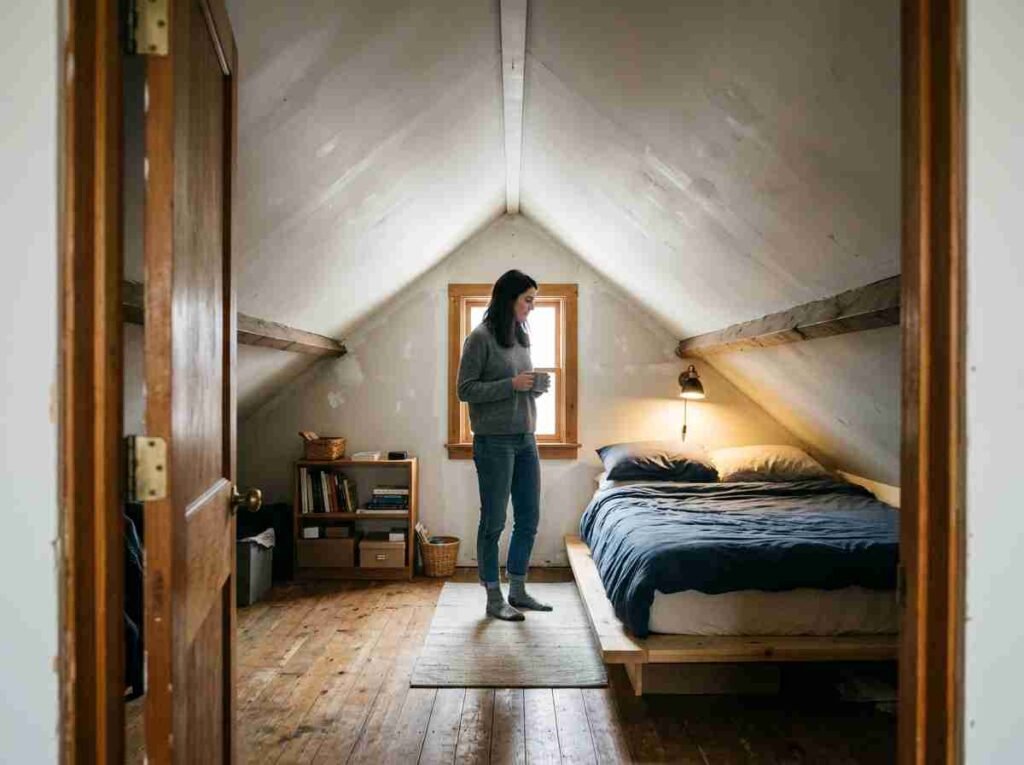
The standing-height boundary. This is the point, moving outward from the peak, where the ceiling drops below a comfortable standing height (roughly 5’6″–6’0″ for most adults). Everything beyond this boundary, toward the walls, is functionally only usable while seated or lying down. Mapping this boundary on the floor — even just mentally walking the room and noting where you start ducking — is the single most useful planning step before buying or building anything.
The absolute lowest usable point. Many attics taper all the way down to a few inches at the wall, where the space genuinely cannot be used for anything except the very back of a deep, low storage unit. Knowing exactly where “usable for furniture” stops and “structural void” begins prevents wasted effort trying to make every square foot of floor space do something it physically can’t.
You can also read Curtain Ideas for a Small Dining Room — The Complete Guide 2026
Where the Bed Actually Goes
This is the most important single decision in a very low attic bedroom, and it’s the one place where the constraint genuinely becomes an advantage rather than just a limitation.
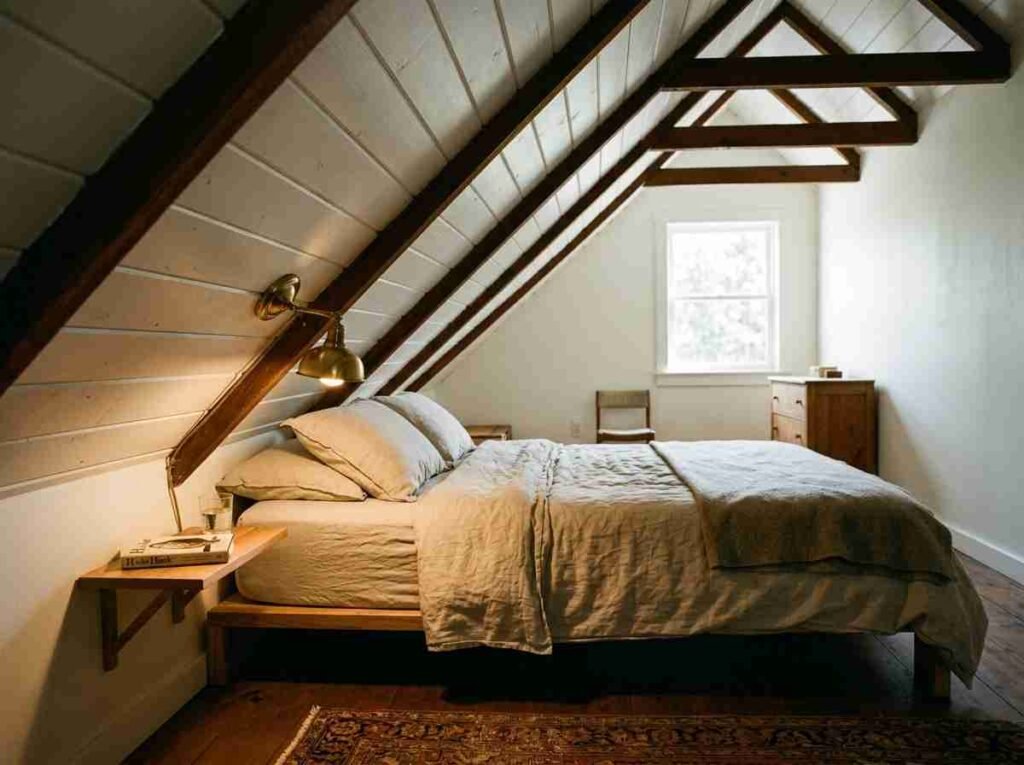
Position the bed where the ceiling is lowest, not where it’s highest. This sounds backwards until you remember the obvious fact that you’re lying down in bed, not standing. A platform frame built to hug the sloping ceiling line, positioned with the head of the bed at the very lowest point of usable headroom, uses exactly the part of the room that’s least useful for anything else. The body extends outward from there, toward where the ceiling gradually rises, so by the time someone sits up, they’re already in a part of the room with more headroom.
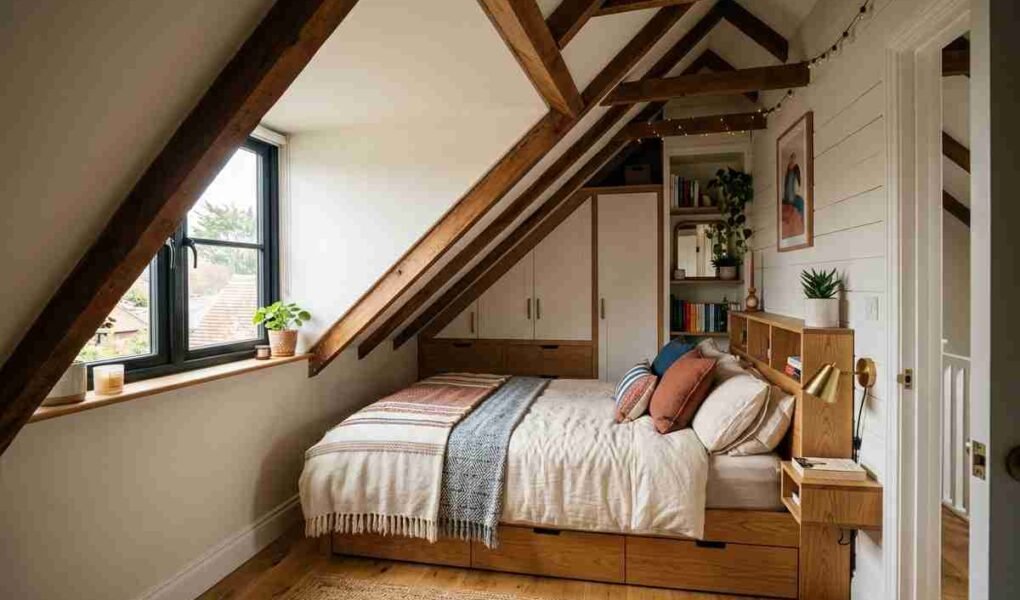
Skip the nightstand — mount everything to the wall or ceiling instead. When the ceiling is sloped close enough to the bed that a standard nightstand won’t physically fit, wall-mounted reading sconces and a tiny floating shelf for a book and a glass of water solve the same problem without needing floor space that doesn’t exist in that exact spot.
Choose a low-profile frame, or no frame at all. A platform bed sitting close to the floor, or a mattress directly on a low base, keeps the entire sleeping area within the lower portion of the slope without the bed itself eating into headroom that could otherwise be used for sitting up comfortably.
Consider angling the bed rather than squaring it to the wall. Positioning a bed at an angle relative to the slope — rather than flush against the lowest wall — can sometimes let in more light from a nearby window while still avoiding the claustrophobic feeling of being tucked directly under the very lowest part of the ceiling.
You can also read Antique Style Bathroom Vanity: The Complete Buying and DIY Guide
What Furniture Genuinely Fits
Once the bed is placed, the remaining furniture needs to be chosen specifically for the boundary between standing-height space and sloped, sit-or-lie-only space.
In the peak/standing-height zone: This is the only place a wardrobe, a tall bookshelf, or a desk with a chair someone needs to sit upright at can realistically go. If the standing-height zone is small, prioritise ruthlessly — one tall storage piece is usually all that fits, and it needs to do the work of several smaller ones.
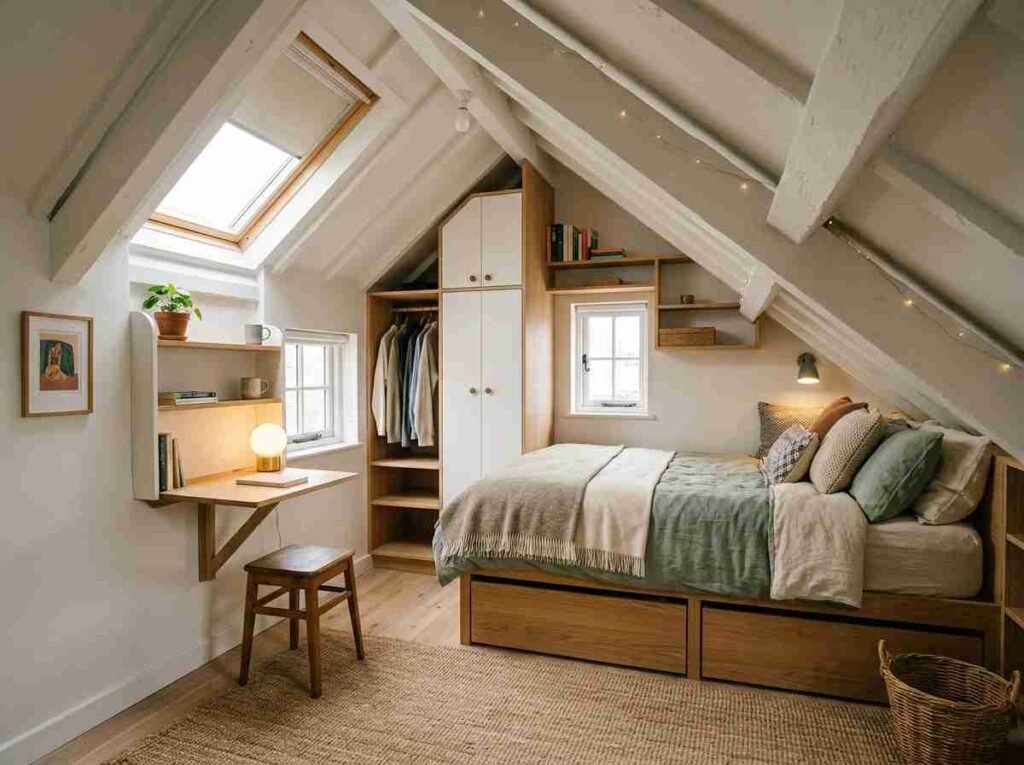
In the sloped, sit-or-lie zone: This space is genuinely only good for low furniture — the bed itself, low storage drawers built into a platform base, or shelving that steps down in height to follow the exact slope of the roof, starting full height where the ceiling allows and gradually shrinking toward the wall.
Built-in over freestanding, wherever the budget allows. Custom, fitted furniture built to the precise angle of a sloped ceiling almost always outperforms standard freestanding furniture in a very low attic, since a regular wardrobe or shelf simply can’t follow a slope and ends up wasting the triangular gap above it. A bespoke fitted wardrobe, even a simple one, recovers usable storage space that off-the-shelf furniture cannot.
Foldable and multifunctional pieces for everything else. A foldable desk that tucks away when not in use, or a low ottoman that doubles as both seating and storage, matters more in a very small attic than in almost any other room type, since floor space genuinely cannot be permanently dedicated to single-purpose furniture.
You can also read Rustic Basement Design: The Complete Guide
Light — The Single Biggest Factor After Layout
Once the layout is settled, lighting (natural and artificial) is what determines whether a very low attic bedroom feels cosy or genuinely oppressive.
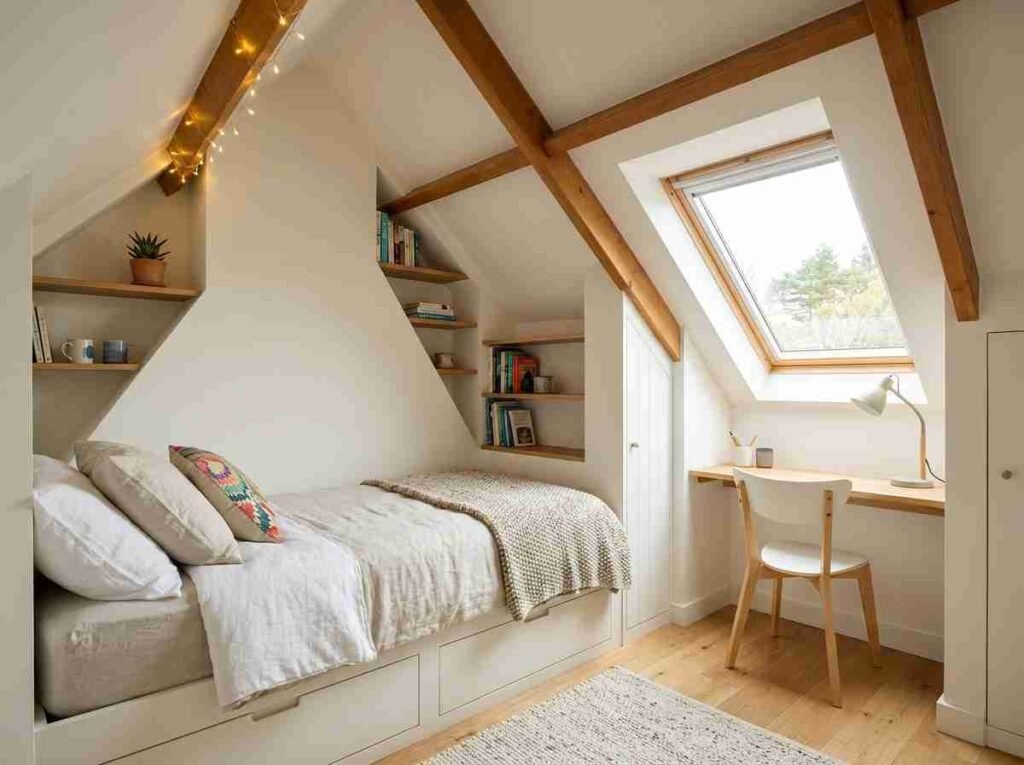
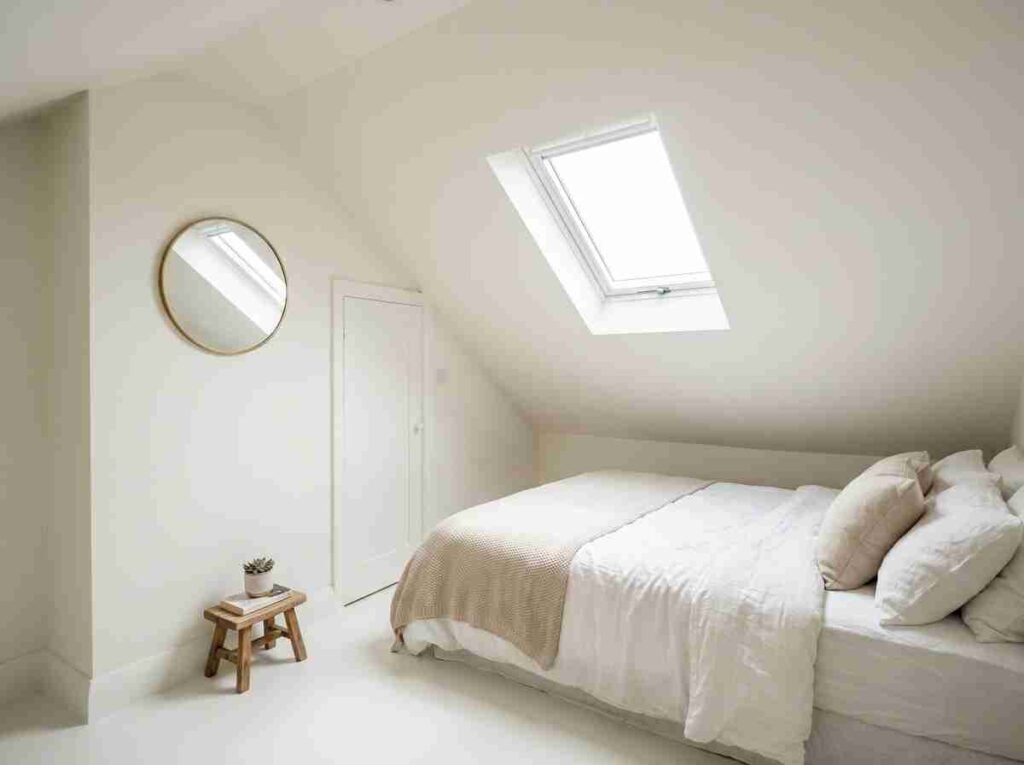
Skylights change everything. In attics with small windows or low ceilings, skylights provide a much-needed source of light that makes the room feel more open and airy than its actual dimensions suggest, and a skylight placed directly over the bed lets someone see out while lying down — genuinely useful for avoiding the closed-in feeling that low, sloped ceilings can otherwise create.
Wall-mounted lighting saves floor and table space that doesn’t exist. In a room this constrained, every fixture that would normally sit on a surface — a table lamp, a floor lamp — competes for space that’s needed for something else. Wall-mounted fixtures solve the lighting problem without taking any of that space.
A consistently light, monochromatic colour scheme makes the room read as larger than it is. Painting the sloped ceiling, the walls, and the trim all in the same pale colour minimises the visual transitions that would otherwise make the room feel chopped up — the eye moves continuously around the space rather than catching on each angle change, which makes low ceilings read as less oppressive than they would in a room with contrasting paint breaking up every surface.
You can also read Southwestern Desert Bathroom Decor: The Complete Style Guide
Decorating Once the Layout Works
Once the practical foundation is in place — the bed positioned correctly, the furniture chosen for the right zones, the lighting addressed — the remaining decorating advice for a very small, very low attic bedroom is genuinely the same as for any attic, regardless of how dramatic the slope is.
Lean into the cosiness rather than fighting it. The intimate scale and angular ceilings that come with a very small attic create an automatic sense of retreat that larger, more conventional rooms struggle to replicate — once the layout is sorted, this becomes a genuine asset rather than something to apologise for.
Use the slope itself as a design feature. Built-in shelving that steps down in height along the exact angle of the roof turns “what do I do with this weird wall” into a deliberate architectural feature, particularly when filled with books or display objects arranged to draw the eye along the line of the slope.
Add personal, characterful touches once the basics are right. Family photos, artwork, and small meaningful objects make a very small attic bedroom feel like a genuine sanctuary rather than just a solved storage puzzle — this final layer matters more in an attic than almost anywhere else, since the room’s intimacy means every object in it is more visible and more present than in a larger, more anonymous space.
Use transitional flooring or rugs to define zones if the attic serves more than one purpose. In a small attic apartment or a combined bedroom-office space, a different flooring material or a well-placed rug between the sleeping zone and a desk area helps the room feel organised rather than chaotic, even without any walls to physically divide it.
Frequently Asked Questions
Q: How low can an attic ceiling be and still work as a bedroom?
A: There’s no single fixed number, but as a practical guide, a peak height of at least 7 feet somewhere in the room gives enough space to stand comfortably, while sections that drop to 3–4 feet can still be used effectively for the lowest part of a bed or for low built-in storage. Rooms where the entire floor area sits well under 5 feet of headroom are far more limited and usually work best as storage, a child’s play space, or a very compact reading nook rather than a full-time bedroom, though even these can sometimes work with very careful, fully custom furniture planning.
Q: Where should the bed go in a low ceiling attic bedroom?
A: Position the bed where the ceiling is at its lowest, with the head of the bed at the very lowest usable point and the body extending toward where the ceiling rises. This works because lying down requires far less headroom than sitting up or standing, so the lowest, least versatile part of the room becomes the bed’s natural home rather than wasted space. Skip a bedside table in favour of wall-mounted lighting and a thin floating shelf, since a standard table often won’t physically fit in the gap between the bed and the sloped ceiling above it.
Q: What furniture fits in a very small attic bedroom with a sloped ceiling?
A: Tall furniture — wardrobes, bookshelves, a desk and chair — needs to go in the area with full standing height, usually near the centre or peak of the roof. The sloped, lower-headroom areas around the edges only suit low furniture: the bed itself, low storage drawers, or custom shelving built to step down in height following the exact angle of the slope. Built-in, custom-fitted furniture consistently outperforms standard freestanding pieces in these spaces, since it can follow the slope precisely rather than leaving an unusable triangular gap above a standard rectangular piece.
Q: How do you make a small attic bedroom feel less cramped?
A: Paint the sloped ceiling, walls, and trim in the same pale, consistent colour to minimise visual transitions between surfaces, which helps the eye move continuously around the room rather than catching on every angle change. Maximise natural light with a skylight if possible, positioned over the bed or a seating area where feasible. Use wall-mounted lighting rather than floor or table lamps to avoid losing floor space to fixtures, and consider a mirror on any available vertical wall to bounce additional light around the room.
Q: Is it worth converting a very low attic into a bedroom rather than just using it for storage?
A: It depends on the specific dimensions and what the space is realistically capable of. An attic with reasonable headroom across a meaningful portion of the floor, even if much of it slopes dramatically toward the walls, is very often worth converting into a genuine bedroom using the placement and furniture principles above. An attic where almost the entire floor area sits under roughly 4–5 feet of headroom is more realistically suited to storage, a play space, or a small reading nook, since the proportion of truly usable floor space becomes too limited to comfortably support full-time bedroom use, even with the most careful planning.