Introduction
A small bedroom does not need a perfect shape to feel calm and easy to use. It needs a bed position that makes sense when you walk in, clear paths to move around, and storage that does not block the door or the window. That is where feng shui bedroom layout ideas are useful, not as strict rules to worry about, but as a practical way to test a layout before you move heavy furniture.
In traditional feng shui, the most important idea is the command position. Put simply, you can see the door from the bed without lying directly in line with it, and your headboard rests against a solid wall. Many people find that position feels more settled, because you are not startled by someone entering and you are not sleeping in the main path through the room.
Small rooms complicate that idea. You may have a window where the solid wall should be, a door in the corner, an ensuite door, a sloped ceiling, or a wardrobe that leaves almost no floor space. This guide works through those real problems, gives clear measurements, and offers three room shapes you can copy, so you can choose a layout that fits your room rather than forcing your room to fit a diagram. For the bigger picture on layout, storage, light, and style, see Small Bedroom Ideas: The Complete Guide to Layout, Storage, Light and Style.
Key takeaways
- Put the bed in the command position first: visible from the door, not in line with it, with a solid headboard wall.
- Small-room exceptions can be solved without moving walls, using layout, mirrors, and storage choices.
- Keep the area under the bed clear and avoid mirrors facing the bed, for calmer sleep.
- Use one of the three copyable layouts (square, narrow, or door-in-corner) as a starting point, then adjust for your room.
Idea 1: Put the Bed in the Command Position First
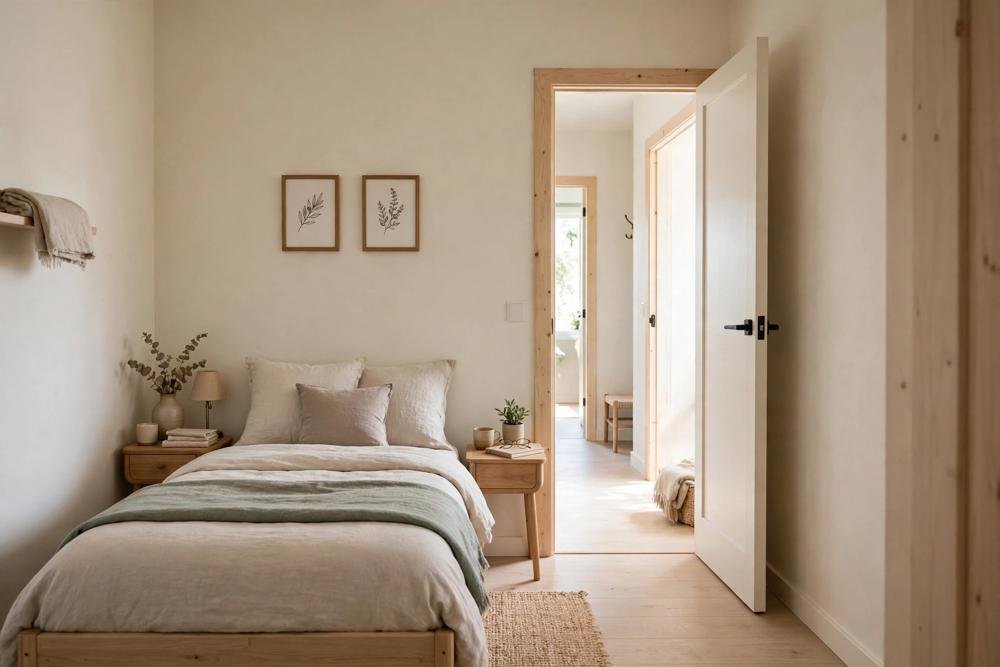
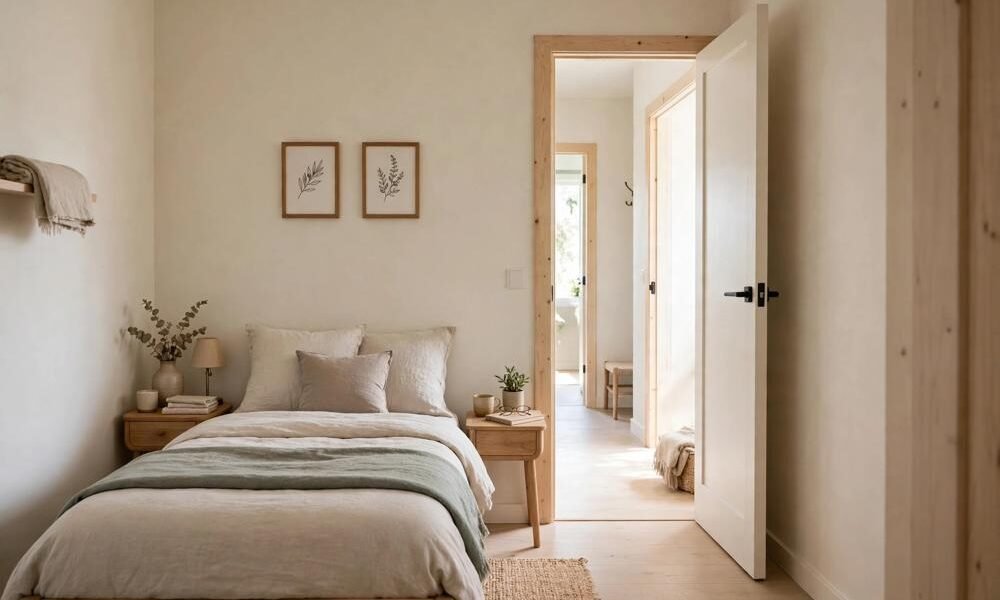
Start with the bed, because it is the largest piece of furniture and it sets the rest of the room. Look for a solid wall that lets you see the door from the bed, ideally at an angle, while keeping the bed out of the direct line of the doorway. You do not need a perfect view of the whole door. A clear view of who is coming in is enough.
Keep walkways usable. Aim for about 24 to 30 inches of clear space on the side you get in and out of bed most often. If both sides are used, keep at least 24 inches on the tighter side. At the foot of the bed, leave enough room to walk past without turning sideways. In a very small room, 24 inches can work for a short path, but check how far dresser drawers and wardrobe doors open before you settle the bed.
A solid headboard helps the command position feel finished. It does not need to be tall or expensive. A simple upholstered panel or wooden headboard gives your head a clear backing and stops pillows from slipping behind the bed. If you read in bed, choose one that is comfortable to lean against, and use a wall light rather than a bulky table lamp that eats into nightstand space. For more layered options, see our guide to Cozy Bedroom Lighting Ideas Without an Overhead Light.
If you share the room, test the position for both sleepers, and use a floating shelf or slim wall mounted nightstand on the tight side to keep the walkway clearer.
Idea 2: Solve the Small Room Exceptions Without Moving Walls
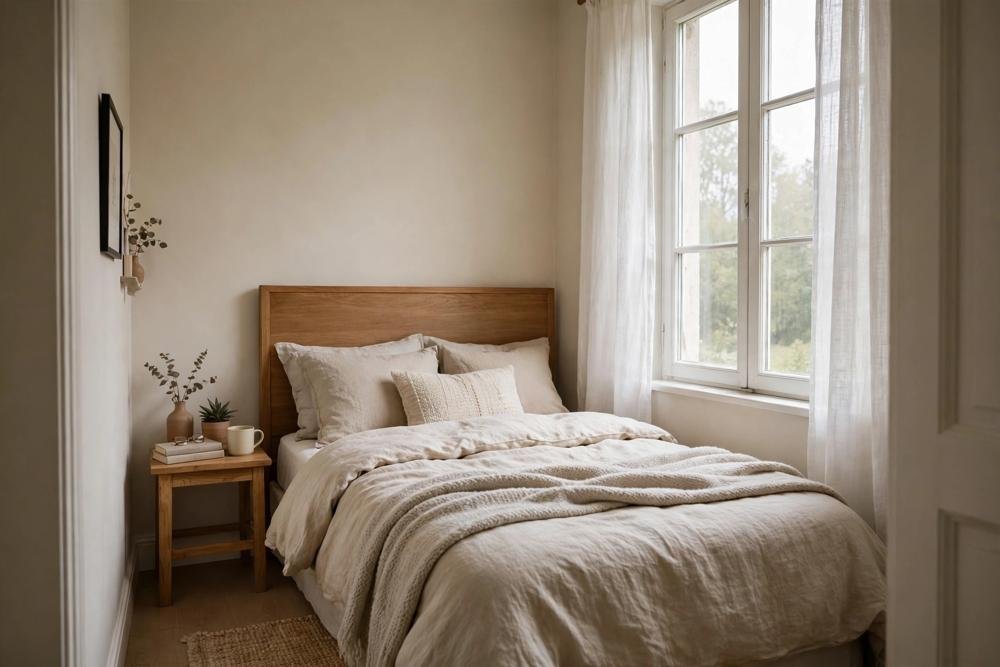
Most small bedrooms break at least one textbook rule, and that is normal. Choose the least disruptive compromise and fix it with furniture.
If the only good wall is under a window, you can still use it. Place the bed with a solid headboard against the wall below the window, keep curtains that close fully at night, and avoid blocking the window handle or a radiator. If the window is low, a lower headboard works better, and curtains hung wider than the frame can make the bed wall look intentional. Keep the window clear enough to open for fresh air, and do not push a tall wardrobe directly in front of it.
If the bed would face the door directly, shift it a little to one side if you can. Even 12 to 18 inches can move it out of the direct doorway line while keeping a clear view of the entrance. If the room is too narrow to shift it, use a footboard, a bench, or a low storage box at the foot of the bed to create a visual pause between the door and the sleeping area. Keep it low and narrow so it does not block the path.
Two doors can make a small room feel like a hallway. Pick one main walking route and keep it clear. Put storage and any desk against the wall that is not on that route. If one door is an ensuite door, keep the area just inside it free of laundry and boxes. A door that opens into the room needs its full swing clear, so check whether reversing a door, if your home allows it, would free up a useful wall.
A sloped ceiling needs a different test. Do not put the head of the bed where you cannot sit up comfortably, and keep tall storage on the highest wall. Low storage works well under a slope, while a tall wardrobe there will waste space.
Idea 3: Use Mirror, Beam and Under Bed Rules in Practical Terms
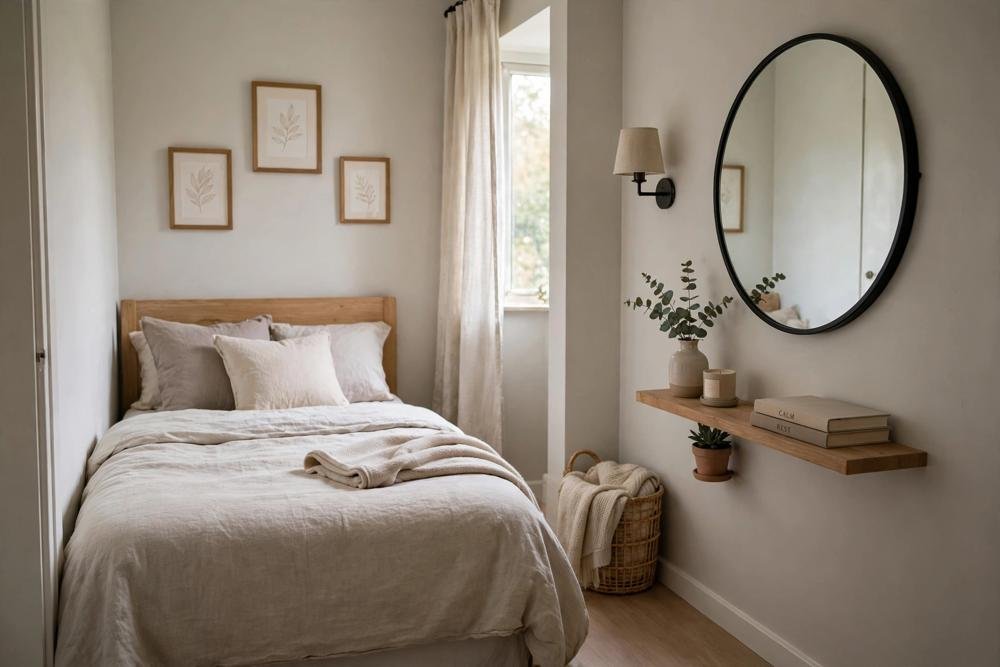
Feng shui has a lot to say about mirrors, beams, and clutter under the bed. You can use those ideas in practical terms, without making health or luck claims. The goal is a room that is easier to sleep in, easier to clean, and less visually busy.
For mirrors, avoid one that faces the bed directly, especially a large one that reflects movement all night. Instead, place a mirror on a side wall, inside a wardrobe door, or beside the dressing area where you actually use it. If your only mirror is opposite the bed, angle it if possible, move it to a side wall, or cover it at night. This reduces visual distraction and reflected light when you are trying to rest.
For beams, avoid placing the head of the bed directly under a heavy exposed beam if you can. A beam over the bed can feel heavy and make the room feel lower. If it cannot be avoided, paint it the same colour as the ceiling so it blends in, add soft lighting on either side, or move the bed a few inches so the beam falls over the foot of the bed rather than over your head. A fabric canopy is not needed, and in a small room it can make the space feel more enclosed.
Under the bed, keep it simple. Clear space is easier to clean, and closed boxes or drawers work best if you need storage there. Avoid filling the space with things you never use, and keep wardrobe tops and the floor by the door clear.
Idea 4: Three Small Room Layouts You Can Copy
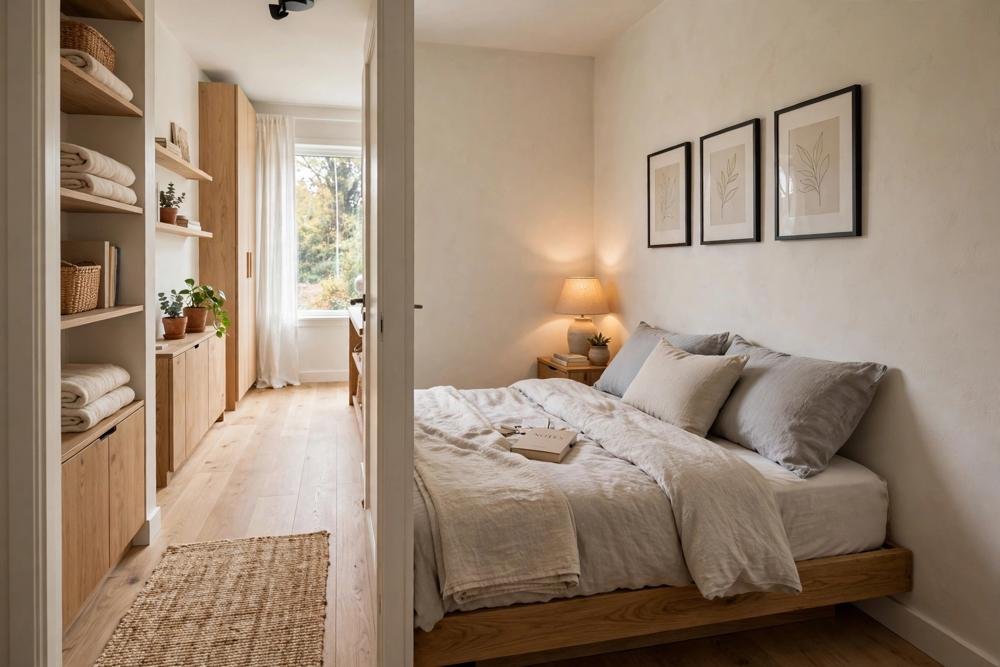
The square room
In a square room, place the bed against the wall opposite the door if that wall is solid, or diagonally opposite the door if the opposite wall has a large window. Keep nightstands slim. A floating shelf on one side can save about 12 inches compared with a wide nightstand, and a wall light frees the shelf surface. Put the wardrobe on the wall beside the door, not opposite the bed, so the room does not feel boxed in when you walk in. For a full plan for this exact footprint, see our Small Bedroom Layout Ideas for a 10 by 10 Room.
The narrow room
In a long narrow room, place the bed against the long wall if that leaves a walkway of at least 24 inches on one side. Pushing the bed fully into a corner can work if only one sleeper uses that side often, but it makes changing sheets harder. A better compromise is a slim gap for bedding, a wall mounted light instead of a table lamp, and shallow storage on the opposite wall. A wardrobe depth of 40 to 60 centimetres is usually enough for hanging clothes, and a deeper one can steal the walkway. At the far end, a small desk or reading chair can create a second zone, but only if the walkway to the bed stays clear.
The room with the door in the corner
A corner door often leaves one long usable wall and one short wall. Place the bed on the long wall, angled so you can see the door, and keep the short wall for a tall chest rather than a wide dresser. The tall chest uses vertical space and leaves more floor free. Keep the door swing zone empty. A rug under the lower two thirds of the bed, rather than under the whole bed, can define the sleeping zone without crowding the door area. Avoid a second large piece of furniture near the door, because it will make the entrance feel tight every time you enter.
Before You Move Furniture, Do This Quick Check
Measure the room, the bed, and the main furniture before you start. Note the door swing, window position, radiator and outlet locations, and any sloped ceiling height. Tape the bed outline on the floor with masking tape if you can. Walk the routes you would take at night, from the door to the bed, from the bed to the ensuite or hallway, and from the bed to the wardrobe. If any route forces you to turn sideways, move a small item first and retest.
Check heights too. A nightstand should be close to mattress height, and a desk needs at least 24 inches of chair pull out space behind it.
Storage That Supports the Layout
Good layout ideas work best when storage follows the layout, not the other way round. Start with what you use every day, then weekly items, then seasonal items. Daily clothes belong at waist to shoulder height. Seasonal bedding and rarely used items can go higher, above 6 feet, or under the bed in closed boxes.
If you have no closet, our guide to How to Organise a Bedroom Without a Closet walks through a full system. In short, keep hanging clothes on one wall, folded clothes in a chest or dresser, and shoes near the door or under the bed. If you do have a small reach in closet, double hanging rods for shirts and trousers can double usable hanging space, with one longer section for dresses or coats.
What to Avoid
Avoid placing the bed directly in line with the door if another position is possible, because it puts the bed in the main traffic path and makes the room feel exposed. Avoid a mirror facing the bed, a tall wardrobe blocking the only window, and a desk chair blocking the walkway to the bed. Avoid filling under the bed with items you never use, and avoid leaving bags and laundry by the door.
Avoid buying furniture before measuring. A nightstand that is too tall, a dresser that is too deep, or a wardrobe that is too wide can ruin an otherwise good layout. Avoid matching sets that are too large for the room, and avoid copying a layout diagram without testing it in your own room. Door swings, windows, radiators, and sloped ceilings change everything, and a layout that works in a photo may not work in your space.
FAQs
Where should my bed go in feng shui?
In traditional feng shui, the bed should be in the command position: against a solid wall, with a clear view of the door, but not directly in line with the doorway. In a small room, get as close to this as you can, and use a small shift, a bench at the foot of the bed, or a solid headboard to improve a less than perfect position.
Is it bad feng shui to put a bed under a window?
It is often seen as less ideal, because the wall behind the bed is not solid. In a small room, it can still work well with a solid headboard, curtains that close fully, and the window handle and airflow kept accessible. Test whether drafts or street light bother you at night before deciding.
What is the command position in a bedroom?
The command position means you can see the door from the bed without being directly in front of it, and your headboard is on a solid wall. It is a layout idea many people find more settled, because you are not surprised by someone entering and you are not sleeping in the main path through the room.
Can my bed face the bedroom door?
It is best to avoid it if you can, because the bed then sits in the direct line of movement into the room. If the room is too small to move the bed, shift it slightly to one side, add a low bench or storage box at the foot, and keep the path from the door clear.
Where should I put a mirror in a small bedroom?
Put a mirror on a side wall, inside a wardrobe door, or near the dressing area where you use it, rather than directly facing the bed. If the only spot is opposite the bed, angle it if possible or cover it at night, to reduce reflected light and visual movement while you rest.
What do I do if my bedroom has two doors or an ensuite door?
Choose one clear walking route and keep it free. Put storage against the wall that is not on that route, keep the ensuite entrance clear, and check door swings before placing large furniture. A tall chest on a short wall often works better than a wide dresser near a door.
Conclusion
A good feng shui bedroom layout for a small room is not about following every rule perfectly. It is about choosing a bed position that lets you see the door, keeping clear paths, and solving the exceptions in your room with practical fixes. Start with the command position, test the layout with tape on the floor, and adjust for windows, doors, slopes, mirrors, and storage. When the bed, walkways, and storage work together, a small bedroom can feel calm, easy to use, and much larger than its measurements suggest.