Introduction
If you are standing in a showroom or scrolling through vanity options online, the wood choice can feel overwhelming — every option looks beautiful in a product photo, and almost nothing tells you how it will actually hold up after two years of daily steam, splashing, and humidity beside your sink.
The short answer: teak, walnut, and white oak are consistently the three best choices for a bathroom specifically, because all three have natural properties that genuinely resist moisture rather than simply tolerating it for a while before warping or swelling. Teak leads the group — its natural oils make it so water-resistant it has been used in boat building for centuries, which tells you everything about how it handles a humid bathroom. Walnut is the classic choice for a rich, dark-toned vanity, with good moisture tolerance and a mid-tone grain that quietly hides minor scuffs and water spots over time. White oak has a closed-grain structure that actively resists water penetration, and it ages beautifully rather than simply wearing out.
On the other end: MDF, despite being the industry standard for budget vanities, is essentially compressed sawdust held together with glue. In a humid bathroom it swells, bubbles, and eventually crumbles — often starting from the bottom edge near the floor where moisture collects most persistently. It can look identical to solid wood on day one. It rarely performs that way by year three.
This guide covers every wood option honestly — what holds up, what to avoid, and exactly why — plus the sealing steps that protect any wood vanity long-term, how to refinish or repaint an existing piece, and what to know if you want to build one yourself from reclaimed wood.
🔗 Planning your full vanity setup? Read our antique style bathroom vanity guide and our Free Standing Bathroom Vanity: The Complete Guide for more.
Every Wood Type, Honestly Compared
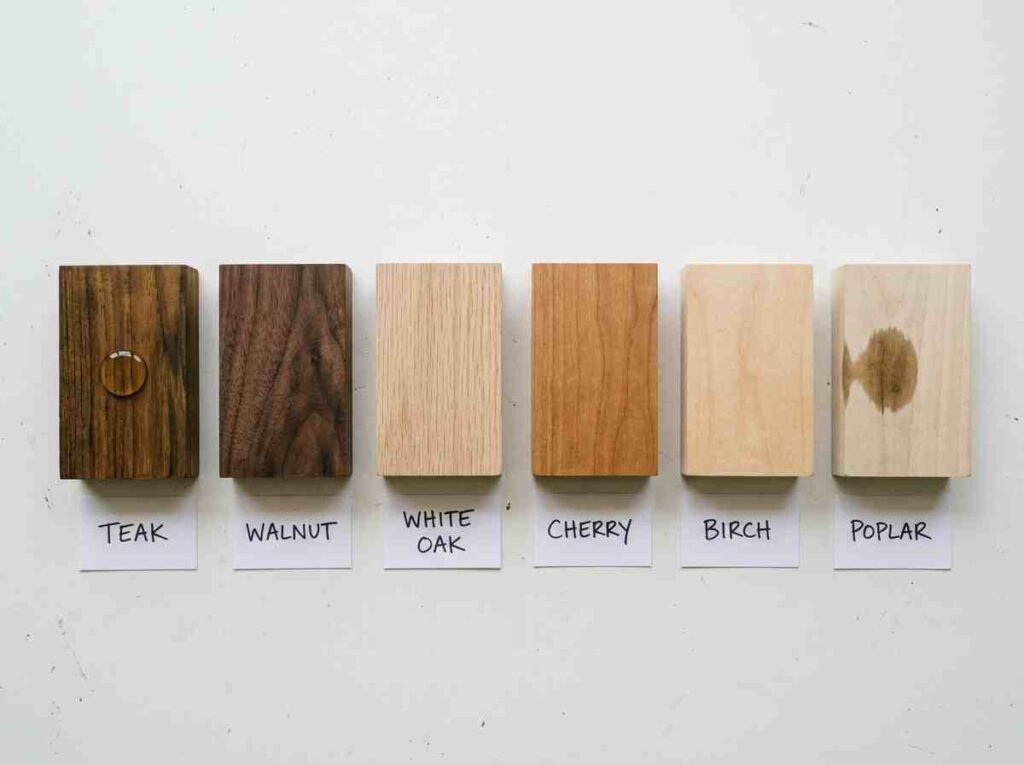
Teak
The single most water-resistant natural wood available for a bathroom vanity, thanks to natural oils within the wood itself that repel moisture far more effectively than most other species. This is the same property that has made teak the material of choice in boat building for centuries, and it translates directly into excellent long-term performance beside a sink and shower.
Best for: Bathrooms with heavy daily use, high humidity, or households that simply want the lowest-maintenance, most failure-resistant option available.
Walnut
The classic, most recognisable choice for a warm, dark-toned vanity, with naturally good moisture resistance and a mid-tone grain colouring that helps disguise minor scuffs and water spots better than lighter woods. Walnut also ages attractively, deepening slightly in colour over years of use rather than looking simply worn.
Best for: A rich, traditional or mid-century aesthetic where dark wood is the desired look.
White Oak
A closed-grain structure that resists water penetration effectively, paired with a wood that genuinely ages well rather than just surviving — developing character over time rather than degrading. White oak is also widely available and pairs easily with almost any hardware or countertop finish.
Best for: A lighter wood tone that still delivers genuine, lasting moisture performance.
Cherry
A warm, reddish-brown wood with a fine, tight grain, commonly used in more traditional and antique-style vanities. Cherry performs reasonably well in a bathroom environment when properly sealed, though it is generally considered somewhat less naturally moisture-resistant than teak or white oak, making a quality sealant especially important.
Best for: A traditional or antique-style bathroom wanting a warm reddish tone rather than the darker brown of walnut.
Birch
A lighter, more affordable hardwood option. Birch can perform adequately in a bathroom vanity when properly sealed and finished, but it is generally considered less naturally moisture-resistant than teak, walnut, or oak, meaning the quality of the finish and ongoing maintenance matter more with birch than with the top-tier choices above.
Best for: A lighter wood tone on a more modest budget, with the understanding that careful sealing is especially important.
Poplar
A softer, more affordable hardwood that’s workable and takes paint well, making it a reasonably common choice for painted vanity cabinets rather than ones meant to showcase natural wood grain. Poplar is not typically recommended as a primary structural wood for unpainted, moisture-exposed surfaces, since it is softer and less naturally water-resistant than the hardwoods above.
Best for: Painted vanity cabinets where the wood itself won’t be left exposed to direct moisture or shown off for its grain.
You can also read Bedroom Sets With a Vanity: What to Look For
Solid Wood vs. Engineered Wood — The Honest Comparison
Solid Wood
Genuine solid hardwood offers the best combination of durability, repairability, and longevity. A solid wood vanity can be sanded and refinished multiple times over its life, and minor damage can often be repaired rather than requiring full replacement. The trade-off is cost — solid wood vanities command a meaningfully higher price than engineered alternatives.
MDF (Medium-Density Fibreboard)
MDF is the industry standard for budget vanities because it’s inexpensive to produce, but it is essentially compressed sawdust held together with glue. In a humid bathroom, it swells, bubbles, and can eventually crumble, particularly around the sink area and along the bottom edge near the floor where moisture collects most persistently. A vanity built from MDF can look identical to a solid wood piece on the showroom floor, but the two materials behave very differently after a few years of real bathroom use.
Plywood
A genuine middle ground between solid wood and MDF. Quality plywood, particularly marine-grade plywood, offers considerably better moisture resistance than MDF while remaining more affordable than solid hardwood, making it a reasonable choice for vanity cabinet boxes (the structural cabinet itself) even when the visible front panels are solid wood or a quality veneer.
Wood Veneer Over Engineered Core
A thin layer of real wood applied over a more stable engineered substrate. This delivers genuine wood grain and visual authenticity at a lower cost than solid wood throughout, though the quality varies enormously between manufacturers — a thicker, well-applied veneer over a quality core (rather than MDF) can perform reasonably well, while a thin veneer over MDF inherits most of MDF’s underlying moisture problems regardless of how convincing the surface looks.
The honest bottom line on whether you need solid wood: for a vanity that needs to last many years in genuinely humid, daily-use conditions, solid wood or quality plywood with a real wood veneer are the only choices that reliably hold up. For a guest bathroom or powder room with lighter, less frequent use, a well-made MDF or veneer vanity can perform acceptably, but it should be understood as a shorter-lifespan choice from the outset rather than treated as equivalent to solid wood.
How to Seal and Waterproof a Wood Vanity Top
Whatever wood you choose, proper sealing is what actually determines how well it performs over time, and this matters even for the most naturally water-resistant species.
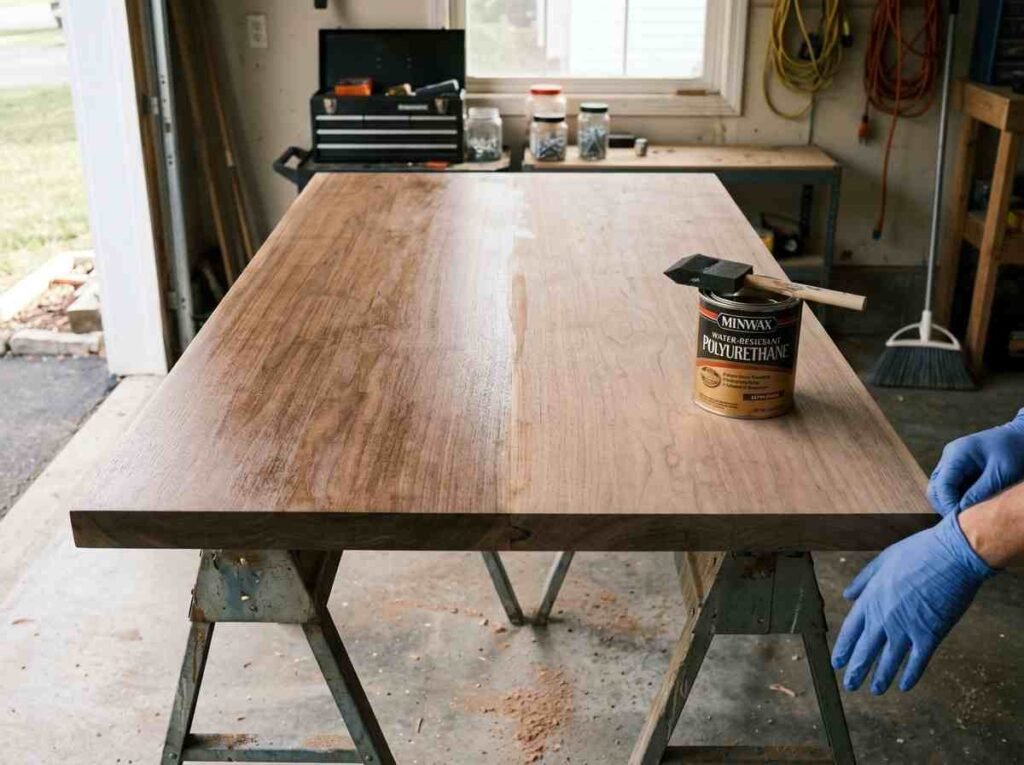
Choose a genuine water-resistant sealant, not a standard furniture wax or finish intended for dry-room use. Polyurethane (in a satin or semi-gloss finish for a vanity top specifically) and quality marine-grade varnishes are both commonly used for exactly this application.
Apply multiple thin coats rather than one thick one. Each coat should be allowed to cure fully before the next is applied, since multiple properly cured thin coats consistently outperform a single thick coat in both appearance and long-term durability.
Pay particular attention to the edges and any cut surfaces, including around any sink cutout, since these exposed edges are typically the most vulnerable points for water to penetrate the wood’s protective layer over time.
Reapply sealant periodically rather than treating it as a one-time job. A vanity top in heavy daily use benefits from a fresh coat of sealant every one to two years to maintain consistent protection, particularly around the sink area where water contact is most frequent.
You can also read Common Bathroom Vanity Sizes: The Complete Reference Guide
How to Refinish, Paint, or Repair an Existing Wood Vanity
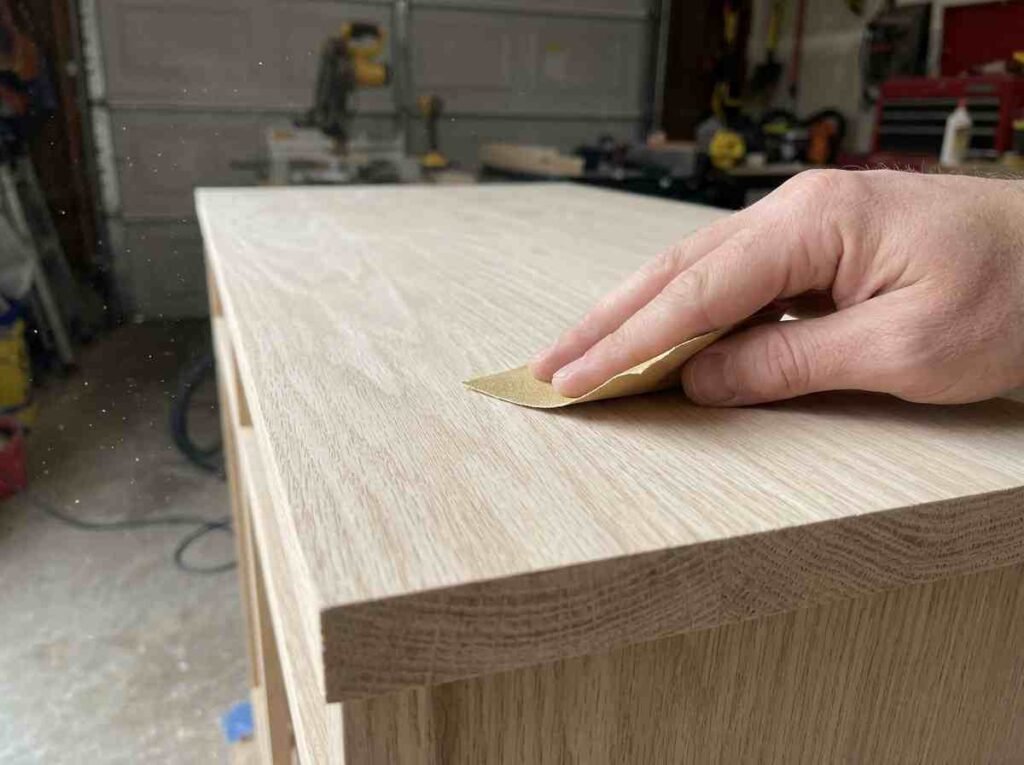
A tired or dated wood vanity is often a strong refinishing candidate rather than something that needs full replacement.
To refinish and restain: Strip or sand back the existing finish completely, taking care to remove old wax or sealant residue thoroughly before applying any new stain, since residual old finish can prevent new stain from absorbing evenly. Apply the new stain in the direction of the wood grain, then follow with several coats of fresh water-resistant sealant once the stain has fully dried.
To paint an existing wood vanity: Clean and degrease the surface thoroughly, since bathroom surfaces accumulate oils and residues that prevent paint from adhering properly. Sand lightly to give the surface some texture for the primer to grip, apply a stain-blocking primer, then finish with a paint specifically rated for high-moisture or bathroom use, applied in several thin coats rather than one heavy one.
For minor water damage or small repairs: Sand the affected area back to bare wood, apply wood filler if there’s any actual loss of material, sand smooth once cured, then match the surrounding stain or paint as closely as possible before resealing the full surface, since resealing only the repaired patch can leave a visible difference in sheen over time.
You can also read Cultured Marble Vanity Top: The Complete Guide
Building Your Own Vanity From Reclaimed Wood
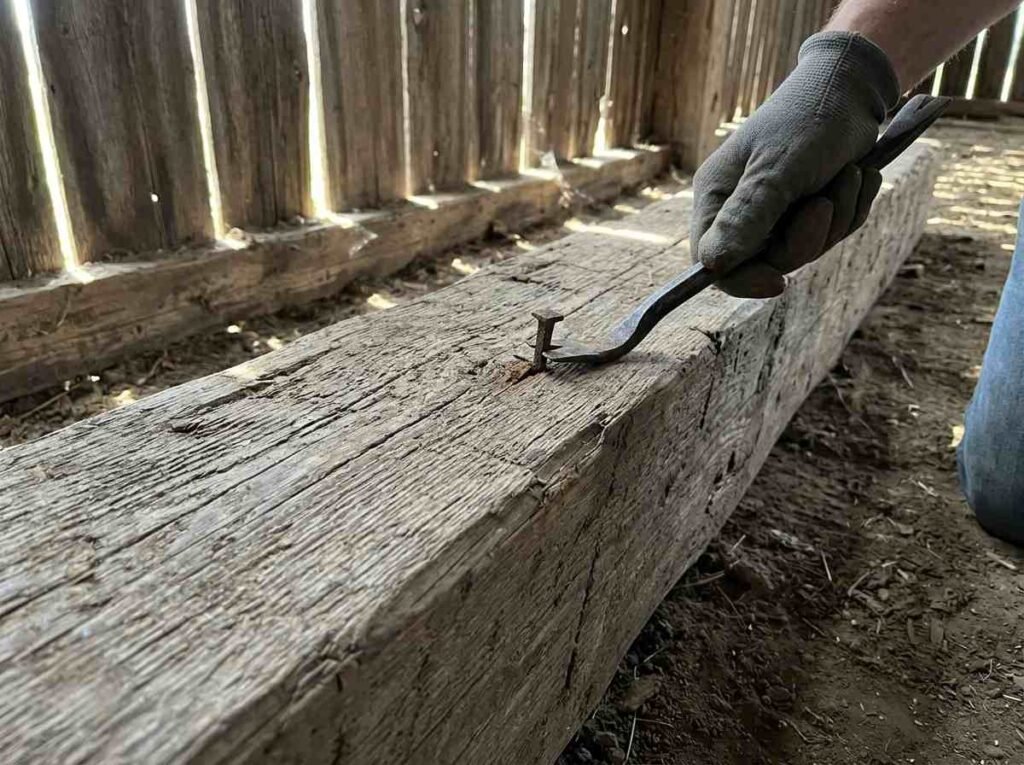
For anyone genuinely drawn to a one-of-a-kind result, building a vanity from reclaimed wood — old barn wood, a salvaged dresser top, or other repurposed lumber — is a realistic and increasingly popular DIY project.
Source structurally sound wood first. Reclaimed lumber should be checked for rot, insect damage, and genuine structural integrity before being considered for a wet-area application like a bathroom vanity, regardless of how visually appealing the weathered surface looks.
Plan for the sink cutout and plumbing access early, ideally before final assembly, since cutting an opening into a finished piece is considerably more difficult and risks damage compared to planning the opening from the start.
Seal more thoroughly than you would with new wood. Reclaimed wood has often dried out unevenly over its previous life and can behave somewhat less predictably than fresh-cut lumber, making a thorough, multi-coat sealing process even more important than usual.
Accept and even embrace visible character. Nail holes, slight colour variation between boards, and a weathered surface texture are generally the entire appeal of a reclaimed wood vanity — sanding too aggressively in an attempt to make the wood look new again tends to remove exactly the character that made the reclaimed material worth using in the first place.
Frequently Asked Questions
Q: What is the best wood for a bathroom vanity?
A: Teak, walnut, and white oak are consistently the three best choices, each offering strong natural resistance to the moisture and humidity a bathroom produces. Teak is the most water-resistant overall due to its natural oils, walnut offers rich colour with good moisture tolerance, and white oak has a closed-grain structure that resists water penetration while ageing attractively. Cherry is also a solid choice, particularly for a warmer, more traditional tone, while birch and poplar are more budget-friendly options that require more careful sealing and maintenance to perform well long-term.
Q: Is engineered wood or MDF good for a bathroom vanity?
A: MDF is generally the material to be most cautious about, since it’s essentially compressed sawdust held together with glue and tends to swell, bubble, and potentially crumble in a humid bathroom environment over time, particularly near the sink and along the floor-level edge. Quality plywood, especially marine-grade plywood, offers meaningfully better moisture resistance than MDF and is a reasonable choice for the structural cabinet box, even in a vanity with solid wood or veneer front panels. A thick, well-applied wood veneer over a quality core can perform acceptably, but a thin veneer over MDF generally inherits most of MDF’s underlying moisture vulnerability.
Q: How do I seal a wood bathroom vanity top to make it waterproof?
A: Use a genuine water-resistant sealant such as polyurethane in a satin or semi-gloss finish, or a marine-grade varnish, rather than a standard furniture wax intended for dry rooms. Apply several thin coats rather than one thick coat, allowing each to cure fully before applying the next, and pay particular attention to edges and any sink cutout, since these are the most vulnerable points for water penetration. Plan to reapply a fresh coat of sealant every one to two years on a vanity in regular daily use to maintain consistent protection.
Q: Can I paint a wood bathroom vanity instead of replacing it?
A: Yes, painting is a genuinely effective way to refresh a tired or dated wood vanity without replacing it. Clean and degrease the surface thoroughly, sand lightly to help the primer adhere, apply a stain-blocking primer, and finish with paint specifically rated for high-moisture or bathroom environments, applied in several thin coats. This approach works well on solid wood, and can also work on some veneer surfaces, though very thin or already-damaged veneer may not provide a stable enough surface for a durable, long-lasting paint job.
Q: Can I build my own bathroom vanity from reclaimed wood?
A: Yes, and it’s an increasingly popular DIY project for anyone wanting a genuinely one-of-a-kind result. The reclaimed wood needs to be checked carefully for rot, insect damage, and structural soundness before use, sink and plumbing access should be planned before final assembly rather than cut into a finished piece, and the wood should be sealed thoroughly, often more so than fresh-cut lumber, since reclaimed wood can behave somewhat unpredictably due to its uneven prior drying history. Visible character such as nail holes and colour variation is generally the appeal of the material and is worth preserving rather than sanding away.




[…] You can also read Best Wood for a Bathroom Vanity: The Complete Material and Care Guide […]