Introduction
Somewhere between a garden shed and a living room, the greenhouse has become the most quietly aspirational outdoor structure of 2026. Not the utilitarian kind filled entirely with trays of seedlings and bags of compost — though those work perfectly well — but the kind that blurs the line between indoor comfort and outdoor beauty so thoroughly that you find yourself spending time there not because you have something to tend to, but simply because it is the best room in the garden.
The shift happening around home greenhouse ideas right now is significant. These outdoor structures are stylish, sleek, and, above all, multi-functional — you are as likely to find a fully-stocked bar or a reading chair inside a modern greenhouse as a selection of perfectly pruned roses. The greenhouse has evolved from a purely functional growing space into a genuine lifestyle structure: part garden room, part sanctuary, part entertaining space, and one of the most personal additions any home can have.
This guide covers the main greenhouse types and which suits different spaces, the materials worth knowing, how to design the interior as a living space rather than just a plant room, DIY options for every budget level, and the styling details that turn a functional glass structure into somewhere you will genuinely want to spend time.
🔗 Read our Dark Olive Green House Style Guide and our Very Small Attic Bedroom Ideas for more.
Why Greenhouses Are the Outdoor Trend of 2026
In line with the biophilic design trend, horticulture and entertaining now exist side by side in modern greenhouses, with a growing demand for structures that feel as comfortable and considered as an interior room. This movement reflects a broader shift in how people are thinking about their outdoor spaces — not as zones for specific activities but as genuine extensions of the home, as carefully designed and as personally expressive as any indoor room.
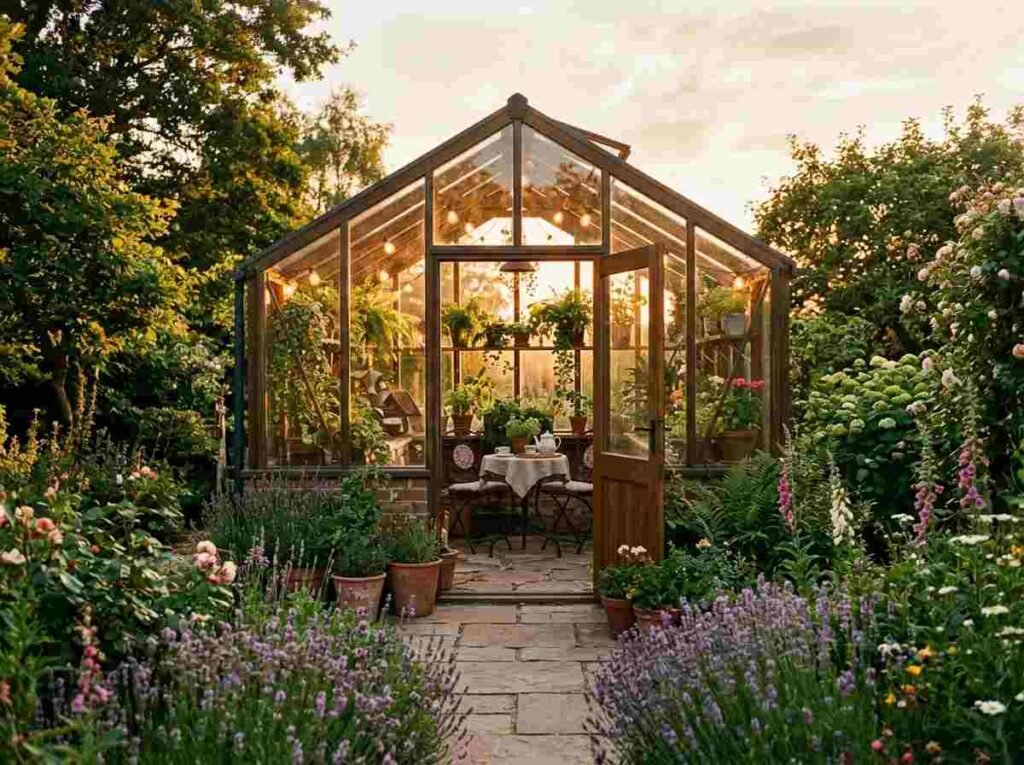
The practical reality behind the trend is equally compelling. A greenhouse extends the growing season, protects plants year-round regardless of weather, and creates a microclimate that can be genuinely warmer and more pleasant than the garden around it for a significant portion of the year. A well-designed greenhouse brings lifestyle, beauty, and practicality together — whether you are sipping tea among orchids or entertaining guests
The Main Greenhouse Types — Which Suits Your Space
Freestanding Greenhouse
The classic standalone structure, positioned anywhere in the garden with no attachment to the house or other buildings. Freestanding greenhouses give maximum flexibility for orientation and positioning, and can be as large or as small as the available space allows. They tend to suit larger gardens where the greenhouse can become a genuine destination rather than something tucked into a corner.
Lean-To Greenhouse
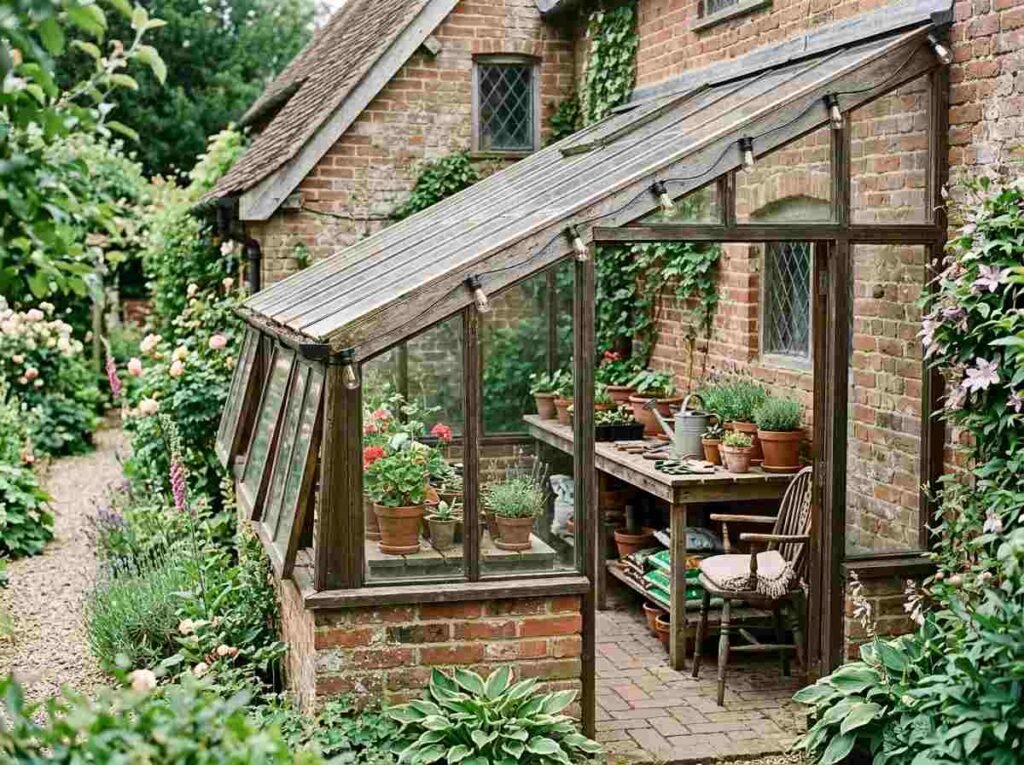
A lean-to greenhouse integrates against an existing structure — a house wall, fence, or garage — creating an attached greenhouse that feels like a seamless extension of your home and garden. This approach maximizes space, harnesses natural sun exposure, and transforms a simple garden corner into a beautiful sanctuary you can enjoy year-round.</cite>
The lean-to is particularly well suited to smaller gardens or urban spaces where a freestanding structure would take up too much footprint, and the shared wall with the house provides natural insulation that a standalone structure doesn’t have access to.
Cold Frame
The smallest and most affordable greenhouse option — essentially a bottomless box with a transparent lid, designed to protect seedlings and young plants from frost rather than to create a full growing or living environment. Cold frames are the right starting point for anyone who wants the benefits of a greenhouse without the commitment of a full structure.
Mini or Compact Greenhouse
Compact greenhouse designs are ideal for smaller yards or beginners who aren’t ready to tackle a large building project — some designs are just four feet long and two feet wide, with shelves to hold plants. These smaller structures make the greenhouse concept accessible to almost any outdoor space, including small patios, balconies, and urban gardens.
You can also use our Free Renovation Tool for Styling
Greenhouse Materials — What to Build With
Glass
Traditional greenhouse glazing, offering the best light transmission, the most clarity, and the most genuinely beautiful appearance. Glass is heavier than alternatives, requires more careful handling and installation, and can break — but a glass greenhouse has a quality and longevity that polycarbonate and acrylic structures rarely replicate. A full-glass greenhouse maximizes sunlight and offers a modern design that fits seamlessly into any outdoor space.
Polycarbonate Panels
The most common material for DIY and budget-friendly greenhouses, polycarbonate is lightweight, impact-resistant, and significantly cheaper than glass while still allowing strong light transmission. A spacious greenhouse can be built from a cedar wood frame with a polycarbonate cover — a combination that offers warmth, character, and practical durability at a cost well below a comparable glass structure.
Reclaimed Windows and Doors
Using salvaged windows and doors is a budget-friendly option for anyone wanting to DIY their own greenhouse. These materials can be found at local salvage yards, antique stores, estate sales, Habitat for Humanity ReStores, or online marketplaces — the key is ensuring the frames are sturdy and not rotted, and selecting single or double-pane windows, with the latter offering better insulation.</cite> A greenhouse built from reclaimed windows has an irreplaceable character and a visual warmth that no manufactured greenhouse quite replicates.
Frame Materials
Cedar and redwood are the classic choices for wooden greenhouse frames, offering natural rot resistance and a warm, characterful appearance that suits a garden setting far better than metal or plastic alternatives. Aluminum is the most common frame material for manufactured greenhouses, being lightweight, rust-proof, and low maintenance, though it lacks the warmth of wood. Steel offers maximum strength for larger structures, usually powder-coated to resist corrosion.
You can also read Curtain Ideas for a Small Dining Room — The Complete Guide 2026
Designing the Interior as a Living Space
This is where the modern greenhouse moves beyond its functional origins. The greenhouse evolution continues, with these structures becoming more adaptable, blending horticulture, wellness, and entertaining in a way that feels deeply connected to the garden.
Flooring
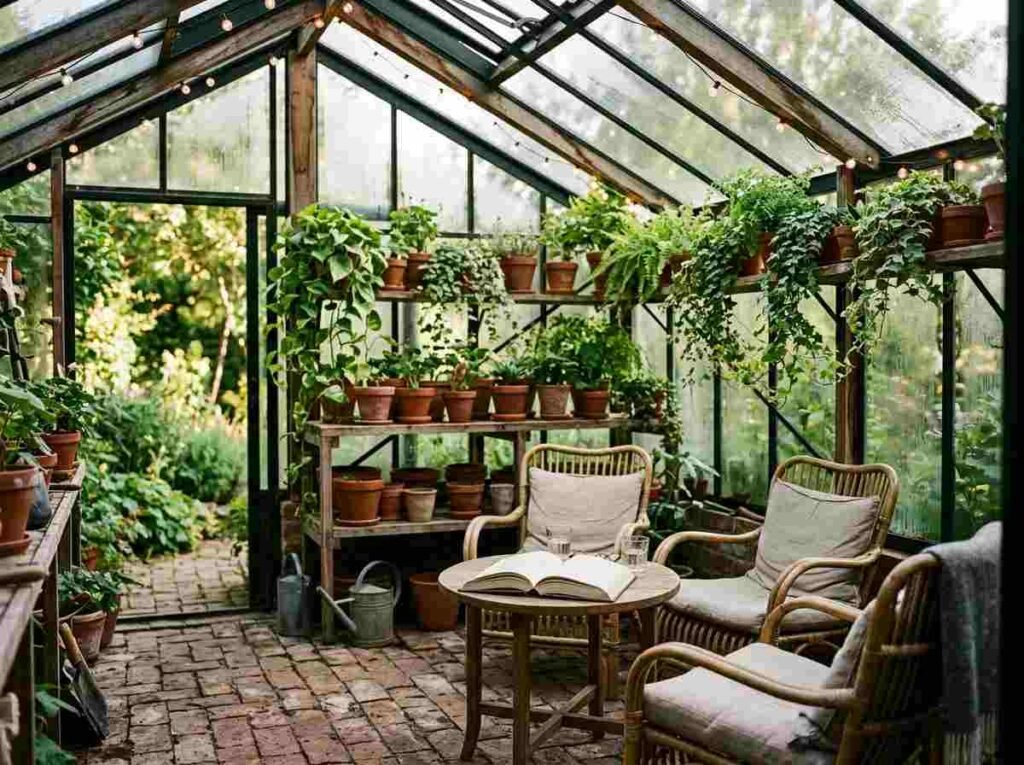
The floor of a greenhouse does more work than it might appear to. A brick-paved floor provides a cozy, rustic touch while offering enough room for potting, plant storage, and a small seating area. Pea gravel is another popular choice, excellent for drainage and giving the interior a natural, garden-appropriate texture. Reclaimed stone or slate provides warmth and character for a more finished look.
Seating and Furniture
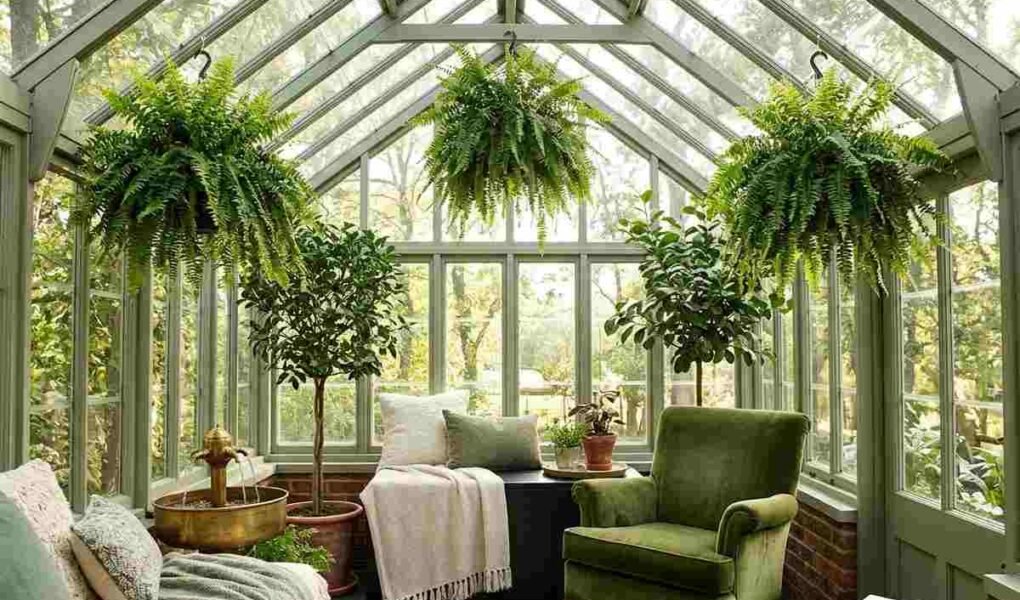
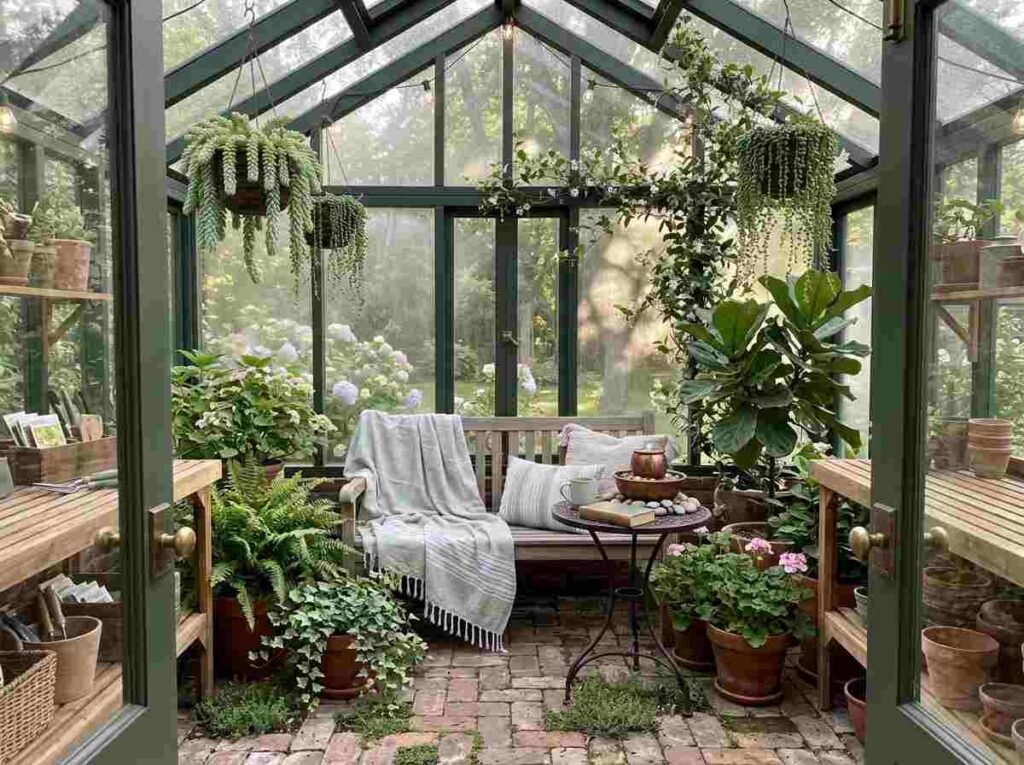
Place wicker chairs or a small garden table for tea or brunch, hang string lighting or lanterns for evening ambiance, and add plant shelves or trellis walls for immersive greenery — these design touches help turn a greenhouse into a sanctuary, not just a plant room.
Weather-resistant rattan, teak, and powder-coated metal are the most practical furniture choices for a greenhouse environment, where humidity levels are typically higher than outdoors and certainly higher than indoors. Cushions and textiles should be specifically rated for outdoor or high-humidity use.
Lighting
String lights, lanterns, or soft LED grow lights that double as ambiance in the evening are the most popular greenhouse lighting choices, and for good reason — a greenhouse lit by warm string lights in the evening is one of the most genuinely beautiful outdoor spaces available in any garden. Grow lights serve a dual purpose, providing the spectrum plants need during short winter days while also creating a warm, functional ambient light for the space.
Shelving and Storage
Tiered shelving along the walls and under benches keeps the floor clear for movement and furniture while maximising the growing capacity of the space. Wrought iron, reclaimed wood, and powder-coated steel all suit a greenhouse environment — materials that look better with a little moisture and age rather than ones that degrade from it.
You can also read Southwestern Desert Bathroom Decor: The Complete Style Guide
DIY Greenhouse Options for Every Budget
Under $200 — Cold frame or mini structure. A cold frame can be built from reclaimed timber and old window panes for almost nothing in materials, and small prefabricated polycarbonate structures in the four-to-six foot range are widely available in this budget. Functional rather than decorative, but a genuine starting point.
$200–$800 — Polycarbonate panel greenhouse kit. Modular greenhouse plans allow for quick assembly, with modules assembled to create the finished structure.Many kit greenhouses in this range include everything needed for a basic six-by-eight or eight-by-ten foot structure, and can be dressed up considerably with the styling choices around the interior.
$800–$2,500 — Cedar frame with polycarbonate or glass. This budget allows for a genuinely characterful structure — a cedar frame greenhouse with polycarbonate panels delivers warmth, quality, and a look that improves with age rather than degrading.
$2,500 and above — Custom or glass structure. Full glass greenhouses, custom lean-to designs, or larger freestanding structures with brick or stone flooring, proper electrical supply, and considered interior furnishing. These are the structures that genuinely function as additional rooms of the house rather than garden accessories.
Styling a Greenhouse as a Sanctuary
Beyond the structure itself, the details that make a greenhouse feel like a personal sanctuary rather than a functional growing space are almost entirely about sensory experience — what you feel, smell, and hear inside it, not just what you see.
Scent. Growing jasmine, gardenia, sweet peas, or herbs like rosemary and lavender inside a greenhouse fills the space with natural fragrance that no interior room can replicate. This is one of the greenhouse’s underappreciated qualities as a sanctuary space.
Sound. A small water feature — even a simple tabletop fountain — adds the sound of moving water to a greenhouse interior, which is both practically useful (raising humidity for tropical plants) and atmospherically significant for a space meant to feel restorative.
Seasonal layering. A greenhouse used as a sanctuary changes with the seasons in a way that a static indoor room cannot — the quality of light through glass panels shifts dramatically between summer and winter, the plants change, and the contrast between the warmth inside and the weather outside becomes a feature rather than a problem.
You can also read English Country Home Decor: 17 Cozy Ideas for a Timeless Home
Frequently Asked Questions
Q: What is the best type of greenhouse for a small garden?
A: A lean-to greenhouse against an existing wall is generally the best choice for a small garden, since it uses space that is already partly defined by the wall rather than taking up open garden area. Compact freestanding structures in the four-to-six foot range are also genuinely useful for small gardens, though they function better as growing spaces than as living spaces due to their limited interior room.
Q: What is the cheapest way to build a greenhouse?
A: The most affordable approach is to build a cold frame from reclaimed timber and old window panes, which can cost almost nothing in materials. For a full-height greenhouse, building from salvaged windows and doors sourced from salvage yards or online marketplaces is significantly cheaper than buying a kit or using new materials, and often produces a more characterful result. A polycarbonate panel kit is the most affordable option that provides a proper full-height enclosed growing space from new materials.
Q: Can a greenhouse be used as a living space, not just for plants?
A: Yes, and this is increasingly how modern greenhouses are being designed and used. A greenhouse with a brick or stone floor, weather-resistant furniture, good lighting, and comfortable seating functions as an additional garden room that can be used for reading, dining, entertaining, or simply spending time surrounded by greenery. The key considerations are managing humidity, ensuring adequate ventilation for comfort during warmer months, and choosing furniture materials that handle a higher-humidity environment without degrading.
Q: What direction should a greenhouse face?
A: <cite index=”23-1″>Orient a greenhouse toward the south or southeast for maximum light and warmth, using the house’s wall as a heat-absorbing feature to increase passive solar gains, and avoid heavy shade from trees or structures that block sun exposure.</cite> South-facing orientation maximises the hours of direct sunlight the structure receives, which matters both for plant growth and for the quality of light inside the space throughout the day.
Q: What should I put on the floor of my greenhouse?
A: Brick, stone, and pea gravel are the three most popular greenhouse flooring choices, each offering good drainage and a natural appearance that suits the garden environment. Brick provides the most warmth and character, stone offers a more polished look, and pea gravel is the most affordable and easiest to install. Avoid solid concrete without drainage channels, and avoid materials that retain water at the surface, since consistent moisture on the floor surface can create slip hazards and encourage mould growth.