Introduction
A range hood is easy to overlook until the smoke alarm goes off, the windows steam up, and last night’s cooking smell is still in the curtains the next morning. Good ventilation removes smoke, steam, grease, heat, and odours, protects cabinets and paint from sticky grease, and makes a kitchen far more comfortable, especially in a small or open plan home.
This guide covers ducted and ductless hoods, chimney, island, under cabinet, and downdraft styles, sizing, noise, and cleaning. The goal is a kitchen that smells fresh after cooking, without opening every window in winter.
Start with your cooker. A gas hob, an induction hob, and a large range cooker need different levels of extraction. Then check whether you can duct outside through a wall or roof, or must recirculate air through filters. Those two answers decide almost every other choice below.
Idea 1: A ducted chimney hood for the strongest extraction
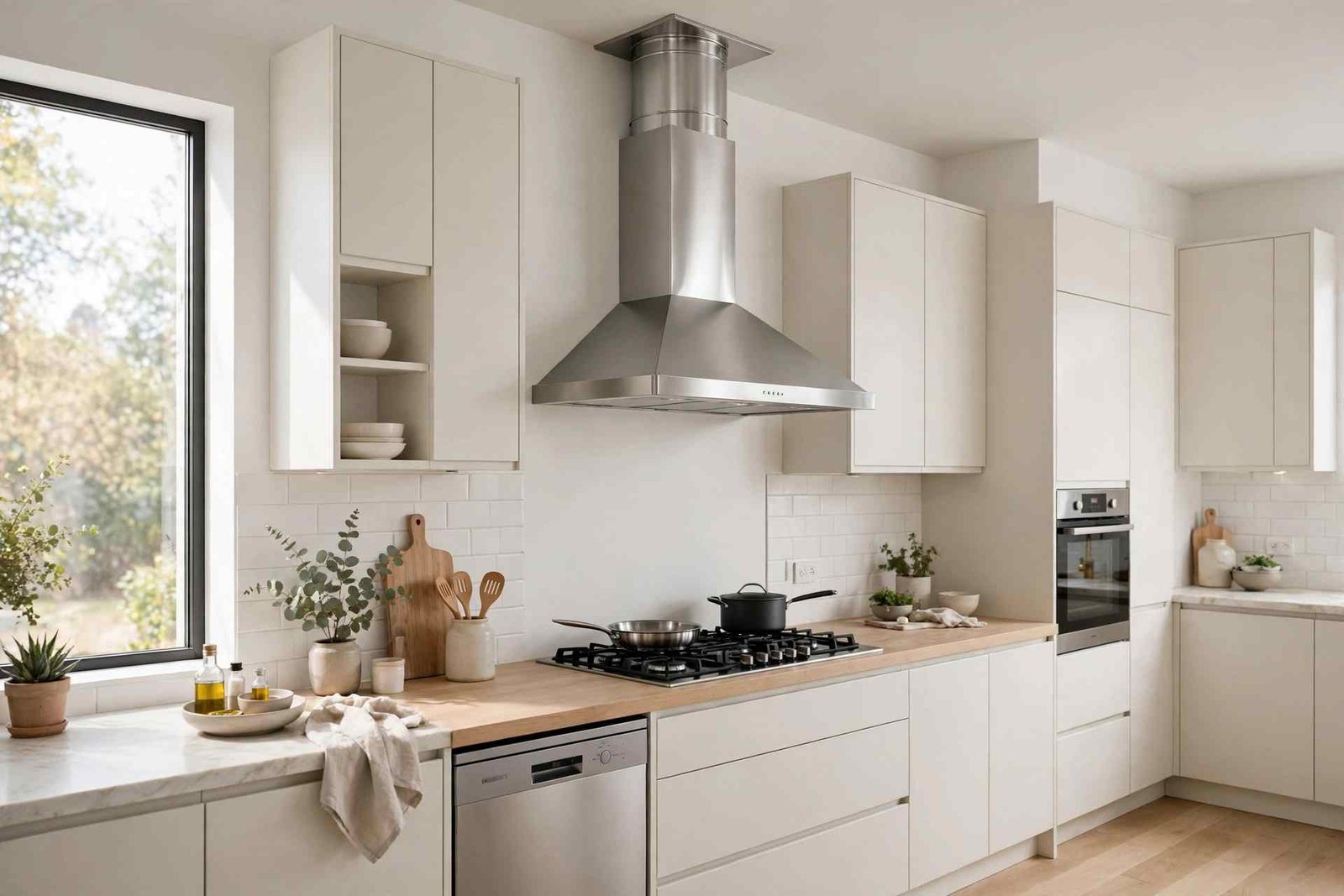
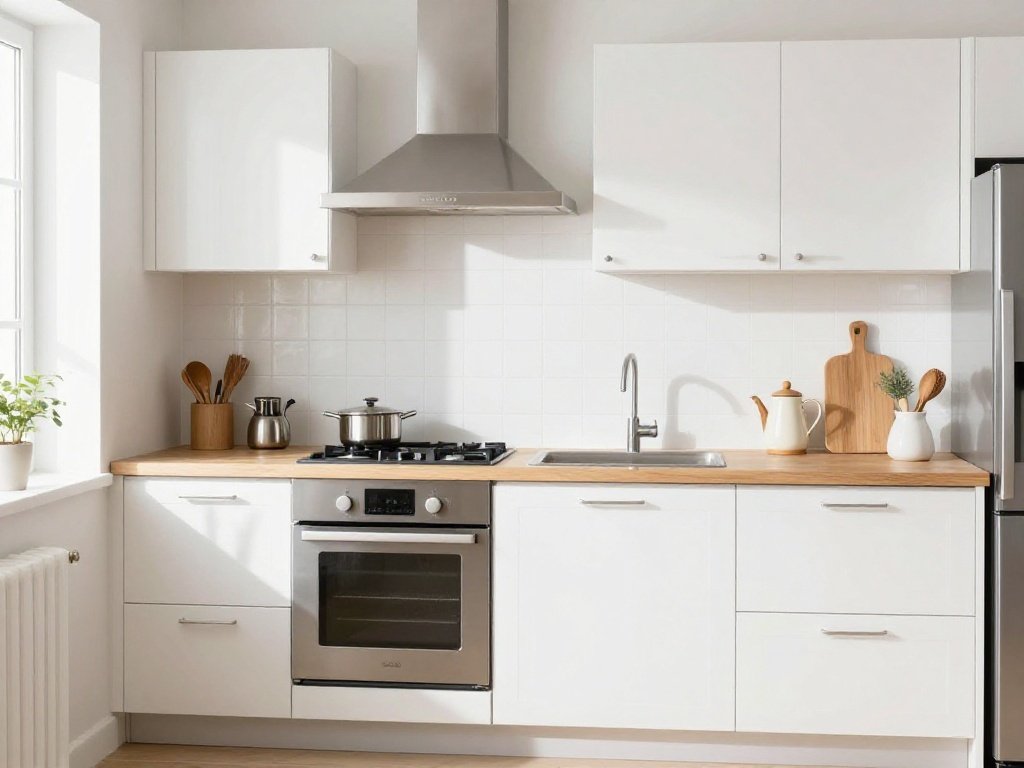
A ducted chimney hood is the most effective option for most kitchens, because it sends smoke, steam, and grease outside, rather than filtering air and returning it to the room. It sits over the hob, mounted to the wall, with a chimney covering the duct to the ceiling. It works best over a gas hob or a large range cooker, where heat and smoke are greatest.
Sizing matters more than style. A hood should be at least as wide as your hob, and ideally a little wider, so smoke from front burners is caught before it escapes around the sides. For a 60 centimetre hob, choose 60 to 90 centimetres. For a 90 centimetre range cooker, choose 90 to 120 centimetres. A narrow hood will miss a lot of smoke, no matter how powerful its fan is.
Height matters too. Mount a chimney hood about 65 to 75 centimetres above a gas hob, and about 55 to 65 centimetres above an electric or induction hob, following the manufacturer’s instructions. Too high, and smoke escapes before it reaches the hood. Too low, and the hood gets in the way and can be damaged by heat. In a high ceiling kitchen, a chimney extension fills the gap neatly.
Idea 2: An under cabinet or slim hood for small kitchens
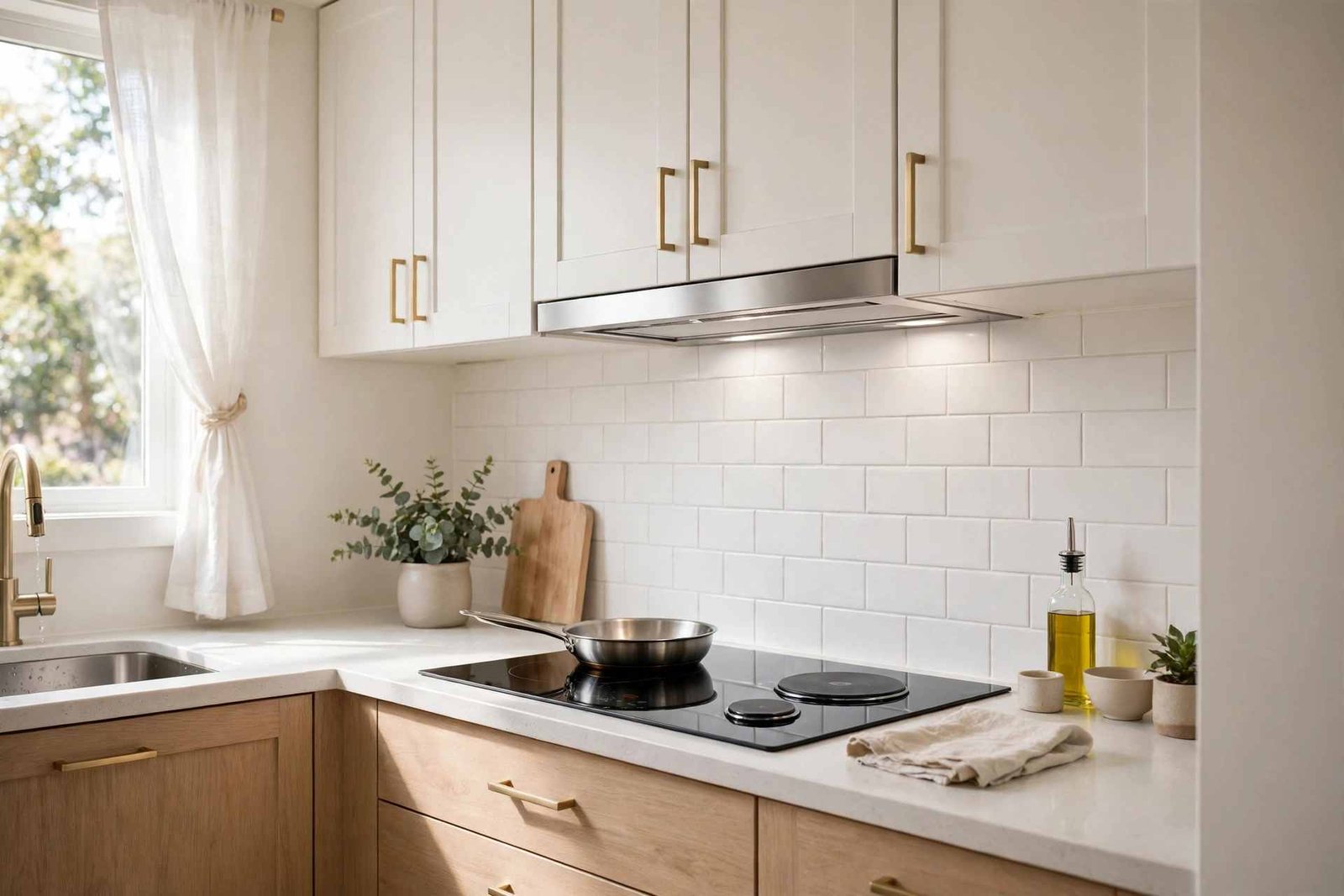
In a small kitchen, an under cabinet hood is often the smartest choice, because it uses space already there, under a wall cabinet, and does not dominate the room. Slim visor or slide out hoods are only a few centimetres tall when closed, and pull out over the hob when you cook. They suit galley kitchens, flats, and kitchens where a large chimney hood would feel too heavy.
Under cabinet hoods can be ducted or ductless. Ducted is still better if you can run a short duct through the cabinet and out through a wall, but many small kitchens use ductless hoods with charcoal filters. A ductless hood removes grease and some odours, but not steam or heat as well as a ducted hood, and its filters need replacing more often, usually every three to six months.
Noise is a particular issue with small hoods, because a small fan working hard can be loud. Look for a hood with a quiet low speed for everyday cooking, and a boost setting only for frying or searing. A hood that is quiet on low speed will get used every time you cook, while a loud hood will be left off, which defeats the point of having it.
Idea 3: An island hood and downdraft for open plan kitchens

An island hood is the centrepiece option for an open plan kitchen with a hob on an island. It hangs from the ceiling, and it needs to be larger and more powerful than a wall hood, because smoke can escape in every direction. Choose an island hood at least 10 centimetres wider than the hob on each side if you can, and check that your ceiling can support its weight, especially for a heavy glass or steel model.
Ducting an island hood is harder than ducting a wall hood, because the duct must run through the ceiling, and sometimes through a floor above. If ducting outside is not possible, a recirculating island hood is an option, but it will be less effective at removing steam. In that case, combine it with good general ventilation, such as a window that opens, so cooking air does not linger in the living area.
Downdraft extraction is a different idea: a vent that rises from behind the hob when you cook, and drops back down when you are done. It keeps sightlines clear, which is its main advantage, but it is generally less effective than an overhead hood, because smoke naturally rises and a downdraft must pull it down. Downdraft suits induction hobs and light cooking better than gas hobs and heavy frying, and it needs space below the hob for duct and motor.
Idea 4: A ductless hood for kitchens that cannot duct outside
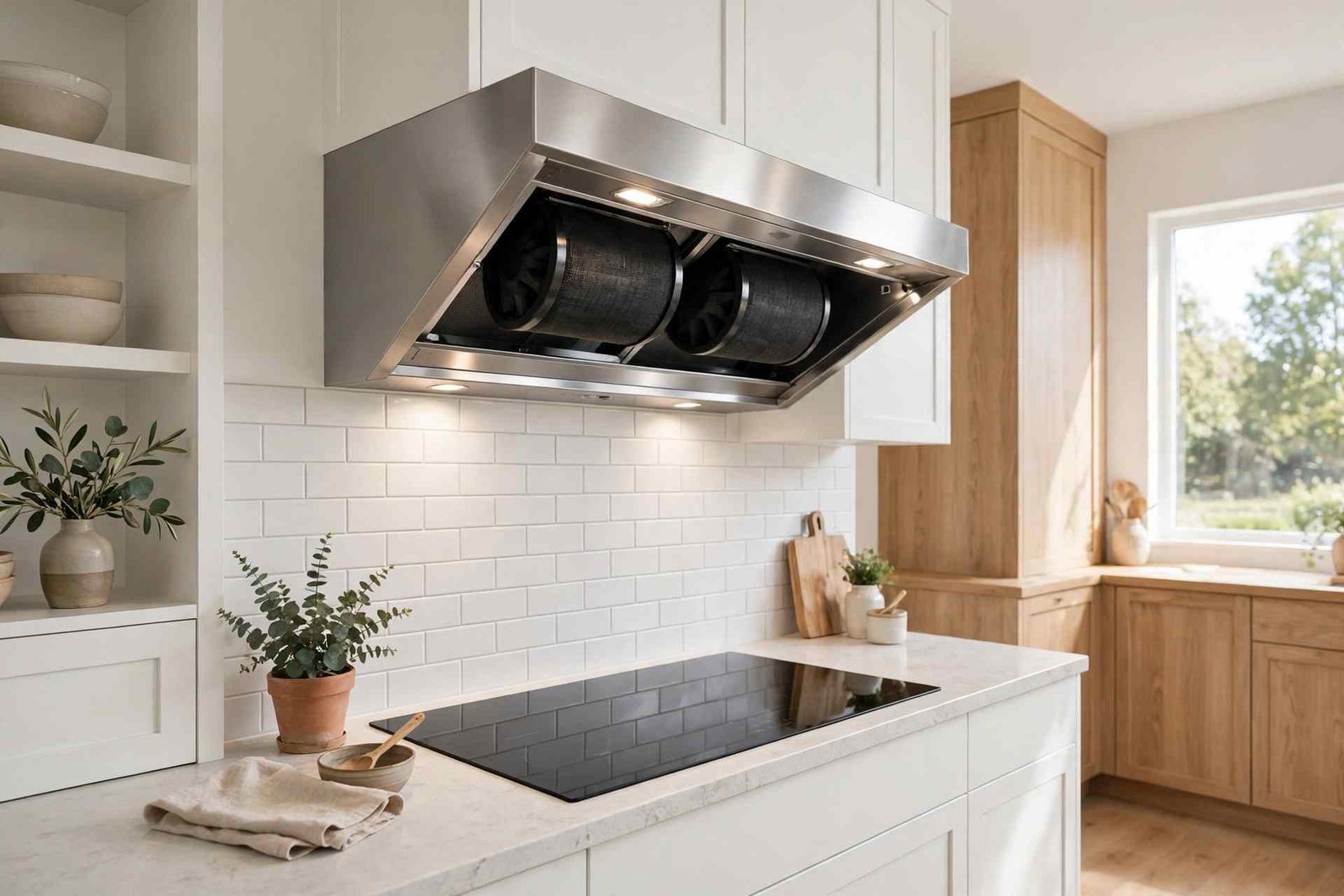
Some kitchens cannot duct outside: a flat with no external wall near the hob, a listed building, a rental where drilling is not allowed, or a hob on an internal wall far from outside. A ductless hood is better than no hood, as long as you understand its limits and maintain it. It passes air through a grease filter and a charcoal filter, then returns it to the room. It catches grease and reduces odours, but does not remove steam, humidity, or heat as well.
To make a ductless setup work, add extra ventilation. Open a window a little while you cook, even in winter, to let steam escape. Wipe cabinets and walls near the hob regularly, because grease a ductless hood misses will settle there. Replace charcoal filters on schedule, not when they start to smell, because a saturated filter does almost nothing.
For renters, a ductless under cabinet or slide out hood is often the only option that needs no new duct hole. Choose a model with easy to remove filters, because you will change them yourself, and keep the filter size and model number written down, so replacements are easy to order. A maintained ductless hood still makes a real difference to smells and grease, even if it cannot match a ducted hood for steam.
How to size airflow in plain terms
Airflow is measured in CFM, cubic feet per minute, or cubic metres per hour. A common guide is about 100 CFM for every 30 centimetres of hob width for a wall hood, and more for an island hood or gas range. For a 60 centimetre hob, that suggests 200 to 400 CFM, and for a 90 centimetre range, 600 CFM is a common starting point.
Another guide is kitchen volume: multiply length by width by height, then aim for about ten air changes per hour. A 30 cubic metre kitchen would need about 300 cubic metres per hour, roughly 175 CFM. These are guides, because duct length, bends, and filters all reduce real airflow. A long duct with several bends can cut extraction by a third or more, so keep ducts short and straight, and use smooth rigid ducting rather than flexible concertina ducting, which creates resistance.
Do not simply buy the most powerful hood you can find. A very powerful hood in a small, airtight home can cause backdraught and excessive noise. If your home is airtight, or you have a gas boiler or open fire in the same space, ask about make up air, a small vent that lets fresh air in to replace air the hood removes. A well sized, well ducted hood used on the right speed will outperform a huge hood rarely switched on because it is too loud.
Noise, lighting, and installation basics
Noise matters more than most buyers expect. A hood rated at 1 to 2 sones on low speed is quiet enough to talk over. A hood at 5 sones or more on boost will drown out conversation, and many people will switch it off rather than listen to it. Check noise at each speed, not just the lowest, and look for a quiet motor and insulated ducting if noise is a priority.
Lighting is the second usability factor. Most hoods have built in LED lights that light the hob below. Choose bright, warm white LEDs covering the full hob width, not a single dim bulb in the centre. Controls should be simple and reachable without leaning over a hot hob, and a timer that runs the fan for a few minutes after cooking is useful, because it clears lingering steam without you having to remember to switch it off.
Installation needs a route outside for a ducted hood, through a wall or roof, with a vent cap to stop rain and pests, and a backdraught shutter to stop cold air blowing back down the duct. The duct should be the diameter the manufacturer specifies, usually 150 millimetres, and as short and straight as possible. Check for joists, beams, and pipes before cutting a ceiling or wall, and follow gas safety rules and clearance distances exactly for a gas hob. In a rental, do not cut a new duct hole without landlord permission.
Cleaning and choosing by kitchen type
A hood only works well if its filters are clean. Wash metal grease filters about once a month if you cook daily, by hand in hot soapy water or in a dishwasher if allowed. A grease filter clogged with old fat blocks airflow, makes the fan louder, and can become a fire risk near a hot hob. Replace charcoal filters in a ductless hood every three to six months, and wipe the outside weekly with a soft cloth and mild cleaner, avoiding abrasive pads on glass or stainless steel.
For a small flat, choose a slim under cabinet or slide out hood, ducted if possible, prioritising low noise. For a family kitchen with a gas range, choose a ducted chimney hood wider than the cooker, with boost speed and a timer. For an open plan island, choose a large island hood, ducted through the ceiling if you can, and plan ducting early. For a rental, choose a ductless hood with filters you can change yourself. For a kitchen with a boiler or open fire in the same room, be careful with very powerful hoods in airtight homes, and ask a heating engineer about make up air and backdraught.
What to avoid
- Choosing a hood narrower than your hob, which lets smoke escape around the sides
- Mounting a hood too high, so smoke disperses before it is caught, or too low, where heat damages it
- Using long, flexible ducting with many bends, which cuts airflow and increases noise
- Buying the most powerful hood for a small, airtight home, which can cause backdraught and excessive noise
- Leaving grease filters unwashed for months, which blocks airflow and creates a fire risk
- Running a ductless hood with saturated charcoal filters, which lets smells pass straight through
- Installing a heavy island hood without checking ceiling support, or cutting a duct without checking joists and gas safety
Frequently asked questions
Do I need a ducted or ductless range hood?
Ducted is better if you can run a short, straight duct outside, because it removes smoke, steam, heat, and grease. Ductless is the option when ducting is not possible, such as in a flat or rental, but it needs regular charcoal filter changes and will not remove steam as well.
What size range hood do I need for my hob?
Choose a hood at least as wide as your hob, and ideally a little wider. For a 60 centimetre hob, choose 60 to 90 centimetres. For a 90 centimetre range cooker, choose 90 to 120 centimetres. For an island hob, go wider still, because smoke can escape in every direction.
How many CFM do I need for a kitchen range hood?
As a guide, about 100 CFM for every 30 centimetres of hob width for a wall hood, and more for an island hood or gas range. A 60 centimetre hob often needs 200 to 400 CFM, while a 90 centimetre range may need 600 CFM. Duct length and bends reduce real airflow, so keep ducts short and straight.
How high should a range hood be above the hob?
Usually 65 to 75 centimetres above a gas hob, and 55 to 65 centimetres above an electric or induction hob, but always follow the manufacturer’s instructions. Too high lets smoke escape, too low risks heat damage.
How often should I clean range hood filters?
Wash metal grease filters about once a month if you cook daily. Replace charcoal filters in a ductless hood every three to six months. A clogged filter is the most common reason a hood stops extracting well.
Is a downdraft extractor as good as an overhead hood?
Usually not for heavy cooking, because smoke naturally rises and a downdraft must pull it down. Downdraft suits induction hobs, light cooking, and open plan kitchens where clear sightlines matter most. For gas hobs and frequent frying, an overhead hood is generally more effective.
Conclusion
Good kitchen ventilation is not about buying the biggest or most stylish hood, it is about matching the hood to your hob, kitchen, and ducting options. A ducted chimney hood, wider than the hob and mounted at the right height, is the strongest choice for most homes. A slim under cabinet hood suits a small kitchen, a large island hood suits an open plan island, and a well maintained ductless hood is far better than no hood at all where ducting is impossible.
Size airflow sensibly, keep ducts short and straight, choose a hood quiet enough to actually use, and clean grease filters monthly and replace charcoal filters on schedule. Do those basics, and your kitchen will stay clearer, cooler, and fresher after cooking, and your cabinets will stay cleaner. Start by measuring your hob, checking whether you can duct outside, and choosing a hood that fits both, and the rest of the decision becomes much simpler.