Introduction
Countertops last much longer when they are cleaned and sealed correctly for their material, and they are damaged quickly when the wrong cleaner is used. A cleaner that is safe for quartz can dull granite, and a cleaner that is safe for laminate can dry out butcher block.
This guide gives care, sealing, and cleaning by material, so you can keep the countertop you chose looking good for years.

Idea 1: Laminate and solid surface care
Laminate and solid surface countertops are non porous and easy to clean. Wipe daily with a damp cloth and mild soap, dry with a soft cloth to avoid water marks, and use a trivet for hot pans, because laminate can scorch.
For solid surface, light scratches can be buffed out with a fine abrasive pad, but avoid steel wool on laminate, which will scratch the surface permanently.
Do not use harsh chemicals, bleach, or abrasive pads on laminate, and do not cut directly on it, because cuts cannot be repaired easily.

Idea 2: Butcher block care and oiling
Butcher block needs regular oiling to stay beautiful. Oil it once or twice a year, or when water no longer beads on the surface, with food safe mineral oil or butcher block oil, not cooking oil, which can go rancid.
Clean daily with a damp cloth and mild soap, dry quickly, and do not leave wet dishes or standing water on wood for hours, because wood swells and cracks when wet.
Sand out scratches and stains with fine sandpaper, then re oil the area. For food prep areas, clean with a mild vinegar solution occasionally, but do not soak wood in vinegar or water.
Idea 3: Granite, marble, and stone sealing
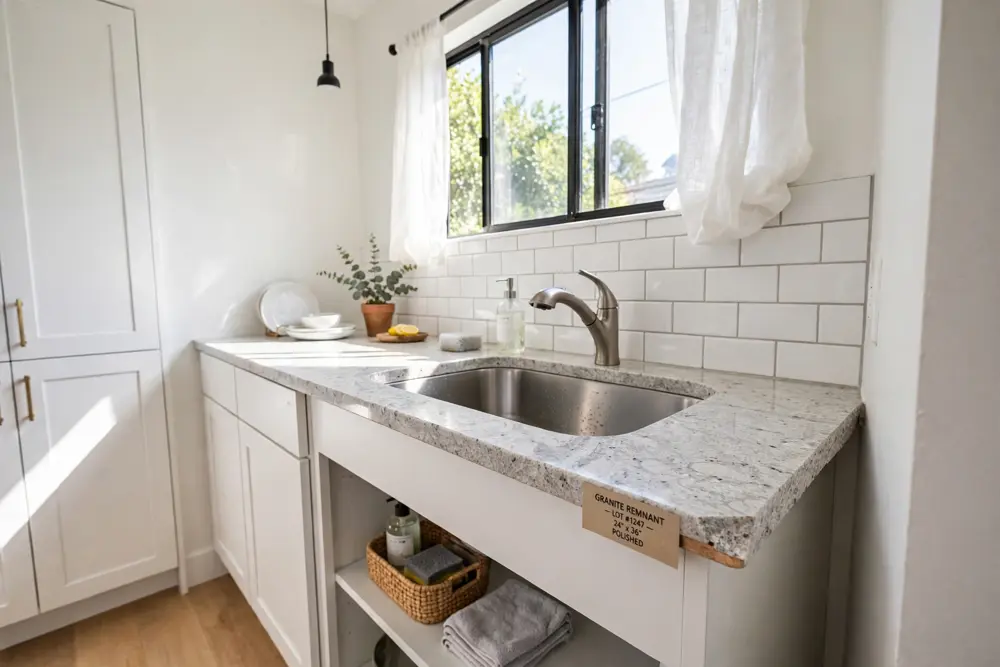
Granite and marble are porous, so they need sealing to resist stains. Test sealing by dropping water on the surface: if it beads, sealing is still good, if it soaks in within a few minutes, it is time to reseal, usually every 1 to 3 years for granite, more often for marble.
Clean stone daily with a pH neutral stone cleaner or mild soap and water, dry with a soft cloth, and avoid acidic cleaners, vinegar, lemon, and bleach, which etch marble and dull granite.
For granite, use a penetrating sealer, not a topical coating, and follow the product instructions for drying time before using the counter again. Marble in a busy kitchen needs more frequent sealing and more careful cleaning, because it etches from acidic foods like tomato and citrus.
Idea 4: Quartz, porcelain, and tile care
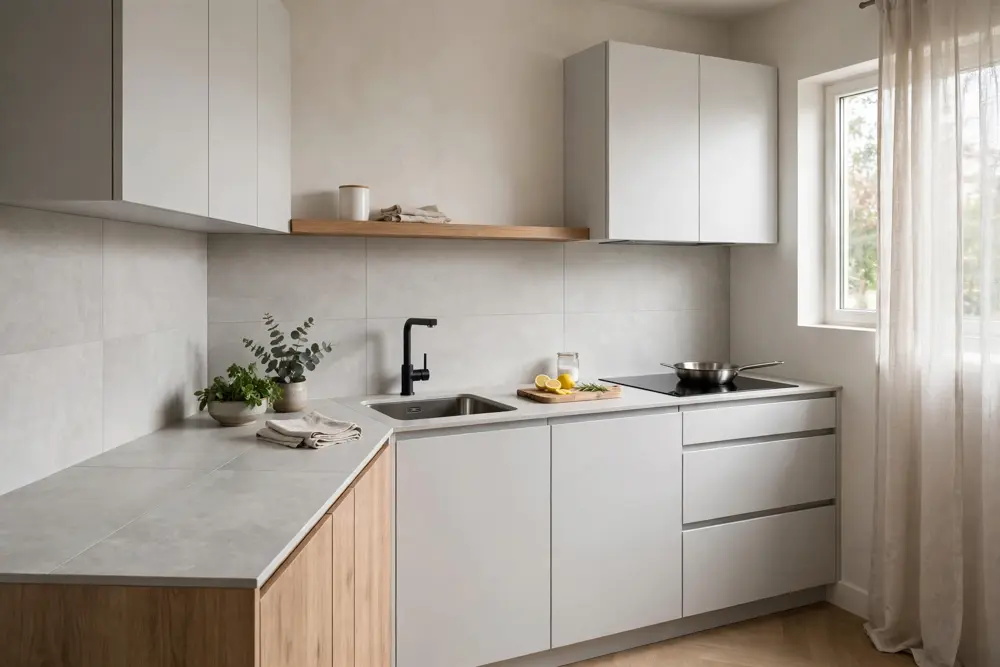
Quartz and porcelain are non porous and do not need sealing, which is why they are popular for busy kitchens. Clean daily with a damp cloth and mild soap, dry to avoid water marks, and use a trivet for hot pans on quartz, because quartz can discolour from extreme heat, even though it is stain resistant.
Porcelain is heat resistant and stain resistant, and can handle hot pans better than quartz, but it can chip if heavy items are dropped on edges, so use cutting boards and avoid dropping cast iron on edges.
For tile countertops, clean tiles with mild soap and water, and seal grout lines every 1 to 2 years, because grout stains easily even if tiles do not. Use a grout sealer and a soft brush, not a metal brush, which can scratch tiles.
How to test whether your countertop needs sealing
Do not guess a sealing schedule, because stone varies a lot. A dense dark granite may go years without resealing, while a light, porous granite in a busy kitchen may need it every year. The water test takes five minutes and tells you the truth.
Clean and dry a small area, put a few drops of water on it, and start a timer. If the water stays beaded and the stone does not darken for about ten minutes, the seal is still working. If the stone darkens within five to ten minutes, plan to reseal soon. For butcher block, the same idea applies: if water no longer beads, it is time to oil again.
Sealing too often is rarely the real problem. The real problems are using the wrong product, using too much product, and leaving excess sealer to dry on the surface, which leaves a hazy or streaky film. Always wipe off the excess and follow the label.
How to seal granite and marble step by step
Sealing stone is a simple weekend job, and doing it yourself saves the cost of a professional visit. Clear the countertop completely, clean it with a pH neutral stone cleaner or mild soap and water, and let it dry fully. Ideally, let it dry for several hours or overnight, because sealer will not soak into a damp stone.
Put on gloves, and apply a penetrating sealer made for natural stone, spreading it evenly with a soft cloth or applicator pad. Let it sit for 15 to 20 minutes so it can soak in, then wipe away all excess with a clean dry cloth. For very porous stone, a second coat may help, but only if the product label recommends it. Keep the counter dry and gentle for the curing time on the label, often 24 hours, before normal use.
Use a penetrating sealer, not a topical coating, for granite and marble. A penetrating sealer soaks into the pores and protects without changing the look or feel of the stone. A topical coating sits on top, can wear unevenly, and can leave a filmy residue. Marble needs sealing more often than granite, about every 6 to 12 months in a busy kitchen, because it is softer and more porous.
Daily and weekly care routine that works for every material
Daily care is the same for almost every countertop, and it takes less than two minutes. Wipe up spills straight away, especially wine, coffee, tomato sauce, citrus juice, and oil, because even sealed stone can stain if a spill sits for hours. Wipe with warm water and a drop of mild dish soap, rinse the cloth, wipe again, and dry with a soft towel to avoid water marks.
Weekly, give the counter a slightly deeper clean. Remove everything from the surface, wipe the whole counter including edges and the area behind the kitchen sink and cooker, and check the backsplash, chips, cracks, or grout lines that need attention. This weekly check is how small problems get caught before they become stains or damage.
Keep a simple kit under the sink so care is easy: a soft microfibre cloth, mild dish soap, a pH neutral stone cleaner if you have stone, food safe mineral oil if you have butcher block, and a grout sealer if you have tile. When the right product is easy to reach, you will actually use it.
Stain removal by material
Act fast on stains, and match the method to the material. On laminate and quartz, most stains lift with mild soap and water and a soft cloth. For a stubborn mark on laminate, a paste of baking soda and water left for a few minutes can help, but do not scrub hard, because laminate scratches easily.
On granite, a stain that has soaked in may need a poultice, a paste made for stone that draws the stain out over several hours. Do not use bleach or harsh chemicals on stone, and never use vinegar on marble, because acid etches the surface and leaves a dull mark that cannot be wiped away.
On butcher block, sanding is the fix for most stains and scratches. Sand lightly with fine sandpaper in the direction of the grain, wipe away the dust, and re oil the area so the colour blends back in. On tile, stained grout can often be cleaned with a soft brush and a grout cleaner, and resealing the grout after cleaning keeps the stain from coming back.
What to avoid
- Harsh chemicals, bleach, and abrasive pads on most countertops
- Acidic cleaners on marble and granite, which etch stone
- Cooking oil for butcher block oiling, which goes rancid
- Hot pans directly on laminate and quartz, which scorch or discolour
- Standing water on wood and unsealed stone, which causes swelling and staining
Frequently asked questions
How often should I seal granite countertops?
Usually every 1 to 3 years, depending on use and sealer. Test with water: if it beads, sealing is good, if it soaks in, reseal.
Do quartz countertops need sealing?
No, quartz is non porous and does not need sealing. Clean with mild soap and water, and use a trivet for hot pans to avoid discolouration.
How do I clean butcher block countertops?
Wipe daily with a damp cloth and mild soap, dry quickly, and oil once or twice a year with food safe mineral oil. Sand out scratches, then re oil.
What cleaner is safe for marble countertops?
A pH neutral stone cleaner or mild soap and water only. Avoid vinegar, lemon, bleach, and acidic cleaners, which etch marble.
How do I clean tile countertop grout?
Clean tiles with mild soap and water, seal grout every 1 to 2 years with a grout sealer, and use a soft brush, not metal, to avoid scratching tiles.
Can I use vinegar to clean kitchen countertops?
Only on some materials, like laminate in small amounts, and never on marble, granite, or stone, because vinegar is acidic and etches stone. Mild soap and water is safest for most countertops.
How do I know if my countertop is sealed?
Do the water test: put a few drops of water on a clean, dry area. If it beads and the surface does not darken in ten minutes, the seal is good. If it darkens within five to ten minutes, reseal.
What is the best daily cleaner for kitchen countertops?
Warm water with a drop of mild dish soap, wiped with a soft cloth and dried, works for almost every material. For stone, a pH neutral stone cleaner is a good alternative.
Conclusion
Care by material, not by habit: laminate and quartz need only mild soap and a trivet, butcher block needs regular oiling, granite and marble need sealing and pH neutral cleaners, and tile needs grout sealing.
Test sealing with water, clean daily with mild soap, and avoid harsh and acidic cleaners on stone and wood. That simple, material specific care will keep your countertop looking new for years, and it pairs well with thoughtful kitchen storage and kitchen flooring choices.