Introduction
A hotel bed looks inviting before you even touch it. The corners are crisp, the top layer falls in soft folds, and there is just enough texture to make the bed look finished without looking fussy. At home, the same effect is easier to achieve than it first appears. The secret is not buying ten new pillows or the most expensive duvet you can find. It is following a clear order, choosing the right number of layers for the season, and making the bed easy to undo at night.
Many bedrooms fail at this last point. A bed can look beautiful yet be annoying to sleep in, because cushions end up on the floor and the duvet is too hot or bunched. Hotels avoid this with a system: sheets keep the bed fresh, the duvet provides warmth, the coverlet adds structure, the throw adds colour and texture, and the pillows finish the look.
This guide breaks that system into four ideas: the five layer system, pillow formulas for every bed size, fabrics for summer and winter, and a nightly routine that takes about twenty seconds. Start with what you already own and fix the order first.
Key takeaways
- Use a five layer system, from fitted sheet to throw, for a hotel look.
- Follow a pillow formula for your bed size, so pillows look full, not crowded.
- Choose fabrics and textures that feel good to sleep in, not just look good.
- Use a twenty second nightly routine to keep layered bedding tidy.
Idea 1: Use the Five Layer System
Work from the mattress outward, and keep each layer in the same place every time you make the bed.
Start with fitted and flat sheets. A fitted sheet keeps everything smooth, while a flat sheet should be tucked in at the foot and sides, with enough slack at the top to fold back over the duvet. That fold makes the bed look intentional and gives you a clean edge to hold at night.
Next comes the duvet or comforter. A duvet slightly larger than the mattress gives the soft hotel overhang; a king duvet on a queen bed drapes generously. In a very small bedroom, too much overhang can look bulky and block walkways, so balance it with room size.
Add a quilt or coverlet as the third layer, folded across the lower third or half so the duvet still shows at the top. It adds pattern, colour, or texture without much heat, and can be the main top layer on warm summer nights or a light extra layer in winter.
The fourth layer is a throw at the foot of the bed. Fold it neatly, rather than tossing it in a loose pile. A knit, waffle, or light cotton throw adds texture and can be pulled up on a cool evening. Keep it narrow enough that it does not cover the pillows or make the bed look short. A throw that ends about two thirds down the bed usually looks balanced.
The fifth layer is pillows, covered in detail in Idea 2. The principle is the same as the rest of the system: sleeping pillows at the back, decorative pillows in front, and nothing that takes more than a few seconds to remove. If you have to clear a mountain of cushions before you can lie down, the system is working against you.

Once you understand the order, making the bed becomes faster. Shake out the duvet, smooth the coverlet, fold the throw, and stack the pillows. The bed will look consistent from day to day, even if you change colours or fabrics with the seasons.
Idea 2: Follow a Pillow Formula for Your Bed Size
Pillows cause more confusion than any other part of bedding. Too few can make a bed look flat. Too many can make it look cluttered and hard to use. A simple formula by bed size solves both problems.
For a twin bed, start with one sleeping pillow. Add one standard decorative pillow or one small square cushion in front of it. That is enough. A twin bed is narrow, so a second row of cushions will crowd the bed and leave no room for a book or a phone.
For a full bed, use two sleeping pillows side by side. In front of them, add two standard decorative pillows or one long lumbar pillow. The lumbar pillow is a good choice for a full bed because it spans the width without needing many separate pieces.
For a queen bed, use two sleeping pillows and, if you like a fuller look, two Euro pillows behind them. Euro pillows are large square pillows that fill the width of a queen bed and give it height at the headboard. In front of the sleeping pillows, add two standard decorative pillows and one lumbar pillow, or two decorative squares. That gives a layered look, but only two pillows are the ones you actually sleep on.
For a king bed, use two king sleeping pillows, or three standard pillows if you prefer that width. Add three Euro pillows behind them for height, then two or three decorative pillows and one lumbar pillow in front. A king bed can handle more pillows because it is wider, but the same rule applies: the sleeping pillows should be easy to reach, and the decorative pillows should come off in one quick movement.
Place larger pillows at the back and smaller ones at the front, so each row is visible. Keep colours simple: white or cream sleeping pillows, one accent colour in the decorative pillows, and a throw that echoes it. If you share a bed, use matching pillowcases so a difference in firmness is less obvious.

Idea 3: Choose Fabrics and Textures That Feel Good to Sleep In
A hotel bed is not only about how it looks. It is about how it feels when you get into it. Texture is what stops a white bed from looking plain, and fabric choice is what stops a layered bed from feeling hot or scratchy.
Cotton is the safest starting point. Percale cotton feels crisp and cool, which suits warm sleepers and summer bedrooms. Sateen cotton feels smoother and slightly heavier, which suits people who like a softer, more polished look. Linen feels relaxed and breathable, but it wrinkles more easily, so it suits a casual bedroom better than a very formal one. A linen duvet cover with cotton sheets can give you texture without a fully wrinkled bed.
If you sleep hot, read our guide to bedroom temperature and bedding for hot sleepers.
Waffle weave is useful as a middle layer. It adds texture and light warmth without the weight of a thick quilt. Knit throws are soft and flexible, and they drape well at the foot of the bed. Faux fur can look luxurious, but use it sparingly. One faux fur cushion or a narrow faux fur throw is enough. A whole faux fur duvet can be too hot and hard to wash.
Think about texture in threes: one smooth fabric, one textured fabric, and one soft fabric, for example smooth cotton sheets, a waffle coverlet, and a knit throw. All smooth can look flat; all heavily textured can look noisy.
Washing matters too. Check care labels before you buy, choose removable covers for throws and pillow covers, and keep one spare set of pillowcases and a spare duvet cover if you can.
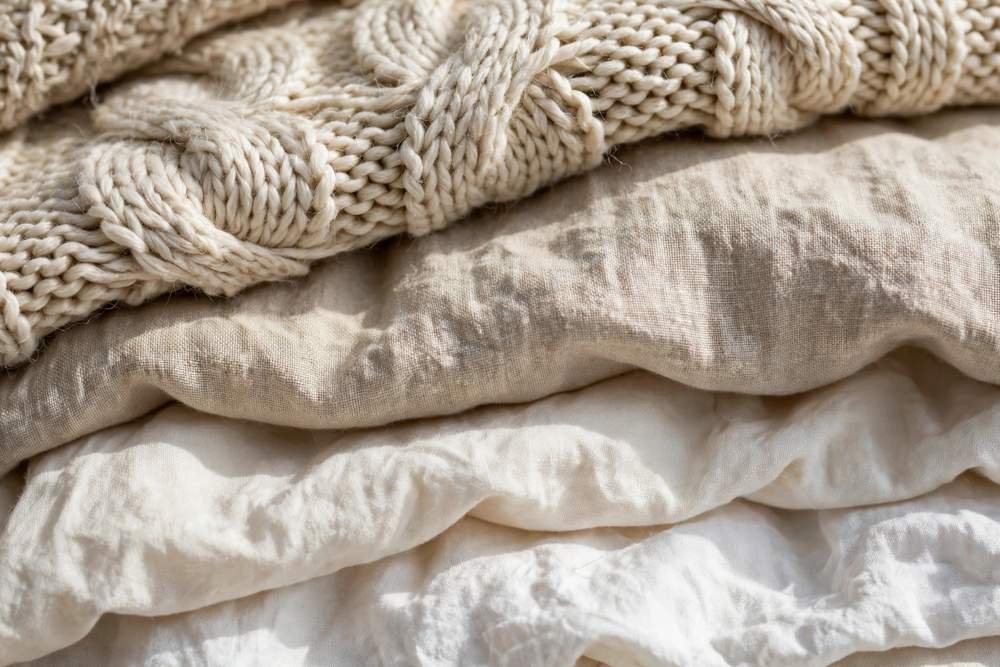
Colour matters too. White looks hotel like but shows marks easily; cream, soft grey, and sage are calmer, more forgiving choices. Put colour in the throw and one or two pillow covers, not in every layer, so you can change the accent cheaply with the seasons.
Idea 4: Use a Twenty Second Nightly Routine
The best test of a layered bed is how fast you can get into it. If it takes more than twenty seconds to remove the decorative layers, the bed is overstyled for everyday life. Hotels solve this by keeping decorative layers light and easy to lift. You can do the same at home.
Keep a bench, basket, or chair at the foot of the bed for decorative pillows and the throw. When you turn the bed down, lift the decorative pillows in one movement and place them in the basket. Fold the throw and place it on the bench, or drape it over the basket. Do not drop pillows on the floor. Once they are on the floor, they collect dust, get stepped on, and make the room look untidy in the morning.
In the morning, reverse the routine: sleeping pillows against the headboard, decorative pillows in front, duvet smoothed, throw folded at the foot. Done in the same order daily, it becomes a habit. If a cushion is always left in the basket, it may not belong in your formula.

For small bedrooms, use a basket under a bench, a narrow storage bench, or a single hook for the throw. The aim is a bed that looks inviting in the morning and is ready for sleep in seconds at night.
Summer and Winter Swaps
You do not need two completely different bedding sets to handle the seasons. You need a few swaps within the same five layer system.
In summer, keep sheets light and breathable. Use percale cotton or linen, a light duvet or a flat sheet with a coverlet, and a thin cotton throw. Remove a heavy quilt, and reduce decorative pillows if the bed feels crowded in warm weather. A lighter palette, such as white, cream, or pale sage, can also make the room feel cooler.
In winter, keep the same order but use a warmer duvet, a quilt or coverlet over it, and a thicker wool or heavy knit throw. Flannel sheets feel warmer but can be too warm for hot sleepers, so test one set first. The pillow formula can stay the same; only the weight and texture change.
For more cold-weather inspiration, explore cozy winter bedroom ideas for January and February.
Making Layered Bedding Work in a Small Bedroom
Scale matters in a small bedroom. A very thick duvet with a heavy quilt and a wide throw can make a small bed look bulky and leave little room to move around it.
Choose a duvet that drapes without pooling on the floor, fold the coverlet higher so the bed looks longer, and use a narrower throw. Keep decorative pillows to the minimum formula; a lumbar pillow adds colour without height. Use a mostly light palette with one accent, and keep bedding simpler if the walls are dark or patterned.
For the full room plan, see Small Bedroom Ideas: The Complete Guide to Layout, Storage, Light and Style.
What to Avoid
Avoid buying a full matching bedding set and then adding five more patterned cushions on top of it. Matching sets can look flat, and too many patterns can make the bed look busy rather than luxurious. Choose one pattern at most, and let texture do the rest of the work.
Avoid pillows that are purely decorative and uncomfortable to lean against. If you like to read in bed, you need at least one pillow that supports your back. A lumbar pillow or a firm Euro pillow can do that job while still looking good during the day.
Avoid a duvet that is too small for the bed. A duvet that barely reaches the sides will look skimpy, even if the fabric is good quality. Measure your mattress and check the duvet size before you buy, especially if you are moving from a full bed to a queen bed or from a queen bed to a king bed.
Avoid layers that cannot be washed, and avoid styling the bed so much that no one wants to use it. An everyday bedroom should be easy to get into and easy to remake.
Frequently Asked Questions
How many layers should a bed have?
Five layers work well: sheets, duvet, quilt or coverlet, throw, and pillows. Reduce this to three in summer, or add a thicker duvet and heavier throw in winter. The order, and whether each layer is easy to remove at night, matters more than the number.
How do you arrange pillows on a queen bed?
Use two sleeping pillows, two Euro pillows behind them if you want height, and two decorative pillows plus one lumbar pillow in front. Place larger pillows at the back and smaller pillows at the front, so each row is visible. If you prefer a simpler look, two sleeping pillows and one lumbar pillow are enough.
How do I layer bedding for winter without overheating?
Add warmth in thin layers rather than one very heavy duvet: a medium weight duvet, a quilt or coverlet, and a throw you can pull up or push aside. Choose breathable cotton and wool blends, and avoid synthetics that trap heat. If you wake up hot, remove the coverlet first.
Should a bedroom rug go under the bed or beside it?
A rug extending beside the bed is often most practical: a soft landing that frames the bedding without competing with it. In a small room, two bedside runners can work better than one large rug under the whole bed.
How do I keep layered bedding looking tidy in a small bedroom?
Keep the formula simple, choose a narrower throw, and give decorative pillows one clear home at night, such as a basket or bench. Make the bed in the same order daily, and remove any cushion always left in the basket.
Is white bedding hard to keep clean?
White bedding shows marks more easily, but it is easy to wash and refresh. Use removable covers, wash them regularly, and keep a spare set. If white feels too high maintenance, cream or light grey gives a similar look with more forgiveness.
Conclusion
Layering bedding like a hotel bed is less about luxury shopping and more about a clear system: five layers in a consistent order, a pillow formula for your bed size, seasonal fabrics, and a twenty second night routine. When the bed is easy to make and sleep in, you will actually keep it layered.
Start with what you already own. Fix the order, remove one cushion you never use, and fold the throw neatly at the foot. Then add one layer that improves comfort, such as a better duvet cover or a softer throw.