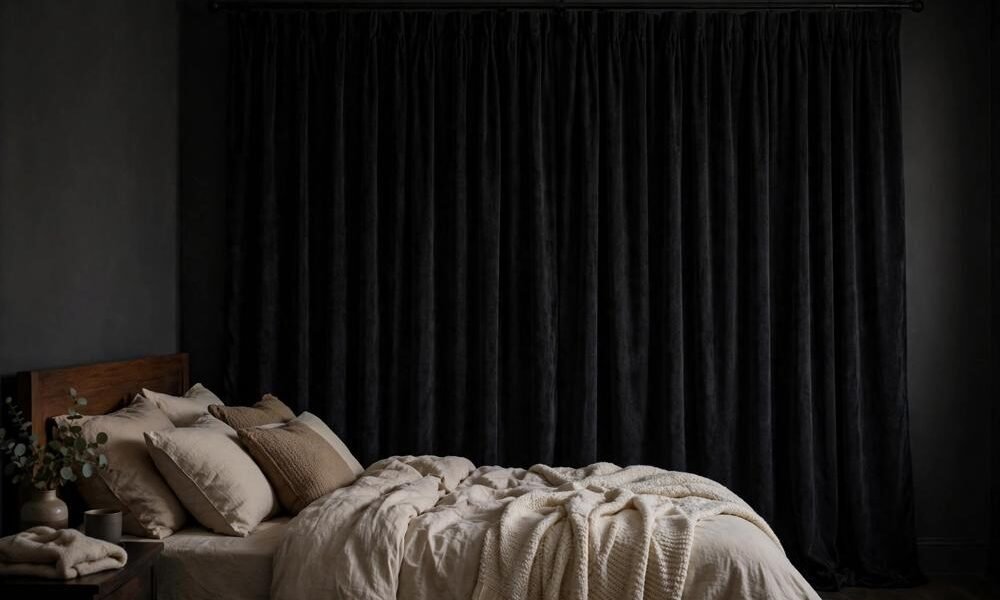
Blackout curtains and blackout liners both block light, but they are not the same purchase. A blackout curtain is a finished curtain with a light-blocking layer built in. A blackout liner is a separate light-blocking panel that hangs behind a decorative curtain you already own, or behind a sheer. The right choice depends on whether you already like your curtains, how dark the room needs to be, how much you want to spend, and whether you rent.
This guide compares them on darkness, looks, cost, hanging, washing and renter-friendliness, and covers the light leaks that ruin both options, plus when using both together makes sense.
Key takeaways: curtains are simpler if you are starting from scratch; liners are cheaper if you already own curtains you like; neither blocks light at the edges unless hung wide and high; and a liner plus a curtain is the darkest setup for shift work and streetlights.
Idea 1: Blackout Curtains, the Simple All-in-One Option
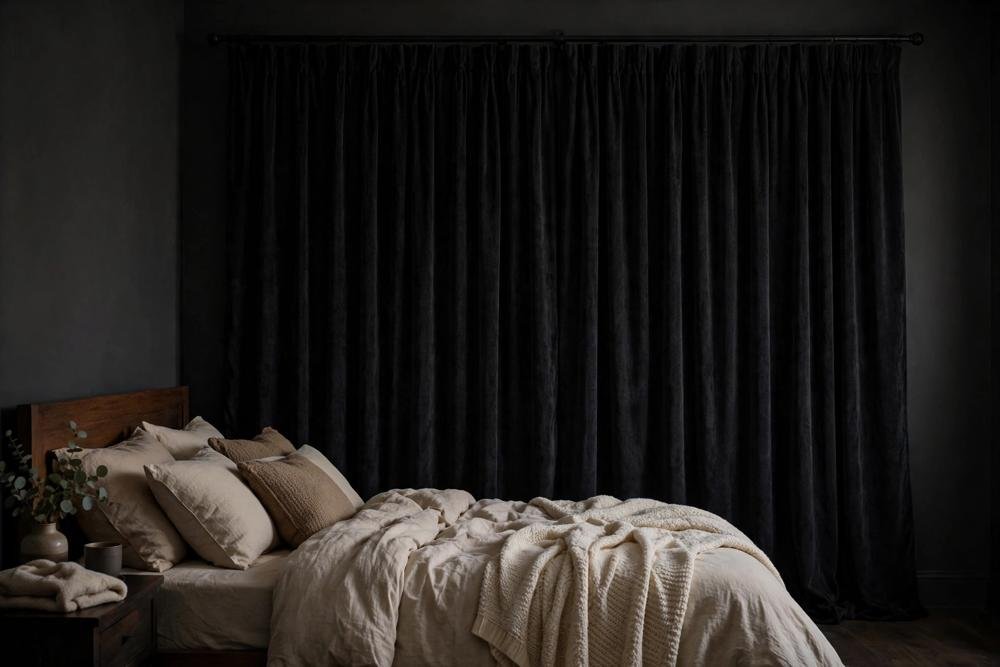
Blackout curtains are the simplest option, because you buy one product, hang it, and you are done. The fabric is usually thick, with a coated or multi-layer backing that blocks most light through the fabric itself. They come in many colours and styles, from plain to patterned, and they can look like normal curtains, which matters if the window is a feature of the room.
Choose blackout curtains by weight and backing, not by colour alone. A dark colour does not guarantee blackout, and a light colour can still block light if the backing is good. Check the product description for a blackout rating or a light-blocking layer, and read reviews for light leaking through the fabric, especially with light colours. If you can, hold the fabric up to a bright light before buying, or buy one panel first and test it at home.
Hang blackout curtains wide and high to block edge light. Use a rod that extends 15 to 20 centimetres beyond the window on each side, and hang it 10 to 15 centimetres above the window frame, or near the ceiling in a small room. This lets the curtains stack off the glass when open, and cover the frame and a margin of wall when closed, so light does not leak around the sides. Use a rod with a return, or a wraparound rod, if the wall allows, so the curtain ends curve back to the wall and close the side gap.
Blackout curtains are heavier than normal curtains, so use a sturdy rod and fixings, especially for wide windows. They also need more washing care: check the label, because some coated curtains cannot be machine washed, or need a gentle cycle. If washing is a concern, choose a washable blackout curtain, or a liner that can be removed and washed separately.
Idea 2: Blackout Liners, the Cheaper Upgrade for Curtains You Already Own
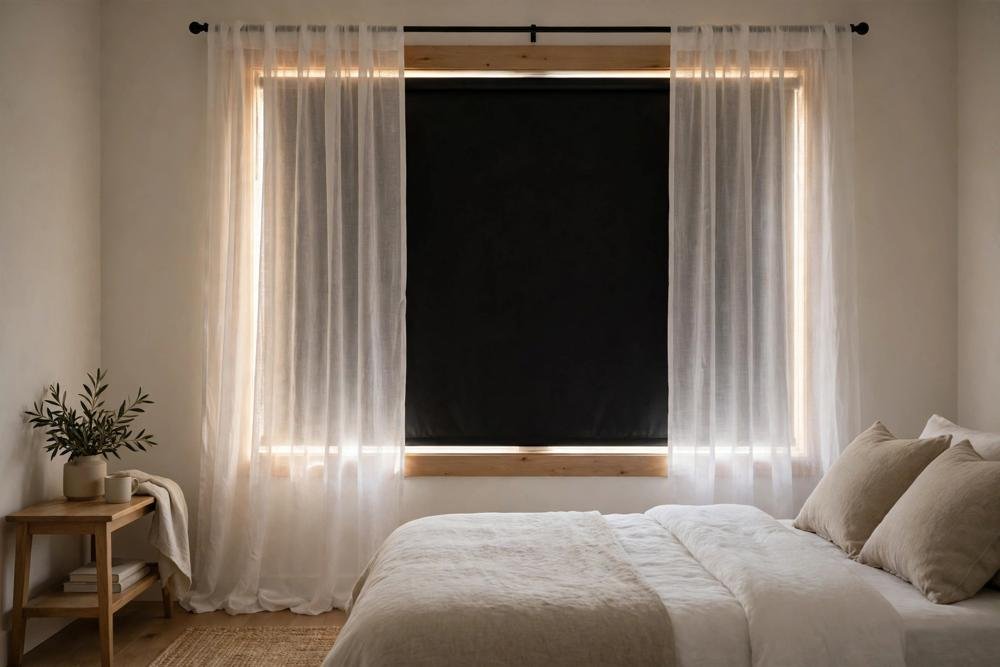
A blackout liner is a separate panel, usually white or cream, that hangs behind your existing curtains on the same rod, on a second rod, or clipped to the curtain. It blocks light through the fabric, while your decorative curtain provides the look. This is the cheapest way to get blackout if you already own curtains you like, or if you want a sheer look during the day and darkness at night.
Liners come in several types: a sewn-in liner, attached to the curtain by a tailor or at purchase; a clip-on liner, attached with hooks or rings to the curtain header; and a separate liner panel, hung on its own rod behind the curtain. Clip-on and separate liners are best for renters, because they do not alter the curtain and can be removed when you move. Sewn-in liners look neater, because they move as one piece, but they are harder to wash separately.
Measure the liner to match the curtain, not just the window. A liner that is narrower than the curtain will leave a light gap at the sides, and a liner that is shorter will leave light at the bottom. Ideally, the liner should be the same width as the curtain, and the same length, or slightly shorter so it does not show below the hem. Use a liner with a header that matches your curtain hanging style, such as rings, hooks, or a rod pocket, so it hangs evenly and does not bunch.
Liners also help with insulation and sound, a little, because they add a layer, but they are not a substitute for proper insulation or soundproofing. They do help protect decorative curtains from sun fading, because the liner takes the sun, which can extend the life of a curtain you like.
Idea 3: Using Both Together for the Darkest Room
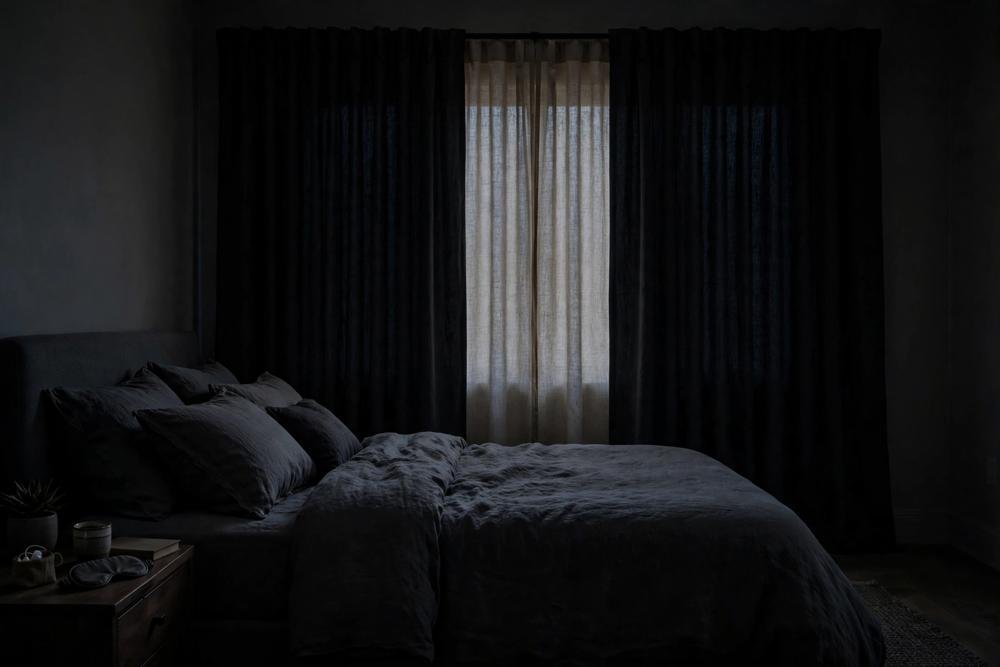
Using a blackout curtain plus a blackout liner gives you the darkest room, because you have two light-blocking layers, and the liner fills gaps the curtain leaves. This is the best setup for shift workers, light sleepers, rooms facing streetlights, and summer mornings when the sun rises early. It is also useful when a single blackout curtain is not quite dark enough, for example with a light-coloured curtain or a large window.
To use both, hang the liner on a second rod behind the curtain rod, or clip it to the curtain, and hang the curtain wide and high as above. Check that the combined weight does not overload the rod or fixings, and that the curtain still opens and closes smoothly. If the window is small, a curtain plus a liner may be bulky, so choose a slim liner and a curtain that stacks neatly to one side.
Cost is the main downside of using both, because you buy two products, and washing becomes two jobs. If you use both, wash the liner more often, because it faces the window and collects dust, and wash the curtain less often, or dry clean it if the label requires it. Keep a spare liner if you rely on darkness for shift work, so you are not without blackout while one is washing.
Do not use both if the room already gets dark enough with one layer, because the extra layer adds weight, cost and bulk for little benefit. Test one layer first, at night with streetlights on and in the morning, before adding the second.
Idea 4: Stopping Light Leaks at the Edges
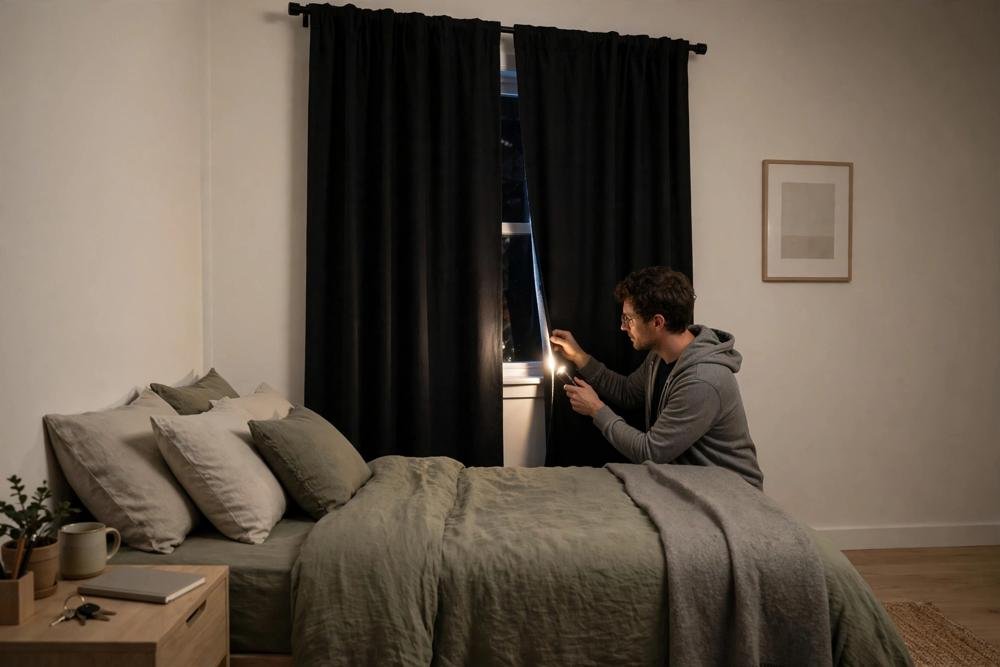
Most blackout failures are not through the fabric, but around it: at the top, sides, bottom, and centre where two panels meet. Light leaks at the edges will wake a light sleeper even when the fabric itself is fully blackout, so fixing leaks matters more than buying a more expensive fabric.
Check leaks at night with the room lights off and streetlights or a torch outside, or in the morning with the curtains closed. Look for light at the top of the rod, down the sides, under the hem, and through the centre gap. Fix the top leak by hanging the rod higher and using a pelmet, a valance, or a rod with a return that closes the top gap. Fix side leaks by extending the rod wider, using a wraparound rod, or adding side channels or magnetic strips that hold the curtain to the wall.
Fix the centre gap by overlapping the two panels by at least 10 centimetres when closed, or using a magnetic closure or a centre overlap clip. Fix the bottom leak by choosing curtains long enough to reach the sill, the floor, or just below the sill, and by using a heavier hem or a weighted hem that hangs straight. If the window has a deep sill, the curtain should fall in front of the sill, not on it, so light does not leak behind.
For renters, use removable fixes: a tension rod inside the frame plus a blackout blind, a portable blackout panel with suction cups, or a curtain rod with removable adhesive fixings rated for the weight. Do not drill without permission, and do not block a fire escape or a window that must open for ventilation.
What to Avoid
Do not buy blackout curtains by colour alone, without checking the backing and reviews. Do not hang blackout curtains exactly the width of the window, because side light will leak. Do not use a liner narrower or shorter than the curtain, because it will leave gaps. Do not ignore the centre gap, the top gap, or the bottom hem, because edge leaks ruin an otherwise good blackout setup. And do not block a window that must open for air or escape, or cover a radiator with a long curtain in a way that creates a fire risk.
FAQs
Are blackout curtains or blackout liners better?
Curtains are simpler if you are starting from scratch, because you buy and hang one product. Liners are better if you already own curtains you like, or you want a sheer daytime look, because they are cheaper and removable. Both block light through the fabric; edge leaks depend on hanging, not the product alone.
Do blackout liners make a room fully dark?
A good liner blocks most light through the fabric, but the room will only be fully dark if the liner is wide enough, long enough, and hung to close edge gaps. Pair a liner with a curtain, or use a second layer, for the darkest result.
Can I use a blackout liner with sheer curtains?
Yes. A liner behind a sheer gives you privacy and light during the day when the liner is open, and darkness at night when it is closed. Hang the liner on a separate rod or track, so you can open it independently from the sheer.
Are blackout curtains washable?
Some are machine washable on a gentle cycle, others need dry cleaning because of the coating. Check the label before buying if washing matters to you, or choose a removable liner that can be washed separately.
How do I stop light leaking around blackout curtains?
Hang the rod wider and higher than the window, use a wraparound rod or a pelmet for the top, overlap panels at the centre, and choose a length that reaches the sill or floor. For renters, use removable side channels, magnetic strips, or a portable blackout panel.
Do blackout curtains help with heat and noise?
A little. The extra layer can reduce heat gain in summer and draughts in winter, and it can dampen some outside noise, but it is not a substitute for insulation, double glazing, or soundproofing. Do not buy blackout curtains for heat or noise alone.
Conclusion
Choose blackout curtains if you want a simple, all-in-one solution and you are starting from scratch. Choose a blackout liner if you already own curtains you like, you rent, or you want a sheer daytime look with darkness at night. Use both together only if one layer is not dark enough, for shift work or streetlights. Whichever you choose, hang it wide and high, close the centre gap, and check for edge leaks at night, because the hanging matters as much as the fabric. Done that way, the bedroom will stay dark enough for sleep, without a full remodel or a new window.