
Introduction
A small primary bedroom does not need walls moved to feel better. Most small primary bedrooms feel tired for simpler reasons. The bed takes up too much visual space, the nightstands are crowded, the storage is not working, and the room has collected extra pieces that do not earn their place. A refresh works when it fixes those problems in the right order, rather than adding more decoration on top of them.
This guide is for a refresh, not a remodel. There is no demolition, no new built in wardrobe, and no change to the room shape. It focuses on layout, bedding, lighting, storage, and one strong wall moment. Start by removing what is not needed, then fix the layout, then change the soft furnishings, and only then add decoration.
Key takeaways
- Fix the layout before you buy anything.
- Change bedding and lighting first for the biggest visual change.
- Add storage without built-ins.
- Create one calm wall moment, instead of decorating every wall.
Idea 1: Fix the Layout Before You Buy Anything
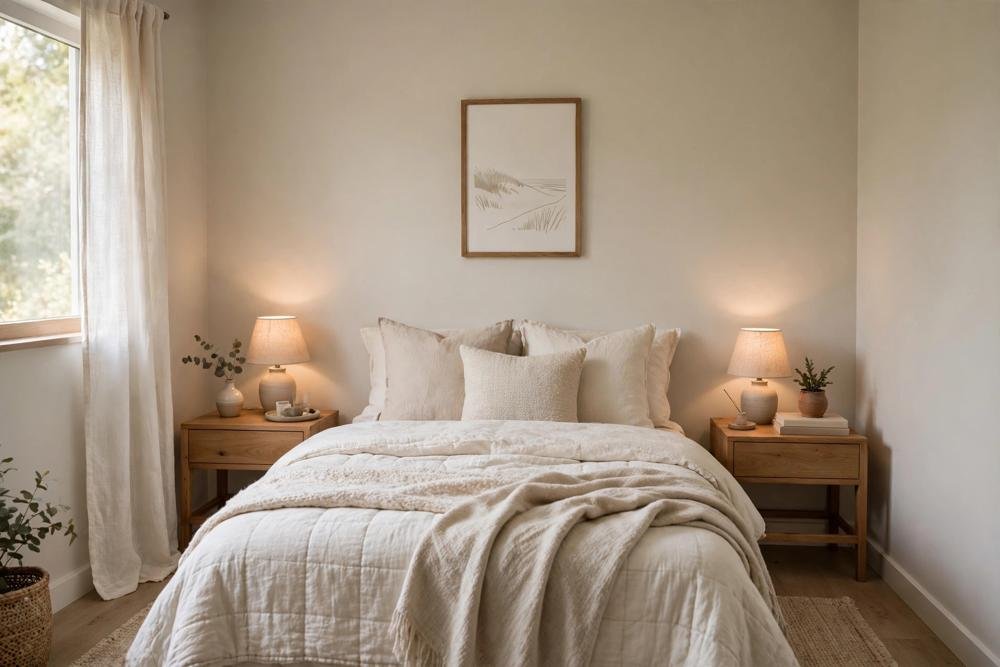
Start with the floor, not the shops. Measure the room, the bed, the nightstands, and the door swing. Then walk the routes you use every morning and evening. Can you get to both sides of the bed without turning sideways? Can you open drawers fully? Can you reach the wardrobe without moving a chair? If any answer is no, solve that problem before you spend money on new bedding or art.
A bed centred on the main wall looks balanced, but it only works if both sides keep a usable walkway. If one side is too tight, push the bed slightly to one side and give the other side a clear path, or replace a wide nightstand with a floating shelf on the tight side. The room may look a little less symmetrical, but it will feel much easier to live in. Also check the door swing. A reading chair or storage bench in the door swing will make the whole room feel cramped. Move it to a wall where it does not block entry, light, or drawer space, and test the new layout for a few nights before buying new furniture.
Idea 2: Change the Bedding and Lighting First for the Biggest Visual Change
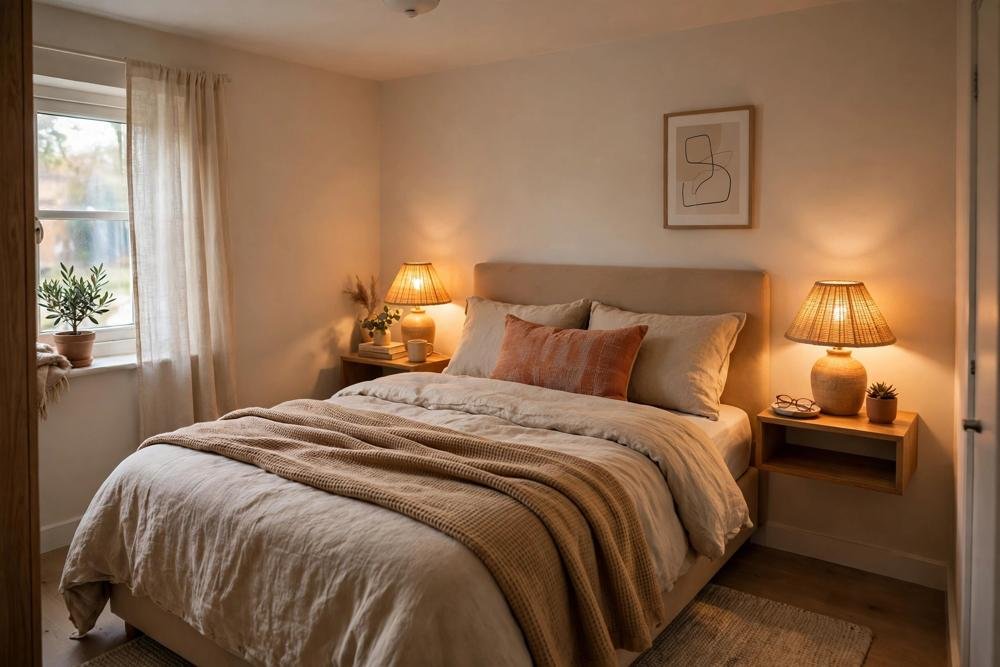
Bedding covers more visual area than almost anything else in a primary bedroom, so it is the fastest way to change how the room feels. Choose a calm base in white, cream, warm grey, or soft sage, then add texture through a quilt, a waffle coverlet, or a linen throw at the foot of the bed. Texture matters more than pattern in a small room. A room with too many competing prints can feel busy, while layered textures feel soft and finished without looking cluttered.
How to Layer Bedding Like a Hotel Bed shows the exact steps for a crisp, hotel-style finish.
Keep the pillow plan simple. Two sleeping pillows, two standard pillows, and one or two decorative pillows are usually enough for a queen bed. You should be able to clear the decorative pillows in a few seconds at night and have a clear place to put them. For lighting, use warm bedside lamps as the main evening light, and keep the ceiling light for cleaning or getting dressed. If you do not have room for two table lamps, use wall mounted lights or plug in sconces. That frees nightstand space and gives each side of the bed its own light, which helps when two people keep different schedules.
Idea 3: Add Storage Without Built Ins
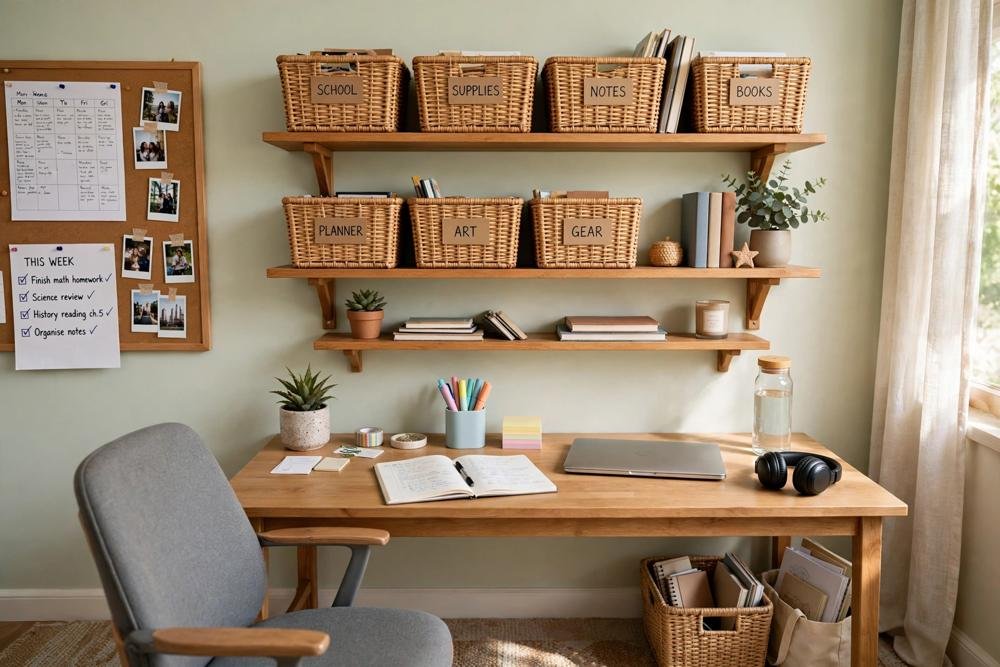
Small primary bedrooms often lack storage, but built in wardrobes are not the only answer, and they are not part of a no renovation refresh. The better approach is to use the height and hidden space you already have, and to choose furniture that does more than one job.
A tall chest is often better than a wide dresser in a small primary bedroom. It uses wall height instead of floor width, and it leaves more room for walkways. A storage bench at the foot of the bed can hold extra blankets or out of season clothes, while also giving you a place to sit while getting dressed. Under bed storage works well for items you do not need every day, but it should be in matching bins or bags so it does not look messy. A shelf above a door can hold rarely used items, and hooks behind a door can hold tomorrow’s clothes without taking floor space. Keep daily items between waist and shoulder height, and seasonal items high or low. Drawer dividers and shelf risers can also improve existing furniture without buying a larger piece.
Idea 4: Create One Calm Wall Moment

A small primary bedroom does not need decoration on every wall. Too many small pieces can make the room feel smaller and more restless. Choose one wall to be the focus, usually the wall behind the bed, and keep the other walls calm.
Above the bed, aim for art that is wide enough to relate to the bed, but not so large that it overwhelms the room. A single large piece, a pair of matching frames, or a simple grid can all work, as long as the total width feels balanced with the bed. Hang it low enough to connect with the headboard, rather than floating high near the ceiling. If you are renting or do not want holes in the wall, use lightweight frames with adhesive fixings rated for the weight, or lean a large frame on a dresser or shelf.
Colour can be part of this wall moment without repainting the whole room. A painted arch behind the bed, removable panels, or a large textile can add warmth and focus, and all can be removed or repainted later. Keep the palette close to the bedding palette, so the wall feels like part of the room rather than a separate feature. Once the main wall is done, a plant in one corner, a mirror that reflects light, or a single shelf can finish the room, but only if each piece has a clear place.
A One Weekend Refresh Order That Actually Works
A weekend refresh works when the order is fixed before you start. On Saturday morning, declutter first. Remove everything that does not belong in a primary bedroom, then remove one piece of furniture that is not earning its space. This is often a chair, a small table, or an extra storage unit. Bag laundry, clear surfaces, and take a photo of the empty room. That photo helps you see the layout clearly, without the distraction of clutter.
Next, rearrange the furniture, fix the nightstand problem, and clear the door swing. Then clean the room properly, including skirting boards and light switches. On Saturday afternoon, change the bedding and lighting. Make the bed properly, add the layered textures, and set the lamps. On Sunday, add storage solutions, hang or lean the main wall art, and place the final small pieces. Finish with a walk through in the evening, with only the bedside lamps on. That evening view is how you will see the room most nights, so it should be the view you judge the refresh by. If you run out of time, stop after bedding, lighting, and layout. Those three changes carry most of the refresh.
Small Bedroom Ideas: The Complete Guide to Layout, Storage, Light and Style lays out the full system behind this order.
Solving Small Primary Problems: King Bed, Two Nightstands, and a Reading Chair
A king bed in a small primary bedroom is possible, but it needs honest trade offs. Measure the walkways on both sides, and remember that drawers and doors need extra space beyond the walkway itself. If a king bed leaves less than a comfortable path on one side, consider a queen bed, or keep the king bed and accept one floating shelf instead of a full nightstand on the tight side. The goal is sleep comfort plus daily comfort, not just the largest bed that fits in the room.
Two nightstands are nice, but they are not a rule. In a tight room, two different solutions can work better than two matching pieces. One full nightstand and one wall shelf, one nightstand and one small stool, or two floating shelves can give both people a place for a phone, water, and a book without crowding the floor. The key is that both sides have light and a small surface, even if the furniture does not match exactly. A reading chair only works if it has light, a small table or shelf, and a clear path around it. If the chair blocks a door, a drawer, or the main walkway, move it to a corner near a window, replace it with a smaller chair, or remove it and use a storage bench instead.
Colour, Texture, and Budget for a Refresh
Small primary bedrooms usually look best in a calm palette with warm undertones. Cream, warm beige, soft greige, and muted sage keep the room light without feeling cold or stark. Choose one main neutral, one soft accent, and one darker tone for small details. Texture stops a neutral room from looking flat: linen bedding, a wool or cotton rug, a velvet cushion, and natural wood add interest without visual clutter. For budget, work in priority order: free changes first, then bedding and lighting plus one storage piece, then a rug, curtains, and wall art.
Warm Neutral Bedroom Colour Schemes With Beige and Greige collects our favourite palettes in these tones.
Bedroom Makeover for Under 500 Dollars breaks down where a small budget goes furthest.
What to Avoid
Do not buy a full matching bedroom set for a small primary room unless you have measured every piece. Matching sets often include a wide dresser, two large nightstands, and a tall headboard that together leave little room to move. Mixing a few pieces in a similar wood tone or colour usually fits a small room better, and it looks more personal.
Do not fill the room with many small decorative pieces. A tray, a candle, a photo, and a plant can be lovely, but five small items on every surface will make the room feel dusty and crowded. Choose fewer, larger pieces, and leave some surfaces empty. Empty space is not wasted space in a small bedroom. It is what makes the room feel calm. Do not choose a rug that is too small, curtains that are too short, or art that is too tiny for the wall above the bed. When in doubt, size up the rug, hang curtains higher and wider, and choose one larger piece of art rather than several tiny frames. Do not start with paint if the layout and storage are still wrong. A new wall colour will not fix a blocked door, a nightstand that does not fit, or a wardrobe that cannot close.
FAQs
Can you refresh a small primary bedroom without renovating?
Yes. Most small primary bedrooms improve most from layout, bedding, lighting, and storage changes, not from moving walls or adding built ins. Start by clearing clutter, fixing walkways and door swings, and changing bedding and lighting. Add storage that uses height and hidden space, and finish with one calm wall moment.
What should I update first in a small primary bedroom?
Update the layout first, then bedding and lighting, then storage, then decoration. Layout fixes cost little and affect how you use the room every day. Bedding and lighting change how the room looks and feels most. Storage keeps the refresh tidy after the first week. Decoration should come last.
How do I fit a king bed in a small primary bedroom?
Measure both walkways, drawer swing, and door swing before you decide. A king bed can work if both sides keep a usable path and drawers can open fully. If one side is too tight, use a floating shelf instead of a full nightstand on that side, choose a slimmer headboard, or consider a queen bed for better daily comfort.
What is the best storage for a small primary bedroom without built ins?
Use a mix of tall storage, hidden storage, and multi purpose furniture. A tall chest uses wall height instead of floor width. A storage bench at the foot of the bed holds extra bedding. Under bed bins work for seasonal items. Drawer dividers and shelf risers improve existing furniture without buying larger pieces. Keep daily items at waist to shoulder height, and seasonal items high or low.
How can I make a small primary bedroom feel like a suite?
Focus on a calm palette, layered bedding, warm bedside lighting, and one clear focal wall. Keep surfaces mostly clear, use texture rather than many patterns, and give both sides of the bed light and a small surface. A rug beside the bed, curtains that frame the window, and a tidy storage system all help the room feel more like a hotel suite, even without a larger floor area.
How much does a small primary bedroom refresh cost?
It depends on what you already own and what you need to replace. A low cost refresh can focus on decluttering, rearranging, washing bedding, and matching light bulbs. A middle refresh usually adds bedding, lighting, and one storage piece. A higher refresh adds a rug, curtains, wall art, and a second storage piece. Set a priority order before you shop, and spend most on bedding or lighting that you use every day.
Conclusion
A small primary bedroom refresh without renovating is really a series of small, practical decisions made in the right order. Clear what does not belong, fix the layout so the room works every day, change bedding and lighting for the biggest visual impact, add storage that does not need built ins, and finish with one calm wall moment. Avoid matching sets that are too large, too many small decorations, and undersized rugs, curtains, and art.
When the room is done, it should feel easier in the morning and calmer at night. That feeling comes from a layout that works, storage that is easy to use, and soft furnishings that invite you to slow down.


