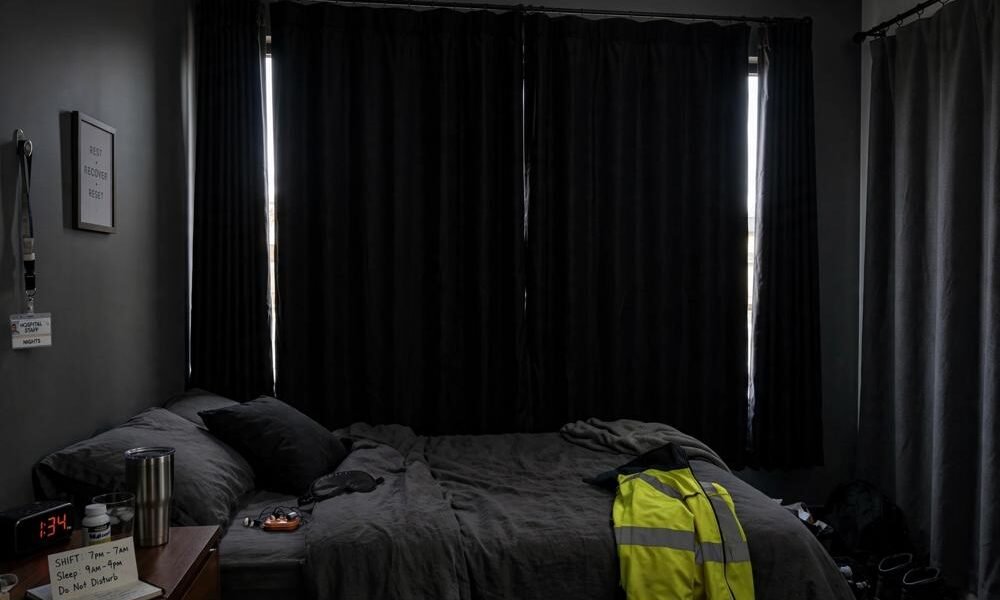
Introduction
Sleeping in the day is not the same as sleeping at night. The sun is up, the house is awake, deliveries arrive, and your body is telling you it should be alert. If you work nights, or if you are a light sleeper who wakes at every small sound and change in light, a normal bedroom is not enough. You need a room built for sleep, not just decorated for sleep.
This guide works through four systems: darkness, quiet, temperature and bedding, and evening light. Start with light and sound leaks, then fix temperature, then build a wind down routine that tells your brain it is time to sleep, even at 9 in the morning. Most fixes are renter friendly.
Key takeaways
- Build a darkness system, not just a curtain.
- Build a quiet system layer by layer.
- Keep the room cool and the bedding breathable.
- Use an evening wind down light plan.
Idea 1: Build a Darkness System, Not Just a Curtain
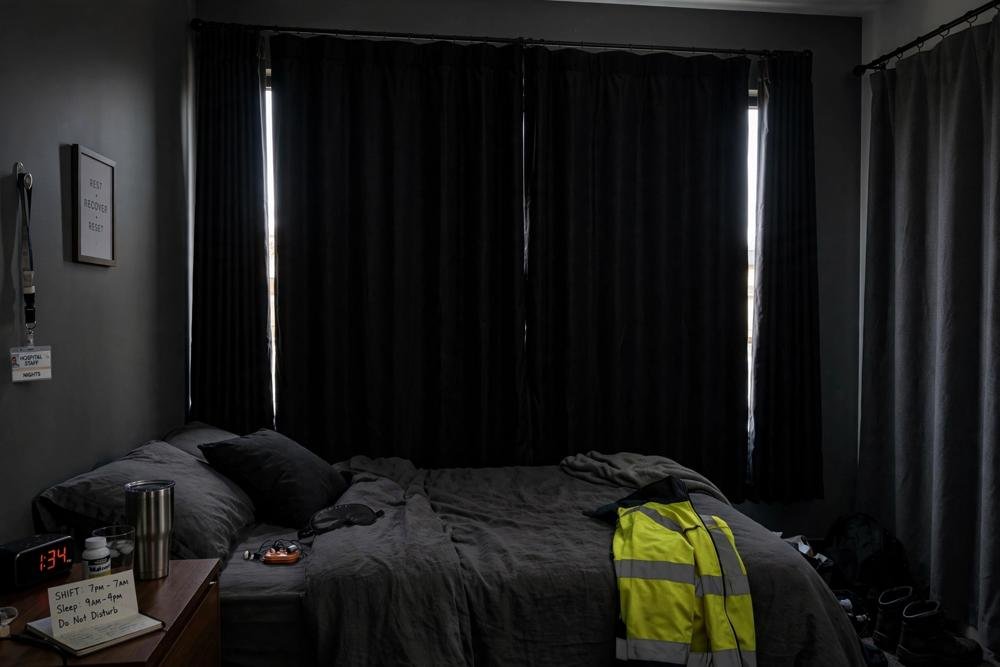
A single pair of dark curtains is a start, but it is rarely a complete darkness system. Light finds gaps: through the sides of the curtain, over the top of the rod, through thin fabric, under the door, and from small devices in the room. For daytime sleep, close those gaps one by one.
Hang the curtain rod wider than the window frame and higher than the top of the frame, so the curtain covers the whole opening and falls past the edges. Add a blackout liner behind the main curtain, or use a blackout roller blind behind a curtain. The two layers work together: the blind blocks direct light, and the curtain covers the edges and softens the room. If you are choosing between the two layers, see Blackout Curtains Versus Blackout Liners for Bedrooms.
Check the sides and the top, where light often leaks where the curtain meets the wall. Side panels, return rods that bend back to the wall, or a simple pelmet can reduce this gap. If you cannot change the rod, try magnetic strips or adhesive side channels made for blackout curtains. They are renter friendly and make a real difference in a bright room.
Do not forget the door. A gap under a bedroom door lets hallway light in every time someone walks past or switches on a light. A draft stopper or door sweep closes that gap and helps with sound too. Cover small device lights with blackout stickers, move chargers out of your direct line of sight, and use a sleep mask as a backup, not as your main plan.
Test the room in the middle of the day. Close the curtains, close the door, switch off the lights, and wait two minutes for your eyes to adjust. Walk around and look for every bright line and glow. Fix the largest leak first, then test again. Two or three small fixes often make the room feel completely different.
Idea 2: Build a Quiet System Layer by Layer
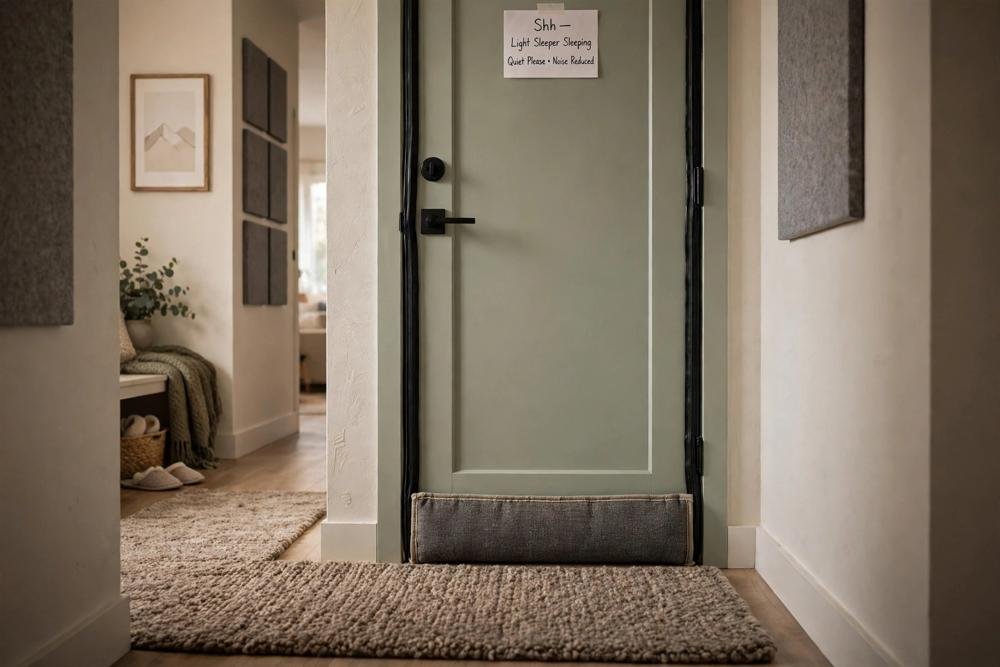
Quiet is harder than darkness, because sound travels through walls, floors, doors and vents. You cannot make a normal bedroom soundproof without building work, but you can reduce everyday noise and make what remains less sharp and less likely to wake you.
Start at the door, often the weakest point in the room. Add weather stripping around the frame and a door sweep at the bottom. This reduces hallway voices, television sound and footsteps. A thick curtain on the inside of the door adds another soft layer, even though it will not block all sound.
Next, soften the room itself. Hard floors, bare walls and empty corners reflect sound and make a room feel echoey. A thick rug, especially with a rug pad underneath, reduces footstep noise and absorbs sound. Heavy curtains, upholstered furniture, a fabric headboard and a full bookshelf all help. The goal is not clutter. It is to avoid large, hard, empty surfaces that bounce sound back at you.
White noise is the next layer, and it works best when it is steady and low. A fan, a white noise machine, or an app playing brown noise or pink noise can mask sudden sounds such as a door closing, a car horn, or a voice in the next room. Keep the volume low and steady, and place the machine near the door or window, where outside sound enters, rather than right next to your pillow.
Thin foam panels often improve echo inside a room, but they do not stop sound coming through a wall. Earplugs can help as a backup, but they are not a replacement for sealing gaps and softening the room. If you share a home, agree on quiet hours for your sleep window.
Idea 3: Keep the Room Cool and the Bedding Breathable

Temperature is often the forgotten part of daytime sleep. A room that feels fine at night can feel warm and stuffy in the afternoon, when the sun hits the window and the house warms up. Your body also sleeps better when it can cool down slightly, so a cool room is part of the sleep system, not just comfort.
Aim for a room that feels slightly cool when you get into bed. Close blackout curtains before the sun hits the window, not after the room has already heated up. Open a window for fresh air in the early morning if the outside air is cool, then close it before the heat builds. A fan helps even without air conditioning, because moving air feels cooler and adds steady background sound.
Bedding matters just as much as room temperature. Choose breathable layers you can adjust: a light cotton or linen sheet, a light duvet or quilt, and a throw at the foot of the bed. If you wake up warm, push the duvet aside and keep the sheet. If you wake up cool, pull the throw up without fully waking. Avoid heavy, synthetic bedding that traps heat, especially in summer. If you sleep hot, see Bedroom Temperature and Bedding for Hot Sleepers.
Keep an eye mask and a light blanket within reach, so a small problem does not force you to get up in the middle of a daytime sleep. Keep the bed as a sleep only zone as much as you can, and use a chair or desk for work and screens.
Idea 4: Use an Evening Wind Down Light Plan

Light is not only about blocking daylight. It is also about the light you use before you sleep. Bright, cool white light tells your brain to stay alert. Warm, dim light tells your brain to wind down. For shift workers, this matters in reverse: you need bright light during your shift to stay alert, and warm, dim light in the hour before you sleep, even if that hour is in the morning.
Build a simple wind down plan for the last hour before bed. Switch off overhead lights and use a bedside lamp with a warm bulb instead. Look for bulbs described as warm white, around 2200 to 2700K. That warm amber tone feels calmer than a cool daylight bulb, and it is much less likely to keep you wired. Use a dimmer if you can, or a low wattage lamp you only switch on for reading and getting ready for bed.
Avoid cool white light after your wind down starts, including bright bathroom lights, kitchen downlights, and phone and laptop screens at full brightness. If you need a screen, turn the brightness down and use a warm night mode. Better still, put the phone on charge outside the bedroom or face down on the bedside table, so a notification does not light up the room while you are trying to sleep.
Create a short routine you repeat every time, such as shower, change into sleep clothes, dim lamp, read for fifteen minutes, lights out. The exact steps matter less than the repetition. After a few weeks, the routine itself becomes a signal, and your brain starts to wind down when the lamp goes dim. If you live with someone on a different schedule, a warm bedside lamp is less disturbing than an overhead light, and a focused reading light lets one person read while the other sleeps.
Build a Daytime Sleep Routine You Can Repeat
Shift work is already irregular, so your sleep routine needs to be as steady as you can make it. Try to sleep at the same time after each shift, even if your days off are different. Use the same wind down steps, the same bedding, and the same room setup. Your body adapts to patterns, even when the pattern happens in daylight.
Eat a light meal before you sleep, rather than a heavy meal that leaves you uncomfortable. Avoid caffeine in the last few hours of your shift if you can, and avoid alcohol as a sleep aid. Alcohol may help you fall asleep quickly, but it often leads to lighter, broken sleep later. Tell the people around you when you are sleeping. A sign on the door, a message to family, and a phone on silent can prevent many daytime wake ups.
A Small Room and Rental Friendly Version
You do not need a large bedroom to make this work. In a small room, start with the window and the door, because they have the biggest effect. Then add a rug and soft furnishings, because a small room with hard floors echoes more. Use a tension rod for a blackout curtain if you cannot drill, and use adhesive door seals and a draft stopper you can remove when you move out. For the full small-bedroom plan, see Small Bedroom Ideas: The Complete Guide to Layout, Storage, Light and Style.
In a rental, avoid anything that damages walls or doors. A tension rod curtain, a thick rug, heavy curtains and a door sweep are all removable. Take photos before you make changes, so you can put the room back exactly as you found it.
What to Avoid
Avoid buying a full blackout and soundproofing kit before you have found your leaks. Test the room in daylight first, then fix the largest gaps. A very expensive curtain will not help if light is pouring under the door.
Avoid making the room completely sealed and stuffy. Darkness and quiet are important, but fresh air and a cool temperature matter too. Open a window when you can, use a fan, and do not block vents you need for air flow.
Avoid bright, cool white bulbs in the hour before sleep, even if they are energy saving. The colour of the light matters as much as the brightness. A warm, dim lamp is a better choice for winding down.
Avoid relying only on a sleep mask and earplugs. They are useful backups, but they do not fix a bright, noisy room. Use them to cover the last small gaps, not to replace curtains, door seals and a proper routine. Avoid turning the bedroom into a work room, a storage room and a sleep room at the same time, because clutter and screens make it harder for your brain to switch off.
FAQs
How dark should a bedroom be for daytime sleep?
As dark as you can reasonably make it, with no direct daylight on the bed and no bright lines around curtains or doors. Most people sleep best in a room that feels dark after their eyes adjust for two minutes, not just dim. If you can read a book without a lamp, the room is still too bright for daytime sleep.
What is the best way to blackout a bedroom for shift work?
Use two layers at the window, such as a blackout blind plus a blackout curtain, hung wider and higher than the frame. Seal the sides and top, close the gap under the door, and cover small device lights.
How can I make my bedroom quieter without renovation?
Seal the door with weather stripping and a door sweep, add a thick rug with a pad, use heavy curtains and soft furnishings to reduce echo, and add steady white noise or brown noise at a low volume. Earplugs can help as a backup, but they work best alongside these room fixes, not instead of them.
What temperature is best for daytime sleep?
Most people sleep best in a cool room that feels slightly cool when they get into bed. Close blackout curtains before the sun heats the room, use a fan for air movement, and choose breathable bedding layers you can adjust if you wake up warm. Avoid heavy synthetic bedding in warm months.
Do I need blackout curtains and a sleep mask?
Blackout curtains and door seals should do most of the work, because they darken the whole room and stay in place every day. A sleep mask is a useful backup for very bright mornings, travel, or a curtain that slips, but it should not be your only darkness plan. If you rely on a mask every day, check your curtains and door gaps again.
How do I wind down after a night shift when it is already morning?
Use the same wind down routine every time, even in daylight. Dim the lights in the last hour before bed, use a warm bedside lamp around 2200 to 2700K, and turn screens down or off. A short, repeated routine helps your brain learn that it is time to sleep, even when the sun is up outside.
Conclusion
A bedroom for shift work and light sleepers is not about one perfect product. It is about a system: block the light, soften the sound, keep the room cool, and wind down with warm, dim light. Start with the leaks you can see and hear in daylight, fix them one by one, and then protect the room with a simple, repeatable routine.
You do not need to do everything in one weekend. Fix the window and the door first, add a rug and steady background sound next, then adjust your bedding and evening light plan. When you close the door after a shift, the room should feel dark, quiet, cool and calm.