
If you wake up hot, sweaty, or kicking the covers off, the problem is rarely just the duvet. It is the room temperature, the bedding layers, the airflow, and what you wear, all working together. Hot sleepers do not need a colder house or an expensive cooling system. They need a cooler bedroom at night, breathable bedding that lets heat escape, and layers they can adjust without fully waking.
This guide covers room temperature and airflow, breathable fabrics, layering, and pillows, plus what to avoid, and when to seek medical advice if night sweats are new, severe, or unexplained. It does not promise to cure night sweats or medical conditions; it covers bedroom setup only.
Key takeaways: aim for a cool bedroom, around 16 to 19 degrees Celsius if you can; use breathable natural fabrics and light layers; keep air moving, even gently; choose a pillow that does not trap heat; and change one thing at a time, so you know what actually helped.
Idea 1: Breathable Bedding That Lets Heat Escape
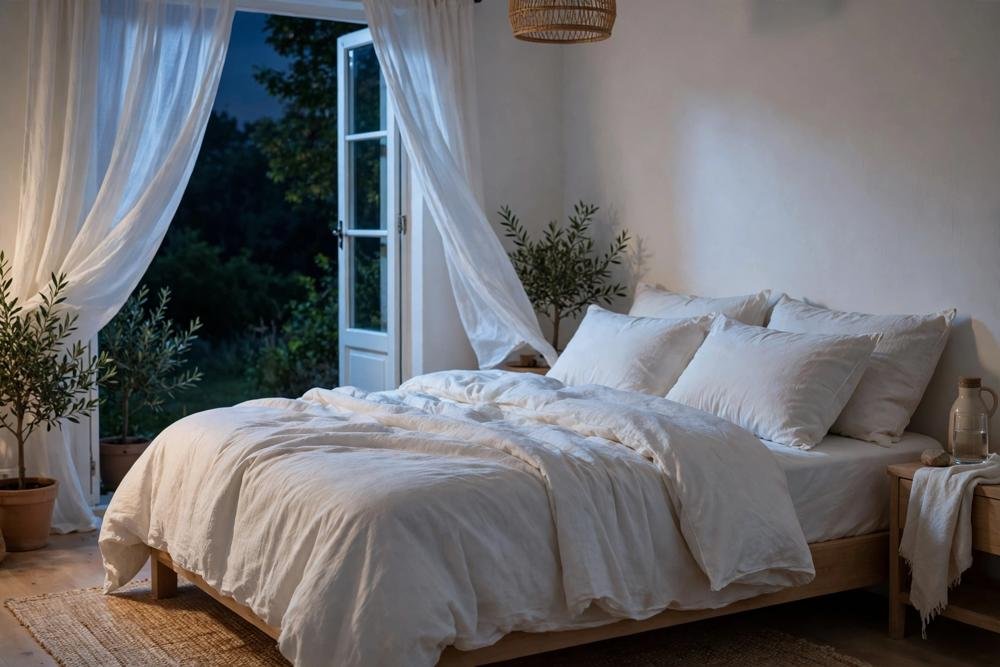
Breathable bedding is the biggest win for hot sleepers, because it sits against your skin all night. Choose natural, light fabrics that allow air to pass and moisture to evaporate: cotton percale, linen, bamboo viscose, and light cotton jersey. Percale feels crisp and cool, linen feels airy and textured, bamboo viscose feels soft and drapey. Avoid heavy synthetic fabrics, thick flannel in summer, and high-thread-count sateen that traps heat, even if it feels soft in the shop.
Use a light duvet or a top sheet alone in warm weather, rather than a heavy winter duvet. Check the duvet tog rating if you use one: a summer duvet is usually 4.5 tog or lower, a spring or autumn duvet is around 7 to 10 tog, and a winter duvet is 13 tog or higher. If you share a bed and one person is hot and the other is cold, use two separate single duvets, one light and one heavier, rather than fighting over one duvet all night. This is common in Scandinavian bedrooms and it works well.
Wash bedding often in warm weather, because sweat and body oils build up and make bedding feel heavier and less breathable. Use a light-coloured duvet cover, because dark covers can absorb heat during the day if the sun hits the bed, and keep the bed made loosely, not tightly tucked, so air can circulate under the covers.
Check the mattress too. A thick memory foam topper can trap heat, because it moulds around you and reduces airflow. If you use one and you sleep hot, try a thinner topper, a latex topper, or a breathable mattress protector, and see if it helps before buying a new mattress.
Idea 2: Room Temperature and Airflow at Night
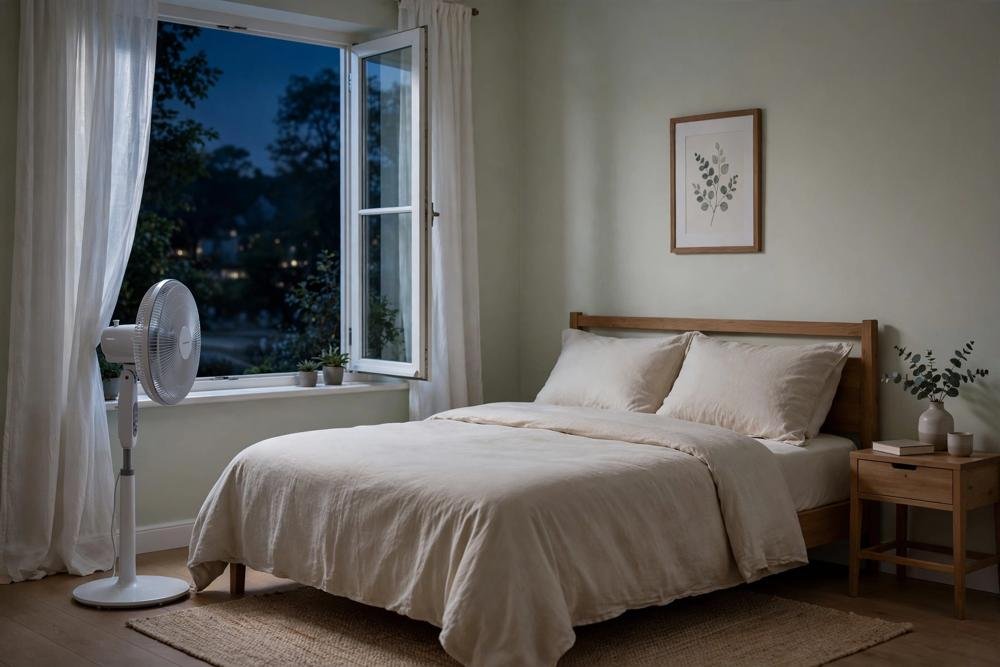
Room temperature matters more than bedding alone. Most sleep guidance suggests a cool bedroom, around 16 to 19 degrees Celsius, but the exact number matters less than feeling cool without shivering. If you cannot control the thermostat, or you rent, use airflow and timing instead: open windows in the evening when outside air is cooler, close curtains during a hot day to block sun, and use a fan to move air across the bed, even on a low setting.
Use a fan safely and quietly. A ceiling fan on low, a standing fan aimed across the room rather than directly at your face, or a small bedside fan on a timer, can make a room feel cooler by 2 to 3 degrees without actually cooling the air. Direct airflow on your face all night can dry your eyes and throat, so aim the fan at the foot of the bed, or use an oscillating setting. Clean the fan regularly, because dust on blades reduces airflow and can irritate allergies.
If you use air conditioning, set it to a cool but not cold temperature, and use a timer so it does not run all night at full power. A room that is too cold can also disrupt sleep, because you wake up chilled and need to add layers. Use a light blanket within reach, so you can adjust without fully waking, rather than setting the room very cold and sleeping without a cover.
Keep the bedroom door slightly open if it helps airflow, and keep heat sources out of the bedroom at night: close the door to a hot hallway, turn off radiators in the bedroom in summer, and avoid charging devices under pillows or bedding, which can add heat and is a safety risk.
Idea 3: Layers You Can Adjust Without Waking Fully

Layers beat a single heavy duvet for hot sleepers, because you can add or remove a layer in seconds, half asleep, without getting out of bed. Use a light top sheet, a light blanket, and a light duvet or throw, stacked in that order, so you can kick off the top layer, then the next, as you warm up. Keep the layers within reach, not folded at the foot where you have to sit up to reach them.
Choose layers by weight, not by warmth alone. A light cotton sheet, a thin waffle blanket, and a summer duvet together are more adjustable than one heavy duvet, even if the total warmth is similar. In very warm weather, use just the sheet, with a light blanket folded at the foot for the early morning when the room cools. In cooler weather, add the blanket, then the duvet, as the night gets colder.
Wear light, breathable sleepwear, or sleep in light layers you can remove. Heavy pyjamas, thick socks, and synthetic sleepwear trap heat, even with light bedding. Choose cotton, linen, or bamboo sleepwear, loose fitting, and keep a spare light layer nearby if you get cold later in the night.
If you share a bed, layers help even more, because each person can use their own layers. Use separate top sheets or separate light blankets, even with a shared duvet cover, so one person can kick off a layer without uncovering the other.
Idea 4: Pillows That Do Not Trap Heat
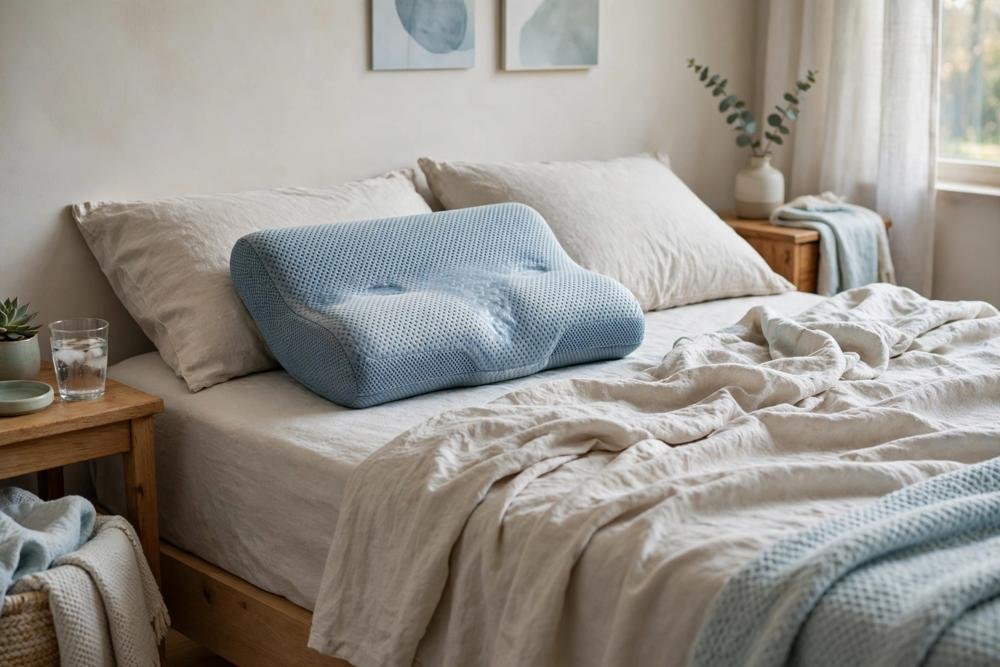
Pillows trap heat because your head rests on them all night, and a pillow that holds heat will feel warm within an hour, even in a cool room. Choose a pillow with airflow: a latex pillow, a shredded memory foam pillow with ventilation, a buckwheat pillow, or a pillow with a breathable cover and a cooling gel layer. Avoid a solid, dense memory foam pillow without ventilation if you sleep hot, because it can hold heat around your head and neck.
Use a breathable pillowcase, cotton percale or linen, and change it often in warm weather. A pillow protector can help with allergies, but choose a breathable one, not a waterproof plastic one that traps heat, unless you need waterproof protection for medical reasons. If you use a cooling pillow, check whether it needs to be chilled, how long the cooling lasts, and whether it feels firm, because some cooling pillows are firmer than a normal pillow and can cause neck discomfort.
Keep a spare pillowcase or a second pillow nearby, so you can flip to the cool side, or swap to a fresh pillowcase, without getting up. Flipping a pillow is a common hot-sleeper habit, and it works because the underside has not absorbed body heat yet. A pillow with two sides, one cool and one soft, can help, but a simple spare pillowcase is cheaper and just as effective.
If you wake with neck pain as well as heat, the pillow height and firmness may be wrong, not just the material. A pillow that is too high or too low can cause neck strain, which can disrupt sleep even if the temperature is right. Try a pillow at a height that keeps your neck in line with your spine when lying on your side or back, and adjust if you wake with stiffness.
What to Avoid
Do not use a heavy winter duvet in summer, or a thick synthetic duvet cover that traps heat. Do not keep the bedroom hot and rely on bedding alone to cool you, because room temperature matters more. Do not use a fan aimed directly at your face all night, or a room so cold you shiver, because both can disrupt sleep. Do not use waterproof pillow protectors or mattress protectors that trap heat unless you need them. And do not ignore new, severe, or unexplained night sweats, especially with fever, weight loss, or other symptoms; see a clinician, because bedroom setup cannot fix a medical cause.
FAQs
What temperature should a bedroom be for hot sleepers?
Around 16 to 19 degrees Celsius is a common guide, but feel matters more than the number. Aim for cool without shivering, with light bedding within reach, and adjust by 1 degree at a time until you sleep comfortably.
What bedding is best for hot sleepers?
Light, breathable natural fabrics: cotton percale, linen, or bamboo viscose, with a light summer duvet or just a top sheet in warm weather. Avoid heavy synthetic fabrics, thick flannel in summer, and high-thread-count sateen that traps heat.
Should hot sleepers use a fan all night?
A fan on low, aimed across the room or at the foot of the bed, can help by moving air, but direct airflow on your face all night can dry eyes and throat. Use an oscillating setting, a timer, or a ceiling fan on low, and clean the fan regularly.
Are cooling pillows worth it?
For some hot sleepers, yes, especially a breathable latex or ventilated pillow with a cooling cover. Check firmness, how long cooling lasts, and whether it needs chilling. A spare pillowcase or flipping the pillow is a cheaper first step.
Is it better to use layers or one duvet for hot sleepers?
Layers, because you can add or remove a layer half asleep without getting up. Use a sheet, a light blanket, and a summer duvet, stacked, so you can adjust as the night warms or cools.
When should I see a doctor about night sweats?
If night sweats are new, severe, frequent, or unexplained, or come with fever, weight loss, chills, or other symptoms, see a clinician. Bedroom setup helps with comfort, but it does not diagnose or treat a medical cause.
Conclusion
Hot sleepers do not need a colder house, they need a cooler bedroom setup: a cool room with gentle airflow, breathable light bedding, adjustable layers, and a pillow that does not trap heat. Start with the cheapest changes: open windows in the evening, use a fan on low, switch to a light percale or linen sheet, and use layers you can kick off. Change one thing at a time, so you know what helped, and keep a light blanket within reach for the early morning cool. Done that way, the bedroom stays comfortable through the night, without a remodel, and without waking up hot and sweaty.