Introduction
A bedroom with little natural light can still feel alive and welcoming, but it needs the right plants. The common mistake is choosing a plant for how it looks in a bright shop display, then placing it in a dark corner at home. Low light does not mean no light, and not every plant will cope. Match the plant to the light you actually have, water less than you think, and place each plant where it can get the best of what is available.
This guide focuses on plants that tolerate low light in a real bedroom. It also separates two ideas that are often mixed up: plants that survive in low light, and plants that are safe around cats and dogs. Some of the toughest low light plants are not pet safe, so that choice matters more than leaf shape or pot colour.
You will not find promises here that bedroom plants purify the air or cure poor sleep. Those claims are often overstated for a normal room with one or two plants. A plant can soften a corner, add height, and make the room feel cared for, but it is not a substitute for fresh air, darkness, and a regular sleep schedule. Start with light, then water, then placement.
Key takeaways
- Match the plant to your window direction first.
- Choose a low light shortlist you can actually keep alive.
- Pick pet safe plants first if cats or dogs sleep in the room.
- Place plants by height so the room still feels open.
Idea 1: Match the Plant to Your Window Direction
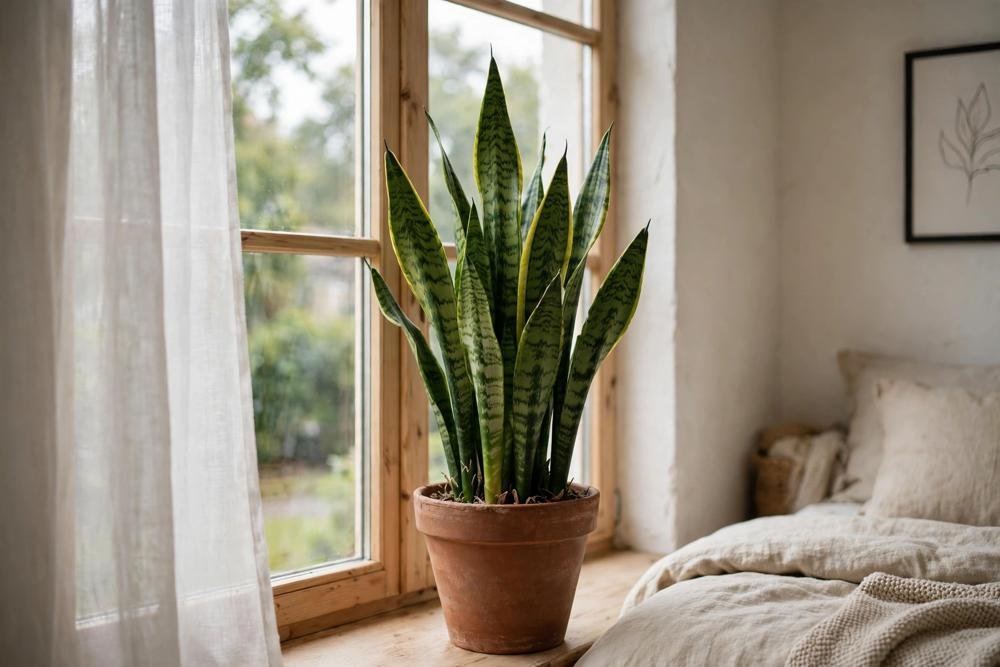
Before you buy anything, look at your bedroom windows for a full day if you can. Notice when direct sun comes in, when the light is bright but indirect, and when the room is simply dimm. Many plant labels say low light, but they often mean bright indirect light, not a dark corner far from any window. That difference is the main reason low light plants fail.
A north facing window usually gives gentle, indirect light all day, while an east facing window gives soft morning sun. A south or west facing window can be too strong at midday or in the afternoon, so a sheer curtain or a position to the side of the window is safer. Distance matters just as much as direction: place low light plants within one to two metres of a window if possible, and avoid a windowless corner unless you add a grow light.
A spot that feels bright in summer can become quite dim in winter, so be ready to move a plant closer to the window in the darker months. Paint colour also reads differently as the light shifts through the year; see Sage Green Bedroom Ideas and Paint Colours That Work in Real Light.
Idea 2: Choose a Low Light Shortlist You Can Actually Keep Alive

A short list is better than a long list of exotic plants that need perfect conditions. The plants below are widely available, tolerant of lower light, and forgiving if you miss a watering day. They are not identical, though, so choose based on your room, your pets, and how much care you want to give.
Snake plant is often the first choice because it tolerates dim light, dry soil, and irregular watering. Its upright leaves add height without much floor space, making it useful in a corner or beside a wardrobe. Let the soil dry out between waterings, and avoid a cold draught or a constantly wet pot.
ZZ plant is another strong option. It stores water in thick stems and roots, so it copes well if you forget to water, and it grows slowly in low light, which suits a small bedroom. Keep it out of direct sun and use a pot with drainage holes.
Cast iron plant tolerates low light, cool rooms, and neglect better than most houseplants, and its broad, arching leaves soften a corner. Buy one close to the size you want, as it grows slowly in a dim room.
Dracaena also tolerates low to medium light, but it is sensitive to overwatering and can develop brown leaf tips in some tap water. Pothos is a trailing plant for a high shelf, but it is not pet safe if chewed, so keep it out of reach in a pet household. In low light it grows more slowly and may become greener, which is normal.
Start with one or two plants from this shortlist, not six. If leaves stay firm and colour stays steady after a month, you have a good match. If leaves yellow or become soft, check water first, then light, then pot drainage.
Idea 3: Pick Pet Safe Plants First If Cats or Dogs Sleep in the Room

If a cat or dog sleeps in your bedroom, pet safety should come before plant toughness. Some of the most popular low light plants, including snake plant, ZZ plant, and pothos, can cause vomiting, drooling, or stomach upset if a pet chews them. That does not mean you cannot have plants, but it does mean you need to choose carefully and place plants thoughtfully.
Spider plant is a popular pet friendly choice. It tolerates low to medium light, produces arching leaves and small plantlets, and looks good in a hanging planter or on a high shelf. Cats are sometimes attracted to spider plants and may bat at the leaves, so a hanging position can protect both the plant and the pet. It prefers soil that dries slightly between waterings, but not completely bone dry for long periods.
Parlor palm is another gentle option for a bedroom. It has soft, feathery fronds, tolerates low light better than many palms, and adds a relaxed, tropical feel without sharp leaves. It likes consistent moisture, but not soggy soil, and it benefits from a pot with good drainage. It grows slowly, so it is well suited to a bedroom corner that does not get much direct sun.
Boston fern can work with indirect light and regular moisture, but it needs more humidity than a snake plant or ZZ plant, so keep it away from radiators in winter. Peace lily is not safe for pets to chew, even though it is often sold as a classic bedroom plant, so skip it in a pet household.
Before you buy, check the botanical name, not just the common name, and confirm it on a reliable pet poison resource. Keep new plants out of reach for the first few days, and remember that safe does not mean edible if a pet eats a large amount of leaves.
Idea 4: Place Plants by Height So the Room Still Feels Open
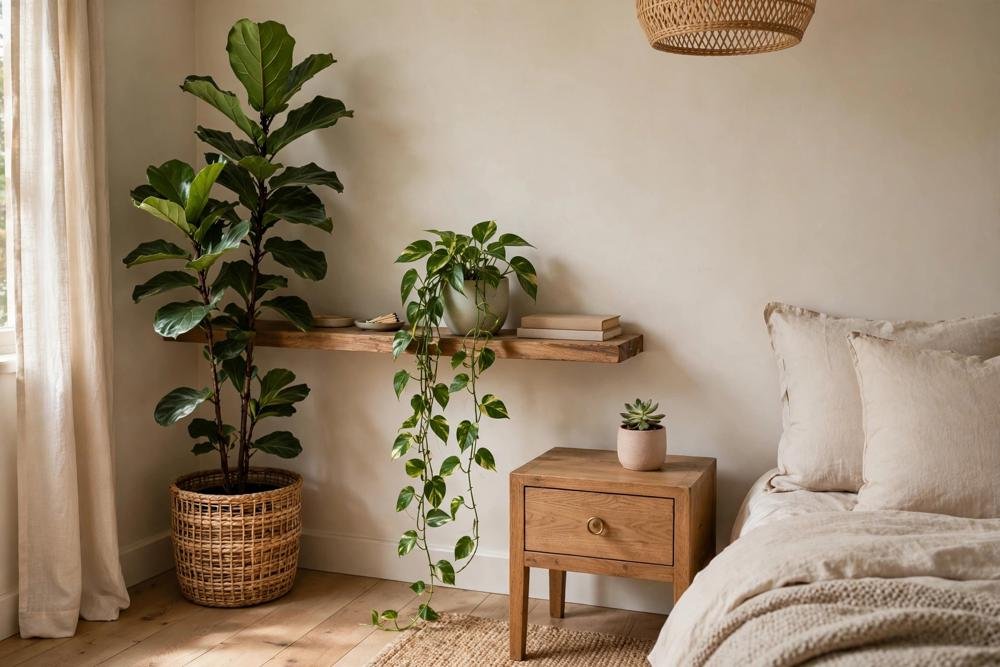
Placement by height is what stops a bedroom from feeling cluttered. Instead of lining up several pots on the floor, think in three layers: floor, eye level, and high shelf. One plant in each layer is often enough for a small bedroom, and it creates a sense of depth without blocking walkways or light.
Use a tall floor plant in one corner only. A snake plant, parlor palm, or dracaena in a simple pot can anchor a corner and draw the eye upward. Avoid placing a tall plant directly in front of a window, where it will block light, or beside a door. Keep pots in warm, simple finishes so they blend into the room; see Warm Neutral Bedroom Colour Schemes With Beige and Greige.
At eye level, use one nightstand plant only, and keep it small. A small spider plant, a compact pothos in a pet free home, or a small ZZ plant can soften a nightstand without crowding a lamp, book, or glass of water. If your nightstand is already full, skip this layer. A plant that forces you to move your lamp every night will not stay in place for long.
For the high layer, use a trailing plant on a shelf or a hanging planter near, but not over, the bed. Trailing leaves add softness without taking floor space, which is valuable in a small bedroom. Avoid hanging a heavy pot directly above pillows, and check that the hook or bracket is fixed into a stud or a suitable wall fixing, not just plasterboard with a light adhesive hook.
Leave a small gap between grouped pots so air can move around the leaves. Finally, keep the path to the bed clear. If you have to step around a pot in the dark, move it. Good placement is practical first, decorative second. For the full room plan, see Small Bedroom Ideas: The Complete Guide to Layout, Storage, Light and Style.
How to Water Low Light Plants Without Overwatering
Watering is where most low light bedroom plants fail, and the cause is usually too much water, not too little. In low light, plants use water more slowly because they are growing more slowly and losing less moisture through their leaves. Soil that stays wet for days can lead to root rot, yellow leaves, and a plant that looks worse the more you try to help it.
Before watering, check the soil with your finger. Push your finger about two to three centimetres into the soil. If it feels damp, wait. If it feels dry at that depth, water thoroughly until a little water runs out of the drainage holes, then empty the saucer so the pot is not sitting in water. For snake plant and ZZ plant, let the soil dry out more fully between waterings. For spider plant and parlor palm, keep the soil lightly moist, but still avoid constant sogginess.
Use pots with drainage holes whenever possible. If you love a pot without holes, use it as an outer cover pot and keep the plant in a plastic nursery pot inside it, lifting it out to water and drain. In winter most low light plants need even less water, and in summer a little more, but still check the soil first.
A Simple Weekly Bedroom Plant Routine
Once a week, check the soil of each plant, remove any yellow leaves, and wipe dusty leaves with a damp cloth. Dust reduces the already limited light a plant receives, so this small job matters more in a dim room than in a bright one. Rotate each plant slightly so it does not lean heavily toward the window, and check under leaves for pests. Use a pot with drainage holes and a free draining indoor potting mix, not dense garden soil. If your bedroom has almost no natural light, a small white LED grow light used for several hours a day is far kinder than forcing a plant to survive in darkness, but turn it off at night so it does not disturb sleep.
What to Avoid
Avoid buying a plant only because it is labelled low light without checking what that means for your room. A plant that tolerates low light in a bright shop may still need a window nearby at home. Avoid placing plants in a windowless bathroom style corner and expecting them to thrive without any light support.
Avoid overwatering, especially in winter, and do not leave pots sitting in saucers full of water. Avoid pots without drainage unless you use an inner nursery pot and drain it properly. Avoid overclaiming what plants can do: do not choose a plant because a post says it will purify your air or guarantee better sleep, as the evidence in a normal home is weak. Avoid placing toxic plants within reach of pets, hanging heavy pots above a bed, or blocking a window, door, or walkway. Finally, avoid filling a small bedroom with too many plants at once.
FAQs
What plants survive in a dark bedroom?
Snake plant, ZZ plant, and cast iron plant are among the most tolerant of low light, but dark does not mean no light. They still need some indirect daylight or a grow light to survive long term.
Are bedroom plants safe for cats and dogs?
Some are, and some are not. Spider plant and parlor palm are commonly listed as pet friendly, while snake plant, ZZ plant, pothos, and peace lily can cause problems if chewed. Always check the exact botanical name for your pet, and keep new plants out of reach until you know whether your pet tries to eat them.
Do bedroom plants really improve sleep and air quality?
Plants can make a bedroom feel calmer, but they are not a proven air purifier or sleep treatment in a normal room. One or two plants will not replace ventilation. For better sleep, focus on a dark, quiet, cool room and a regular routine. If you sleep hot, the room’s temperature matters more than any plant; see Bedroom Temperature and Bedding for Hot Sleepers.
How often should I water low light bedroom plants?
Most need less water than people expect. Check the soil with your finger, water thoroughly only when the top few centimetres are dry, and always drain excess water. Snake plant and ZZ plant usually need to dry out more than spider plant or parlor palm.
What is the best low light plant for a small bedroom?
Without pets, a snake plant or ZZ plant adds height without much floor space and tolerates irregular watering. For a pet household, a spider plant in a hanging planter or a parlor palm in a corner is safer. Choose one plant first, then add more only after it is stable.
Where should I place plants in a low light bedroom?
Place them within one to two metres of a window where possible, using height layers: one tall floor plant in a corner, one small plant on a nightstand if space allows, and one trailing plant on a high shelf. Avoid blocking windows, doors, and walkways, and avoid hanging heavy pots above pillows.
Conclusion
The best bedroom plants for low light rooms are not the most exotic or heavily marketed. They are the plants that match your window, your watering habits, and your household, including pets. Start with light, choose a short list you can care for, water only when the soil tells you to, and place plants by height so the room still feels open and calm.
Remember one rule: low light means slower growth and slower water use, so patience is part of plant care. Give a plant a fair spot, a pot that drains, and a little time.