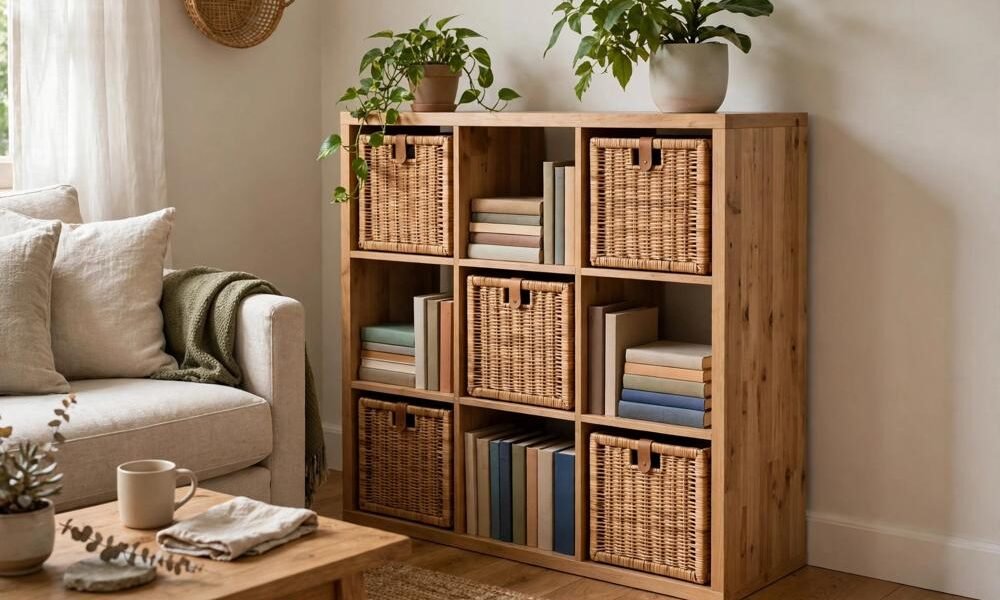
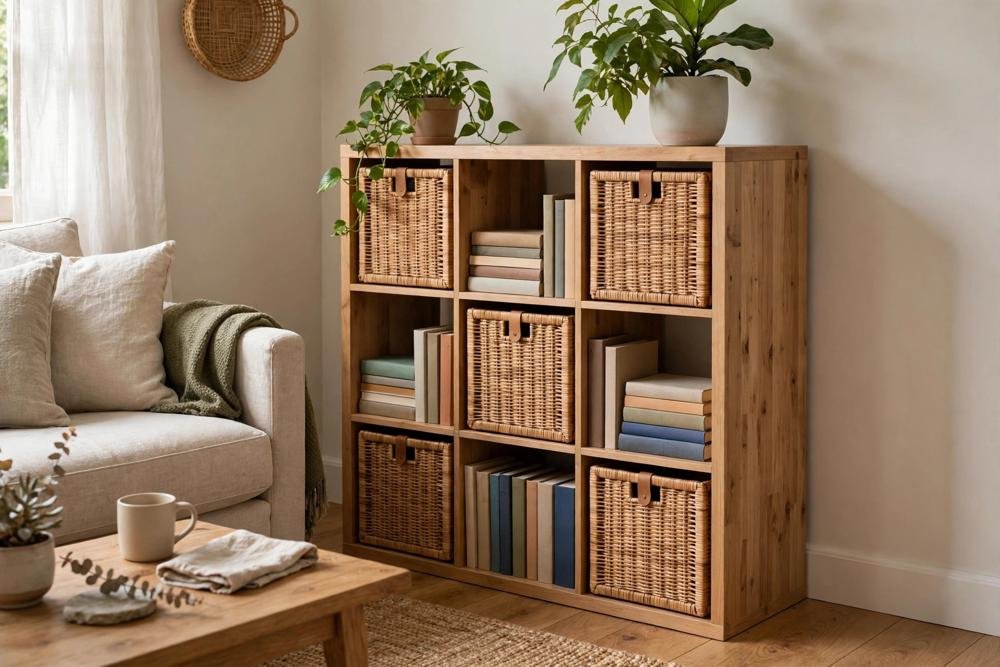
Cube storage layouts, for small corners and rooms, mean arranging cube units, baskets, and items, in a corner, against a wall, or as a divider, with one basket, per cube, labelled, so each person, or each type of item, has a place, and so cubes can be rearranged, without moving a whole unit, and so a corner, that is too narrow, for a wide unit, can still hold storage, without blocking a walkway, a door, or a seating area, and so a room, that feels cluttered, can feel intentional, tidy, and easy to use, without waste, damage, or a large piece that does not fit. A cube unit, is a set, of square, or rectangular, open boxes, stacked, or side by side, with a cube size, approximately 12 to 14 inches, 30 to 35 cm, square, for a living room, bedroom, or children’s corner, where items can be grouped, in baskets, one per cube, and with a basket, that is easy to carry, easy to clean, and easy to label, so a basket can be taken out, used, and put back, without moving many baskets, and so a cube, that has a basket, will feel intentional, not a pile, and so a cube, that has no basket, will feel empty, and will become a pile, of small items, that are never found, because they are hidden, in a cube, that has no basket, and no label.
All measurements in this guide are in inches and cm, as approximate ranges only, and sizes vary by product, so check listings before you buy, and measure your corner first, as in the measuring guide in this series.
Key takeaways
- Use one basket, per cube, labelled, so each person, or each type of item, has a place, and so cubes can be rearranged, without moving a whole unit.
- Use a cube size, approximately 12 to 14 inches, 30 to 35 cm, square, for a living room, bedroom, or children’s corner, where items can be grouped, in baskets, one per cube.
- Keep heavy items low, light items high, and display items at eye level, approximately 48 to 60 inches, 120 to 150 cm, from the floor, for most adults, so the unit is stable, not top heavy.
- Anchor a tall cube unit, safely, using manufacturer hardware and weight limits, with studs or rated anchors, and with landlord permission before drilling, because a tall unit tips more easily than a wide low unit.
- Use cubes, as a divider, only where a walkway stays clear, approximately 30 to 36 inches, 75 to 90 cm, as a comfort guide, and where a door swing, and an exit route, stay clear, at all times.
- Measure width, depth, height, door swing, and walkway, in inches and cm, with tape on the floor, before you buy, and live with a layout for a week, then adjust one thing at a time.
Corner Layouts: L Shape, Stack, and Low Bench
Corner layouts, for cube storage, L shape, stack, and low bench, each work, for a different corner, a different room, and a different job, and each needs a different checklist, because a corner, that is deep, needs a different layout, than a corner, that is shallow, and a room, that is small, needs a different layout, than a room, that is large, however good a layout looks, in a photograph. L shape: use two cube units, at right angles, in a corner, with one unit, along each wall, so the corner, is used, fully, without a gap, behind the units, where items fall, and are forgotten, and with baskets, one per cube, labelled, so each person, or each type of item, has a place, and so cubes can be rearranged, without moving a whole unit, and with a plant, on top, of one unit, so the corner feels intentional, not just a storage unit, and so a corner, that is L shaped, will hold more, than a corner, that has one unit, alone, against one wall, with a gap, behind it, where items fall, and are forgotten.
Stack: use cube units, stacked, vertically, in a corner, with a unit, that is tall, rather than wide, so a corner, that is too narrow, for a wide unit, can still hold storage, without blocking a walkway, a door, or a seating area, and with heavy items, low, light items, high, and display items, at eye level, so the unit is stable, not top heavy, and easy to use, and good looking, as in the shelf styling guide, and as in the narrow storage guide, which keep heavy low, and light high, so the unit is stable, not top heavy. Anchor a tall stacked unit, safely, using manufacturer hardware and weight limits, with studs or rated anchors, and with landlord permission before drilling, because a tall unit, tips more easily, than a wide low unit, and a unit, that is not anchored, will fall, and hurt a child, a pet, or an adult, however sturdy it looks, and it must be anchored, following its instructions, as in the anchoring guide, in this series, to follow, when it is published.
Low bench: use a low cube unit, as a bench, in a corner, or entryway, with a cushion, on top, so the unit, can be sat on, when putting on shoes, or bags, and with baskets, underneath, for shoes, bags, or toys, so a corner, can be a seat, and storage, at the same time, without a separate bench, and a separate storage unit, blocking the room, every day, and with a bench height, approximately 17 to 19 inches, 43 to 48 cm, for most adults, so a person can sit comfortably, with feet on the floor, without the bench being too high, or too low, for sitting, and with a cushion, that is easy to clean, because a bench, in an entryway, or hallway, gets dirty, from shoes, bags, and coats, and a cushion, that is hard to clean, will become dirty, however tidy it starts, as in the entryway pillar, which links to this guide, and to the other Furniture guides, as they go live.
Avoid a corner layout, that leaves a gap, behind the units, where items fall, and are forgotten, because a gap, behind a unit, will become a pile, of small items, that are never found, because they are hidden, behind a unit, that cannot be moved, without help, and avoid a stacked unit, that is not anchored, because it will fall, and hurt a child, a pet, or an adult, however sturdy it looks, and avoid a low bench, that is too high, or too low, for sitting, because it will not be sat on, and it will become a pile, or a display unit, rather than a bench, that is used, every day, and avoid a layout, that blocks a walkway, a door swing, or an exit route, because it is a safety problem, not just a tidy problem, and it must be moved, however tidy it looks, and however much you want it, in that corner.
Baskets and Labels: One Per Cube, One Job Per Basket
Baskets and labels, for cube storage, one per cube, one job per basket, mean each cube, has one basket, and each basket, has one job, such as books, toys, shoes, or supplies, labelled, so each person, or each type of item, has a place, and so a basket, can be taken out, used, and put back, without moving many baskets, and so a cube, that has a basket, will feel intentional, not a pile, and so a cube, that has no basket, will feel empty, and will become a pile, of small items, that are never found, because they are hidden, in a cube, that has no basket, and no label. Use a basket, that is easy to carry, easy to clean, and easy to label, with a handle, that is easy to grip, so a basket can be taken out, used, and put back, without help, and without tools, if possible, so a basket, that is hard, or heavy, to carry, will not be taken out, when needed, and items, that are in a hard basket, will end up, elsewhere, on a table, a sofa, or a floor, where they will be forgotten, rather than in a basket, where they can be found, quickly, without searching.
Label baskets, with a label, that is easy to read, in daylight, and at night, with a word, or a picture, for children, who cannot read, yet, so a child, can find a basket, by picture, rather than by word, and so a basket, that is labelled, by picture, will be used, by a child, every day, rather than ignored, because a child, cannot read, the label, and so a basket, that is labelled, by word, will be used, by an adult, every day, rather than ignored, because an adult, cannot remember, which basket, holds which item, without a label, and so a basket, that has no label, will become a pile, of small items, that are never found, because they are hidden, in a basket, that has no label, and no job, and that is never opened, because no one knows, what is inside, without opening it, and checking, every time.
Avoid baskets, that are too large, for a cube, because they will not fit, in a cube, when not used, and they will block the room, every day, not just when pulled out, for use, and avoid baskets, that are too small, for a cube, because they will leave a gap, in a cube, where small items fall, and are forgotten, and avoid baskets, that have no label, because they will become a pile, of small items, that are never found, because they are hidden, in a basket, that has no label, and no job, and avoid baskets, that are hard, or heavy, to carry, because they will not be taken out, when needed, and items, that are in a hard basket, will end up, elsewhere, on a table, a sofa, or a floor, where they will be forgotten, rather than in a basket, where they can be found, quickly, without searching, in the morning, when time is short, and at night, when light is low.
Room Divider, Kids, and Hallway Layouts
Room divider layouts, for cube storage, use a cube unit, as a divider, between two areas, in a small apartment, or studio, such as a living area, and a sleeping area, or a living area, and a work area, with a unit, that is low, rather than tall, so light, and air, can pass, over the unit, and so a room, that is divided, does not feel dark, and cramped, however tidy the unit looks, and with baskets, one per cube, labelled, so each person, or each type of item, has a place, and so cubes can be rearranged, without moving a whole unit, and with a plant, on top, of the unit, so the divider feels intentional, not just a storage unit, and so a room, that is divided, by a low cube unit, will feel intentional, tidy, and easy to use, without waste, damage, or a large piece that does not fit.
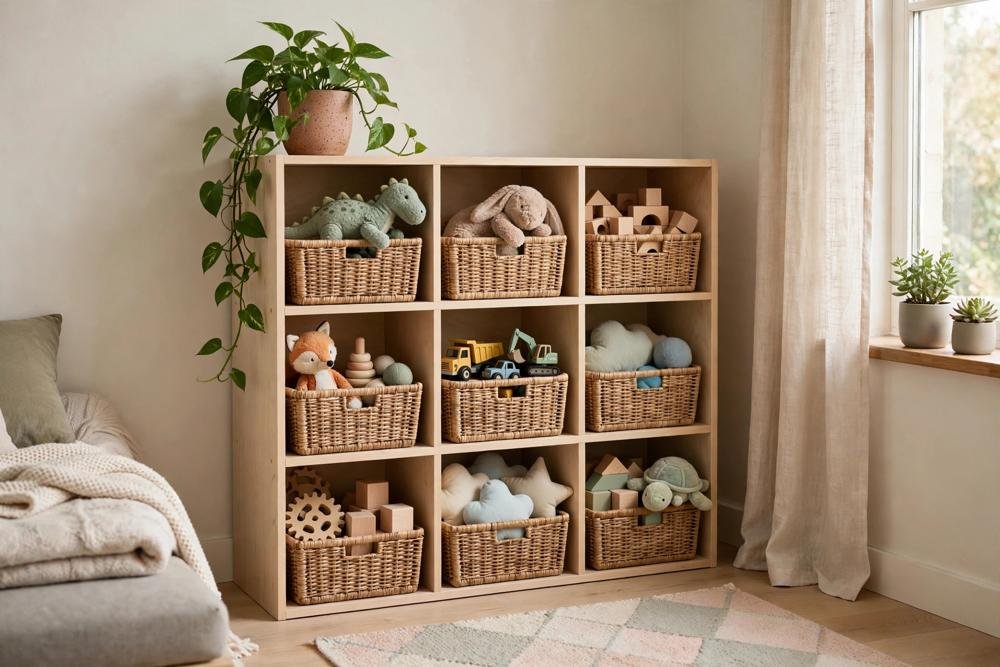
Kids layouts: use cube units, in a children’s corner, with baskets, one per cube, labelled, by picture, for children, who cannot read, yet, so a child, can find a basket, by picture, rather than by word, and so a basket, that is labelled, by picture, will be used, by a child, every day, rather than ignored, because a child, cannot read, the label, and with heavy items, low, light items, high, and display items, at a child’s eye level, so a child, can reach items, without climbing, and without help, and so a child, who can reach items, without climbing, will not climb, a unit, to reach a toy, a book, or a light, without supervision, because a unit, that can be climbed, is a risk, not just a storage unit, and it must be anchored, and placed, with climbing, in mind, especially in a family home, as in the anchoring guide, and as in the shelf styling guide, which keep heavy low, and light high, so the unit is stable, not top heavy.
Hallway layouts: use a low cube unit, in a hallway corner, with baskets, one per cube, labelled, so each person, or each type of item, has a place, and so a hallway, can hold shoes, bags, and keys, without a pile, on a floor, and without a wide unit, blocking the walkway, and with a walkway clear, approximately 30 to 36 inches, 75 to 90 cm, as a comfort guide, not a building code, so you can walk past, easily, even when bags are on a unit, and shoes are in baskets, underneath, and so you can get out, easily, even in the dark, and so a door can open fully, without hitting the unit, or a basket. For a general awkward corner overview, see the awkward corner pillar in this series, which links to this guide, and to the other Furniture guides, as they go live.
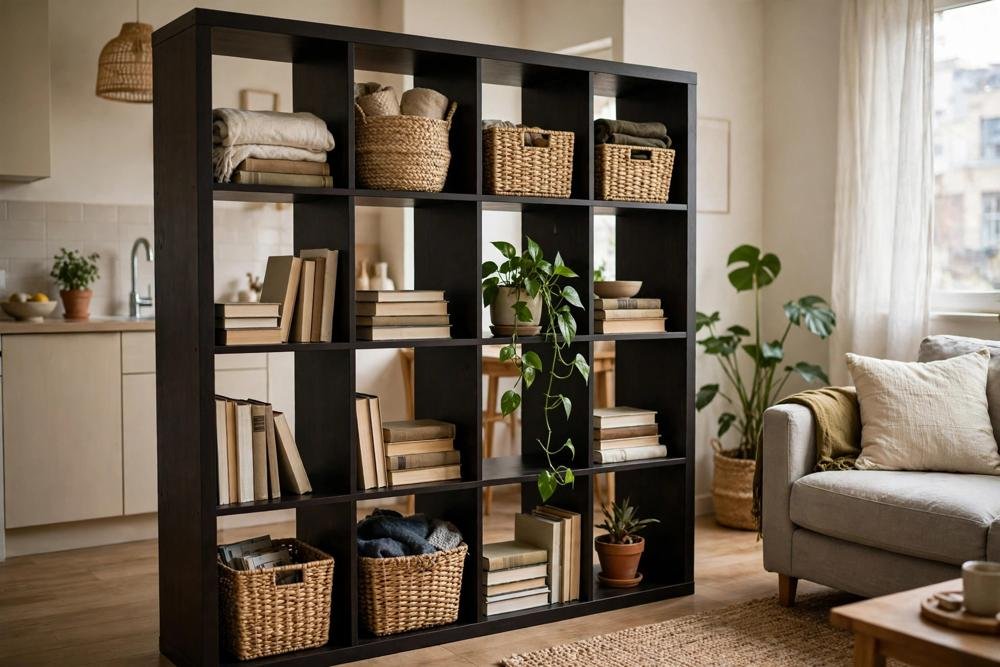
What to Avoid With Cube Storage
Avoid a cube unit, that is too wide, too deep, or too tall, for the corner, because it will block a walkway, a door, or a seating area, and it will make the room feel cramped, even if it is tidy, and avoid a cube unit, that is not anchored, if it is tall, or narrow, because it will fall, and hurt a child, a pet, or an adult, however sturdy it looks, and avoid a cube unit, that is overloaded, because a cube unit, that is overloaded, will sag, bow, or fail, and items, that are overloaded, will fall, when a basket is pulled, or a cube is moved, and avoid a cube unit, with baskets, that have no label, because baskets, that have no label, will become a pile, of small items, that are never found, because they are hidden, in a basket, that has no label, and no job.
Avoid a cube, that has no basket, because it will feel empty, and will become a pile, of small items, that are never found, because they are hidden, in a cube, that has no basket, and no label, and avoid a cube, that has many baskets, or many items, because it will feel crammed, and it will be hard to find items, and it will be hard to clean, dust, or move, a basket, without moving many baskets, and avoid a cube layout, that blocks a walkway, a door swing, or an exit route, when it is used, or when it is pulled out, because it is a safety problem, not just a tidy problem, and it must be moved, however tidy it looks, and however much you want it, in that corner, when it is used, or when it is pulled out, for use, and avoid a cube layout, that is placed, in a corner, where a child can climb it, to reach a window, a shelf, or a light, without supervision, because a cube unit, that can be climbed, is a risk, not just a storage unit, and it must be anchored, and placed, with climbing, in mind, especially in a family home.
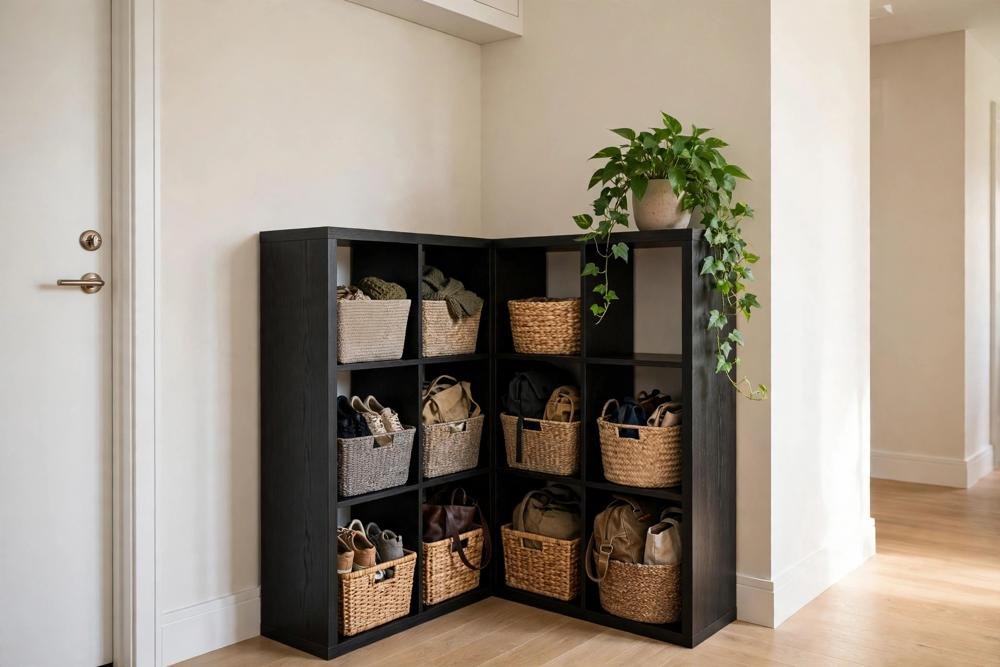
Checklist: Cube Storage Without Waste
- Measure the corner, the wall, and the walkway, width, depth, height, door swing, and walkway, in inches and cm, with tape on the floor, for the unit, and for the walkway, before you buy.
- Choose one layout, L shape, stack, low bench, divider, kids, or hallway, that matches your corner, your job, and your room, rather than a layout, that is cheapest, or that looks best, in a photograph.
- Use one basket, per cube, labelled, so each person, or each type of item, has a place, and so cubes can be rearranged, without moving a whole unit.
- Use a cube size, approximately 12 to 14 inches, 30 to 35 cm, square, for a living room, bedroom, or children’s corner, where items can be grouped, in baskets, one per cube.
- Keep heavy items low, light items high, and display items at eye level, approximately 48 to 60 inches, 120 to 150 cm, from the floor, for most adults, so the unit is stable, not top heavy, and easy to use.
- Anchor a tall cube unit, safely, using manufacturer hardware and weight limits, with studs or rated anchors, and with landlord permission before drilling, and check anchoring regularly, especially after moving furniture.
- Keep exits, door swings, and walkways clear at all times, with a walkway of approximately 30 to 36 inches, 75 to 90 cm, as a comfort guide, and check at night and in daylight, with doors open and baskets pulled out.
- Use baskets, that are easy to carry, easy to clean, and easy to label, with a handle, that is easy to grip, so a basket can be taken out, used, and put back, without help.
- Live with the layout for a week, then adjust one thing at a time, rather than buying a full cube set on day one, and avoid a layout, that is too wide, too deep, too tall, or too small, for the corner, or the job.
Conclusion
Cube storage layouts, for small corners and rooms, work when you use one basket, per cube, labelled, so each person, or each type of item, has a place, and so cubes can be rearranged, without moving a whole unit, use a cube size, approximately 12 to 14 inches, 30 to 35 cm, square, for a living room, bedroom, or children’s corner, keep heavy items low, light items high, and display items at eye level, anchor a tall cube unit, safely, using manufacturer hardware and weight limits, with studs or rated anchors, and with landlord permission before drilling, and keep exits, door swings, and walkways clear at all times. A cube unit, that is laid out, simply, with baskets, one per cube, labelled, will feel intentional, not crammed, and will make items easy to find, without pulling out a whole unit, and will make a corner feel like a tidy corner, not just a storage unit, and will be used, every day, without worry, and without tipping, even if a child pulls on it, or a pet jumps on it, because the unit is anchored, and balanced, with heavy low, and light high.
Use the guides in this series for each type and job: awkward corner pillar, corner bookshelf, expandable dining tables, measuring a corner, shelf styling, tables compared, narrow storage, anchoring, floating shelves versus bookcases, corner desk, and corner storage per room, each with its own measurements, safety, and styling, so you can choose the right type for each corner, rather than forcing one type into every corner, and so you can choose, a layout, that matches your corner, your job, and your room, rather than a layout, that is cheapest, or that looks best, in a photograph, but does not match, your corner, job, or room. Done that way, cube storage will feel intentional, tidy, and easy to use, in a living room, a bedroom, a hallway, or a children’s corner, without waste, damage, or a large piece that does not fit.
Related reading
- Awkward Corner Ideas for Every Room in a Small Home
- Corner Bookshelf Ideas for Small Spaces and Awkward Corners
- Expandable Dining Tables for Small Spaces and Corners
- How to Measure a Corner for Furniture in a Small Home
- Corner Shelf Styling Ideas for Small Spaces and Bookshelves
- Space Saving Tables Compared for Small Homes and Corners
- Narrow and Slim Storage Ideas for Small Corners
- Floating Shelves vs Bookcases for Small Corners
- Corner Entryway Ideas for a Tight Corner
- Rug Calculator
- How to Anchor Bookshelves Safely, Corner Desk and Work Nook, and Corner Storage for Each Room, in this series, to follow.
Frequently Asked Questions
What size cube should I use for a small corner?
Use a cube size, approximately 12 to 14 inches, 30 to 35 cm, square, for a living room, bedroom, or children’s corner, where items can be grouped, in baskets, one per cube, and with a basket, that is easy to carry, easy to clean, and easy to label, so a basket can be taken out, used, and put back, without moving many baskets. Measure the corner, the wall, and the walkway, width, depth, height, door swing, and walkway, in inches and cm, with tape on the floor, for the unit, and for the walkway, before you buy, because a unit, that is too wide, too deep, or too tall, for the corner, will block a walkway, a door, or a seating area.
Should each cube have a basket, or can some stay open?
Use one basket, per cube, labelled, so each person, or each type of item, has a place, and so cubes can be rearranged, without moving a whole unit, and so a cube, that has a basket, will feel intentional, not a pile. A cube, that has no basket, will feel empty, and will become a pile, of small items, that are never found, because they are hidden, in a cube, that has no basket, and no label, and a cube, that is left open, for display, should hold one display item, such as a plant, a vase, or a book, not many items, that will feel crammed, and that will be hard to find, and hard to clean, without moving many items.
How do I label cubes for children who cannot read yet?
Label baskets, with a picture, for children, who cannot read, yet, so a child, can find a basket, by picture, rather than by word, and so a basket, that is labelled, by picture, will be used, by a child, every day, rather than ignored, because a child, cannot read, the label. Use a picture, of a toy, a book, or a shoe, on each basket, so a child, can find a basket, quickly, without help, and so a child, who can find a basket, quickly, will put items back, in the right basket, without help, and without a pile, on a floor, where items will be forgotten, rather than in a basket, where they can be found, quickly, without searching.
Can cube storage work as a room divider in a small apartment?
Yes, if the unit is low, rather than tall, so light, and air, can pass, over the unit, and so a room, that is divided, does not feel dark, and cramped, however tidy the unit looks, and with baskets, one per cube, labelled, so each person, or each type of item, has a place, and with a walkway clear, approximately 30 to 36 inches, 75 to 90 cm, as a comfort guide, and with a door swing, and an exit route, clear, at all times, so a room, that is divided, by a low cube unit, will feel intentional, tidy, and easy to use, without waste, damage, or a large piece that does not fit.
Do tall cube units need to be anchored?
Yes, anchor a tall cube unit, safely, using manufacturer hardware and weight limits, with studs or rated anchors, and with landlord permission before drilling, because a tall unit, tips more easily, than a wide low unit, and a unit, that is not anchored, will fall, and hurt a child, a pet, or an adult, however sturdy it looks, and it must be anchored, following its instructions, as in the anchoring guide, in this series, to follow, when it is published. Check anchoring regularly, especially after moving furniture, after a child climbs, or after a unit is loaded, or unloaded, because a loose anchor is a risk, not just a wobble.
What should I avoid with cube storage layouts?
Avoid a cube unit, that is too wide, too deep, or too tall, for the corner, because it will block a walkway, a door, or a seating area, and avoid a cube unit, that is not anchored, if it is tall, or narrow, and avoid a cube unit, that is overloaded, or with baskets, that have no label, because baskets, that have no label, will become a pile, of small items, that are never found, because they are hidden, in a basket, that has no label, and no job. Avoid a cube, that has no basket, or many items, because it will feel empty, or crammed, and avoid a layout, that blocks a walkway, a door swing, or an exit route, because it is a safety problem, not just a tidy problem.