A bed under a window is not a design mistake. In many small bedrooms it is the only layout that leaves a clear walkway, a usable wardrobe wall and a door that opens fully. It works well when you solve three problems directly: morning light waking you too early, drafts and cold air from the window, and a headboard that blocks the window or looks wrong against it.
This guide covers the pros and cons honestly, then four practical layouts that work in real rooms, plus renter friendly fixes that need no drilling into the window frame. Use it before you move the bed, not after you have bought a tall headboard that does not fit under the sill.
Key takeaways: keep the headboard below the window sill where possible; use a blackout layer plus side sealing for sleep, not just a pretty sheer; leave a gap of at least 5 centimetres between bed and window for air and curtain movement; and test the layout for a week before drilling anything.
Idea 1: Low Bed, Low Headboard, Full Window

The simplest under-window layout is also the best looking: a low bed frame, a headboard that stops below the sill, and curtains that frame the window rather than hiding it. This keeps daylight, keeps the window usable, and stops the room feeling like the bed was pushed into a corner.
Measure first. Measure the sill height from the floor, the window width, and the height of your headboard. If the sill is at least 75 centimetres high, most low headboards fit underneath without blocking the glass. If the sill is lower, skip a fixed headboard and use a cushion rail, a padded panel hung from a slim rod, or no headboard at all, with the pillows doing the work. A headboard that covers the lower third of the window is not just ugly, it also stops you opening the window and cleaning the glass.
Keep bedding light in colour and low in bulk. A tall pile of pillows against a window looks crowded and pushes you forward, which makes the bed feel shorter. Two sleeping pillows plus one reading cushion is enough. If you read in bed, use a wall lamp on the side wall or a clip lamp, not a tall bedside lamp that competes with the window.
For curtains, hang a rod that extends 15 to 20 centimetres past each side of the window, and 10 to 15 centimetres above the frame. That way the curtains stack on the wall, not over the bed, and you can open them fully in the day. Use a sheer for daytime privacy and a blackout layer for night, on the same rod if space is tight, or on two rods if the window is deep enough. Our curtain calculator can check rod length and panel width before you buy.
Idea 2: Blackout First, Then Style
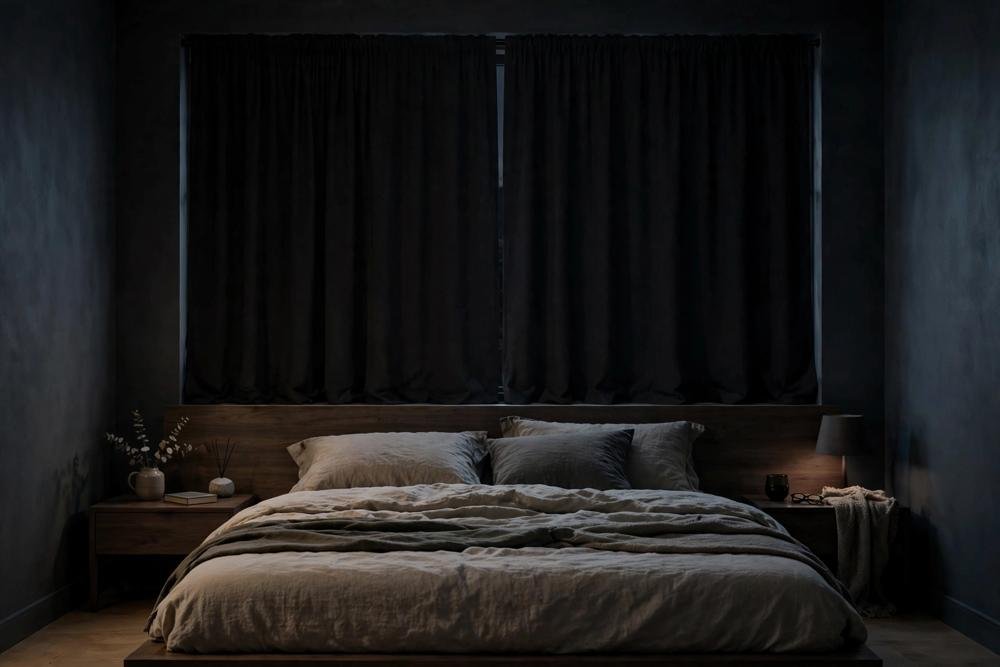
A bed under a window fails for sleep long before it fails for style. Morning light comes straight at your face, street light leaks around the edges, and a thin curtain that looked pretty in the shop does nothing at 5 a.m. Fix darkness first, then worry about how it looks.
Start with a blackout layer that is wider than the window, not just the same width. Light leaks at the sides and top, not through the middle of the fabric. A rod that extends well past the frame, a curtain that reaches the sill or the floor, and a simple side seal, such as a return rod or a fabric flap tucked behind the curtain, will do more than a more expensive fabric alone. Check for gaps at night with the lights off, and fix the largest gap first.
Add a second layer for privacy and drafts. A sheer or a light roller blind inside the frame gives daytime privacy without blocking all light, and a blackout curtain outside the frame gives night darkness. If you cannot fit two layers, a blackout roller blind inside the frame plus a sheer curtain outside it is a good compromise. Keep the blind cord out of reach of the bed, and use a cord cleat or a cordless blind if the bed is close to the window.
For shift workers and light sleepers, add the door and window seals from the dark and quiet guide. A gap under the door, a thin window seal, and a thick rug will often matter more than a new curtain. Do not seal a window shut permanently, and do not block a fire escape route. If the window is your second exit, keep it openable and keep the curtain easy to move in the dark.
Idea 3: Use the Sides, Not Just the Wall

When the window is in the middle of the wall, the sides of the bed are where storage and light actually live. Use narrow bedside tables, wall shelves above the tables, and a windowsill that is kept clear, not piled with books and chargers. That keeps the window as the focal point and stops the room feeling like a storage cupboard.
If only one side has space for a table, use a wall shelf on the other side for a phone, water and a book. A shelf 20 to 25 centimetres deep is enough, and it keeps the walkway clear. If neither side has space, use a headboard shelf, a bed caddy that hangs over the side of the bed, or a small stool that slides under a table during the day. Do not put a tall wardrobe beside a window bed unless you have at least 60 centimetres of walkway left, because the wardrobe will block light and make the bed feel boxed in.
Plants on a windowsill work well behind a bed only if they are small, sturdy and not in the way of the curtain. A small pothos, a succulent or a spider plant in a heavy pot will survive. Tall plants, trailing plants that tangle in the curtain, and plants that need daily watering are a bad idea behind a bed, because you will knock them over when you make the bed. Keep the sill clear enough to open the window and clean the glass.
Reading light matters more under a window, because the ceiling light is often behind you. Use a warm lamp on the side wall, a swing-arm light fixed to the side wall, or a clip light on the headboard. Aim the light at the page, not at the window, or you will get glare on the glass at night.
Idea 4: Renter Friendly Fixes for a Window Bed

Renters often cannot drill into a window frame, change the window, or paint the wall. A bed under a window still works, with fixes that come off in an afternoon. Start with the fixes that solve the biggest problem, and do not do them all at once.
For privacy without curtains, use static-cling window film on the lower half of the glass. It lets light in, blocks the view in, and peels off without residue. Test it on a small corner first, and do not use adhesive film on a rented window unless you have checked it will come off cleanly. For darkness, use a tension rod inside the window recess for a blackout blind, or a portable blackout panel that hangs from removable hooks above the frame. Both come down without holes in the frame.
For drafts, use a removable draft strip on the window, a thick curtain that reaches the floor, and a draft stopper at the door, not at the window. Do not stuff the window frame with foam that you cannot remove, and do not paint over a draft strip. For cold air, a thicker duvet and a warm throw at the foot of the bed will help more than a heater beside the bed, which is a fire risk near curtains.
For a headboard, use a freestanding padded panel that leans against the wall, a fabric panel hung from a tension rod, or a row of cushions on a rail that uses removable hooks. Each one gives the bed a finished look without holes in the wall or frame. Keep the panel below the sill, and keep it light enough to move when you need to open the window.
Pros and Cons of a Bed Against a Window
Pros: it frees the longest wall for storage, it gives you natural light and a view from bed, it often leaves the best walkway, and it can make a small room feel larger because the eye goes to the window. Cons: morning light and street light hit the bed directly, drafts and cold air are stronger at the window, a tall headboard blocks the window, and opening the window can be awkward. The layout is worth keeping when the pros solve a bigger problem, such as a blocked door or no wardrobe wall, and when you are willing to fix darkness and drafts properly. It is worth changing when the window is the only fire escape and the bed blocks it, when the window leaks badly and cannot be fixed, or when the bed leaves no walkway on either side.
What to Avoid
Do not put a tall, heavy headboard against a window, because it blocks light, blocks the window, and makes cleaning impossible. Do not hang a curtain that is narrower than the window, because light will leak at the sides and the curtain will look too small. Do not block the window with a wardrobe, a tall shelf or a stack of boxes, because you lose light, air and an escape route. Do not use a heater directly beside a curtain or bedding, and do not run a curtain cord across the bed where it can tangle. Do not ignore drafts for a whole winter, because a cold bed will make you blame the layout when the fix is a seal or a thicker curtain.
FAQs
Is it bad feng shui to put a bed under a window?
Traditional feng shui prefers a solid wall behind the bed, because a window can feel less secure. If that matters to you, use a solid, low headboard, keep the curtains closed at night, and keep the bed off the window itself. If it does not matter to you, the practical fixes in this guide matter more than the rule.
How do I stop morning light waking me when my bed is under a window?
Use a blackout layer wider than the window, seal the sides and top, and check for gaps at night with the lights off. A sleep mask helps for travel, but a properly fitted blackout curtain is the long-term fix. Do not rely on a sheer alone.
Can I put a headboard against a window?
Yes, if it stops below the sill, leaves the window openable, and does not block the glass. A low padded panel, a cushion rail, or a freestanding panel all work. A tall wooden headboard that covers the lower window does not.
What if my window is low and the bed covers it?
Use no fixed headboard, or a very low one, and keep the window clear. If the bed must cover part of a low window, keep the opening part clear, keep the curtain easy to move, and do not put a tall pile of pillows against the glass.
How do I keep a bed under a window warm in winter?
Seal drafts, use a floor-length blackout curtain, add a thick rug, and use a warmer duvet and a throw at the foot of the bed. Close the curtain before dark so the room holds heat, and open it in the morning for light and air.
Is a bed under a window safe?
Keep the window openable, do not block a fire escape, keep heaters and candles away from curtains and bedding, and keep blind cords out of reach. If the window is the only second exit, do not put a heavy bed that cannot be moved in an emergency in front of it.
Conclusion
A bed under a window is a good layout when you treat the window as part of the bed, not as a problem to hide. Keep the headboard low, fix darkness and drafts before style, use the sides for storage and light, and use renter friendly fixes where you cannot drill. Test the layout for a week, check light and drafts at night, and adjust the curtain before you buy new furniture. Done that way, the window becomes the best part of the room, not the reason you moved the bed into a corner.