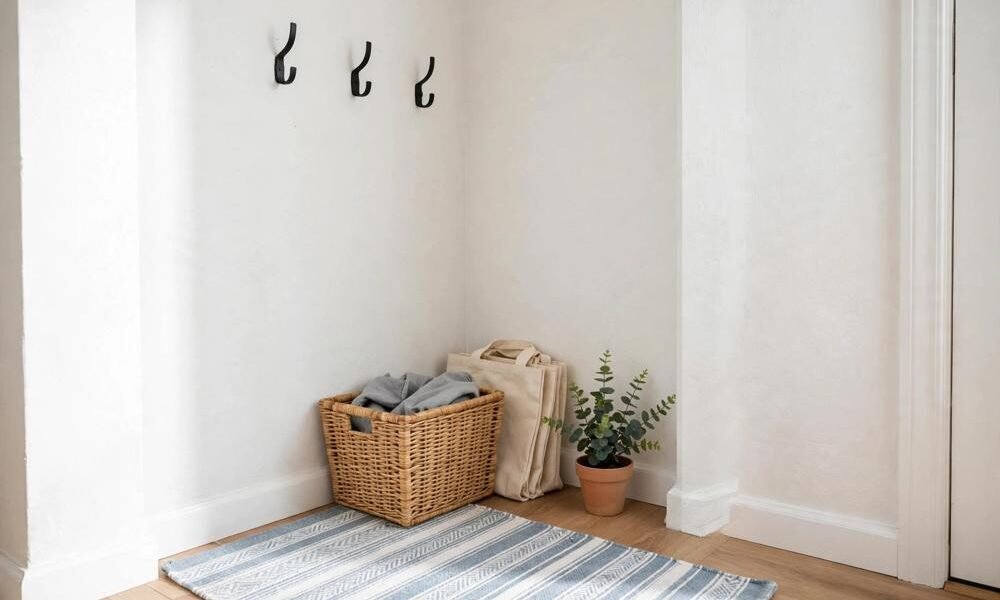
A budget entryway makeover works when you spend money first on the things that change how the corner works, like hooks, a shoe place, and a washable mat, and only later on the things that change how it looks, like paint, a mirror, and styling. In a small corner, a makeover under 50 can make the space usable, a makeover under 150 can make it comfortable, and a makeover under 300 can make it feel finished, provided you measure first, keep the walkway clear, and do not buy a large piece that does not fit. All prices in this guide are approximate estimates only, and they vary by product, shop, and country, so check listings before you buy, and treat each plan total as a guide, not a fixed price.
Key takeaways
- Spend on function first: hooks, shoe storage, and a washable mat, before paint, mirrors, and decor.
- A plan under 50 can work: adhesive or over door hooks, a basket, a tray, and a mat, with no drilling and no new furniture.
- A plan under 150 adds a bench or shoe rack, a mirror, and a runner, for a corner that is comfortable to use every day.
- A plan under 300 adds a hall tree or a bench with storage, better lighting, and a finished look, provided the corner is wide enough and the piece can be anchored safely.
- Paint is the cheapest large change, but only if you are allowed to paint, and only after you clean and prepare the wall.
- Reuse what you already have first: a bench, a basket, or a mirror from another room can save a whole plan budget.
Start With What You Already Have
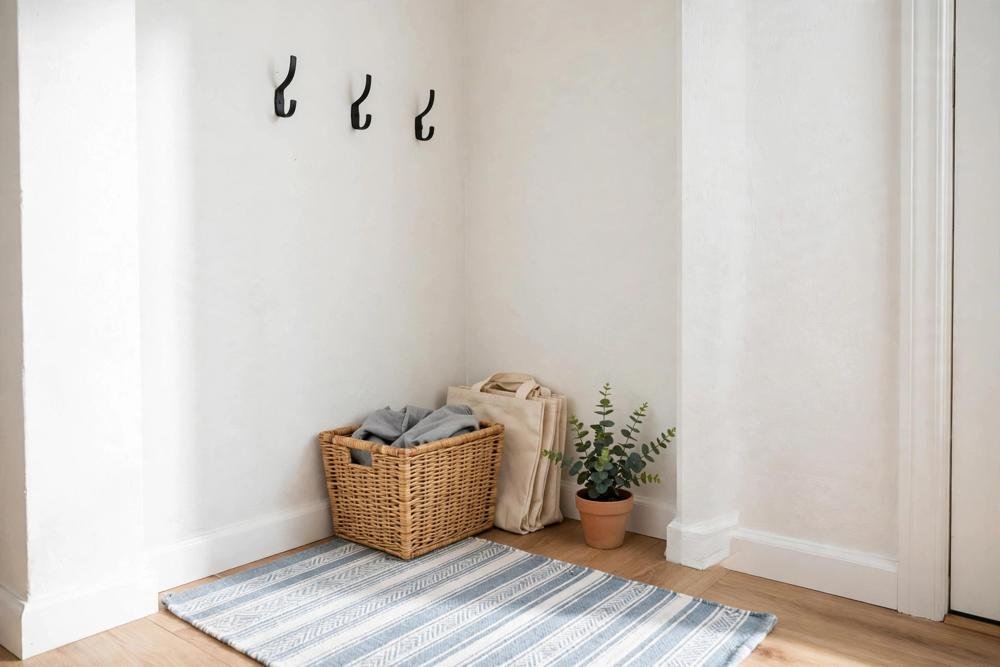
Before you spend anything, clear the corner completely, clean it, and look at what you already own that could work there. A basket from a bedroom, a stool from a kitchen, a mirror from a hallway, or a rug from another room can often be reused in an entryway corner, at no cost, and reusing will save more than any sale. Put those reused pieces in the corner, live with them for a week, and notice what is missing, rather than buying a full set on day one.
Next, measure the corner, as in the earlier guides: width at floor, bench, and hook height, depth, door swing arcs, and the walkway you must keep clear, approximately 75 to 90 cm as a general comfort guide, not a building code. A budget makeover that buys a bench that blocks a door, or a hall tree that narrows the walkway, is not a good makeover, however cheap it was, because it will need to be moved, returned, or replaced, which costs time and money.
Then make a list, in order: what must change for the corner to work, what would make it comfortable, and what would make it look finished. Must change items are hooks, shoe storage, and a mat. Comfort items are a bench, a mirror, and a runner. Finished items are paint, lighting, and styling. Spend in that order, and stop when the corner works, even if you have not spent the full plan budget, because a corner that works at 80 is better than a corner that looks finished at 300 but still has no place for shoes.
Check your lease before you paint or drill, as in the renter guide. If you rent and you are not allowed to paint or drill, use adhesive hooks, over door hooks, and freestanding pieces, and use paint only if you are allowed, and only in a colour you can return to the original colour at the end of a tenancy, or with permission in writing. A budget makeover that leaves damage behind is not a budget makeover, it is a repair bill waiting to happen.
Plan Under 50: Make It Usable
A makeover under 50, approximately, is for a corner that is currently a pile by the door, and it focuses on one job: give every daily item a place, without buying furniture.
Itemised plan, approximate estimates only, prices vary:
- Adhesive hooks or an over door hook rack, for coats and bags: approximately 10 to 20, depending on type and number of hooks, checking weight limits and door closing, as in the renter guide.
- One basket, for gloves, hats, and small items, or for shoes if you have no shoe place: approximately 5 to 15.
- One boot tray or washable mat, for wet shoes and mud: approximately 5 to 15.
- One small tray for keys, if you do not already have one: approximately 0 to 10, or reuse a tray from another room at no cost.
- Total: approximately 20 to 50, depending on what you already have and what you choose, with reuse bringing the total down further.
What this plan gives you: coats on hooks, not on chairs, shoes on a tray or in a basket, not on the floor, gloves in a basket, not in coat pockets, and keys in a tray, not lost. What it does not give you: a place to sit, a mirror, or a finished look, and that is fine, because usability comes first. Live with this plan for a few weeks, and notice what you miss most: if you miss sitting down, save for a bench in the next plan, if you miss a mirror, save for a mirror, and if the corner already works, you may not need the next plan at all.
Do the work in order: clean the corner, put hooks up, put the basket and tray in place, put the mat down, and put back only one coat, one pair of shoes, and one set of gloves per person, as in the winter guide. That clear out, plus hooks and a tray, will make more difference than any decor item, and it costs less than a single large piece of furniture.
Plan Under 150: Make It Comfortable
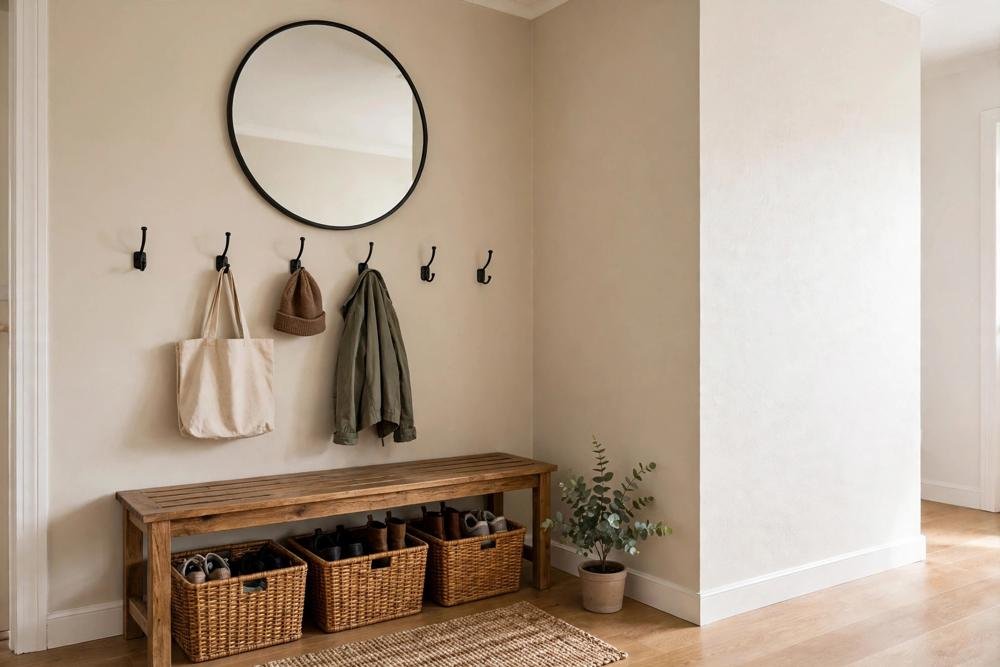
A makeover under 150, approximately, builds on the under 50 plan, and adds comfort: a place to sit, a place to see yourself, and a floor that is protected and easy to clean.
Itemised plan, approximate estimates only, prices vary, including items from the under 50 plan if you do not already have them:
- Hooks, basket, tray, and mat, from the under 50 plan: approximately 20 to 50, or 0 if you already have them.
- One narrow bench or shoe rack, approximately 30 to 40 cm deep, with shoe storage underneath: approximately 40 to 80, depending on size, material, and whether it is freestanding or a simple bench.
- One small mirror, above a shelf or bench, fixed safely, or leaning safely if it is small and stable: approximately 10 to 30.
- One washable runner, from the door to the next room, or a larger mat if a runner does not fit: approximately 15 to 30.
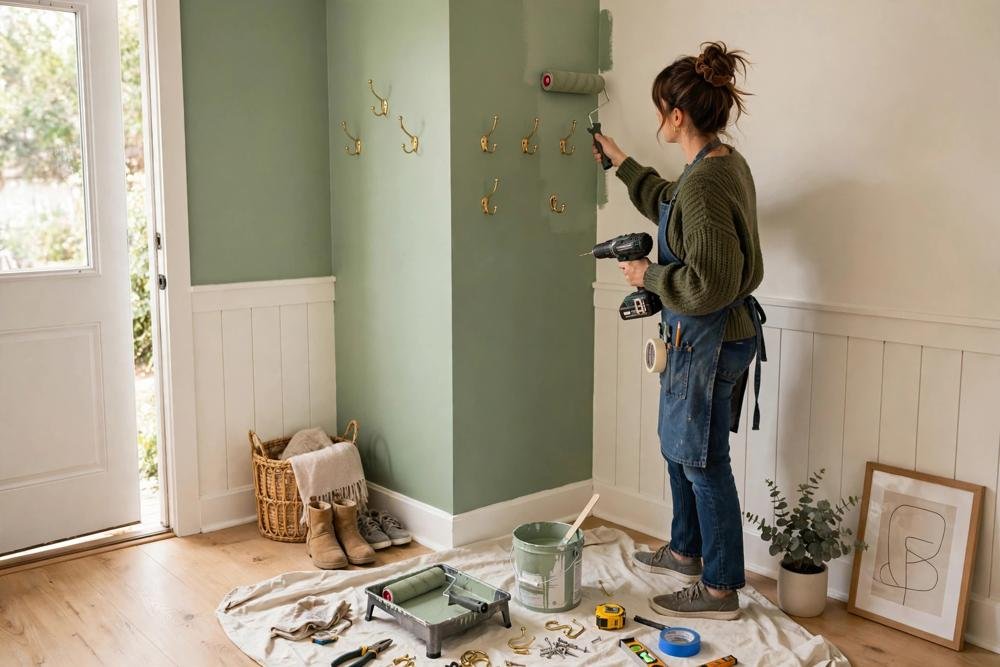
- Paint, if you are allowed and if you want it, for one accent wall or the corner walls, including a small tin of paint and a brush or roller you already have or borrow: approximately 10 to 30, or 0 if you do not paint.
- Total: approximately 100 to 150, if you buy everything new, or less if you reuse hooks, baskets, or a bench you already have.
What this plan gives you: a place to sit to change shoes, a mirror to check yourself before leaving, a runner that protects the floor and is easy to wash, and, if you paint, a corner that feels fresh and intentional, rather than a leftover space by the door. What it does not give you: a full hall tree, closed storage, or new lighting, and that is fine, because comfort comes before a finished look, and a comfortable corner will be used every day.
Do the work in order: measure again, with the bench footprint taped on the floor, as in the size guide, then place the bench, then the mirror, then the runner, then paint if you are painting, with the bench and hooks moved out of the way, and the wall cleaned and prepared first. Paint is the cheapest large change, but only if the wall is prepared, the paint is suitable for the wall type, and you are allowed to paint, otherwise skip paint and spend that money on a better bench or runner instead.
Plan Under 300: Make It Finished
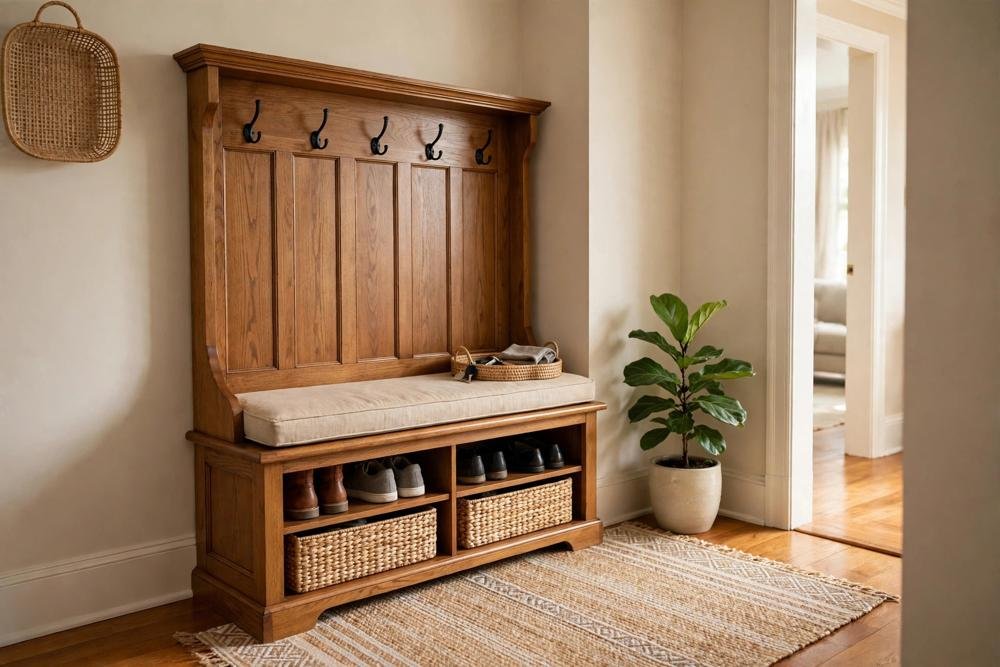
A makeover under 300, approximately, builds on the under 150 plan, and adds a finished look: a hall tree or a bench with storage, better lighting, and styling that makes the corner feel like part of the home, not just a place to dump things.
Itemised plan, approximate estimates only, prices vary, including items from earlier plans if you do not already have them:
- Hooks, basket, tray, mat, and runner, from earlier plans: approximately 30 to 60, or 0 if you already have them.
- One hall tree, or one bench with storage, approximately 90 to 150 cm wide, depending on your corner measurements: approximately 100 to 180, depending on size, material, and whether it has closed storage, checking width, depth, height, and anchoring, as in the size guide.
- One mirror, if you do not already have one, or a larger mirror if the small mirror feels too small: approximately 20 to 40.
- One small wall light, or a plug in light, if you can add lighting safely and are allowed to, with a slim profile that does not stick far out from the wall: approximately 15 to 40.
- Paint, if you are allowed and have not already painted, plus a plant, a small tray, and a few styling items you already have or buy cheaply: approximately 20 to 40.
- Total: approximately 200 to 300, if you buy everything new, or less if you reuse a bench, mirror, or lighting you already have.
What this plan gives you: a complete entry system in one piece, with hooks, a bench, and shoe storage, plus light and styling, so the corner feels finished and intentional. What it does not give you: a renovation, new flooring, or a new door, and that is fine, because a budget makeover is about making the most of the corner you have, not about rebuilding it.
Do the work in order: measure and tape the hall tree footprint, as in the size guide, check door arcs, walkway, sockets, and switches, then assemble the hall tree, anchor it safely if it is tall, following its instructions, with landlord permission if you rent, then add the mirror, light, and runner, then style with a plant and a tray, keeping the bench top clear except for keys. Live with the finished corner for a few weeks, and adjust one thing at a time, rather than buying more styling items, because a finished corner that is over styled will fill up again, and will stop being useful.
Paint, Hooks, and Other Cheap Changes
Paint is often called the cheapest makeover, and it can be, but only if it is done well and allowed. Clean the wall, fill any small holes if you are allowed, sand lightly if needed, and paint with a colour that is light enough to make a small corner feel wider, as in the hallway guide, rather than a dark colour that will make it feel narrower. Use a paint suitable for the wall type, and for a hallway that gets knocked by bags and coats, a washable paint will last longer than a flat paint that marks easily. If you rent, check your lease, get permission in writing, and keep a record of the original colour, so you can return the wall to that colour at the end of a tenancy if needed.
Hooks are the second cheapest change, and they are also the most useful, because a hook rail, or a row of hooks, will hold coats and bags that otherwise end up on chairs, benches, and floors. Choose hooks that match the wall and the weight they need to hold, check weight limits, and get landlord permission before drilling if you rent, or use adhesive or over door hooks if you cannot drill, as in the renter guide. A hook rail that is fixed safely, at approximately 165 to 175 cm for most adults, with a lower hook for children if needed, will be used every day, while a hook rail that is too high, too low, or overloaded will be ignored.
Other cheap changes include: a new mat or runner, which protects the floor and is easy to wash; a basket or tray, which gives small items a place; a plant, which makes a corner feel alive, provided it gets enough light and is not in the walkway; and a small tray for keys, which stops keys being lost. Each of these costs little, but together they make a corner feel intentional, rather than accidental, and they are easy to move to another home if you move.
Avoid cheap changes that cost more in the long run: paint that is not suitable for the wall, hooks that fail and damage the wall, a bench that blocks a door and needs to be returned, or a hall tree that cannot be anchored safely and needs to be replaced. A cheap makeover that needs to be redone is not cheap, it is expensive, so measure first, check listings, and buy pieces that fit, even if they cost a little more than the cheapest option.
DIY, Reuse, and What to Skip
DIY can save money, but only if you have the tools, time, and skill to do it safely. Painting a wall, putting up a hook rail with permission, assembling a bench, or making a simple shelf from a board and brackets, are all DIY jobs that most people can do, provided they follow instructions, use fixings suited to the wall type, and do not drill into pipes or cables. If you are unsure about a job, especially electrical work for lighting, or drilling into a wall you do not understand, ask a professional, or skip that job, rather than risking damage or injury to save money.
Reuse is the best budget strategy, because it costs nothing and it is sustainable. Check other rooms, charity shops, and online marketplaces for a bench, a mirror, a basket, or a rug that could work in an entryway corner, and check that any reused piece fits your measurements, is stable, and does not block a door or walkway, before you bring it home. A reused bench that fits is better than a new bench that does not, and a reused mirror that is the right size is better than a new mirror that is too large for the corner.
Skip a large hall tree if your corner is small, skip closed storage you will not open, skip paint if you are not allowed to paint, and skip lighting that sticks far out from the wall and blocks the path, as in the earlier guides. Skip a complete set bought on day one, before you have lived with a simpler layout for a week, because a set that looks good in a photograph may not fit your corner, your doors, or your daily routine, and it will be hard to return once it is assembled. Buy in order, function first, comfort second, finished look third, and stop when the corner works.
Weekend Timeline: One Weekend, Three Budgets
You can do any of these plans in one weekend, by working in order: Saturday clear and measure, Saturday afternoon place function items, Sunday place comfort and finished items, and live with the result for a week before you buy more.
On Saturday morning, clear the corner completely, clean the floor and walls, and measure width, depth, height, door arcs, and walkway, as in the size guide, with tape on the floor for any bench or hall tree footprint. On Saturday afternoon, place hooks, baskets, trays, and mats, from the under 50 plan, and put back only one coat, one pair of shoes, and one set of gloves per person. On Sunday, add a bench or shoe rack, a mirror, and a runner, from the under 150 plan, or a hall tree, light, and styling, from the under 300 plan, depending on your budget, and paint if you are painting, with the wall prepared and the furniture moved out of the way.
Keep safety in mind throughout, as in the rest of this series: anchor tall units, check adhesive hook weight limits, keep the exit route and door swing clear, and get landlord permission before drilling or painting if you rent. A budget makeover that is safe, clear, and easy to clean will be used every day, and a budget makeover that is crammed, blocked, or hard to clean will be avoided, however good it looks in a photograph.
Checklist: Budget Makeover Without Waste
- Clear the corner, clean it, and reuse what you already have before you buy anything new.
- Measure width, depth, height, door arcs, and walkway, approximately 75 to 90 cm as a comfort guide.
- Check your lease for drilling and painting, and get permission in writing if needed.
- Spend in order: function first, comfort second, finished look third, and stop when the corner works.
- Under 50 plan: hooks, basket, tray, mat, and key tray, with reuse bringing the total down.
- Under 150 plan: add a narrow bench or shoe rack, a mirror, a runner, and paint if allowed.
- Under 300 plan: add a hall tree or bench with storage, lighting, and styling, with anchoring if tall.
- Tape footprints on the floor, walk through them, open doors, and check at night and in daylight before you buy.
- Check listings for exact sizes and prices, because prices and sizes vary by product, shop, and country.
- Live with the makeover for a week, then adjust one thing at a time, rather than buying more.
Conclusion
A budget entryway makeover does not need a large budget, it needs a clear order: function first, comfort second, finished look third, with measurements, a taped footprint, and a lease check before you spend. A plan under 50 can make a corner usable, with hooks, a basket, a tray, and a mat. A plan under 150 can make it comfortable, with a bench, a mirror, a runner, and paint if allowed. A plan under 300 can make it finished, with a hall tree or bench with storage, lighting, and styling, provided the corner is wide enough, the walkway stays clear, and tall pieces are anchored safely. All prices are approximate estimates only, and they vary, so check listings, reuse what you already have, and stop when the corner works.
Measure first, spend in order, keep the walkway and exit clear, and live with the result for a week before you buy more. Done that way, a small corner entryway will feel intentional, tidy, and easy to use, at any of these budgets, without waste, damage, or a large piece that does not fit.
Related reading
- Corner Entryway Ideas for a Tight Corner
- Mini Mudroom Entryway Ideas for Apartments and Small Homes
- Corner Storage Ideas for Entryways
- Winter Entryway Organization Ideas for a Tidy Corner
- Hallway Corner Ideas for Narrow Hallways
- Renter Friendly Entryway Ideas Without Drilling
- Bench and Hall Tree Size Guide for Entryways
- Rug Calculator
Open Entryway Ideas, Functional Entryway Zones, Entryway Corner Decor, and Entryway Storage for Kids and Pets, in this series, to follow.
Frequently Asked Questions
What can I do for an entryway makeover under 50?
Use adhesive or over door hooks for coats and bags, a basket for gloves and small items, a boot tray or washable mat for shoes, and a small tray for keys, with reuse bringing the total down further. That plan makes the corner usable, without new furniture, drilling, or paint, and it is the best first step before spending more.
Is a bench worth it in a budget entryway makeover?
Yes, if the corner is wide enough for a narrow bench, approximately 30 to 40 cm deep, with the walkway still comfortable, approximately 75 to 90 cm as a comfort guide, and with shoe storage underneath. A bench makes changing shoes comfortable, and it is the main comfort item in the under 150 plan, but in a very narrow hallway, wall hooks only may be better than a bench that blocks the path.
Can I paint an entryway corner if I rent?
Check your lease first, and get permission in writing if needed, because some leases do not allow painting, and some allow it only if you return the wall to its original colour at the end of a tenancy. If you cannot paint, use hooks, a runner, a mirror, and styling instead, which change the look without changing the wall.
How do I keep a budget makeover from looking cheap?
Spend on function first, choose light, slim pieces that fit, keep the corner clear and clean, and style with a plant and a tray, rather than many small items. A tidy corner with hooks, a bench, a runner, and a mirror will look intentional at any budget, while a crammed corner with many cheap items will look cluttered, however much was spent.
Should I buy a hall tree or a bench plus hooks on a budget?
Choose a hall tree only if it fits your measurements, passes the fit checker in the size guide, and can be anchored safely, with a budget around 100 to 180 for the piece alone, approximately. Otherwise, a bench plus hooks, or a shoe rack plus hooks, is cheaper, shallower, and easier to move, and it will serve most small corners better than a hall tree that does not fit.
How long does a budget entryway makeover take?
Most plans in this guide can be done in one weekend: Saturday clear, measure, and place function items, Sunday place comfort and finished items, and paint if you are painting, with the wall prepared first. Live with the result for a week before you buy more, and adjust one thing at a time, rather than buying a full set on day one.