Introduction
A tea and coffee station is a small corner that saves you time every morning, but only if it is set up around how you actually make drinks. A station that looks good in a photo but forces you to hunt for filters, mugs, and milk every day will be abandoned in a week. The best stations put everything for one drink within arm’s reach, keep water and power close, and keep the rest of the counter clear.
This guide focuses on the gap most coffee bar guides skip: stations that work in real kitchens, with limited counter space, shared households, and different drink habits. You will find ideas for a counter station, a cabinet station, a cart station, and a tiny station for a kitchen with almost no spare surface. The goal is a morning routine that takes two minutes, not ten, and a counter that still works for cooking.
Start with your drink. Do you make espresso, filter coffee, instant coffee, tea, or all of them? Do you make one drink or four at once? Those answers decide how much space you need, what equipment matters, and what storage you can skip.
Idea 1: A counter station in one corner
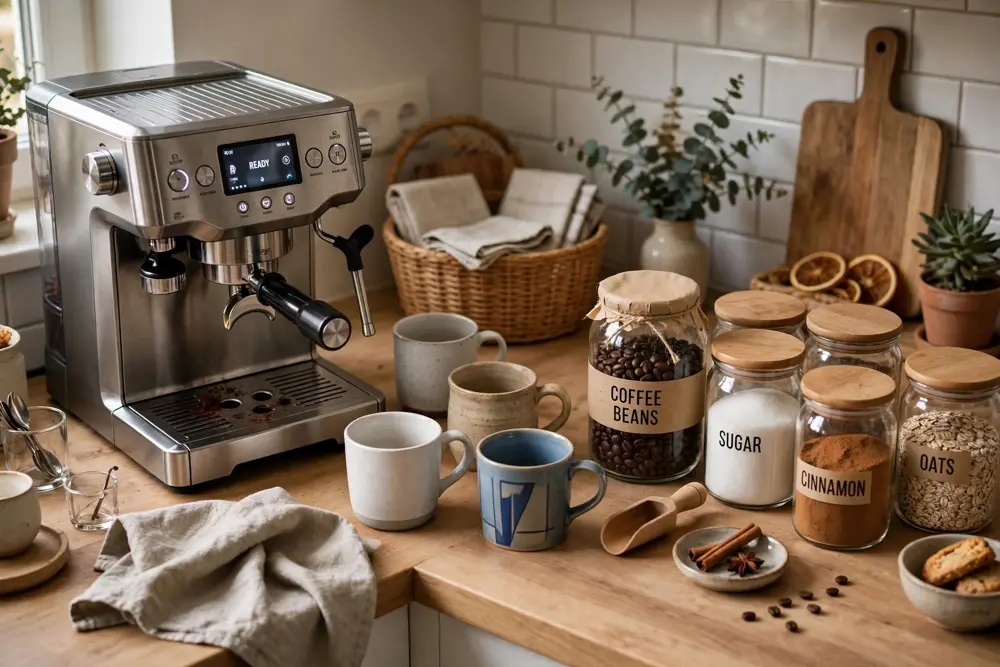
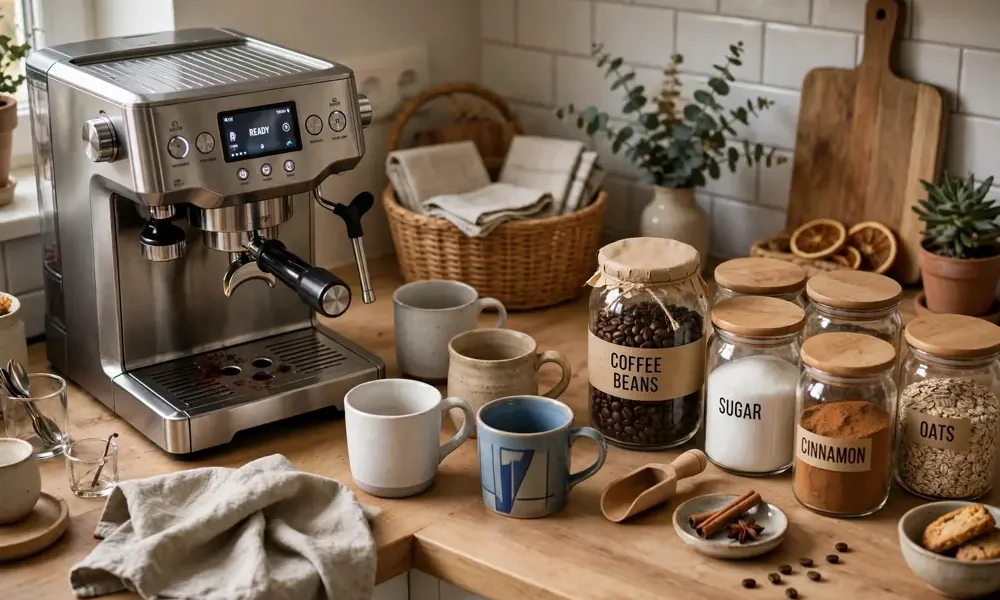
A counter station is the simplest setup, and it works best in one corner, near a power point and away from the main prep area. Put the machine at the back, mugs on a small rail or a stack beside it, and coffee, tea, sugar, and spoons in jars or a small tray in front. A tray is the key trick: it contains spills, it defines the station, and you can lift the whole station to clean underneath in seconds.
Keep the counter station narrow. A station wider than about 90 centimetres will creep into prep space and annoy anyone cooking. Choose one machine, not three, unless you truly use them all daily. A kettle, a coffee machine, and a milk frother can share a corner, but a second machine that is used once a week belongs in a cupboard, not on the counter.
Water matters. If your station is far from the sink, you will carry water across the kitchen every morning and spill it. Place the station on the same run as the sink if you can, or keep a small water jug at the station and refill it once a day. Power matters too: one power strip, hidden behind the machine, is safer and tidier than three plugs trailing across a backsplash.
Idea 2: A cabinet station that closes away
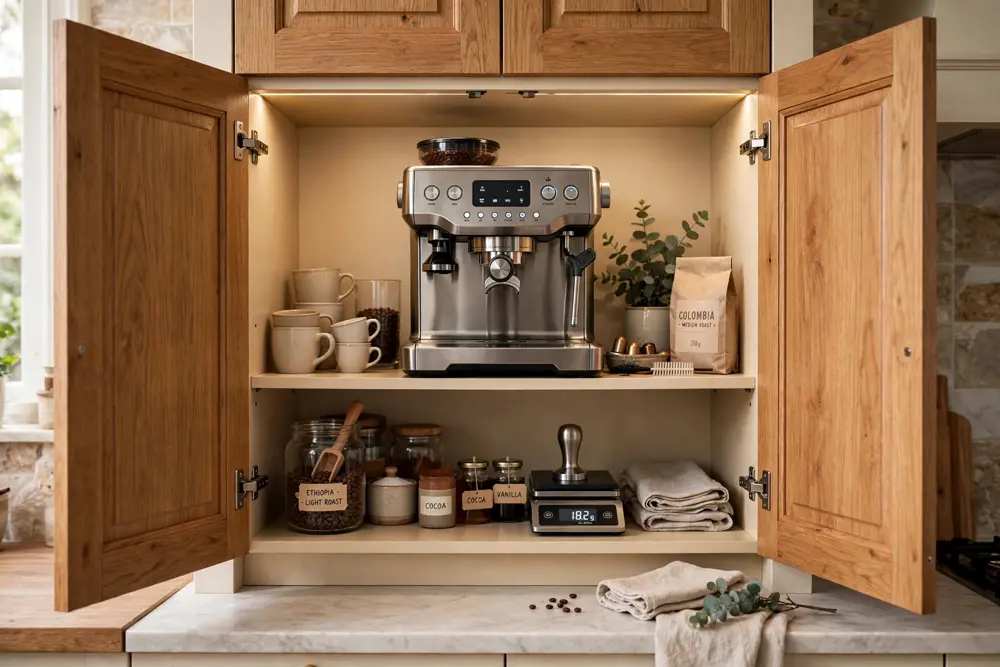
A cabinet station, sometimes called a coffee cabinet or appliance garage, hides the station behind doors when you are not using it. This suits kitchens where counter space is precious, or where you want a calm, uncluttered look during the day. An existing tall cabinet, a wide wall cabinet with a lift up door, or a deep base cabinet can all become a station, as long as there is power inside and room for steam to escape.
Ventilation is the main risk with a cabinet station. A coffee machine and a kettle make steam, and steam trapped in a closed cabinet will warp doors and grow mould. Leave the doors open while you brew, use a cabinet with a vent or a gap at the back, and wipe the inside dry after use. If the cabinet has no power, do not run an extension lead through a door gap permanently; get a proper socket fitted inside, or choose a different cabinet.
Inside, use the same tray idea as a counter station, but smaller. A pull out shelf is ideal, because it brings the machine out to you and pushes it back when done. Store mugs above or beside the machine, not in front of it, so you are not reaching over a hot kettle. A cabinet station takes a little more planning, but it is the best option for a kitchen that needs to look tidy for most of the day.
Idea 3: A cart or trolley station for flexible kitchens

A cart station is the best option if you have no spare counter, if you rent, or if your kitchen layout changes. A small trolley, a bar cart, or a narrow console table can hold a machine on top, mugs and supplies in the middle, and extra stock below. It can move to where you need it in the morning, and move out of the way when you cook a big meal.
Wheels help, but they must lock. A cart that rolls when you press a machine button is annoying and unsafe with hot drinks. Choose a cart with locking castors, a raised edge or tray on top to stop mugs sliding, and a height that matches your counter, so you are not bending to make coffee. If the cart will live near a wall, keep a power point nearby, or use a short, tidy extension that does not cross a walkway.
A cart also works as a tea station for a household with different tastes. One shelf for coffee, one for tea, with separate mugs and sweeteners, stops arguments about whose supplies are where. Label jars if you share a kitchen, because coffee and tea supplies look similar in the morning when you are half asleep.
Idea 4: A tiny station for small kitchens and single drinkers
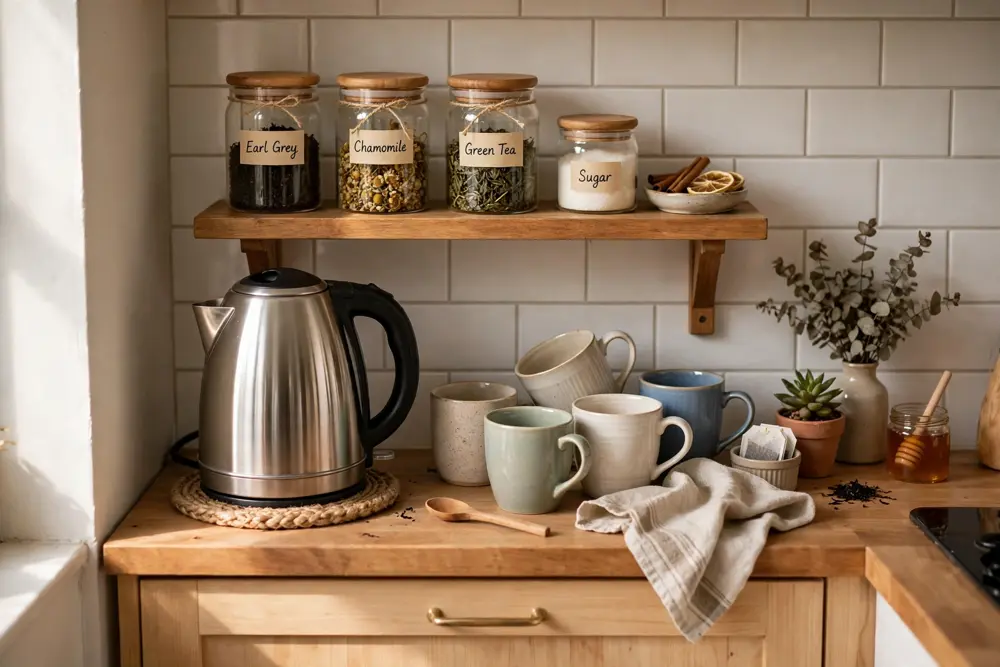
A tiny station proves you do not need a lot of space to make a good drink. If you live alone, or you only drink tea, a kettle, two mugs, a tea caddy, and a small tray on a shelf can be a complete station. The trick is to choose one drink system and commit to it, instead of keeping equipment for every drink you might make one day.
Wall space is your friend in a small kitchen. A small shelf above a counter, with hooks underneath for mugs, creates a station without taking counter space at all. Put the kettle on the counter below the shelf, mugs on hooks, and tea or coffee in jars on the shelf. Everything is visible, everything is within reach, and the counter below stays usable for prep when the kettle is put away.
For a single drinker, also think about waste. A station with single serve pods is convenient, but it creates a lot of waste and cost. A small French press, a pour over, or a simple tea infuser takes almost no space, costs little, and makes a better drink. Choose the method you enjoy, not the method with the most gadgets, and your tiny station will actually get used.
Storage that keeps a station tidy
Mugs are the item that makes a station look messy fastest. Keep only the mugs you use weekly at the station, usually four to six for a household, and store the rest elsewhere. Hang mugs on hooks under a shelf, stack them in pairs, or use a mug tree, but do not let a collection of twenty mugs take over the counter.
Coffee and tea storage should be airtight, labelled, and small. Large bags and boxes take up space and go stale. Decant coffee beans, ground coffee, and loose tea into small jars, keep them away from heat and light, and refill weekly. Sugar, sweeteners, and spoons belong in the same tray as the machine, not in a separate cupboard you have to open with wet hands.
Milk, if you use it, needs a plan too. A small milk jug by the machine, or a place in the fridge door you always use, stops milk wandering around the kitchen. If you use plant milk or flavoured syrups, keep one or two at the station and the rest in the fridge or pantry, not all of them out at once.
Morning routines and shared households
A station should match your routine, not just your kitchen. If you make coffee first thing, set the station up the night before: fill the machine, put a mug out, and clear the tray. That two minute evening habit saves five minutes in the morning and makes the station feel effortless.
In a shared household, agree on a station rule: whoever makes the last drink cleans the tray, empties the drip tray, and wipes the machine. A station that is cleaned daily stays pleasant; a station that is cleaned weekly becomes sticky and uninviting. Keep cleaning supplies at the station, a cloth and a small brush, so cleaning takes seconds, not a trip to another cupboard.
For guests, a station with clear labels and a few choices, coffee, tea, and decaf, is welcoming without being overwhelming. You do not need a cafe menu. Three good options, with mugs and spoons visible, let guests help themselves without asking you every step.
Budget and renter friendly stations
A good station does not need to be expensive. A tray, a few jars, and hooks cost little and transform a corner. A cart station can be made from a second hand trolley, and a cabinet station can use a cabinet you already own. Spend money on the machine and the drink itself first, because a good machine with cheap storage beats a cheap machine with expensive storage every time.
For renters, a counter tray station and a cart station are the safest options, because they need no drilling and no permanent changes. Adhesive hooks under a shelf can hold mugs without damage, as long as you check weight limits and remove them properly at move out. Avoid fitting a socket inside a cabinet in a rental without landlord permission; use a counter station near an existing socket instead.
If you own your home and want a built in station, plan power, water, and ventilation before you build. A plumbed coffee machine sounds luxurious, but it needs a water supply, a drain, and servicing access. For most homes, a well placed counter or cabinet station with a nearby sink is simpler, cheaper, and easier to change later.
What to avoid
- Putting a station far from a sink and a power point, which means carrying water and trailing leads every day
- Keeping three machines on the counter when you only use one daily, which eats prep space
- Closing a cabinet station while brewing, which traps steam and warps doors
- Letting mug collections take over the station, with twenty mugs for a two person household
- Storing coffee and tea in large, open bags near heat and light, which makes them go stale fast
- Using a cart without locking wheels, which rolls when you press a machine button
- Fitting a socket inside a cabinet in a rental without permission, or running a permanent extension through a door gap
Frequently asked questions
Where is the best place for a kitchen coffee station?
In one corner near a power point and, if possible, on the same run as the sink, away from the main prep area. A corner station keeps the machine, mugs, and supplies together without taking over cooking space.
Can I put a coffee station inside a cabinet?
Yes, if there is power inside, room for steam to escape, and you leave the doors open while brewing. Use a pull out shelf if you can, wipe the inside dry after use, and do not trap steam in a closed cabinet.
How do I keep a coffee station tidy?
Use a tray to contain the machine and supplies, keep only four to six mugs you use weekly at the station, decant coffee and tea into small airtight jars, and clean the tray and drip tray daily. A tray you can lift to clean underneath makes the whole station easier to maintain.
What do I need for a small kitchen coffee station?
One machine or kettle, two to four mugs, a small tray, and jars for coffee or tea. Use wall hooks under a shelf for mugs if counter space is tight, and choose one drink system you actually use, rather than equipment for every drink.
Is a coffee cart a good idea in a kitchen?
Yes, if it has locking wheels, a raised edge on top, and a height close to counter height. A cart suits renters and flexible kitchens, and it can move out of the way when you cook. Keep power nearby and do not run a lead across a walkway.
How do I store coffee and tea at a station?
In small, airtight, labelled jars, away from heat and light, refilled weekly. Keep sugar and spoons in the same tray as the machine, and keep milk in the fridge with a small jug at the station, rather than all your supplies out at once.
Conclusion
A tea and coffee station works when it fits your drink, your routine, and your kitchen. Put one machine, a few mugs, and your supplies on a tray in a corner near power and water, hide it in a cabinet if you need the counter clear, use a cart if you rent or need flexibility, or build a tiny wall shelf station if space is tight. Keep mugs to the ones you use, store coffee and tea in small airtight jars, and clean the tray daily.
Start tonight: clear one corner, put a tray there, and set up for tomorrow morning. If making your first drink feels easy, your station is right. If you are still hunting for filters and mugs, move one thing closer, remove one thing you do not use, and try again. A station that saves you five minutes every morning is worth more than a station that just looks good in a photo.