Introduction
A full kitchen remodel can cost tens of thousands, but most kitchens do not need one. A budget update, paint, hardware, lighting, and one or two surfaces, can change how a kitchen feels for a fraction of the cost, if you budget in the right order.
This checklist helps you plan a kitchen update without a full remodel, with costs, priorities, and what to skip.
Idea 1: Start with a budget and a priority list
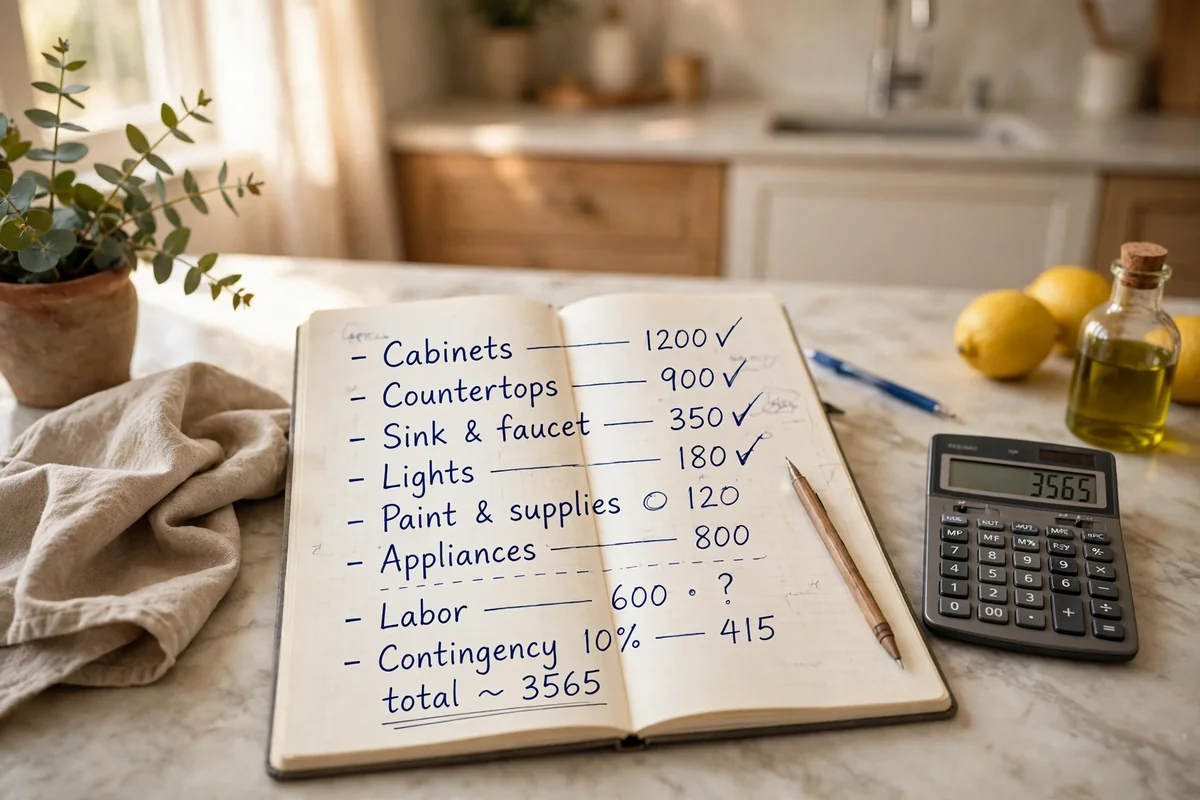
Start by setting a total budget, then list everything you want to change in priority order: what bothers you most, what is broken, and what will change the look most for the least money.
A typical budget update might be: paint $200 to $500, hardware $100 to $300, lighting $100 to $300, backsplash $200 to $600, countertop refresh $500 to $2,100, flooring $500 to $2,000, depending on size and materials.
Add 10 to 20 percent contingency for surprises, like damaged cabinets behind old hardware, or plumbing issues behind an old faucet. If you do not use the contingency, you can add a final touch, like new stools or a rug.
Idea 2: Spend first on paint, hardware, and lighting
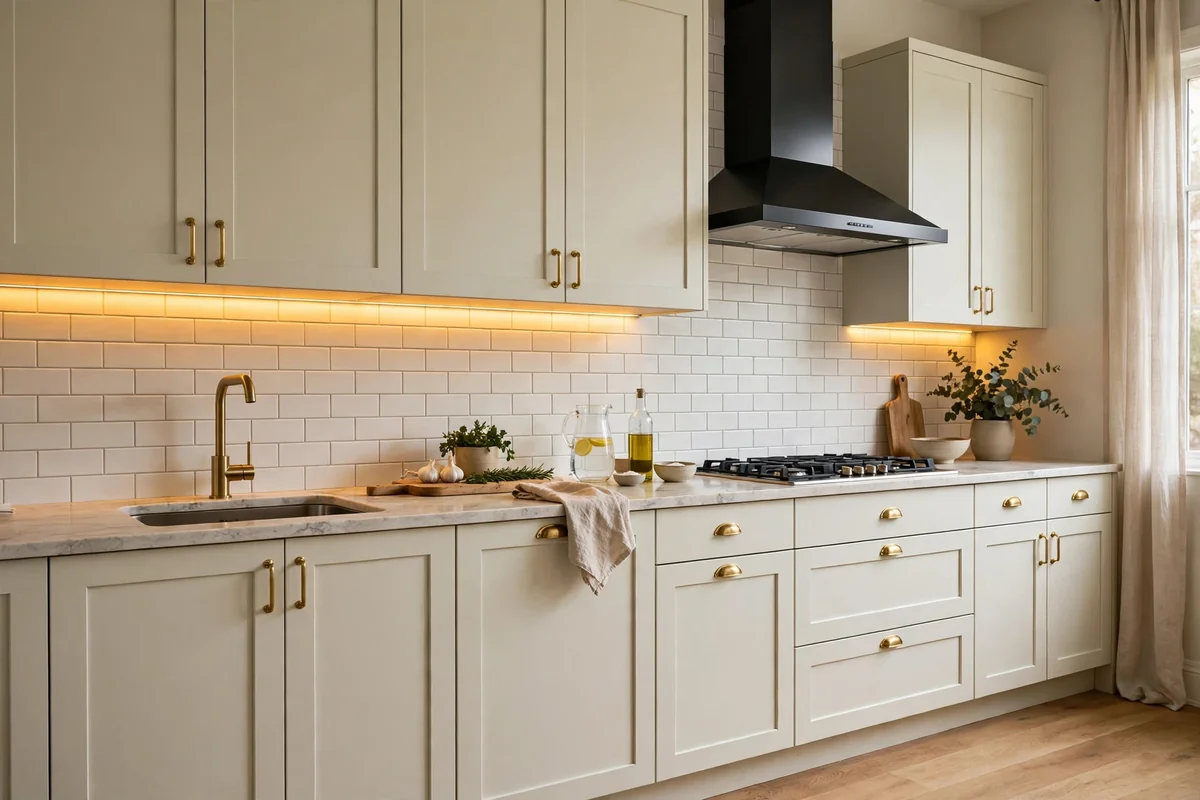
Paint, hardware, and lighting give the biggest visual change for the least money. Painting cabinets, changing handles and knobs, and adding under cabinet LED strips can make a kitchen look new in a weekend, for under $1,000 in many cases.
Paint walls in a light, warm white to reflect light, paint cabinets in white, sage, or greige with a durable satin finish, and add layered lighting: under cabinet lighting for prep, pendant lights over an island, and a brighter ceiling light for general use.
These three changes alone often make a kitchen feel remodelled, even if countertops and flooring stay the same.
Idea 3: Choose one surface to upgrade
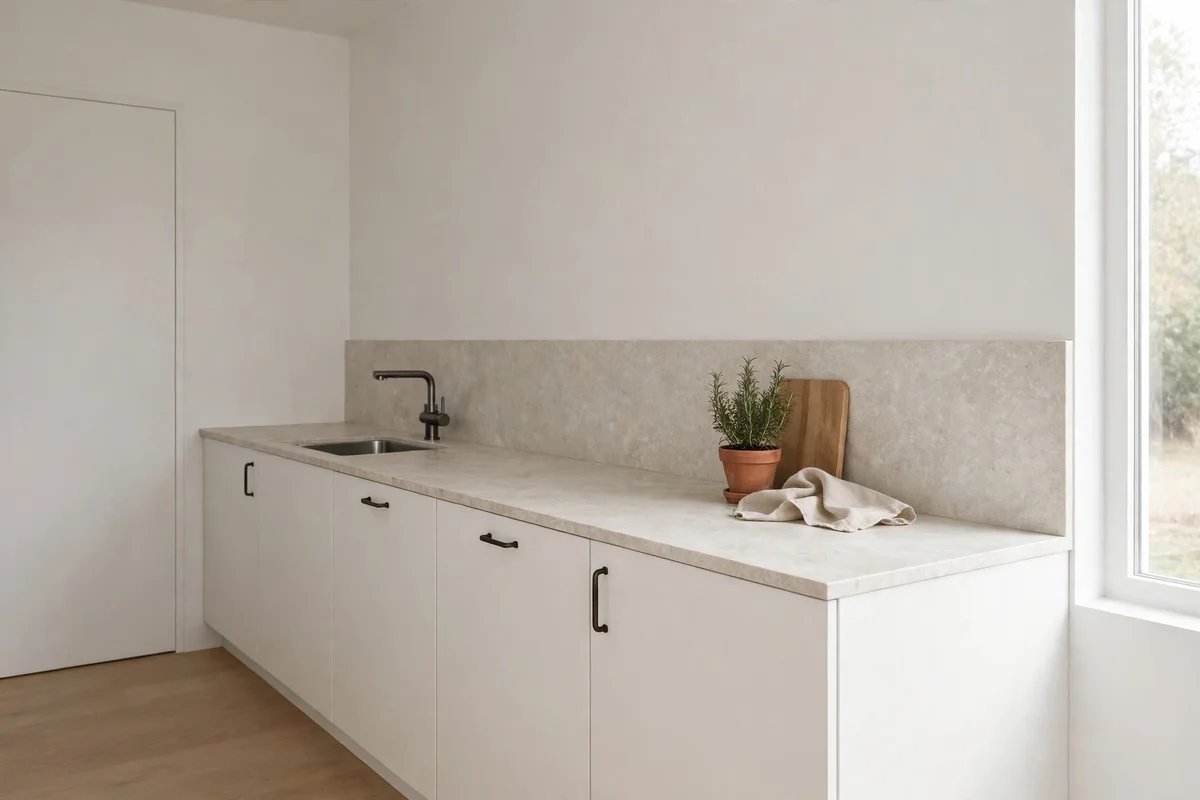
If you have budget for one surface, choose the one that bothers you most or is most damaged: countertops, backsplash, or flooring, not all three at once.
Countertops: laminate or a stone remnant for a small kitchen, as covered in Best Kitchen Countertops for Small Kitchens on a Budget.
Backsplash: peel and stick tiles or removable wallpaper for a renter friendly, budget update, as covered in Indoor Kitchen Backsplash Ideas on a Budget.
Flooring: luxury vinyl plank for a waterproof, budget friendly floor, as covered in Kitchen Flooring Ideas for Small Kitchens.
Doing one surface well is better than doing three surfaces cheaply, and it leaves budget for paint, hardware, and lighting, which tie the whole kitchen together.
Idea 4: Know what to skip and when to hire a pro

Skip full cabinet replacement if cabinets are structurally sound, skip moving plumbing or walls unless you have a large budget, and skip luxury appliances unless you cook for a crowd regularly. See also Kitchen Cabinet Ideas Without Replacing Cabinets.
Hire a pro for: electrical work, gas plumbing, water plumbing behind walls, and stone countertop cutting and installation. DIY mistakes in these areas cost more to fix than hiring a pro from the start.
DIY is good for: painting, hardware, peel and stick backsplash, under cabinet lighting, open shelving, and vinyl flooring, all of which are covered in other articles in this cluster.
Get at least two quotes for any pro work, check that quotes include removal, disposal, and finishing, and do not pay the full amount upfront.
What to avoid
- Starting without a total budget and contingency
- Doing all surfaces at once on a small budget, which leads to cheap finishes everywhere
- Moving plumbing or walls without a large budget and a pro
- Buying appliances before measuring openings and cabinet sizes
- Skipping primer on cabinet paint, which leads to peeling
Sample budgets for a kitchen update
A budget only helps when it is tied to real numbers. Start with three levels and pick the one that fits your kitchen and your savings, rather than copying a number from another home.
A $1,000 update usually covers paint for walls and cabinets, new hardware, under cabinet lighting, and peel and stick backsplash. It works best in a small kitchen where cabinets are sound and the layout already works. You will not replace a countertop or floor at this level, but the room can still look completely different.
A $3,000 update adds one surface to that list. That might be a laminate countertop, a tiled backsplash installed properly, or luxury vinyl plank flooring in a small to medium kitchen. Choose the surface that is most worn, and keep the other surfaces simple. At this level, get a quote for any pro work before you buy materials, because labour can use up a large share of the budget.
A $5,000 update can cover paint, hardware, lighting, backsplash, and one larger surface, with room for a new faucet, a better sink, or new stools. It still is not a full remodel, and that is the point. You are refreshing the parts you touch every day, not moving walls, plumbing, or electrical circuits.
In every case, write the total at the top of your list, then subtract the contingency before you start shopping. If your total is $3,000 and your contingency is 15 percent, your shopping budget is $2,550. That small step stops the most common budget problem, which is spending the full amount on the first two items and then having nothing left for finishing touches.
Where to save and where to spend
Saving and spending are not opposites in a kitchen update. The skill is knowing which items reward a higher price and which ones do not.
Save on paint colour changes that are easy to redo, on peel and stick backsplash, on open shelving, and on decorative items such as stools, rugs, and trays. These items change the look a lot, cost little, and can be replaced later without undoing other work.
Spend on things that are hard to fix later. That includes good cabinet paint and primer, because peeling paint is expensive to redo. It includes a reliable faucet, because a leaking faucet damages cabinets. It includes under cabinet lighting with a clean finish, because poor lighting makes every other change look worse. It also includes proper installation for a countertop or floor, because a badly fitted surface shows every day.
Do not spend on a luxury appliance just because it is on sale, unless it fits your openings and your cooking habits. Measure the width, height, and depth of every opening, including door swing and ventilation space, before you buy. An appliance that does not fit will cost more in returns, cabinet changes, or wasted space than the saving was worth.
A simple week by week plan
A budget update feels easier when it has an order. Rushing every change into one weekend usually leads to dust, half finished paint, and a kitchen you cannot use.
In week one, plan and measure. Set the total budget, list priorities, measure openings and surfaces, and get quotes for any pro work. Order paint, hardware, and lighting first, because these items often arrive in a few days and set the colour direction for everything else.
In week two, do the messy work first. Paint walls and cabinets, change hardware, and fit under cabinet lighting. Keep the kitchen usable by painting in stages, one section at a time, and by covering counters and appliances before you start.
In week three, fit the one surface you chose. That might be a backsplash, a countertop refresh, or new flooring. If a pro is doing this work, confirm the date, the removal and disposal included in the quote, and what you need to clear from the room before they arrive.
In week four, finish and check. Add the final touches, such as a rug, stools, or a tray, then walk through the checklist again. Check paint edges, hardware alignment, lighting colour, and any caulk or trim that needs tidying. Small fixes at this stage are cheap, and they are what make a budget update look intentional rather than rushed.
How to track spending without a spreadsheet
You do not need a complex spreadsheet to stay on budget, but you do need one place where every cost is written down. Use a notebook, a notes app, or a single sheet of paper on the fridge, and update it on the day you spend, not at the end of the month.
Write four columns: item, planned cost, actual cost, and difference. When the actual cost is higher than planned, note why, and decide what will change to keep the total. For example, if paint costs $100 more than planned, you might choose a simpler backsplash or delay new stools. That decision is much easier when it is made early, while you still have choices left.
Keep receipts and photos of labels, paint colours, and product codes. If you need more paint, another length of lighting strip, or a matching handle later, those details save time and prevent a mismatched finish. At the end of the update, add up the actual total and compare it with the original budget. That final number is useful for the next room, because it shows where your estimates were close and where they were not.
Frequently asked questions
How much does a budget kitchen update cost?
Often $1,000 to $5,000 for paint, hardware, lighting, and one surface, depending on kitchen size and materials. A full remodel is usually $15,000 or more.
What should I spend on first in a kitchen update?
Paint, hardware, and lighting first, because they give the biggest visual change for the least money, then one surface: countertop, backsplash, or flooring.
Can I remodel a kitchen without replacing cabinets?
Yes, if cabinets are structurally sound. Paint them, change hardware, add soft close hinges, and update countertops and lighting, and the kitchen will look new. See Kitchen Cabinet Ideas Without Replacing Cabinets.
How do I stay on budget during a kitchen update?
Set a total budget, add 10 to 20 percent contingency, prioritise changes, get quotes for pro work, and do one surface well instead of three surfaces cheaply.
Should I hire a pro or DIY a kitchen update?
DIY paint, hardware, backsplash, lighting, and vinyl flooring. Hire a pro for electrical, gas, plumbing behind walls, and stone cutting and installation.
What is the cheapest way to update a kitchen?
Paint cabinets and walls, change hardware, add under cabinet lighting, and use peel and stick backsplash tiles. These four changes often cost under $1,000 total.
Conclusion
A budget kitchen update is about order, not just money: set a budget with contingency, spend first on paint, hardware, and lighting, choose one surface to upgrade well, and hire a pro only where safety and skill matter.
Use the other articles in this cluster as your checklist: cabinets, countertops, backsplash, flooring, lighting, and storage, one part at a time. That step by step update will give you a kitchen that feels new, without a full remodel, and it links naturally to the next parts of your kitchen cluster: countertop care, pantry organisation, and renter decor.