Introduction
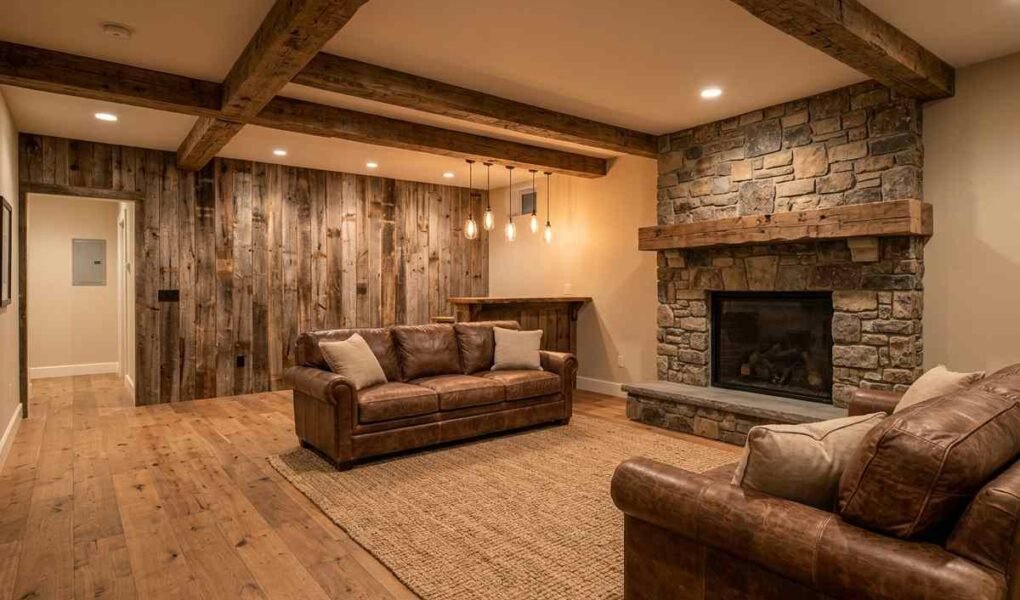
Basements are naturally good at the things rustic design depends on most. They are enclosed, intimate, and slightly removed from the rest of the house in a way that other rooms are not — and those qualities, which can make an unfinished basement feel cold and forgotten, make a thoughtfully finished rustic one feel like a genuine retreat rather than simply a renovated utility space.
Rustic basement design is also one of the most forgiving aesthetic choices for a below-grade space specifically because the style celebrates the characteristics that basements naturally have. Exposed beams look deliberate rather than unfinished. Dark, warm surfaces absorb ambient light rather than demanding more of it. Natural stone handles humidity better than most alternatives. The aesthetic logic and the practical requirements of below-grade construction point in the same direction, which is why rustic basement design consistently produces better results than other style attempts in this environment. This guide covers the moisture-safe material choices, the lighting approach for windowless spaces, the bar and fireplace options most people are looking for, and a room-by-room breakdown from home theater to guest suite.
🔗 Building out the rest of your home? Read our split level house kitchen remodel guide and our economy home decor guide for more.
Why Basements and Rustic Design Work So Well Together
Before any specific ideas, it’s worth understanding exactly why this pairing works, since the reasoning shapes almost every material and lighting decision that follows.
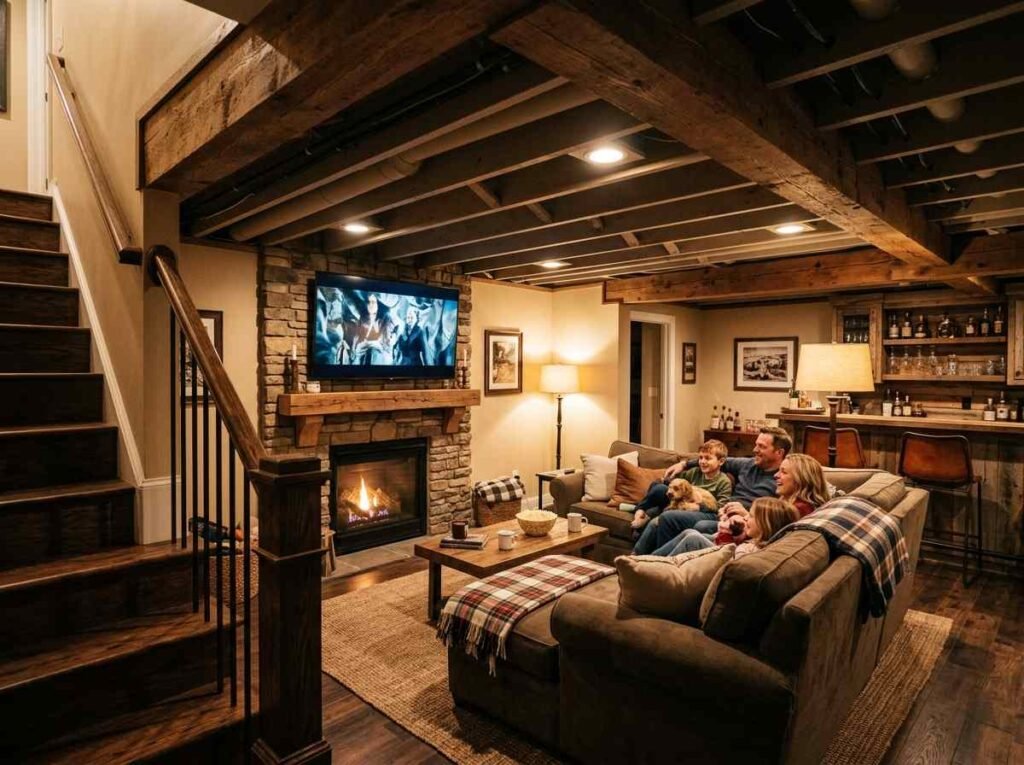
The enclosed environment creates natural coziness rather than fighting it. Basements are inherently more intimate spaces than upper-floor rooms, and rustic design’s emphasis on warm, tactile materials amplifies that intimacy rather than working against it the way a cold, minimalist aesthetic often does in a low-light space.
Lower ceilings and limited windows encourage exactly the atmosphere rustic design is built for. Rather than fighting these constraints with bright white walls and mirrors trying to fake more space, rustic design leans into them, creating something closer to a woodland cabin’s intimate, sheltered feeling than a forgotten storage room.
Natural materials counteract the cold, unwelcoming quality basements can have. Reclaimed wood, stone, and weathered metals bring genuine warmth that directly offsets the temperature and light challenges underground spaces face, doing real functional work rather than purely decorative work.
Materials That Actually Hold Up Below Grade
This is the section almost every rustic basement guide skips, and it’s the one that determines whether a beautiful design lasts or fails within a few years.
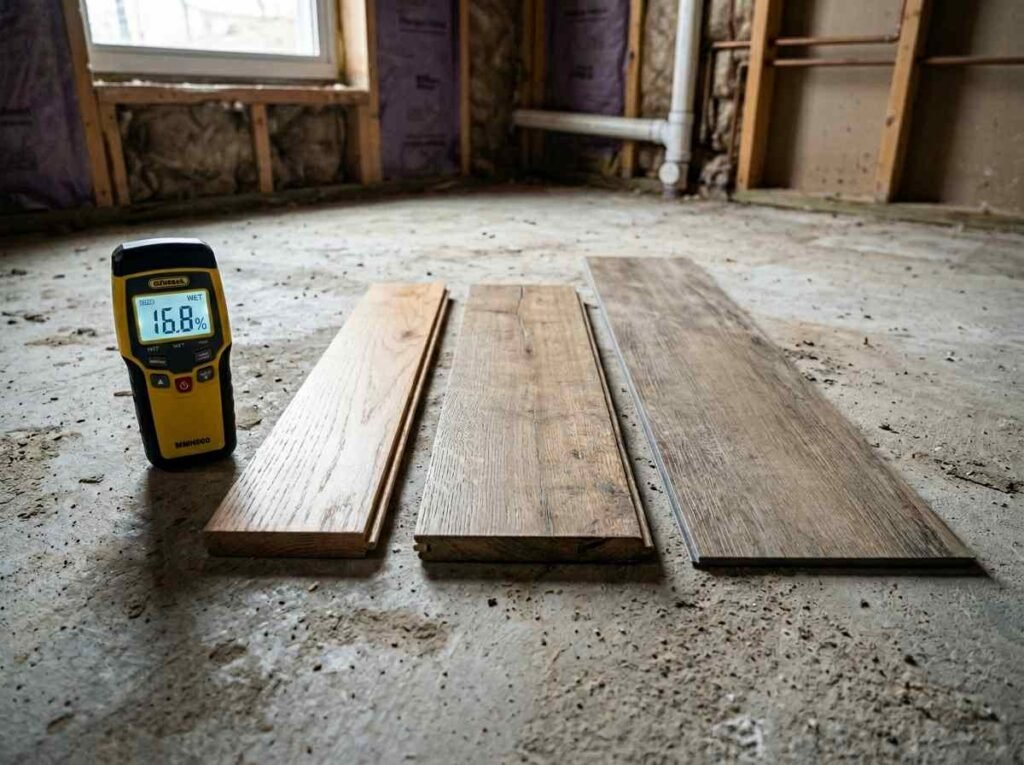
The core challenge: basements are more prone to humidity and moisture than any other room in a typical home, due to their position below grade and proximity to the foundation. Reclaimed wood — the material rustic design depends on most heavily — needs specific handling to perform well in this environment.
For flooring: Avoid solid hardwood directly on a basement floor; it’s highly vulnerable to moisture-related warping and damage below grade. Engineered wood flooring, which is built with a moisture-resistant core beneath a genuine wood veneer, delivers the rustic wood-floor look while actually surviving basement conditions. Luxury vinyl plank with a wood-look finish is an even more moisture-tolerant alternative, and quality options are now visually difficult to distinguish from real reclaimed wood at normal viewing distance.
For reclaimed wood features (bars, shelving, accent walls): Reclaimed wood used for furniture, bar fronts, and wall features rather than flooring is far less exposed to ongoing moisture risk, but should still be properly sealed with a clear protective sealant before installation, and ideally kept away from any wall showing signs of past moisture issues.
For stone: Natural stone veneer for a fireplace surround or accent wall performs excellently in basement conditions and is one of the most reliably moisture-tolerant rustic materials available, making it a safer foundational choice than wood for any feature wall in a basement with known humidity concerns.
Always address moisture at the source first. No amount of moisture-resistant material selection compensates for an underlying basement moisture or water intrusion problem — a dehumidifier, proper grading outside the home, and confirming there’s no active water issue should come before any material decisions, not after.
You can also read Dining Room Mirror Ideas: The Complete Placement, Style, and Feng Shui Guide
Lighting a Room With Little or No Natural Light
Basements present a lighting challenge no other room in the house faces in quite the same way, and getting this right is just as important as material choice for making a rustic basement feel inviting rather than cave-like.
Layer multiple light sources rather than relying on one. Recessed overhead lighting alone, however well-placed, tends to read as flat and slightly institutional. Combining recessed ceiling lighting with floor lamps, table lamps, and wall sconces creates the layered, warm quality that genuinely makes a windowless room feel comfortable rather than merely lit.
Choose warm-temperature bulbs throughout. Cool white lighting compounds the already cold, underground quality a basement can have. Warm white bulbs (around 2700K–3000K) support the rustic aesthetic’s emphasis on coziness far more effectively than daylight-temperature bulbs, even though daylight bulbs are technically brighter.
Use fire as a light source, not just a heat source. A fireplace or wood stove contributes genuine ambient light alongside its warmth, and the natural, flickering quality of real or simulated flame does something no fixed electric light source can replicate in terms of atmosphere.
If any natural light exists, maximise it ruthlessly. Basements with even small windows or walk-out access to grade should keep window treatments minimal and light-coloured, allowing every available bit of natural light through rather than blocking it with heavy curtains that might otherwise suit the rustic aesthetic elsewhere in the room.
The Basement Bar — What People Actually Search For
The basement bar is consistently one of the most requested individual features within rustic basement design, deserving its own dedicated treatment.
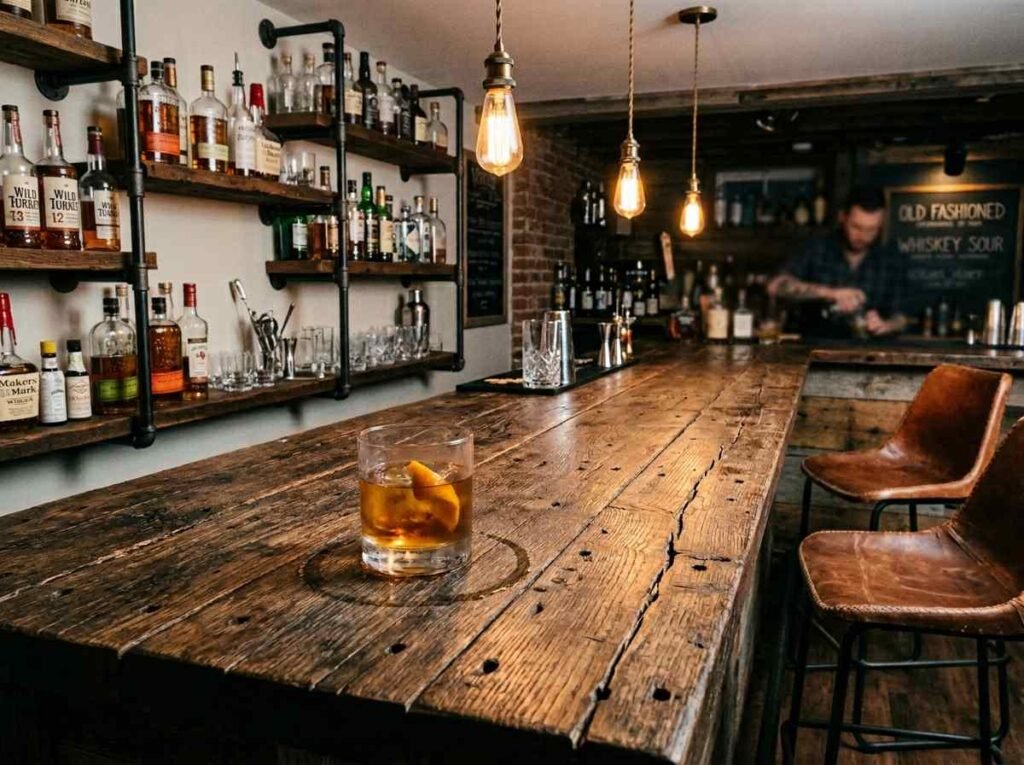
The bar top is the centrepiece. Reclaimed wood — old barn doors, salvaged barn wood, or mixed-width weathered planks — transformed into a bar top is the single most defining element of a rustic basement bar. The weathered surface, complete with natural nicks, grooves, and nail holes, gives the piece a sense of history no new material can fake. Source wood from local salvage yards or buildings being demolished, sand lightly to prevent splinters without removing the character, and seal with a clear protective coating to protect the surface while keeping the raw, authentic look intact.
The bar front offers a second creative opportunity. Vertical planking, herringbone patterns, or mixed-width horizontal boards on the front face of the bar create additional visual interest beyond the top surface alone.
Industrial pipe shelving pairs surprisingly well with rustic warmth. Black iron pipe shelving holding reclaimed wood shelves creates a flexible, easily expandable display system for glassware and bottles, and the contrast between the industrial hardware and the warm wood texture creates a balanced aesthetic that reads as considered rather than mismatched.
Whiskey or wine barrels make genuinely striking centrepieces. A full barrel repurposed as a cocktail table, or a half-barrel used as a literal bar base, brings authentic character that’s difficult to replicate through any other single object.
Seating should match the bar’s material language. Bar stools with leather seats and metal frames complete the look, providing coordinated, comfortable seating that doesn’t compete with the bar itself for visual attention.
You can also read Gothic Furniture Guide: The Best Dark & Dramatic Pieces for Every Room
Fireplaces and Wood Stoves in a Basement
A fireplace or wood stove provides both the visual centrepiece and the actual warmth that makes a basement feel genuinely inviting rather than merely decorated.
Gas fireplaces are the most basement-practical option. They provide convincing flame ambiance without the venting complications a true wood-burning installation requires in a below-grade space, making them the most common practical choice for basement renovations specifically.
Wood-burning stoves are achievable but require real planning. A wood-burning stove in a basement is genuinely possible and creates a uniquely authentic, cabin-like atmosphere, but it requires proper chimney installation and must comply with local building codes and ventilation requirements — always check with your city, county, or HOA before installing, since some areas restrict basement wood-burning installations specifically due to flue, wiring, or air circulation regulations.
Electric fireplace inserts offer the simplest installation. Modern flame-simulation technology has improved enough to create a genuinely convincing visual effect, satisfying the aesthetic requirement for many homeowners without any of the ventilation complexity of gas or wood options.
Surround materials should match the rest of the room’s material language. Stone surrounds reinforce the rustic aesthetic most directly, while a reclaimed wood mantel above any fireplace type adds a horizontal display surface for photographs and decorative objects, tying the fireplace into the same material story as the bar and any other wood features in the room.
Cold air infiltration is a real basement-specific issue worth knowing about. Pressure imbalances can pull outdoor air down a basement chimney more noticeably than in an above-grade fireplace, which is worth discussing with whoever installs the unit, particularly for wood-burning installations.
You can also read Gothic Kitchen & Dining Room Decor: The Complete Dark Elegance Guide
Room-by-Room Rustic Basement Ideas
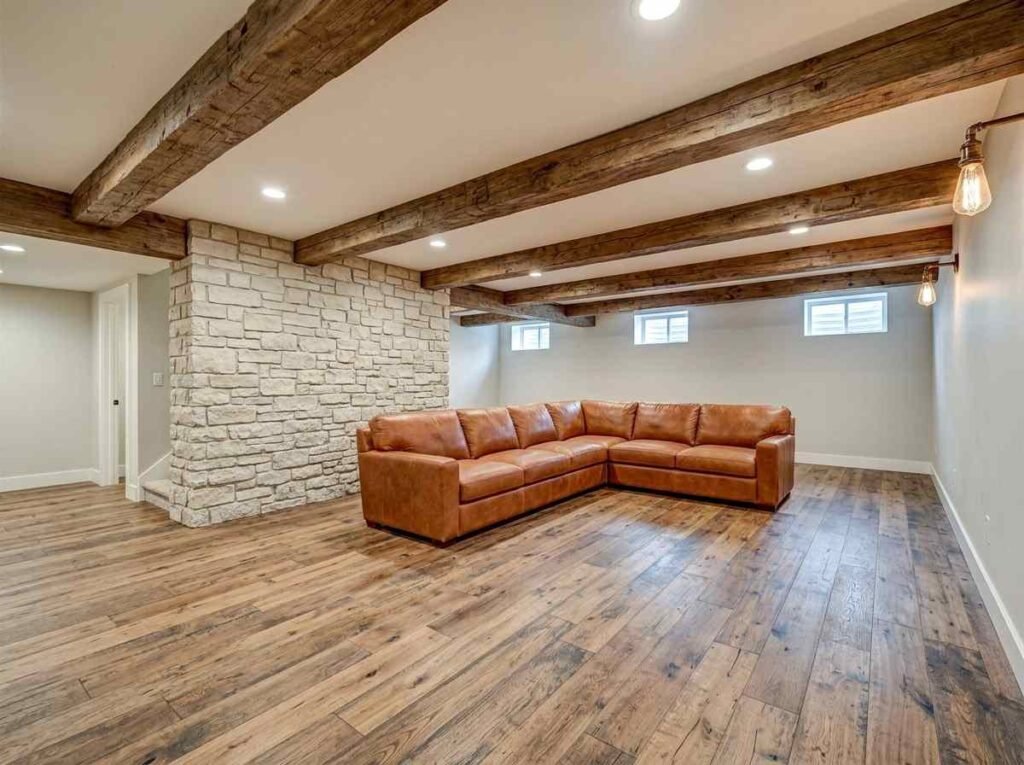
Home Theater or Media Room
Exposed wooden beams overhead, a stone or reclaimed-wood feature wall behind the screen, and deep, comfortable seating in leather or heavy woven fabric bring the rustic aesthetic into a media-focused space without sacrificing the dark, controlled lighting a home theater needs.
Home Gym
Rustic design translates surprisingly well here through material choice alone — exposed wood beams, a stone accent wall, and simple, functional steel equipment racks read as intentional rather than mismatched, while rubber flooring (the practical necessity for a gym) can be chosen in a warm brown tone rather than the more clinical black or grey often used by default.
Guest Suite
A basement guest suite benefits from the same warmth principles as the rest of the space — layered warm lighting, a substantial wood bed frame, and a stone or shiplap accent wall behind the headboard — while paying particular attention to adequate heating, since basement guest rooms can run noticeably cooler than the rest of the home.
Home Office
A basement office benefits from the basement’s natural quiet and separation from the rest of the home, paired with a substantial reclaimed wood desk, warm task lighting layered with the room’s ambient lighting, and open shelving that follows the same material language as any nearby bar or fireplace feature.
Game Room
A wine cellar or wet bar adjacent to a game room with a pool table, paired with reclaimed wood paneling and a chalkboard wall for tallying scores, brings genuine personality and function together in a single connected space.
You can also read Orange Color Bedroom Ideas: The Complete Guide to Using Warmth Right
Frequently Asked Questions
Q: How do I keep a rustic basement design from feeling cold or unfinished?
A: Layer multiple warm-temperature light sources rather than relying on overhead lighting alone, incorporate a fireplace or wood stove for both genuine warmth and ambient light, and use natural materials — wood, stone, weathered metal — generously throughout, since these directly counteract the cold, enclosed quality basements can otherwise have. Addressing the room’s actual temperature with proper heating, not just decorative warmth, also matters meaningfully in a below-grade space.
Q: Is reclaimed wood safe to use in a basement?
A: Reclaimed wood used for furniture, bar fronts, shelving, and wall features performs well in a basement as long as it’s properly sealed and the room doesn’t have an underlying moisture problem. Solid reclaimed wood used directly as flooring is much riskier due to basement humidity and is generally better replaced with engineered wood or wood-look luxury vinyl plank flooring, which deliver the same visual warmth with far better moisture resistance.
Q: Can you have a wood-burning stove in a basement?
A: Yes, but it requires proper chimney installation and compliance with local building codes, and some jurisdictions restrict basement wood-burning installations specifically due to ventilation and air circulation concerns. Always check with your local building department and HOA, if applicable, before installing. Gas fireplaces and electric fireplace inserts are more straightforward alternatives that avoid these complications while still providing genuine rustic ambiance.
Q: What’s the best flooring for a rustic basement?
A: Engineered wood flooring or wood-look luxury vinyl plank are the best choices, since both deliver a convincing rustic wood-floor appearance while resisting the moisture issues that affect solid hardwood below grade. Reclaimed wood is better reserved for furniture, bar tops, and wall features rather than the floor itself, where moisture exposure is highest and most damaging over time.
Q: How much does a rustic basement renovation typically cost?
A: Costs vary enormously based on scope, but rustic design is genuinely one of the more DIY-accessible renovation styles, since its emphasis on natural imperfection and reclaimed materials suits homeowner labour well — sourcing your own reclaimed wood from salvage yards, building a bar yourself, and handling lighting and paint personally can meaningfully reduce costs compared to a fully contracted renovation. A full professional renovation with a custom bar, fireplace installation, and finished flooring throughout represents a significant investment, while a DIY-focused refresh using existing structure with new lighting, a self-built bar, and updated flooring can be achieved on a considerably more modest budget.

[…] Building a complete rustic bathroom? Read our southwestern desert bathroom decor guide and our rustic basement design guide for more rustic […]