Introduction
A warm neutral bedroom is not a blank bedroom. When it works, it feels calm, soft and quietly finished. When it does not work, it can look flat, washed out or strangely cold, usually because the beige or greige had the wrong undertone for the room.
Beige and greige sit in a useful middle ground. Beige brings warmth from yellow, pink or peach undertones. Greige blends grey and beige, so it can look more modern than pure beige without turning icy like a cool grey. The trick is to choose the version that already suits your floor, your wood furniture and your bedding, rather than choosing a colour from a small paint chip and hoping it will behave the same way on four walls.
This guide covers practical decisions: how to test undertones, how to build texture so a neutral room does not look boring, and how to use three reliable palettes: beige and cream, greige and taupe, and beige with a terracotta or olive accent. It also includes a small room version.
Key takeaways
- Beige and cream give a calm, light bedroom; greige and taupe add depth without cold grey.
- Add one warm accent, like terracotta or olive, so beige does not look flat.
- Test undertones before you paint, and build a texture plan for walls, bedding, and curtains.
- Pair warm neutrals with the right lighting and flooring for a small room plan.
Idea 1: Beige and Cream for a Calm Light Bedroom
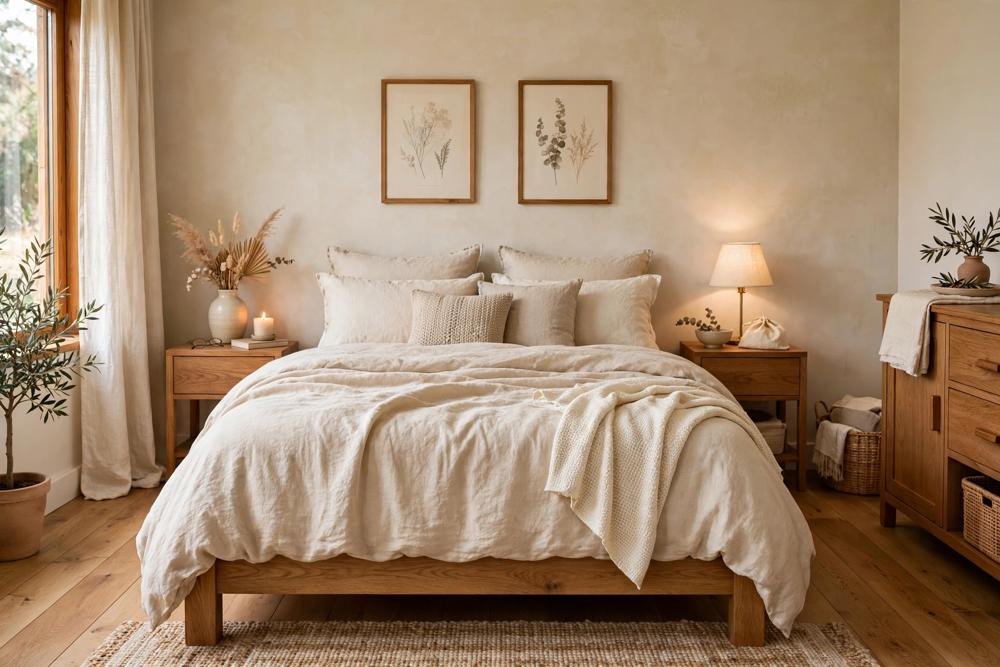
Beige and cream is the safest warm neutral pairing, and it is also the easiest to get wrong if every surface is the same shade. The room needs layers of light neutrals, not one flat colour repeated on walls, bedding, curtains and carpet.
Start with a warm beige on the walls that is a little deeper than your bedding. Cream bedding will then read as fresh rather than yellow, and a slightly darker beige throw or cushion will stop the bed from blending into the wall. Add natural wood for warmth, because wood grain is one of the fastest ways to make a pale room feel grounded. A light oak bed frame, a walnut nightstand or a woven basket can all do this job without adding a strong colour.
Keep the rest quiet. A warm off white or natural linen curtain blends better than bright white, and one deeper cushion or wooden bench gives the eye somewhere to rest. For more natural-material inspiration, see our Cozy Farmhouse Bedroom Ideas.
Idea 2: Greige and Taupe for Depth Without Cold Grey
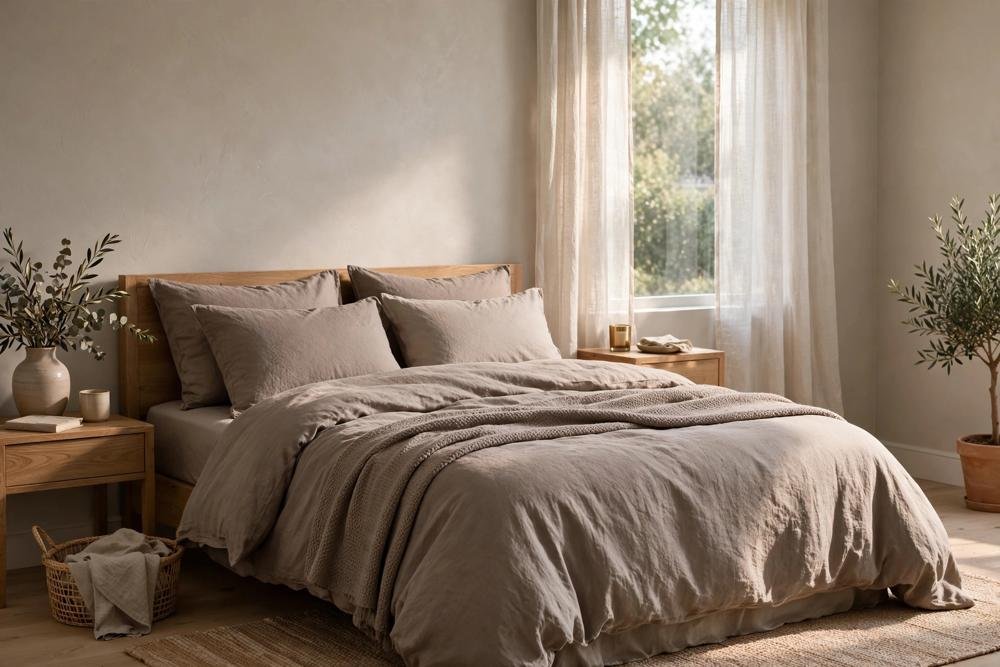
Greige is a good choice if you like the look of grey but find cool greys too stark for a bedroom. Taupe adds a little more brown and purple warmth, so the combination feels soft and grown up rather than cold or industrial.
The key is to check whether your greige leans warm or cool in your room. Hold a sample next to a pure white sheet of paper in daylight. A warm greige will show a hint of beige or taupe. A cool greige will look closer to grey and may feel chilly once it covers a whole wall, especially in a north facing room. Two widely used warm leaning examples are Accessible Beige SW 7036 and Revere Pewter HC 172, but always test them in your own light before committing, because flooring and window direction change how they read.
Pair greige walls with taupe bedding, a cream throw and darker wood or bronze details. This stops the room from looking grey from floor to ceiling. If you want a little more contrast, use a deeper taupe on one wall behind the bed and keep the other walls lighter. That gives depth without making the room feel smaller.
Idea 3: Beige With a Terracotta or Olive Accent
If a fully neutral room feels too quiet for you, add one warm accent and keep it controlled. Terracotta and olive both work with beige because they are earthy, muted and easy to live with, unlike bright orange or vivid green.
Terracotta works best as a small to medium accent. Think terracotta cushions, a throw, a vase or a piece of art, rather than a full terracotta wall. It adds warmth and a little energy, and it pairs well with cream bedding and light wood. Olive works in a similar way, but it feels calmer and slightly more natural. An olive throw, olive cushions or a plant in a terracotta pot can soften a beige room without turning it into a themed room.
Choose one accent, not both at full strength. If you love both colours, use one as the main accent and the other only in a very small detail, such as a book cover, a candle or a single cushion. This keeps the room calm and stops the palette from competing with itself. It also makes the room easier to update later, because you only need to swap cushions and a throw to change the mood If you prefer a green accent, explore these sage green bedroom ideas and paint colours that work in real light..

Idea 4: A Small Room Warm Neutral Plan
Small bedrooms benefit from warm neutrals, but they need a lighter hand. In a small room, a dark beige on every wall can close the space in, while a very pale colour with no contrast can look unfinished. The balance is a light warm neutral on most walls, one slightly deeper tone for interest, and warm lighting to keep the room inviting after dark.
Choose a paint with a higher light reflectance value for the main walls if the room is small or does not get much direct sun. This helps bounce light around the room. Then add depth through texture and one deeper accent wall, ideally behind the bed, rather than through dark paint on all four walls. A deeper accent wall gives the room a focal point and makes the bed look intentional For a complete small-room plan, see Small Bedroom Ideas: The Complete Guide to Layout, Storage, Light and Style.
Keep furniture and bedding in the same warm family. A light beige bed frame, cream bedding and a warm wood nightstand will blend better than a mix of cool grey, bright white and dark black furniture. Use warm bulbs, around 2700K, for bedside lamps, because cool white light can make beige look grey and flat in the evening. Finally, leave some breathing room. One or two well chosen cushions will look better in a small room than five competing patterns. Our Minimalist Room Ideas guide has more tips for calm small rooms.

How to Test Undertones Before You Paint
Undertone is the hidden colour inside a neutral paint. Two beiges can look almost identical on a paint chart and completely different on your wall, because one leans yellow and the other leans pink or grey. Testing is not optional if you want a calm result.
Start by looking at what is already fixed in the room. Flooring is the biggest clue. Warm wood floors suit warm beige and warm greige. Cool grey floors or cool toned tiles can make a warm beige look more yellow, so you may need a greige with a cooler balance. Next, look at your wood furniture. Honey oak, walnut and warm rattan all push a room warmer, while ash, pale grey wood and black metal push it cooler.
Paint large samples, not tiny chips, on different walls, including the wall behind the bed and the wall that gets the most light. Check them in morning, afternoon and evening light, and hold your bedding and curtain fabric next to each sample. If bedding looks dirty or grey next to the paint, the undertone is fighting your textiles. Choose the sample that makes bedding look clean and wood look rich.
How to Build a Texture Plan So Beige Does Not Look Flat
Texture is what saves a warm neutral bedroom from looking boring. Colour alone cannot carry a neutral room, because there is not enough contrast to create interest. Texture adds that interest through touch and shadow.
Start with bedding, because it covers the largest area after the walls. Mix linen or cotton bedding with a waffle or knitted throw and a velvet or bouclé cushion. These textures catch light differently, so the bed looks layered even when the colours are close. Our Romantic Bedding Guide has more ideas for layering a soft neutral bed. Add a rug with a visible weave, preferably wool or a natural fibre blend, to warm up hard floors and define the sleeping area. To get the layers right, learn how to layer bedding like a hotel bed.
Use wood, rattan, ceramic and soft fabric together, rather than relying on smooth painted surfaces alone. A woven basket, a ceramic lamp base and a fabric headboard add depth without adding colour, while matte paint and soft textiles keep the room calm. Vary scale too: a chunky knit throw, a fine linen duvet cover and a smooth cotton pillowcase create more interest than three fabrics with the same weight.
Choosing Paint, Trim and Curtains That Work Together
Trim colour matters more in a neutral room than most people expect. Bright white trim can make warm beige look yellow, while warm off white trim blends smoothly. If you already have bright white trim, choose a beige with a little more depth so the contrast feels intentional.
Curtains should stay in the warm family. Natural linen, warm cream or soft taupe work better than pure white or cool grey. Hang them high and wide to make the room feel taller, and pair sheers with a heavier curtain or blind for privacy and darkness When you hang them, follow this guide to hhang bedroom curtains for better sleep and privacy.
For finishes, use matte or eggshell on bedroom walls for a soft look. Matte hides small imperfections, while eggshell is easier to clean. Save gloss for trim and doors, where durability matters more.
Warm Neutral Lighting and Flooring Pairings
Lighting can change a warm neutral bedroom completely. In daylight, beige and greige look soft and natural. In cool artificial light, they can look grey, dull or even green. That is why bulb colour temperature deserves as much attention as paint colour.
Use warm white bulbs for bedside lamps and overhead lighting, and keep the colour temperature consistent. Mixing warm and cool lights will make one side of the room look yellow and the other grey. Dimmers help in the evening without changing bulb colour. For renter-friendly ways to add warm layers of light, see Cozy Bedroom Lighting Ideas Without an Overhead Light.
Warm wood floors are the easiest match for beige and greige. Light wood keeps a small room airy, while medium walnut adds richness to a larger room. If you have grey toned flooring, choose a greige rather than a yellow beige, and add warm wood furniture and textiles for balance. A warm neutral rug beside the bed can bridge cool floors and warm walls.
What to Avoid
Avoid choosing paint from a phone screen or a tiny chip alone. Warm neutrals shift more than strong colours do, so a colour that looks perfect online can look completely different in your room.
Avoid mixing warm and cool neutrals without a plan. A warm beige wall, a cool grey rug, a bright white duvet and a black metal bed frame can fight each other, even if each item looks good on its own. Pick one temperature family and stay close to it.
Avoid using too many similar neutrals with no texture or contrast. Five shades of beige with smooth bedding, smooth curtains and smooth walls will look flat, no matter how expensive the paint is. Add texture, wood and one deeper tone.
Avoid a matching beige set for everything. Matching bedding, curtains, rug and wall art in the same beige can look like a showroom rather than a bedroom. Let one or two items be a little deeper, a little lighter or a little more textured.
Avoid dark beige on all four walls in a small, low light room. Use the deeper tone on one wall only, and keep the other walls lighter. This gives depth without making the room feel closed in.
FAQs
What is the best warm neutral paint colour for a bedroom?
There is no single best colour, because the right choice depends on your light and flooring. Warm leaning options such as Accessible Beige SW 7036 and Revere Pewter HC 172 are good starting points, but test large samples in your room first. Choose the sample that looks clean next to your bedding and does not turn grey or yellow in evening light.
How do I stop a beige bedroom looking boring?
Add texture and one deeper tone. Mix linen, waffle, velvet and wool, add natural wood and woven details, and use a darker cushion, throw or accent wall for contrast. A beige room looks boring when every surface is smooth and the same shade, not because beige itself is boring.
What bedding goes with beige bedroom walls?
Cream, warm white, taupe and soft natural linen bedding all work well with beige walls. Avoid bright white bedding if it makes your walls look yellow, and avoid cool grey bedding if it makes the room feel cold. Add one warm accent through cushions or a throw if you want more colour.
Is greige warm or cool?
Greige can be either, because it blends grey and beige. A warm greige leans toward beige and taupe, while a cool greige leans toward grey. Check the sample next to white paper and your flooring in daylight. In a bedroom, a warm leaning greige is usually easier to live with than a cool grey.
Does beige work in a small bedroom?
Yes, if you choose a lighter warm neutral for most walls and add depth through texture and one accent wall. Keep furniture in the same warm family, use warm lighting, and avoid dark paint on all four walls. A small room can feel calm and spacious in beige when the palette is controlled.
What colours go with greige bedroom walls?
Taupe, cream, warm white, soft brown and olive all pair well with greige walls. For a little more warmth, add terracotta cushions or a wooden accent. Avoid large areas of cool grey or bright white, which can pull a warm greige back toward a cold grey look. For more bedroom colour pairings, see our Romantic Bedroom Colors guide.
Conclusion
Warm neutral bedrooms work best when you treat beige and greige as a system, not a single paint colour. Test undertones against your floor, wood and bedding, build texture so the room feels layered, and choose one of the three palettes that suits your light: beige and cream for lightness, greige and taupe for depth, or beige with a terracotta or olive accent for warmth.
Start with large paint samples, keep lighting warm and consistent, and let texture do the work colour alone cannot do. Done this way, a warm neutral bedroom will look calm, comfortable and easy to live in.