Introduction
Buying bedroom furniture feels simple until the delivery arrives. A bed that looked perfect online can block a door, a dresser can leave no room for drawers to open, and a nightstand can sit too high or too low to use comfortably. The problem is rarely taste. It is size, clearance, and flow.
This guide helps you check bedroom furniture sizes before you buy: walkway space, nightstand height, tall chest versus wide dresser, and a queen bed footprint audit. A tape measure and ten minutes of planning can save you a return and months of living around furniture that does not quite fit.
The goal is a bedroom that is easy to move through, clean, and live in every day.
Key takeaways
- Start with a pre-purchase measurement checklist, before you buy anything.
- Use size tables by room size instead of guessing, especially for walkways and clearances.
- Get nightstand, dresser, chest, and bench heights and depths right for everyday use.
- Run a footprint audit for a queen bed room, checking walkways, outlets, and door swing.
Idea 1: Start With a Pre Purchase Measurement Checklist
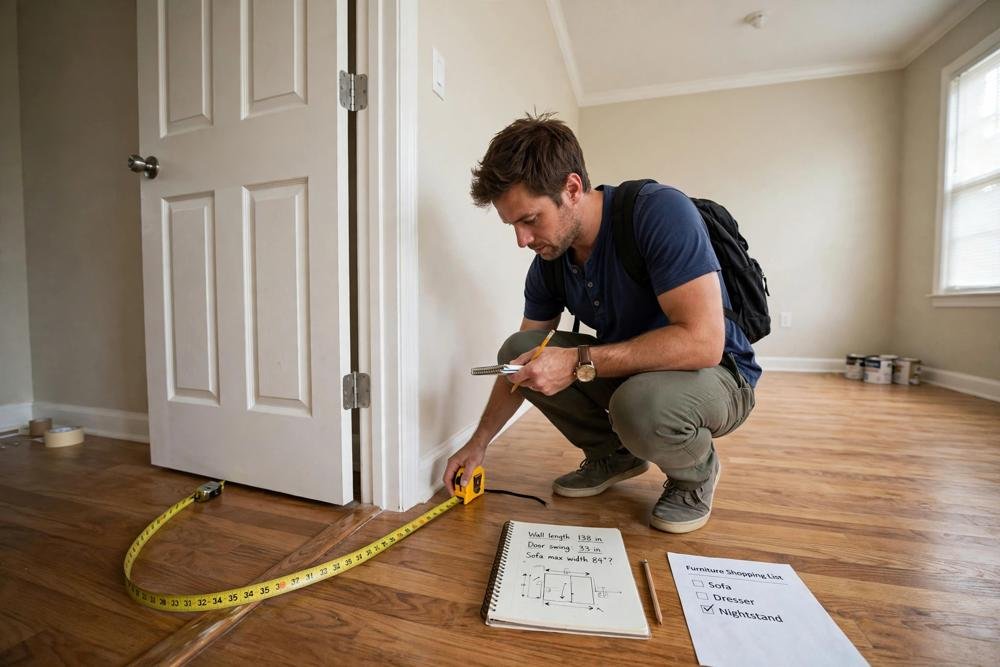
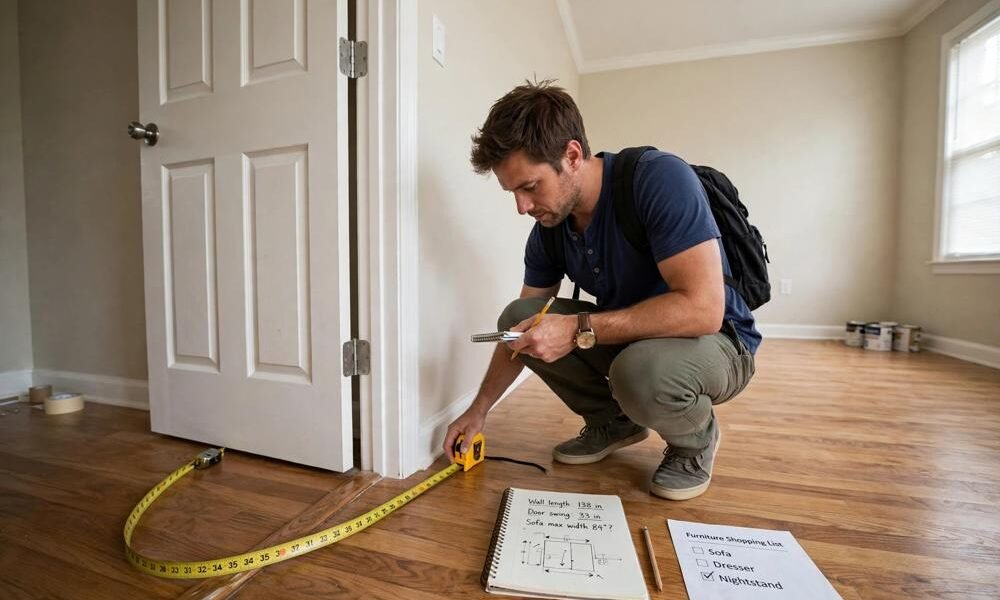
Before you fall in love with a bed frame or dresser, measure the room the way the furniture will actually use it. Wall length alone is not enough. You need to know where doors open, where drawers pull out, where outlets sit, and how deep baseboards and trim really are.
Start with the wall where the bed will go. Measure the full length, then subtract radiators, built in shelves, or door frames. Next, measure door swing: open bedroom, closet, and ensuite doors fully and mark how far each reaches into the room. A dresser in a door swing will block the door or get hit daily.
Then check drawer swing and chair pull out. A dresser needs room in front for drawers to open fully, usually at least 30 inches, plus room for you to stand and sort clothes. A desk chair needs pull out space behind it. A bedside table with a drawer needs a little extra room too.
Outlet position matters more than most people expect. Note where outlets sit, how high they are, and whether a bed, dresser, or wardrobe will cover them. If your phone charger, lamp, or alarm clock needs that outlet, plan for it now. The same goes for light switches, vents, and thermostats. Furniture should not block airflow or make a switch hard to reach.
Finally, measure baseboard depth and any window trim. A wardrobe that is meant to sit flush against a wall may tilt or leave a gap if thick baseboards push it forward. A headboard may not sit flat for the same reason. Small details like these change the usable depth of a piece by an inch or two, and in a small bedroom, an inch or two can matter.
Keep a simple room sketch on paper or on your phone, with wall lengths, door swings, outlet positions, and window locations marked, and compare every piece against it before you buy.
Idea 2: Use Size Tables by Room Size Instead of Guessing
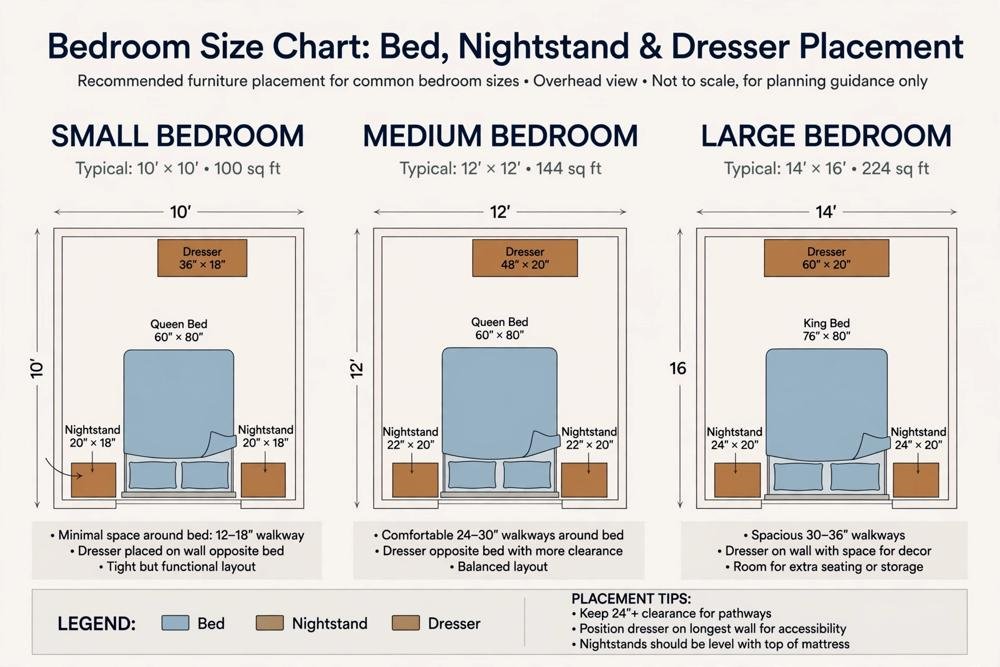
Furniture that works in a large primary bedroom can overwhelm a 10 by 10 room. That is why size tables by room size are so useful. They give you a starting point, and then you can adjust for your doors, windows, and storage needs.
For a small bedroom, roughly 10 by 10 feet to 11 by 12 feet, choose a queen bed only if you can still leave a usable walkway on at least two sides. A full bed is often the smarter choice if the room also needs a dresser and a desk. Nightstands should be slim, ideally 16 to 20 inches wide, and a tall chest usually works better than a wide dresser. A bench at the foot of the bed only works if you still have room to walk past it comfortably.
For a medium bedroom, roughly 12 by 14 feet, a queen bed with two nightstands becomes realistic. You can fit a six drawer dresser, provided it does not block a door or window. A reading chair may work in a corner, but only if it does not crowd the path to the closet or bathroom. This is also the size where a desk can fit without taking over the room, especially if you choose a slim or wall mounted desk.
For a larger bedroom, roughly 14 by 16 feet and larger, a king bed becomes practical. You can use wider nightstands, a full dresser, and a bench or chair without blocking flow. Even here, though, bigger is not always better. A very deep wardrobe or an oversized dresser can still make the room feel cramped if it is placed on the wrong wall.
Use these tables as a guide, not a rule. Two doors, a large window, or a sloped ceiling may mean sizing down, while one door and long clear walls may allow sizing up. Your own measurements finish the decision. For a complete room plan, read Small Bedroom Ideas: The Complete Guide to Layout, Storage, Light and Style.
Idea 3: Get Nightstand, Dresser, Chest, and Bench Heights and Depths Right
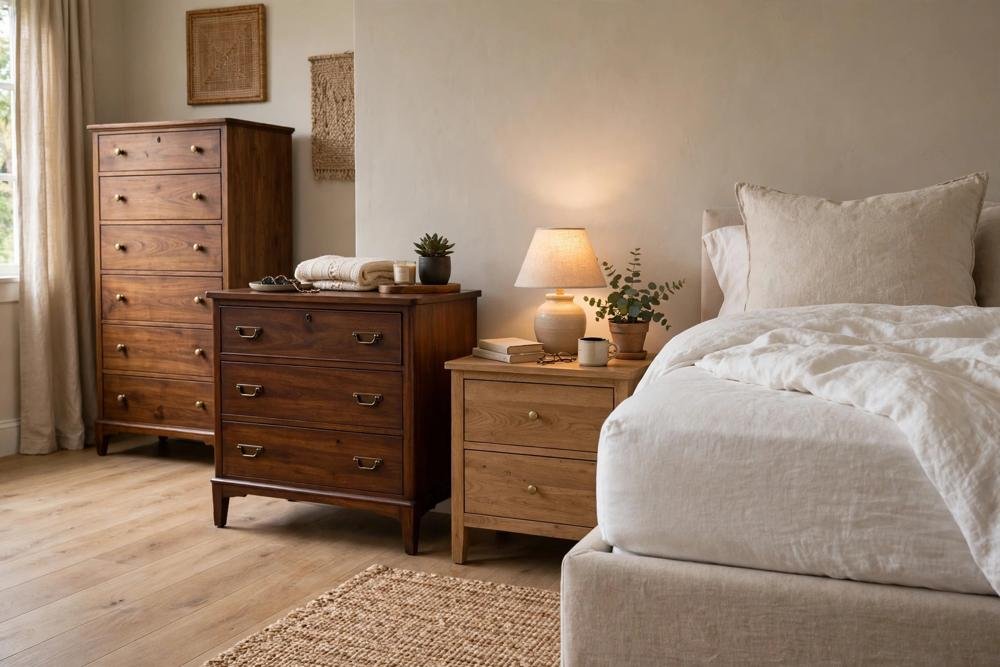
Nightstand height is one of the easiest details to get wrong, and one of the most annoying to live with. As a general rule, the top of your nightstand should sit within about two inches of the top of your mattress. If it is much lower, you will have to reach down for a glass of water or your phone. If it is much higher, it can look bulky and make the bed feel boxed in. Measure from the floor to the top of your mattress, including any mattress topper, before you shop.
Nightstand width matters too. In a small room, a 16 to 20 inch wide nightstand often works better than a wide 24 inch model, especially if you need two of them. A floating shelf or wall mounted nightstand can be a good alternative when floor space is tight. It gives you a surface for a lamp and a book without taking up floor area, and it makes cleaning underneath much easier.
Dresser depth is the next detail to check. Many dressers are 18 to 20 inches deep, which sounds small until you add drawer pull out space in front. In a narrow room, a shallower dresser, or a tall chest with a smaller footprint, can be a better fit. A tall chest, often 36 to 48 inches wide and 50 inches or more tall, uses vertical space instead of wall length. That makes it ideal for small bedrooms, provided you can reach the top drawers comfortably and the piece does not block a window.
A bench at the foot of the bed should be lower than the bed, or at most level with it, and narrower than the bed itself. Leave enough room to walk around it, and avoid a bench with a deep seat if the room is already tight. A storage bench can be useful, but only if you can open the lid fully without hitting the bed or a wall.
When you compare pieces, check height, width, and depth together against your room sketch. A dresser that is the right width but too deep, or a nightstand that is the right height but too wide, can still fail in your room.
Idea 4: Run a Footprint Audit for a Queen Bed Room
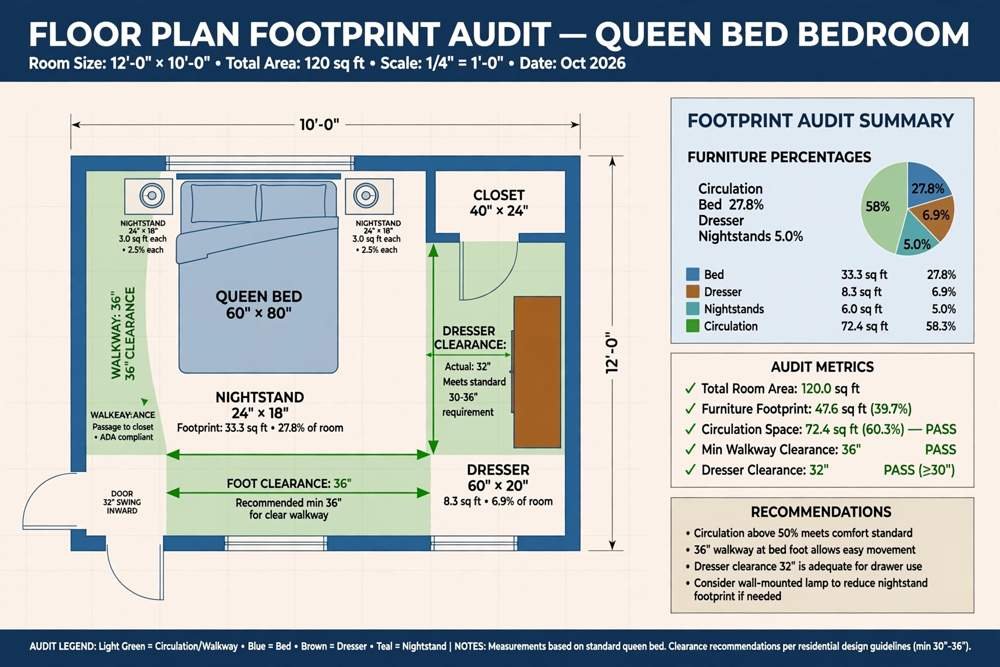
A footprint audit sounds technical, but it is simply a check of how much of your room your furniture will cover. For small rooms, a useful target is to keep furniture coverage at about 50 to 60 percent of the floor area or less. Above that, the room often starts to feel crowded, even if every piece individually fits.
Start with a queen bed, which is typically 60 by 80 inches. Add two nightstands, a dresser or chest, and any desk or chair you plan to include. Calculate the floor area of each piece by multiplying width by depth, then add them together. Divide that total by the total floor area of the room. That gives you a rough footprint percentage.
Here is a worked example. In a 10 by 12 foot room, the floor area is 120 square feet. A queen bed covers about 33 square feet. Two slim nightstands add about 4 square feet. A tall chest adds about 6 square feet. That total is about 43 square feet, or roughly 36 percent of the room, before walkways and door swings. That sounds comfortable, but walkways, drawer space, and door swings use the remaining space quickly. Add a desk and chair, and the usable space shrinks fast. Add a wide dresser instead of a tall chest, and the footprint jumps again.
That is why the audit matters. If a desk pushes the room over 60 percent, try a smaller or wall mounted desk, or a nightstand that doubles as a desk. If a wide dresser pushes you over, a tall chest may be smarter. Do the audit before you buy, not after delivery.
Walkways, Outlets, and Everyday Use
Aim for 24 to 30 inches of clear walkway on the sides of the bed where you get in and out. At the foot of the bed, leave enough room to walk past without turning sideways, even if there is a bench, dresser, or door there. Also check cleaning access: can you vacuum behind the bed, pull it out slightly, and open closet doors fully? Once the layout fits, check what size rug for a bedroom works with your bed and walkway clearances.
Good sizes on paper can still fail if outlets and lighting are in the wrong places. Before you buy, imagine your evening routine: where will you charge your phone, where will your lamp sit, and can you reach the light switch from bed? If a nightstand will cover an outlet, choose one with a cable cutout or move the bed slightly. If a wardrobe will block a vent, leave a gap or choose a different wall. A bedroom that works well fits your routine, not just your furniture.
What to Avoid
Avoid buying furniture based on room photos alone, without checking dimensions against your own room. Photos rarely show door swings, outlet positions, or walkway space.
Avoid a nightstand that is much higher or lower than your mattress. It may look fine in a store, but it will annoy you every day.
Avoid a dresser that is too deep for the wall it will sit on, especially if drawers need room to open fully. A dresser you cannot open fully is a dresser you cannot use properly.
Avoid filling more than about 60 percent of a small bedroom floor with furniture. A room that looks full in a photo can feel overwhelming in real life.
Avoid blocking doors, vents, light switches, and outlets with large pieces. Moving a piece later is much harder than planning for these details now.
Avoid buying a full matching set without checking each piece individually. A set may include a nightstand that is too wide, a dresser that is too deep, or a bench that blocks the walkway. Buy pieces that fit your room, even if they do not all come from the same collection.
FAQs
How much walkway space do I need around a bed?
Aim for 24 to 30 inches on the sides where you get in and out of bed. In a very small room, 24 inches can work, but less than that will feel tight daily. At the foot of the bed, leave enough room to walk past comfortably without turning sideways.
How tall should a nightstand be compared to the bed?
The top of the nightstand should be within about two inches of the top of your mattress. Measure to the top of the mattress, including any topper, before you shop. This makes it easy to reach a lamp, phone, or glass of water without stretching or reaching down.
Should I choose a dresser or a chest for a small bedroom?
A tall chest often works better in a small bedroom because it uses vertical space instead of wall length. A wide dresser needs more wall space and more room in front for drawers to open. Choose a chest if wall length is tight, and a dresser if you have a long clear wall and prefer lower, wider storage.
What is the best bed size for a small bedroom?
It depends on the room and what else must fit. A full bed often works better than a queen in a 10 by 10 room if you also need a dresser and desk. A queen can work in a 10 by 12 room if nightstands are slim and storage is vertical. Run a footprint audit before deciding, so you can see the trade offs clearly.
How do I measure a bedroom before buying furniture?
Measure wall lengths, door swings, drawer pull out space, outlet positions, and baseboard depth. Sketch the room with these details marked, and compare every furniture piece against that sketch. Also measure the path from the front door to the bedroom, including stairways and turns, so delivery can actually reach the room.
Can a queen bed fit in a 10 by 10 bedroom?
Yes, a queen bed can physically fit in a 10 by 10 room, but it will leave limited space for other furniture. Centred on a wall, it may leave only about 30 inches on each side, which makes two nightstands and a dresser difficult. A corner placement, slim nightstands, and a tall chest can help, but a full bed may be more comfortable overall in this size room.
Conclusion
Bedroom furniture sizes are not a minor detail. They decide whether your room feels calm or cramped, whether drawers open fully, and whether you can move, clean, and sleep comfortably. Measure first, check walkways and clearances, compare nightstand height to mattress height, and run a simple footprint audit before you buy.
Fit the furniture to your room and your routine, not just to a photo or a sale. A well measured bedroom will be the one you enjoy living in every day.