Introduction
A small teen bedroom has to do more work than almost any other room in the house. It is a bedroom, a study room, a place to relax, and often a place to see friends, all inside a space that may barely fit a bed and a wardrobe. The trick is not to buy more furniture. The trick is to give every square foot a clear job, and to make sure the study area does not take over the whole room.
Many teen bedrooms fail for the same reason: the desk ends up in a dark corner and books and chargers spread across every surface. A better plan starts with zones. Sleep, study, storage and relaxation each get a place, even if some of those places are small. When the zones are clear, the room feels calmer, tidying is faster, and studying has a proper start and finish point.
This guide shows how to plan a small teen bedroom with a study area that works in real life. You will find zone plans with measurements, desk options for different room sizes, storage ideas that do not crowd the floor, budget tiers, and a way to let your teen take ownership of the room so the plan actually gets used.
Key takeaways
- Start with a zone plan, not a shopping list.
- Choose the desk that fits the room, not the other way round.
- Build storage around the study zone, so it stays tidy.
- Let your teen choose the style, within the plan and budget.
Idea 1: Start With a Zone Plan, Not a Shopping List
The best small teen bedrooms are planned from the walls inward. Before you look at desks or storage boxes, sketch the room and mark the fixed points: the door, the window, the radiator or heater, plug sockets, and the wardrobe or closet door. Those fixed points decide where the bed and desk can go. Everything else follows from them.
A simple zone plan has four parts. The sleep zone is the bed and bedside storage. The study zone is the desk, chair and nearby shelves. The storage zone is the wardrobe, drawers and under bed space. The relax zone can be as small as a reading chair, a floor cushion, or simply the bed itself when it is made and clear. In a very small room, the relax zone may share space with the study zone, and that is fine, as long as the desk can be closed or cleared at the end of the day.
Measurements matter more than style here. A twin bed is about 38 inches wide by 75 inches long. A full bed is about 54 inches wide by 75 inches long. You need about 22 to 30 inches of clear space beside the bed to get in and out comfortably, and enough room to pull a chair out from the desk without hitting the bed. If the bed is pushed against one wall, you gain floor space, but you lose easy access on one side. That trade can work well for a teen who is happy to climb in from one side, especially if the wall side gets a long shelf for books and a phone.
Try the tape test before you buy anything. Use painter’s tape on the floor to mark the bed, desk and chair footprints. Walk the room, open the door fully, pull the chair out, and open drawers. If you keep bumping into the tape, the layout needs another version. This five minute test saves far more time than returning a desk that does not fit.

Idea 2: Choose the Desk That Fits the Room, Not the Other Way Round
There is no single best desk for a small teen bedroom. The right desk depends on the wall you have, the amount of homework and screen time, and whether the room also needs to feel like a bedroom at night.
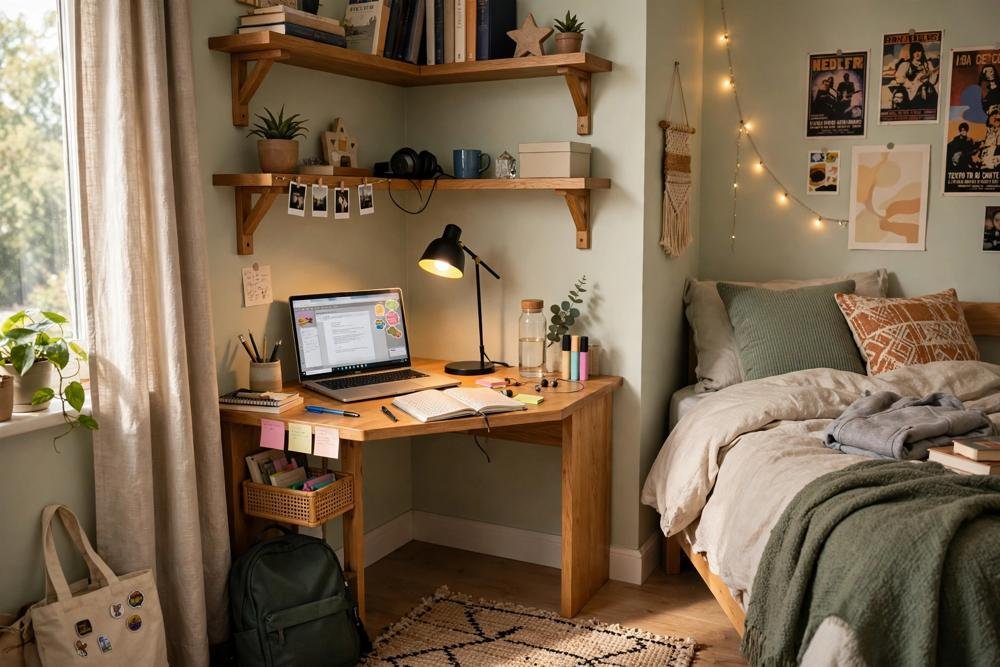
A wall mounted fold down desk is a strong choice for the smallest rooms. It folds flat against the wall when it is not in use, which frees the floor during the day and makes the room feel larger. It works best for a laptop, a notebook and a few books, rather than a large monitor and a printer. A corner desk uses a corner that is often wasted, and it gives a longer work surface without sticking far into the room. A loft bed with a desk underneath can work in a room with a high enough ceiling, but check the sitting height carefully and make sure there is safe, comfortable headroom above and below.
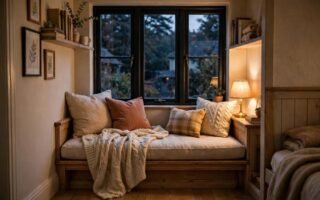
Another practical option is to make the desk do two jobs. A desk can replace a nightstand if it sits beside the bed, with a lamp that works for both reading in bed and working at the desk. A narrow console desk along a wall can hold a laptop during study time and act as a display shelf at other times. If the room has a closet that is not being used well, a cloffice, which is a closet turned into a small office, can hide the whole study zone behind doors at night. That last idea is especially helpful for teens who find it hard to switch off when homework is always in view.
Think about the chair footprint as well as the desk width. A chair needs room to slide back, and a bulky gaming chair can need far more space than a simple study chair. A chair with arms may not fit under a narrow desk, and a chair on castors needs a clear floor area. Measure the chair, not just the desk, and leave space for cables, a charger and a small bin nearby, so clutter has somewhere to go.
Idea 3: Build Storage Around the Study Zone
In a small teen bedroom, storage is what makes the study area usable. Without it, books pile on the desk, chargers tangle on the floor, and the room starts to feel messy even when it has just been tidied. The goal is to store study items close to the desk, and everyday clothes and personal items in a separate, easy system.
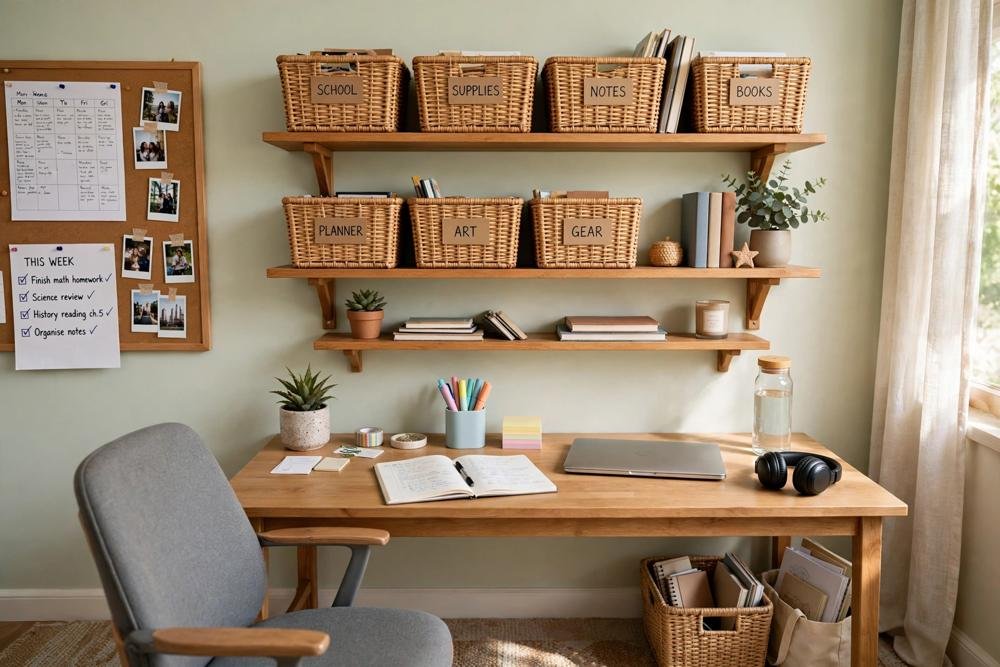
Wall storage is your best friend in a small room. Shelves above the desk keep textbooks and reference books within reach without using desk space. A pegboard or a small rail can hold headphones, cables and stationery in plain sight, which makes it easier to put things back. A magnetic board or pinboard above the desk gives a place for timetables, deadlines and reminders, so they do not end up stuck to the wall in random places or lost in a drawer.
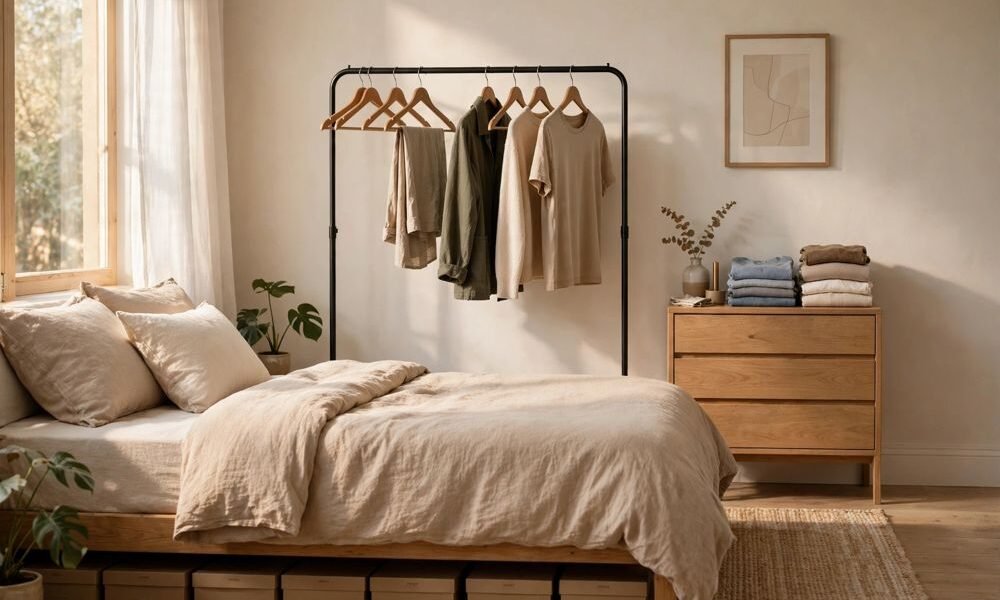
Under bed storage is useful for items that are not needed every day, such as spare bedding, seasonal clothes and old school files. Rolling bins work better than deep boxes, because you can pull them out without moving the bed. In the wardrobe, double hanging rails can double the hanging space for shorter items, and shelf dividers stop stacks of folded clothes from toppling. Small baskets labelled by subject or by use, such as school, sport and tech, make tidying a quick job rather than a weekend project.
One simple rule helps a lot: everything on the desk should have a home within one step of the desk. Pens go in a pot or drawer organiser, chargers go in a small tray, and finished homework goes in a folder, not in a pile. When the desk is clear at the end of study time, the room can switch back to being a bedroom, and the next study session starts faster.
Idea 4: Let Your Teen Choose the Style, Within the Plan
A study area only works if your teen actually uses it. That is why the teen ownership plan matters as much as the measurements. Teens are far more likely to keep a room tidy, sit at the desk, and respect the zones if they helped choose them.
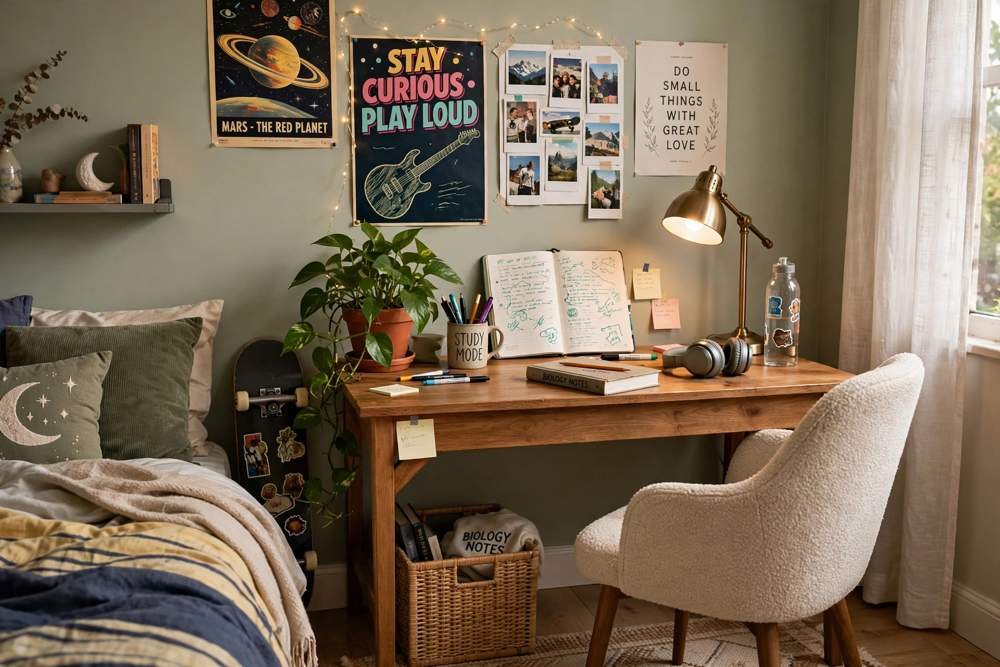
Start by agreeing on the fixed parts together: the bed position, the desk position, and the storage system. Then let your teen choose the flexible parts: the accent colour, the desk style, the shelf layout, the bedding, and the wall art. This balance keeps the room practical while giving your teen real control. A teen who picks a deep green accent wall, a warm wood desk, or a simple black and white scheme will feel that the room is theirs, not just a room that was arranged for them.
Personal touches do not need to be expensive or permanent. Posters in frames, a favourite photo ledge, a small plant, and a throw or cushion in a chosen colour can change the feel of a room without changing the layout. If you rent, use removable hooks, leaning frames, and freestanding shelves so the room can be changed back easily. The aim is a room that reflects your teen, but still has clear surfaces, good light, and a desk that is ready to use.
It also helps to agree on a simple daily routine. Five minutes at the end of homework to clear the desk, put books back on the shelf, and plug in devices in one place keeps the room from sliding back into clutter. That routine is much easier to stick to when the storage is close by and the teen helped design it.
Budget Tiers: Refresh, Makeover, and Full Update
You do not need to spend a lot to improve a small teen bedroom with a study area. It helps to think in tiers and to spend first on the things that change how the room works.
A refresh, roughly 300 to 700 dollars, can cover a wall mounted desk or a simple desk, a study chair, a desk lamp, wall shelves, and storage baskets. Paint one accent wall if you can, and swap bedding and curtains to freshen the room. This tier works well when the bed and wardrobe are already in good shape.
A makeover, roughly 800 to 2500 dollars, can add a better desk, a loft bed or a new bed frame, a wardrobe organiser, a rug, and improved lighting. This is the right tier if the current furniture is the wrong size, if storage is failing, or if your teen has outgrown a childhood room. Spend the largest share on the desk and chair, because those affect comfort every school day.
What to Avoid
Avoid buying a large desk first and then trying to fit the room around it. Measure the wall, the chair space, and the door swing first. Avoid a desk that faces a blank wall in a dark corner if another wall has better light and a plug socket nearby. Avoid filling every wall with shelves, because a room with no breathing space feels smaller and harder to tidy.
Avoid a matching furniture set that is too large for the room. A tall wardrobe, a wide dresser, a large desk and a full bed can quickly use up all the floor space. Choose slimmer pieces, use height for storage, and leave at least one clear wall or floor area. Avoid storing everything on the desk. If the desk holds clothes, games, chargers and school books, it is not a study desk, it is a dumping ground. Give each group its own home.
FAQs
How do I fit a desk in a small teen bedroom?
Start with the wall you have, not the desk you want. Measure the wall length, the chair pull out space, and the distance to the bed and door. A wall mounted fold down desk, a corner desk, or a desk that replaces a nightstand often fits where a standard desk will not. Test the footprint with tape on the floor before you buy.
What furniture does a teen bedroom need?
The essentials are a comfortable bed, a desk and chair that fit the room, storage for clothes and school items, good lighting, and a place to charge devices. Everything else, such as a reading chair, a dressing table, or extra seating, is optional and should only be added if there is clear space left after the essentials are in place.
How can I update a teen bedroom on a budget?
Start with layout and lighting, then storage. Move the desk to the best light, add wall shelves, clear the desk surface, and use baskets and drawer organisers. A refresh with paint, bedding, and a desk lamp can change the room a lot without new large furniture. Spend first on the desk and chair if your teen studies at home every day.
Should a teen study desk face the wall or the window?
Side on to the window is often best, because it gives natural light without direct screen glare or a shadow over the work. Facing a wall can help focus, especially if the wall has a pinboard and shelves, but it needs a good desk lamp. Facing directly into bright sun is usually the worst option for screen work.
How do I keep a small teen bedroom tidy?
Give everything a home close to where it is used, use wall storage for books and stationery, and keep the desk clear at the end of each study session. A five minute tidy routine, plus labelled baskets for school, sport and tech items, works better than a large clear out once a month.
Conclusion
A small teen bedroom with a study area works when the room has a clear plan, a desk that fits the space, storage close to the desk, and a style your teen has helped choose. Start with zones and measurements, choose the desk for the wall you actually have, build storage upward and under the bed, and keep the desk clear so study time has a proper beginning and end.
Plan the zones first, test them with tape on the floor, and let your teen make the final choices that turn a practical room into their room. For the bigger picture, see Small Bedroom Ideas: The Complete Guide to Layout, Storage, Light and Style. If the room is shared, these shared kids bedroom layout ideas for siblings show how to give each teen a fair sleep, study, and storage zone.