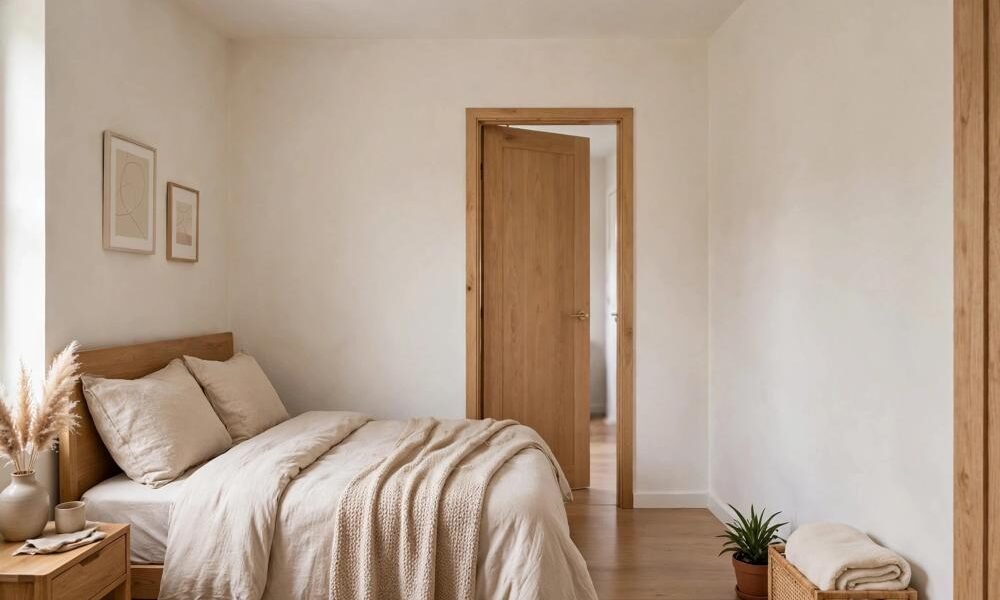
A door in the middle of the wall is the hardest layout in a small bedroom. It splits the wall in two, it eats a swing arc in the middle of the room, and it leaves no long uninterrupted wall for a bed and a wardrobe together. The room can still work well, but only if you plan around the door first, not around the bed.
This guide starts with the door, then gives four bed placements that work, plus storage that stays out of the swing, and a simple test you can do with tape before you move anything heavy.
Key takeaways: measure the door swing arc and keep it completely clear; put the bed on a side wall, not facing the door, in most small rooms; use shallow storage beside the door, never tall storage in the swing; and keep at least 60 centimetres of walkway from door to bed.
Idea 1: Bed on a Side Wall, Door Swing Clear
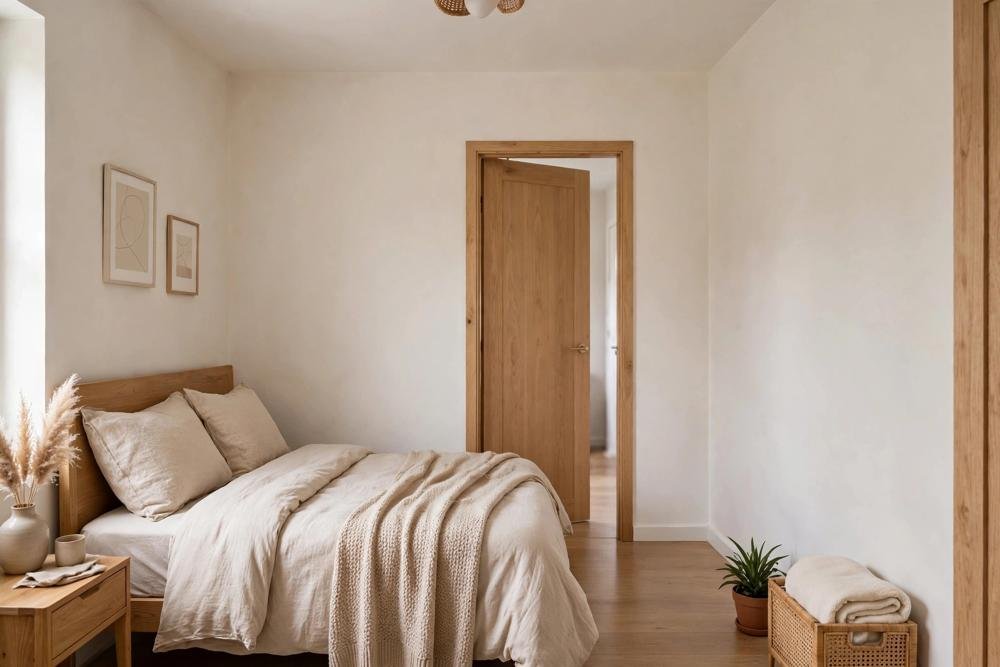
In most small rooms with a middle door, the best bed wall is a side wall, not the door wall and not the wall opposite the door. A side wall gives the bed a solid headboard wall, leaves the door wall for shallow storage, and keeps the walkway from door to bed straight and short.
Measure the door swing first. Open the door fully and mark the arc on the floor with tape. That whole arc must stay clear: no bed corner, no wardrobe door, no tall plant, no shoe rack. A bed that sits in the swing will get hit every time someone enters, and a wardrobe in the swing cannot be opened when the door is open. If the door opens into the room, the arc is usually 75 to 90 centimetres deep. If it opens out into a hallway, you gain that space back, but check that the hallway stays clear.
Place the bed with its headboard on the side wall, and its long side facing the room, not facing the door. That usually leaves a walkway on the door side and a narrow bedside shelf on the wall side. If the room is wide enough for a walkway on both sides, use it. If not, keep the main walkway on the door side, and use a wall shelf on the other side for a phone and water.
Keep the view from the door calm. When you open the door, you should see the side of the bed and a clear floor, not the foot of the bed blocking the path, and not a pile of storage. A rug that starts at the bed and stops before the door arc will define the sleeping zone without tripping anyone.
Idea 2: Bed Opposite the Door, With a Clear Path
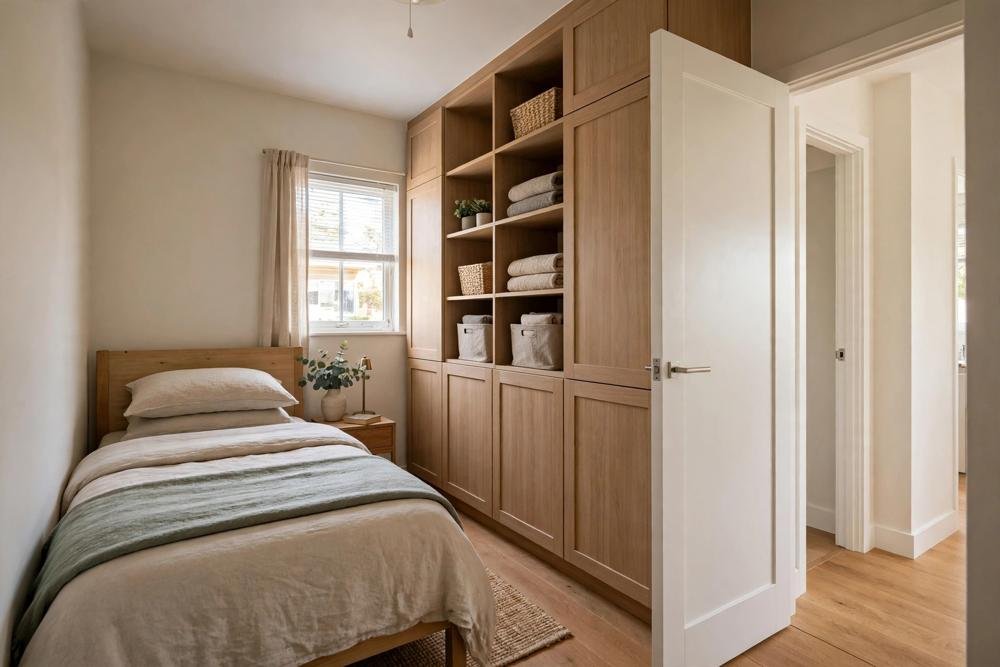
If the side walls are too short for a bed, the wall opposite the door can work, but only if the path stays clear. Put the bed centred or slightly to one side on the opposite wall, with its headboard on that wall, and keep a straight path from the door to the side of the bed, not to the foot.
This layout works best when the room is longer than it is wide, and the door is in the middle of a short wall. The bed gets the longest wall, the door path is straight, and storage can go on a side wall. It fails when the bed is so wide that it leaves less than 60 centimetres on either side, because then getting into bed means climbing over the foot or squeezing past a wardrobe.
Use a low headboard and low bedding in this layout, because the bed is the first thing you see when you enter. A tall headboard and a pile of pillows will make the room feel blocked. Keep bedside tables narrow, and use wall lamps instead of tall table lamps, so the sides stay clear.
If the opposite wall has a window, this layout becomes a bed-under-window layout as well. That can work, with a low headboard below the sill and blackout curtains for sleep, but do not combine a middle door, a window bed and a tall wardrobe in one small room. Choose two of the three, and keep the third simple.
Idea 3: Storage Beside the Door, Never in the Swing
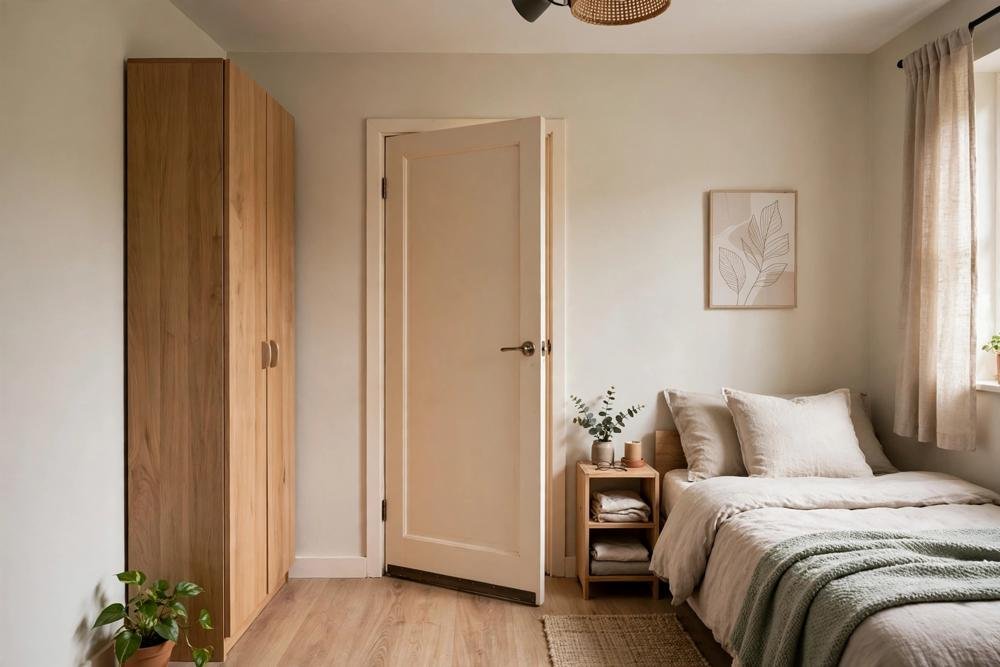
Storage beside a middle door must be shallow, narrow and fixed, not deep and swinging. A narrow wardrobe, a tall narrow shelf, or a row of hooks on the wall beside the door can use the space without blocking the swing, as long as it stays outside the taped arc.
Measure the space beside the door on both sides. In many rooms, one side is wider than the other, because the door is not perfectly centred. Use the wider side for a narrow wardrobe, 45 to 60 centimetres deep, and the narrower side for hooks, a shallow shelf, or nothing at all. Do not put a wardrobe with swinging doors in the swing arc, because its doors will hit the room door. Use sliding doors, open shelves, or a curtain instead.
Use the wall above the door for storage only if you can reach it safely and it does not block light or air. A shelf above the door for seasonal items, suitcases or spare bedding can work, but keep it shallow and keep the items light. Do not put heavy boxes above a door that you open every day.
Keep daily storage near the bed, not beside the door. Daily clothes, shoes and bags should be within two steps of the bed, so you are not crossing the door path every morning. Seasonal storage can go beside the door, high up, or under the bed, because you reach it less often.
Idea 4: Zones, Rugs and Light to Fix the Split Room

A middle door splits a room visually as well as physically. Use zones to put it back together: a sleeping zone around the bed, a dressing zone near storage, and a clear entry zone inside the door. Each zone should be clear, even if it is small, and no zone should overlap the door swing.
Use a rug to define the sleeping zone. A rug that runs under the bed and extends past the sides, but stops before the door arc, will make the bed feel like a room within the room. Use a different light for each zone: a warm bedside lamp for sleeping, a brighter light near storage for dressing, and a soft light near the door for entry. That way the room does not feel like one flat space with a door in the middle.
Use colour to calm the split. Keep walls in one pale warm colour, bedding in one calm palette, and storage in a matching finish, so the eye does not stop at every change. Use art on the wall opposite the bed, not on the door wall, because art on the door wall competes with the door itself.
For privacy, use a door that closes fully, a draft strip that does not block the swing, and a rug that absorbs sound near the door. Do not use a curtain over the door to create privacy, because it will tangle in the swing and block light and air. If the room is shared, agree on a door rule: knock, wait, and keep the entry zone clear, because a middle door means everyone passes through the sleeping zone.
What to Avoid
Do not put the bed in the door swing, even if it fits when the door is closed. Do not put a tall wardrobe, a desk or a tall plant in the swing arc. Do not use a door that opens into the room and a wardrobe with swinging doors on the same wall, because one will always block the other. Do not block the path from door to bed with a rug edge, a box, or a shoe rack that trips you at night. Do not change the door swing without checking the hallway, the hinges and the frame, and do not remove a door entirely without thinking about privacy, sound and heating.
FAQs
Where should the bed go if the door is in the middle of the wall?
In most small rooms, on a side wall, with the door swing completely clear. If the side walls are too short, the wall opposite the door can work, with a straight clear path from door to bedside.
Can I change which way the door opens?
Often yes, if the frame and hallway allow it. A door that opens out into a hallway can free the whole swing arc inside the room, but it must not block the hallway or another door. Check hinges, frame and hallway width before changing it, and get help if the frame needs work.
How much space does a door swing need?
A standard internal door is about 75 to 80 centimetres wide, and its swing arc is about the same depth. Keep that whole arc clear, plus a small margin, and do not put furniture, rugs or storage in it.
What storage works beside a middle door?
Shallow, narrow storage outside the swing: a narrow wardrobe with sliding doors or a curtain, open shelves, hooks, or a tall narrow shelf on the wider side of the door. Avoid deep wardrobes with swinging doors in the arc.
Should the bed face the door?
Not usually in a small room with a middle door. Facing the door puts the foot of the bed in the path and makes the room feel blocked. A side wall placement, with a clear path to the bedside, usually feels calmer and safer.
How do I make a middle-door bedroom feel less split?
Use zones with a rug and different lights, keep walls and bedding in one calm palette, put art opposite the bed, and keep the entry zone clear. The door will still be in the middle, but the room will read as one room, not two halves.
Conclusion
A door in the middle of the wall is not a reason to give up on a small bedroom. Measure the swing, keep it clear, put the bed on a side wall where possible, use shallow storage beside the door, and define zones with a rug and light. Test the layout with tape for a day before you move heavy furniture, and adjust the bedside and storage before you buy anything new. Done that way, the door becomes an entry, not an obstacle, and the room works for sleeping, dressing and getting in and out without a daily struggle.