Introduction
A small guest bedroom does not need more furniture. It needs a better checklist. When a room is short on space, every missing essential is noticed straight away, and every extra piece of furniture gets in the way. Guests do not judge a small room by its size. They judge it by whether they slept well, found what they needed without asking, and had room to move around with a suitcase open.
This guide is a working checklist, not a gallery of bedroom styles. It is built around sleep first, then bedside needs, storage, comfort, welcome touches, and a final check before guests arrive. Each section includes a small room version, because a checklist that only works in a large spare room is not much help when the room is tight. Use it in order, starting with the bed, and finish with a short walk through the room as if you were the guest. For the bigger picture on layout, storage, light, and style, see Small Bedroom Ideas: The Complete Guide to Layout, Storage, Light and Style.
Key takeaways
- Sleep comes first: a comfortable bed, good pillows, and a dark, quiet room matter more than decor.
- Give guests a bedside that works in the dark: light, water, charging, and a place for glasses or a book.
- Storage should not block the room: a small rack, hooks, and a clear surface beat a large wardrobe.
- Finish with welcome touches that do not clutter: fresh towels, a blanket, and a short note with Wi-Fi and house basics.
Idea 1: Start With a Bed That Helps Guests Sleep
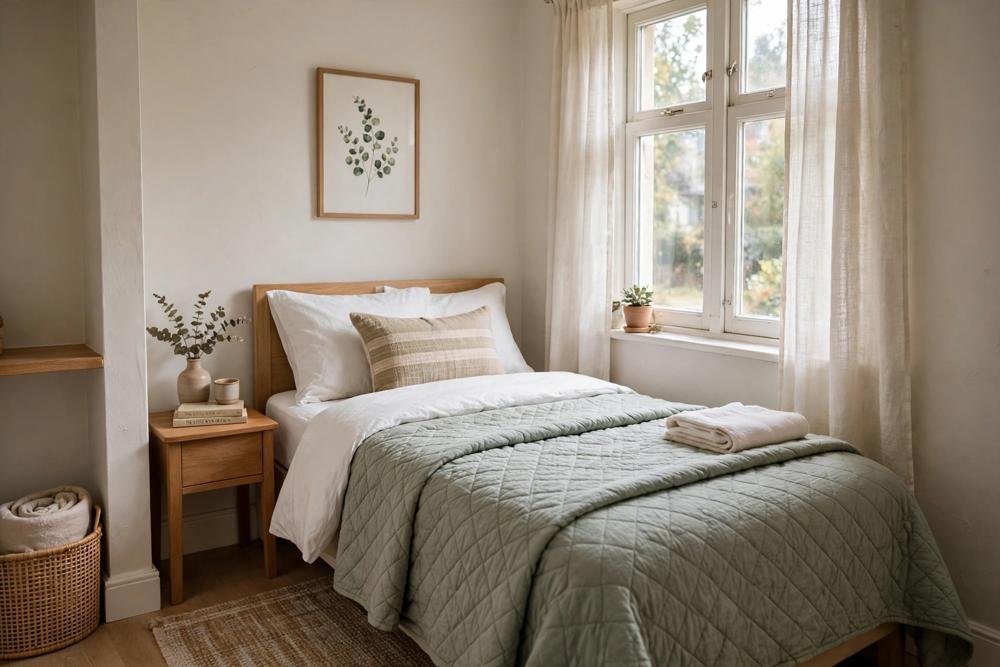
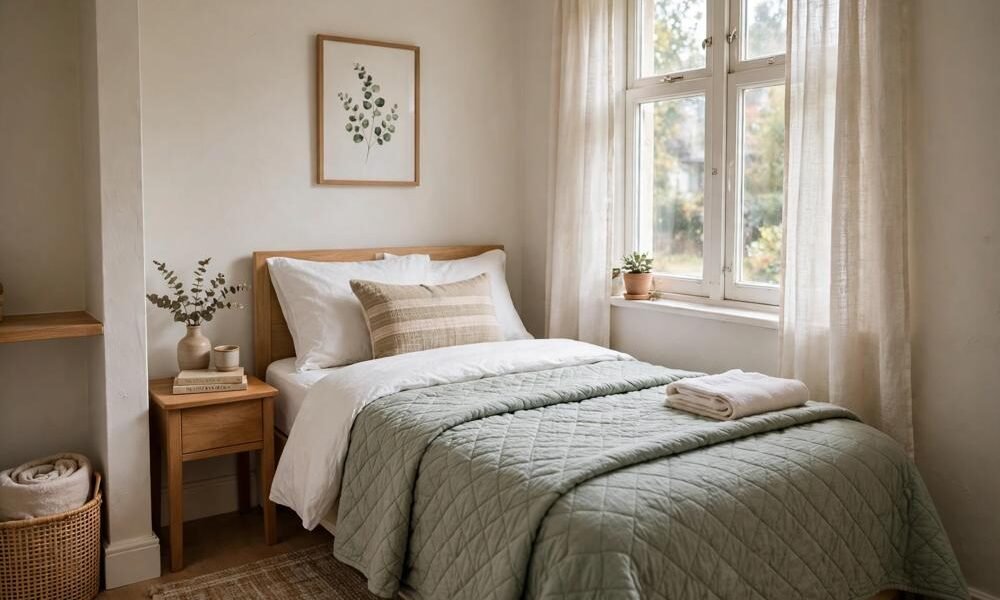
The bed is the most important item in a small guest bedroom. A comfortable mattress matters more than a matching bedroom set, a decorative chair, or a large piece of wall art. If the mattress is sagging or lumpy, guests will remember that long after they forget the colour of the walls.
Choose a medium firm mattress if you can, because it suits the widest range of sleepers. Add a mattress protector to keep it clean and fresh between visits. If the mattress is older but still usable, a good quality topper can improve comfort without replacing the whole bed.
Bedding should be clean, fresh, and simple. Use a fitted sheet and a duvet or quilt that suits the season, with an extra blanket at the foot for guests who sleep cold.
Pillows need a clear plan. Provide two sleeping pillows per guest, one medium and one firmer, so guests can choose. A decorative pillow is fine, but it should not take up half the bed or end up on the floor. In a small room, floor space is too valuable for spare pillows.
Check the bed position as well. Guests need room to get in and out on at least one side without squeezing past furniture.
Idea 2: Set Up a Bedside That Works in the Dark
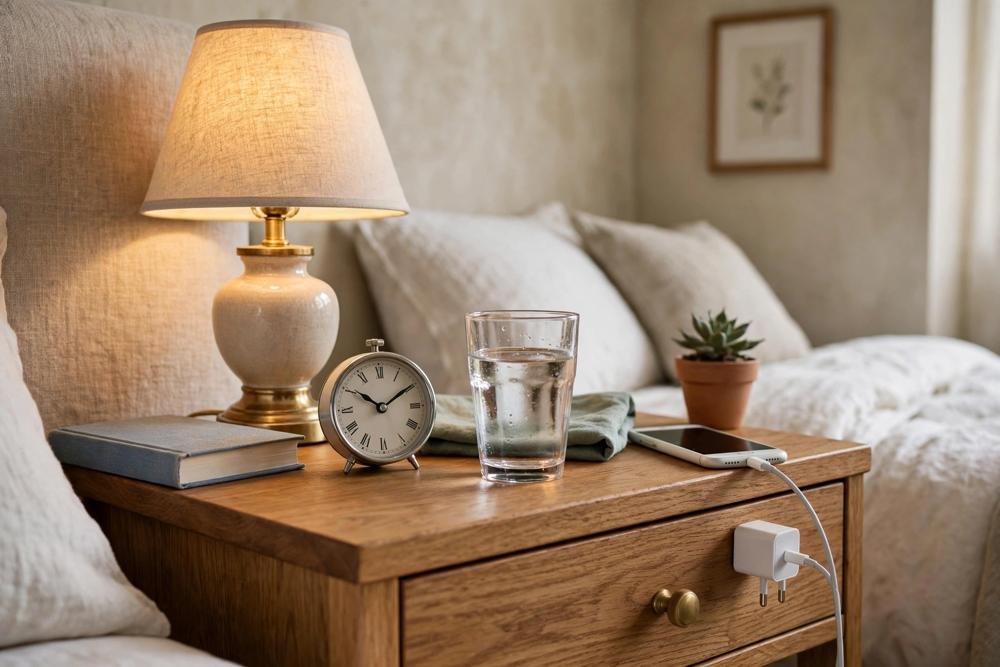
The bedside is where guests reach in the dark, so it should be useful before it is decorative. A small bedside table, a floating shelf, or a narrow stool can all work. The surface does not need to be large. It needs to hold the few things a guest actually uses at night.
Start with light. A bedside lamp with a warm bulb lets guests read or find their way without switching on a bright overhead light. The switch should be easy to reach from the bed. Guests should not need to stand up to turn the light off.
Add a glass of water, or at least an empty glass and a small carafe if the room is away from the kitchen. A phone charger is now an essential, not a luxury. A long charging cable or a multi plug charger covers different phones and avoids guests searching behind furniture for a socket. If the nearest socket is far from the bed, a short extension lead kept neatly behind the table can solve the problem, but keep cables tidy and out of the walking path.
A small clock, tissue box, small bin, and space for a book or glasses complete the setup. Keep the surface clear for a guest’s phone, watch, and water bottle.
In a small room, a wall mounted shelf can replace a full bedside table and keep the floor clear.
Idea 3: Give Guests Storage Without Blocking the Room

Storage is often where small guest bedrooms fail. Guests arrive with a suitcase, clothes, toiletries, and shoes, but the room may have no closet, no empty drawer, and no clear place to unpack. The answer is not a large wardrobe that blocks the door. It is a small set of clear storage spots that guests can understand at a glance.
Start with a place for the suitcase. A folding luggage rack, a low bench, or a clear section of floor near the wall works well. If there is no room for a luggage rack, leave one clear wall area where a suitcase can stand open without blocking the door or the bed.
Next, provide hanging space if possible. A few empty hangers on a wall rail, a small freestanding rack, or a clear section of a closet rail is enough for a short stay. If the room has a small closet, clear at least part of it before guests arrive. A closet full of household storage sends a clear message that guests are not really expected to unpack.
Drawers help, but only if they are empty. One empty drawer is more useful than a chest of drawers filled with old bedding and spare cables. If drawer space is limited, a small shelf with folded towels and a basket for personal items can work just as well.
Towels deserve their own spot. Place clean towels on the bed or a shelf where guests can find them straight away, with a hand towel and a bath towel per guest. A small tray near the door keeps shoes tidy.
Idea 4: Add Comfort and Welcome Touches That Do Not Clutter the Room
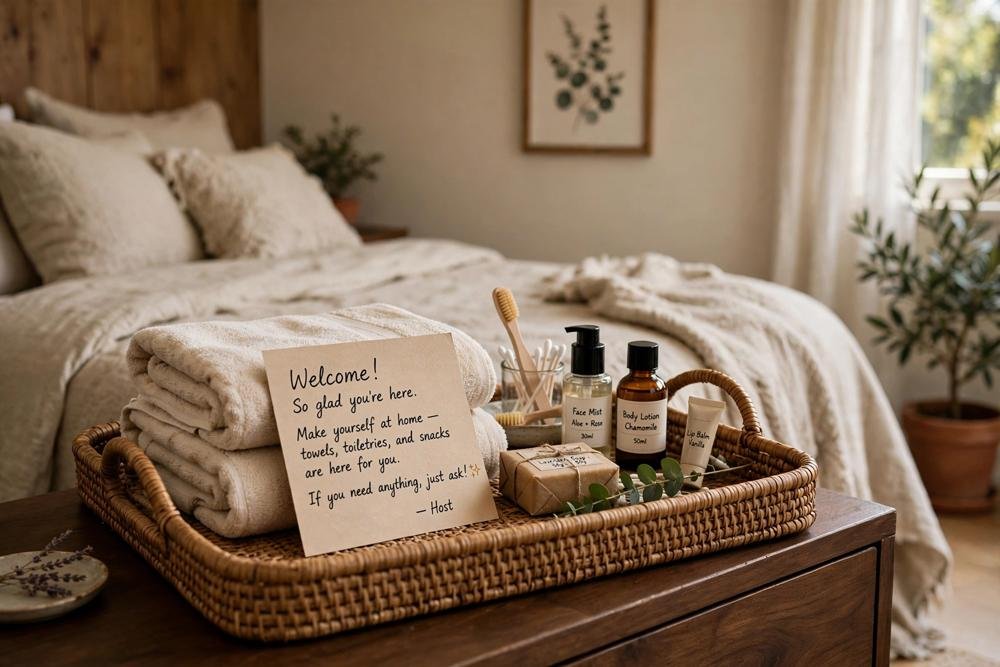
Welcome touches make a small guest bedroom feel thoughtful, but they should never take over the room. The best welcome details are useful, small, and easy to move. A welcome tray on the bed or on a dresser can hold a short note, the WiFi password, a few toiletries, and a small snack. Guests can read it in a minute and then put the tray aside.
Comfort starts with temperature and light control. Guests should be able to close the curtains or blinds fully at night and open them easily in the morning. Blackout curtains or a good blind help guests who sleep late or arrive tired. A spare blanket covers different temperature preferences without changing the whole bedding setup.
Fresh air and scent matter in a small room. Open the window before guests arrive, change the bedding, and remove any musty smell from stored blankets. A small healthy plant can freshen a room if it is placed where it will not be knocked over. Avoid strong air fresheners, because guests may be sensitive to scent. Clean air is better than perfumed air.
A mirror on the back of the door or a clear wall section is practical if guests get ready in the bedroom, and a door that closes properly helps guests feel at ease.
Sleep First Ordering: What to Fix Before Anything Else
When time is short, work in sleep first order. Fix the bed, then the light, then the temperature, then the storage, and only then the decoration. Many hosts do the opposite. They buy new cushions and wall art, but leave a thin pillow, a broken lamp, or curtains that let in street light all night.
Ask a simple question for each item: will this help a guest sleep, get ready, or move around the room? If the answer is no, it can wait. A small guest bedroom does not need to look complete in a photograph. It needs to work for one or two nights. Sleep first ordering also helps with budgeting. A mattress topper, two good pillows, and a working lamp improve a stay more than a new rug.
What to Skip in a Small Guest Room
Small rooms punish extra furniture. Skip the extra chair unless guests have a clear place to sit and the chair does not block the door or the suitcase area. Skip a large wardrobe if it leaves only a narrow path around the bed. Skip a matching bedroom set if a smaller dresser or a wall shelf would leave more floor space.
Skip extra decor that takes up the only clear surfaces. Guests need bedside space, a place to charge a phone, and a place to put a glass of water. A tray of ornaments, a stack of books no one will read, or five decorative pillows all compete with those needs. Skip anything that makes the room harder to clean or reset. A complicated bedding arrangement with many layers and cushions takes time to remake and often ends up on the floor. A simple, clean setup is easier to maintain and more comfortable to sleep in.
Skip personal storage in the guest room. Clear a visible section before guests arrive.
The Sleep One Night Test
The best way to finish this checklist is to sleep in the room yourself for one night. Lie in the bed and check the pillows. Reach for the lamp in the dark. Try to charge a phone. Open the curtains in the morning. Walk to the door with a suitcase in mind.
Notice small things: draughts, a sticking door, heat with the door closed, light gaps in curtains, and whether towels and shoe space are easy to find. Keep a short list of fixes with this checklist.
Final Check Before Guests Arrive
Check the bed, bedside, storage, comfort, and welcome details in that order. Bedding should be clean, the lamp and charger should work, one drawer or shelf should be empty, towels should be visible, curtains should close fully, and WiFi details should be written down. Walk out and look back: the room should feel calm, with a clear path to the bed and space for a suitcase.
What to Avoid
Avoid leaving the room half prepared. A bed made with old bedding, a lamp with no bulb, or a closet full of household items tells guests the visit was an afterthought. Small rooms do not hide these details. They make them more obvious. Avoid overfilling the room to make it look generous. More furniture does not mean more comfort in a small space. It usually means less room to move and more things to bump into at night. Avoid strong scents, noisy decor, and anything that needs instructions. Guests should not need a guide to use the lamp, open the curtains, or find a towel. Avoid assuming guests will ask for what they need. Many guests will not ask, even if they are uncomfortable. A good checklist removes the need to ask.
FAQs
What are the absolute essentials for a small guest bedroom?
The essentials are a comfortable bed with clean bedding, two pillows per guest, a working bedside lamp, a phone charger, towels, a place for a suitcase, and a clear path around the bed. Add curtains that close fully, a glass of water, and WiFi details.
How many pillows should I provide for each guest?
Provide two sleeping pillows per guest, one medium and one firmer. Keep decorative pillows to a minimum, because guests need sleeping space more than a styled arrangement.
What should I put in a guest room without a closet?
Provide a folding luggage rack or clear floor area, a few empty hangers, one empty drawer or shelf, and visible towels. Make each spot empty before guests arrive.
How can I make a small guest bedroom feel less cramped?
Keep the floor clear, use light bedding and curtains, and choose furniture that fits the room. A wall shelf can replace a large table, and a folding luggage rack can be put away when not in use.
Should a small guest bedroom have a desk or a chair?
Only if there is room without blocking the bed, door, or suitcase area. A small desk can help longer stays, but not at the cost of sleeping comfort. A narrow wall shelf can serve as a writing surface.
How do I prepare a small guest bedroom the night before guests arrive?
Start with the bed, then bedside, storage, and welcome touches. Change bedding, check lamp and charger, clear a drawer or shelf, place visible towels, and write down WiFi details. Walk the room as a guest and clear space for a suitcase.
Conclusion
A small guest bedroom works when it is planned around real nights, not around how it looks in a photograph. Start with sleep, keep the bedside useful, give guests clear storage, and finish with a short final check. Skip furniture and decor that block movement or take up the only clear surfaces. Test the room by sleeping in it once, and fix the small problems that test reveals. Guests will not remember whether the room was large. They will remember whether they slept well, found a towel without asking, charged their phone easily, and had room to unpack. A small room, prepared well, can feel more welcoming than a large room that was only half prepared.