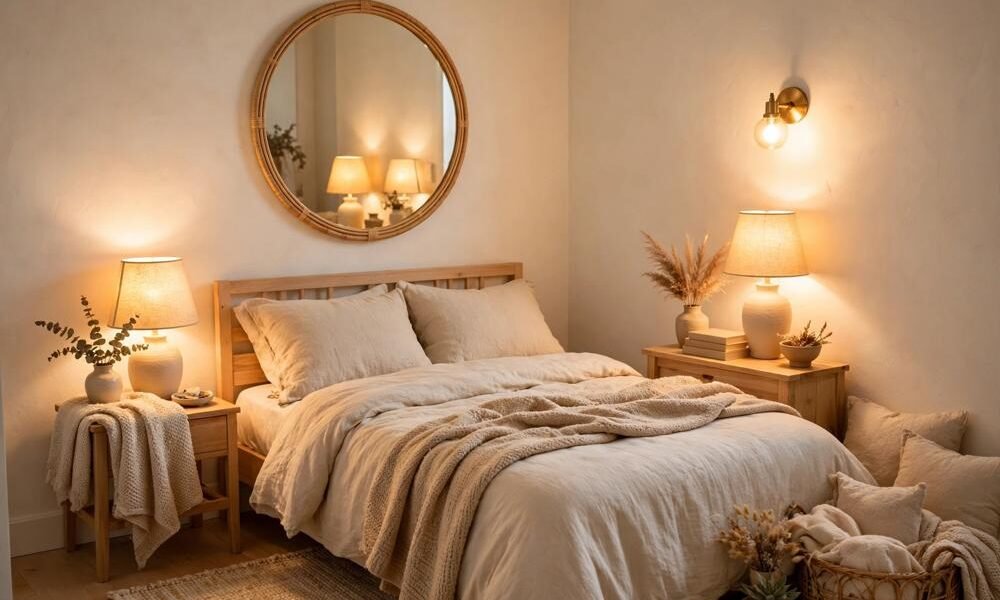
A small bedroom with no window can feel like a cupboard, but it does not have to. The problem is rarely size alone. It is flat light, dark corners, stale air and the feeling that you never know what time it is. Fix those four things in order, and a windowless room can feel calm, bright and easy to sleep in.
This guide is for rooms that truly have no window, not rooms with a small window. It covers light first, then colour and mirrors, then air and freshness, then sleep routines. It also covers the safety point that matters most in a windowless room: keep the door and escape route clear, and do not block ventilation.
Key takeaways: use three layers of light, not one ceiling light; keep walls and bedding pale and warm, not stark white; use one large mirror, not many small ones; improve airflow every day, even without a window; and use a wake-up light or a fixed routine so mornings do not feel like night.
Idea 1: Layer Light Like a Window Would
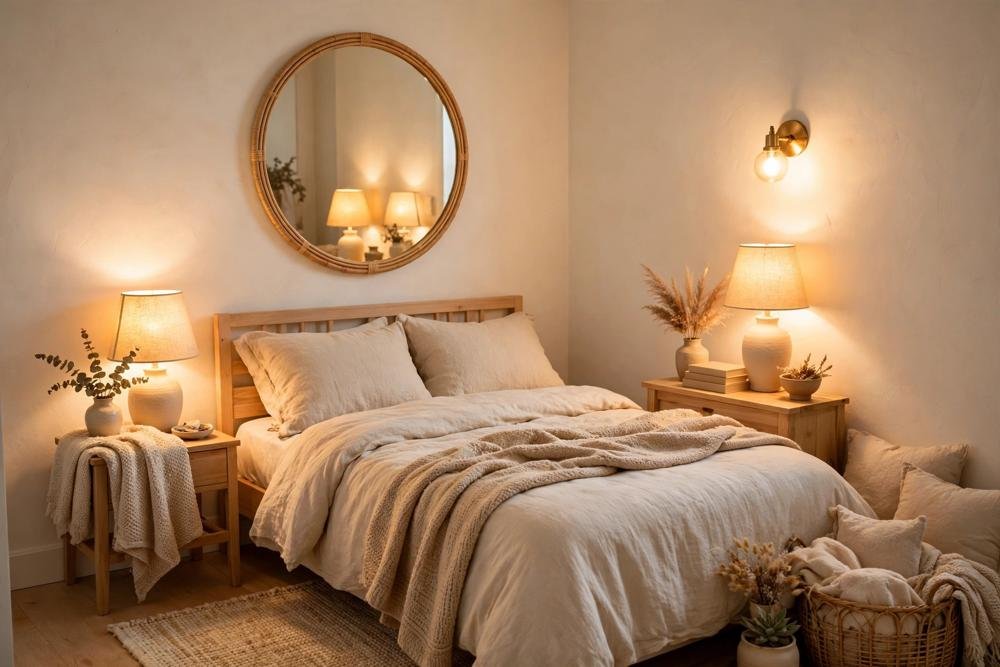
A window gives you three kinds of light at once: general daylight, bright patches, and soft reflected light. A single ceiling light gives you only one, and it usually creates shadows in the corners. In a windowless room, you need to build those layers yourself.
Start with a soft general light. A dimmable ceiling light, or a wall-washing light that bounces off the ceiling, is better than a harsh bare bulb. Aim for warm white, around 2700K to 3000K, for evenings, and a brighter, cooler light, around 4000K, for getting dressed in the morning if you have a switchable bulb. Do not use a single very bright light all day, because it will feel clinical and make the room feel smaller.
Add task light next. A bedside lamp for reading, a small lamp or strip light near a wardrobe or desk, and a light inside a closet if the closet is dark. Each task light should light only its own area, so you are not lighting the whole room to read one page. Use lamps with shades that spread light sideways and upwards, not just downwards, because reflected light is what makes a room feel larger.
Add a third layer for atmosphere. A small warm lamp on a shelf, a light behind a headboard, or a string of warm lights along a shelf can soften the room in the evening. Keep this layer dim and warm, and turn it off for sleep. The goal is not more light, it is light in more places, so no corner stays dark.
For mornings, a wake-up light that brightens slowly can help a lot in a windowless room. It does not replace daylight, but it gives your body a morning signal. Set it for the same time each day, and open the bedroom door to brighter hallway light when you wake, so the contrast is clear.
Idea 2: Pale Warm Colour and One Large Mirror

Colour in a windowless room should be pale, warm and consistent. Stark white can look grey without daylight, and dark colours will shrink the room fast. Choose warm white, pale beige, soft greige or a very pale warm grey for walls, and keep bedding in the same family, with one texture contrast, such as linen or waffle, to stop the room looking flat.
Keep the ceiling white or a shade lighter than the walls, and keep the floor light if you can. A pale rug, light bedding and light curtains are not relevant here, so use light throws, light art frames and light furniture instead. If the furniture is dark, lighten the room with pale bedding, a pale rug and pale art, rather than repainting everything at once.
Mirrors help, but only if they reflect light, not clutter. One large mirror, leaning against a wall or fixed opposite a lamp, will bounce light around the room and make the wall feel further away. Place it where it reflects a lamp or a light wall, not where it reflects a wardrobe door or a pile of clothes. Many small mirrors break the room into pieces and make it feel busy, so one large mirror is usually better than a gallery of small ones.
Art should be light and simple. One large pale print, a landscape with sky, or a light abstract will open the wall. Avoid dark, heavy frames and dark art in a windowless room, because they create dark patches that the eye reads as corners. Keep the wall behind the bed as the focal point, and keep the other walls calm.
Idea 3: Make the Room Feel Larger With Layout
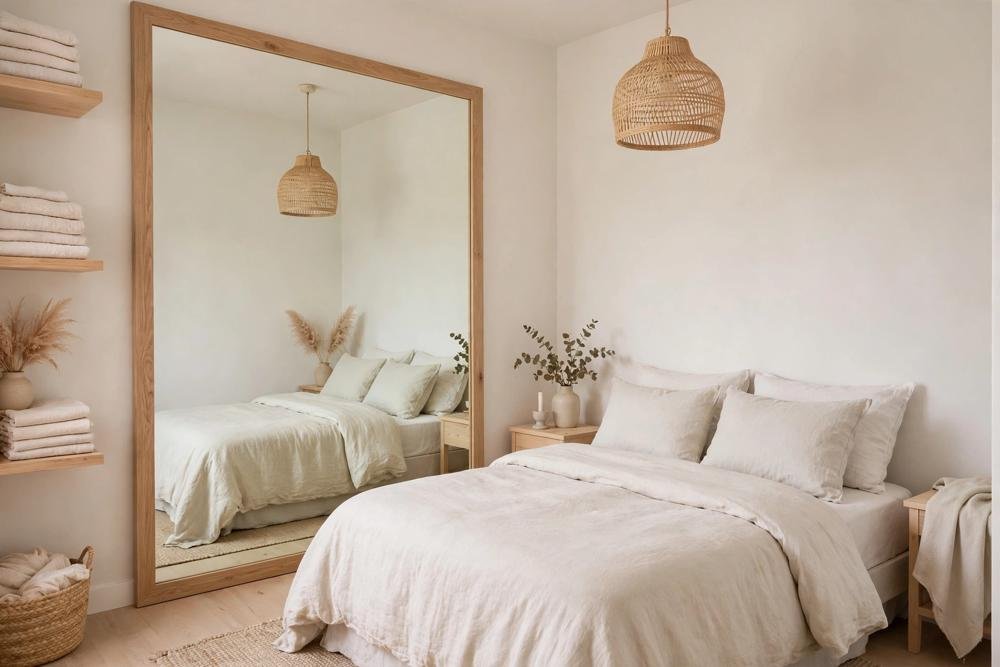
Layout matters even more without a window, because there is no view to distract from a cramped bed or a blocked walkway. Keep the bed against the longest wall, keep at least 60 centimetres of walkway beside it, and keep the door swing clear. Do not push the bed into a corner unless you have to, and do not fill every wall with storage, or the room will feel like a box.
Use low furniture where possible. A low bed frame, low bedside tables and a low dresser keep the eye moving across the room, rather than stopping at tall blocks. If you need tall storage, put it on one wall only, and keep the opposite wall light and clear. Use vertical storage sparingly, and keep the top shelf for weekly items, not daily items you reach for in the dark.
Keep the floor as clear as possible. A rug that extends past the sides of the bed, a clear path from door to bed, and no boxes on the floor will make the room feel larger than any paint colour. If the room has a closet, keep its door closed when you are not using it, because an open dark closet reads as another dark corner.
Use the door as your light source during the day. Leave the bedroom door open to a brighter hallway or living room when you are awake, and close it only for sleep and privacy. A door with a frosted glass panel, or a door left ajar, can bring in borrowed light without losing privacy, if your home allows it. Do not block the door with furniture, and do not hang a curtain over the door that blocks light and air.
Idea 4: Air, Freshness and Sleep in a Windowless Room
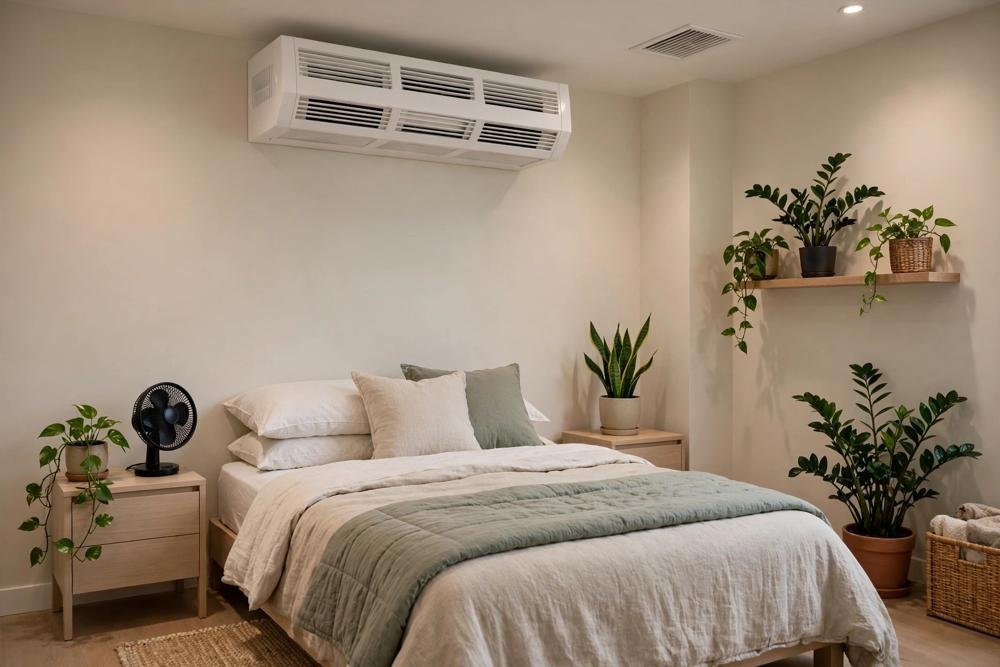
Air is the hardest problem in a windowless room, and it is the one people notice first. Without a window, you need a plan for fresh air, humidity and smell, or the room will feel stuffy even when it looks bright.
Check ventilation first. Many windowless rooms have a vent, an extractor, or a gap under the door that brings in air from the rest of the home. Do not block vents with furniture or boxes, and do not seal the door gap completely, because that gap is often how air moves. If the room has no vent, ask a landlord or a builder about options before you seal anything, and do not use a portable heater or a gas heater in a sealed room without proper advice.
Use a fan to move air, not just to cool you. A small quiet fan near the door, pointing into the room, will pull in hallway air and stop the room feeling stale. Open the door for at least 30 minutes a day, ideally while you are out of the room, so air can change. Wash bedding weekly, vacuum the rug, and keep laundry out of the room, because damp fabric is the fastest way to make a windowless room smell stale.
Plants help with freshness and mood, but they will not purify the air in a meaningful way, and they need light. Choose low-light plants, such as snake plants, pothos and ZZ plants, and give them a lamp for part of the day if the room is very dark. Keep plants to one or two, in pots that drain, and do not overwater, because damp soil in a room with no window will stay damp and can smell.
Sleep in a windowless room can actually be excellent, because it is naturally dark and quiet. The risk is waking up feeling groggy because you never get a morning light signal. Fix that with a routine: same wake time, wake-up light or bright hallway light on waking, and a short walk or bright light in the morning. Keep the room cool, dark and quiet for sleep, and use breathable bedding, because a windowless room can overheat if the door is closed and the heating is high.
What to Avoid
Do not paint a windowless room dark to make it feel cosy, because without daylight it will feel smaller and harder to wake up in. Do not rely on one ceiling light, because it will leave dark corners and flat light. Do not fill the room with many small mirrors, dark art and tall furniture, because each one adds a dark patch. Do not block vents, the door gap or the escape route, and do not use candles or incense to cover stale air, because they add smoke and smell without fixing air. Do not ignore humidity: if walls feel damp, clothes feel damp, or there is a musty smell, check ventilation and heating before buying more decor.
Safety in a Windowless Bedroom
A bedroom with no window needs extra care with fire safety. Keep the door and hallway clear, know your escape route, and do not block the door with furniture or boxes. Use a smoke alarm in the room and in the hallway, test it monthly, and do not use candles, incense or portable heaters near bedding or curtains. If the room is used as a bedroom in a rented home, check local rules about windowless bedrooms, because some places require a window, a vent or a second exit for a room to be used as a bedroom. This guide does not replace local building or fire rules.
FAQs
Can you sleep well in a bedroom with no window?
Yes, often better, because it is naturally dark and quiet. The main risk is waking up groggy without morning light. Use a wake-up light, a fixed wake time, and bright light on waking to give your body a morning signal.
How do I make a windowless bedroom feel less claustrophobic?
Use layered warm light, pale warm colours, one large mirror reflecting a lamp, low furniture, and a clear floor and walkway. Leave the door open to a brighter room during the day when you can.
What colour should I paint a windowless bedroom?
Pale warm colours work best: warm white, pale beige, soft greige or very pale warm grey. Stark white can look grey without daylight, and dark colours shrink the room. Test a large swatch under your lamps, not just in the shop.
Do plants help in a windowless bedroom?
They help mood and freshness, but they do not meaningfully purify air, and they need some light. Choose low-light plants, give them lamp light for part of the day, and do not overwater in a room with no window.
How do I keep a windowless bedroom fresh?
Do not block vents or the door gap, use a fan to move air, open the door daily for air change, wash bedding weekly, keep laundry out of the room, and check for damp. If the room smells musty, fix air and humidity first, not decor.
Is a bedroom with no window legal or safe?
Rules vary by place, and some require a window, ventilation or a second exit for a bedroom. Keep the door and escape route clear, fit smoke alarms, and check local rules for your home before using a windowless room as a bedroom long term.
Conclusion
A small bedroom with no window does not need a window to feel bright. It needs light in layers, pale warm colour, one good mirror, a clear layout, and a daily plan for air. Fix light first, then colour and mirrors, then air, then sleep routine, and change one thing at a time. Done that way, a windowless room can be dark for sleep, bright for getting dressed, and fresh enough to feel like a real bedroom, not a storage room.