Introduction
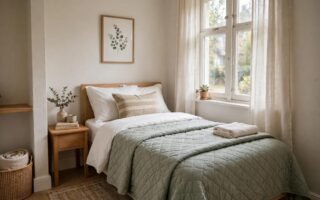
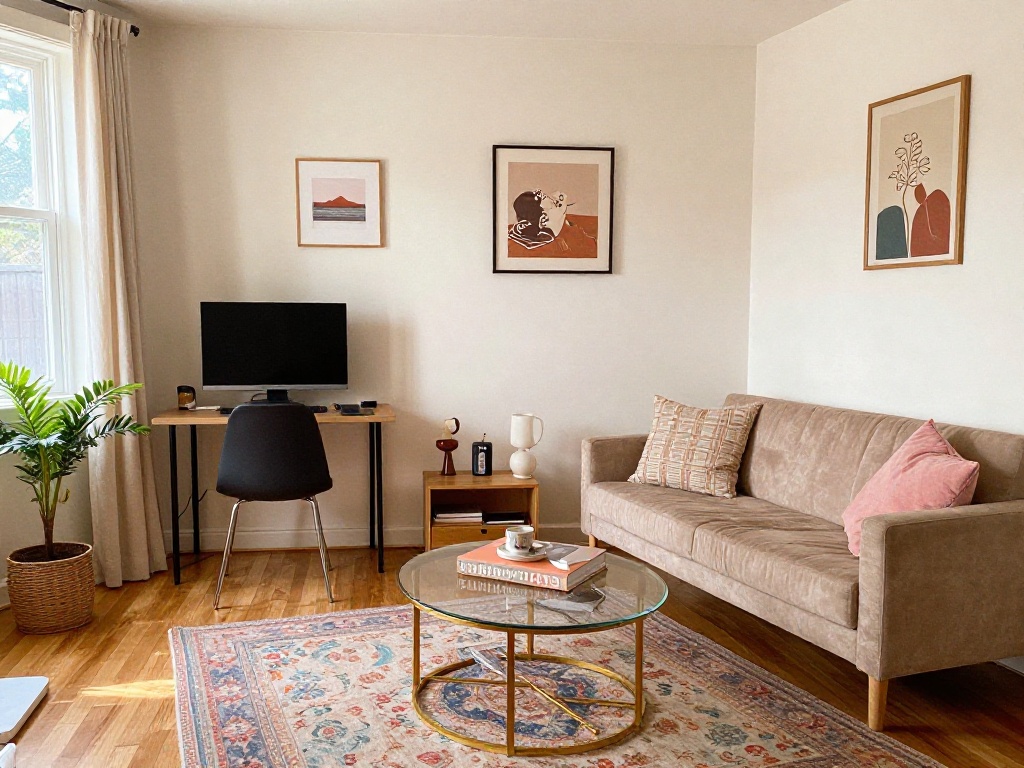
A spare room often starts with good intentions and ends up as a dumping ground for boxes, a drying rack, and a mattress that is never quite ready for a guest. At the same time, many homes need a proper place to work. A kitchen table is noisy, a bedroom desk disturbs sleep, and a laptop on a sofa is not a long term solution. A guest room home office combo solves both problems in one room, but only if you plan it as two rooms that share a space, not as one room with a bed squeezed into an office or a desk squeezed into a bedroom.
The key is to decide what the room does every day and what it does a few nights a year. On a normal weekday, it should feel like a calm, tidy office. When guests arrive, it should change quickly into a welcoming bedroom with a comfortable bed, space for a suitcase, and a place to charge a phone. This guide covers the bed options, hidden work storage, and a changeover routine that takes under 30 minutes. If you are starting from scratch, read Small Bedroom Ideas: The Complete Guide to Layout, Storage, Light and Style first.
Key takeaways
- Choose a bed that works every day, not just on guest nights.
- Give work and sleep their own zones, even in a small spare room.
- Use work storage that hides when guests arrive, so the room feels like a bedroom.
- Set up privacy and light that work for both video calls and sleep.
Idea 1: Choose a Bed That Works Every Day, Not Just on Guest Nights
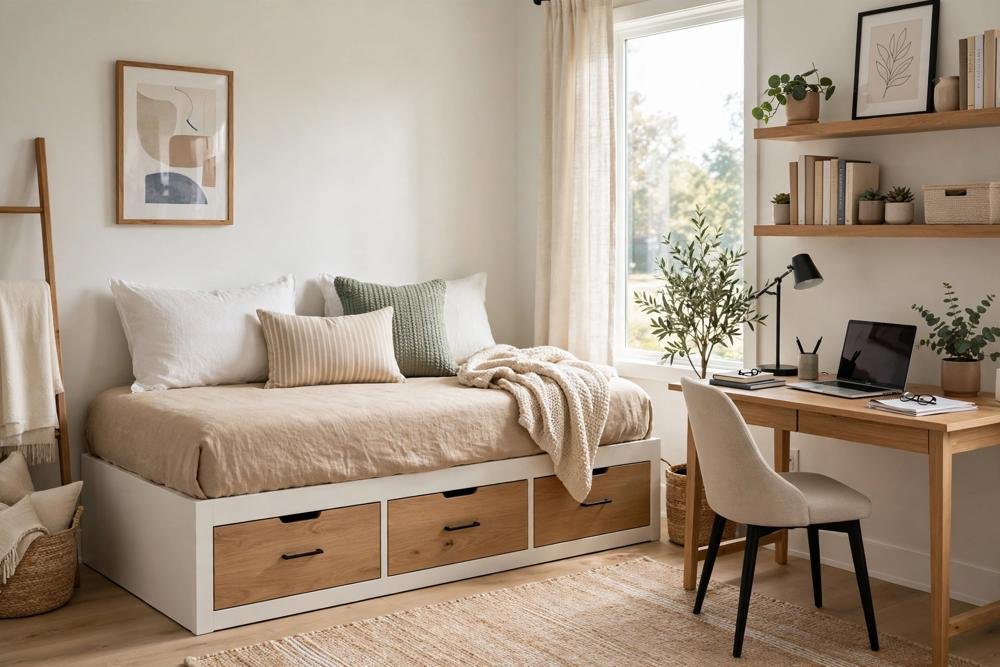
The bed is the biggest decision in a dual purpose room, because it takes up the most floor space and sets the tone for both uses. A bed that is comfortable for guests but impossible to live with the rest of the year will make the office feel cramped. A bed that folds away neatly but sleeps badly will make guests dread staying over. The right choice depends on how often you host, how much floor space you have, and how much effort you are willing to spend on changeover.
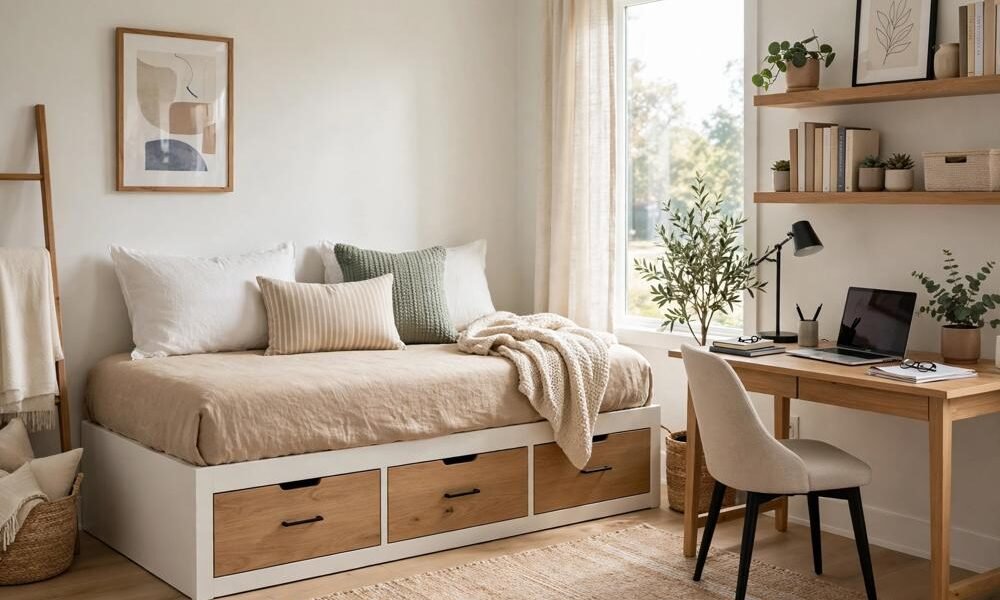
A daybed is often the easiest everyday option. During the day it works as a sofa for reading or taking a break. At night it becomes a single or double bed with the right mattress and bedding. Look for a daybed with a proper mattress, not a thin cushion, and add storage drawers underneath for linen. A sofa bed is a good choice when you need a real sofa in the daytime and a bed only occasionally. Test the mattress, check how easy it is to open, and make sure you have enough floor space in front of it to pull it out fully. It works best for one or two night stays.
A Murphy style fold down bed is the most space efficient option, but it needs the most planning. When folded up, it can look like a wardrobe, leaving the whole room free for work. When folded down, it gives a full size, comfortable bed. It needs a solid wall, professional fitting in many cases, and clearance in front of the bed when it is down. Whichever bed you choose, keep a set of guest bedding ready: fresh sheets, two pillows per person, and a light blanket or duvet, stored together so changeover is quick.
Idea 2: Plan a Layout That Gives Work and Sleep Their Own Zones
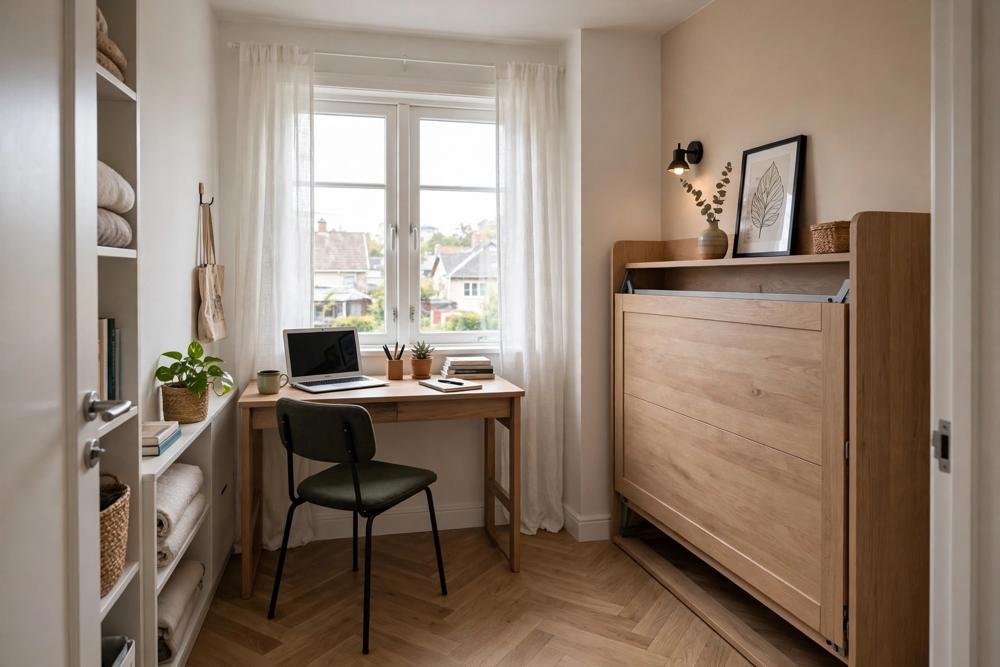
A dual purpose room fails when work and sleep bleed into each other. Papers end up on the bed, chargers trail across the floor, and the guest feels like an intruder in someone else’s office. Zoning solves this without building walls. Think of the room in three areas: a work zone, a sleep zone, and a storage zone. Even in a small room, a rug or a piece of furniture placed at an angle can mark a boundary.
Place the desk where you get good natural light without glare on your screen. Side on to a window usually works better than facing it for video calls and screen work. Leave enough room to pull your chair out fully. A desk about 120 centimetres wide is enough for most laptop work, a monitor, and a notebook. Place the bed where it does not block the desk or the door. A daybed against the longest wall often works well. A Murphy or sofa bed needs a clear floor area in front of it, so do not place a heavy bookcase where the bed will open. For exact desk sizes and positions, see How to Fit a Desk in a Small Bedroom.
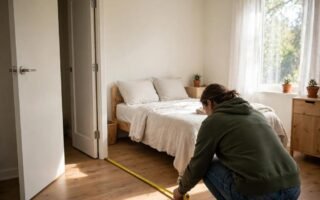
Put storage in the third zone, ideally near the door. A closed wardrobe or cabinet is better than open shelves here, because it hides office supplies, files, and spare bedding behind doors. Leave one drawer or shelf empty at all times for guests, so they have somewhere to put clothes and toiletries without living out of a suitcase on the floor. Before you buy anything large, check the door swing and tape the footprint of the bed and desk on the floor to test the layout. If the room has no built-in closet, our guide to How to Organise a Bedroom Without a Closet has more ideas.
Idea 3: Use Work Storage That Hides When Guests Arrive
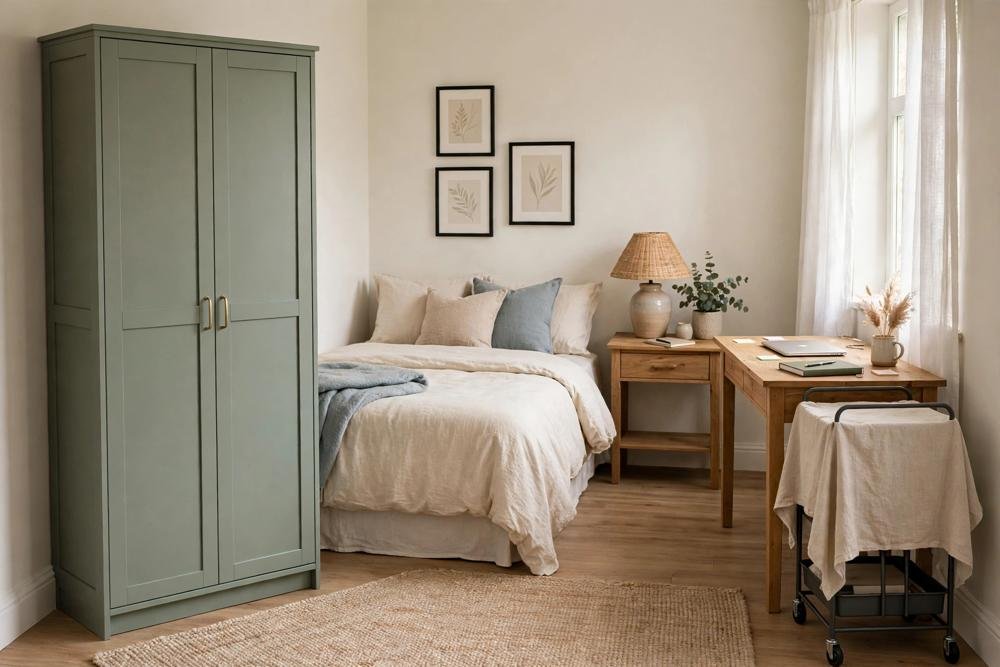
Work storage is where most guest room office combos go wrong. A desk covered in papers, cables, and files makes a guest feel like they are sleeping in a workplace. Clearing everything away is exhausting if you have nowhere to put it. The solution is storage that hides in plain sight and a simple rule: work items live behind closed doors, and one drawer is always kept empty for guests.
A closed cabinet is the single most useful piece of furniture in this room. It can hold files, paper, stationery, chargers, and books, and it closes in seconds. Choose one that matches the bedroom furniture so it does not look like office equipment. A rolling cart is a good second option for items you use every day. Keep your current project and chargers on the cart while you work, then roll it into a closet or behind a door when guests arrive. A slim cart that fits under a desk or beside a wardrobe is ideal. For more space-saving storage ideas, see Small Bedroom Storage Ideas That Do Not Use Floor Space.
Hide cables too. Use a cable tray under the desk and clips to keep cords close to the wall, so they do not become a trip hazard at night. Keep one clearly marked charging point for guests near the bed, with a spare plug socket free. Guests should not have to unplug your monitor to charge a phone. For paper, use one lidded box per project and store finished work in the closed cabinet at the end of each week. A clear desk at the end of the day makes the room feel more like a bedroom in the evening.
Idea 4: Set Up Privacy and Light That Work for Video Calls and Sleep

Light and privacy pull in opposite directions in a dual purpose room. For video calls you need a bright, even light on your face and a tidy background. For sleep you need darkness, quiet, and a sense of privacy. A few simple choices can serve both needs if you plan them together.
Choose a plain wall or a simple shelf with a few books and a plant as your video call background, and keep it tidy. Avoid a background that shows an unmade bed, open storage, or personal paperwork. If the bed is visible on camera, make it neatly during work hours. A daybed with cushions can look like a sofa on camera. If you use a Murphy bed, fold it up before calls. Lighting for calls should come from in front of you, not from behind. A window behind you will make your face dark, while a lamp in front of you will make you look clear. A small desk lamp with a warm white bulb is enough for most calls. Our Cozy Bedroom Lighting Ideas Without an Overhead Light guide shows how to layer warm light without a ceiling fixture.
For sleep, blackout curtains or a blackout blind are worth the investment, especially if guests will sleep during the day or street lights shine into the room at night. A double layer works well: sheer curtains for daytime privacy and a blackout layer for night. Make sure curtains close fully and cover the sides of the window. Privacy also means sound and personal space. A solid door, a draught excluder, and soft furnishings such as a rug and curtains will reduce noise. Tell guests where the bathroom is, and agree on quiet hours if you need to work early. For a full step-by-step plan, read How to Make a Bedroom Dark and Quiet for Shift Work and Light Sleepers.
Layout Plans for Small and Larger Spare Rooms
A small spare room needs ruthless simplicity. Choose one bed option, one desk, and one closed storage unit, and leave the rest of the floor clear. A daybed against one wall, a wall mounted desk on the opposite wall, and a tall narrow cabinet near the door is a proven combination. A larger room can handle a full size bed and a reading chair, but it still needs zoning, or it will feel empty during the day and messy when guests arrive. Our Small Bedroom Layout Ideas for a 10 by 10 Room post shows tested layouts with exact measurements.
The Guest Changeover Routine in Under 30 Minutes
Start by clearing the desk. Put current work into the closed cabinet or onto the rolling cart, wipe the desk, and leave only a small lamp. This takes about five minutes if everything has a proper place. Next, make the bed with fresh sheets, fluff the pillows, and add a throw at the foot of the bed. If you use a sofa bed or Murphy bed, open it now and check that it is stable. This should take under ten minutes with bedding stored nearby.
Then empty one drawer and put a small basket on the bedside table with fresh towels, a spare phone charger, and basic toiletries. Check the curtains close fully and plug in a bedside lamp. Finally, do a quick walk through as if you were the guest. Keep a checklist inside the wardrobe door so anyone can do changeover the same way. Our Guest Bedroom Ideas post has more welcoming touches for longer stays. The Small Guest Bedroom Essentials Checklist covers the guest-side details worth double-checking before longer stays.
Budget Tiers: What to Spend On First
You do not need to renovate to create a good dual purpose room. At the lowest budget, focus on a good mattress topper, fresh bedding, and blackout curtains. At a medium budget, add a proper desk chair and a closed cabinet. At a higher budget, consider a Murphy bed or a built in wardrobe. In every tier, buy the bed and the chair before you buy decor.
What to Avoid
Avoid turning the room into a storage room with a bed in it. Move long term storage elsewhere, and keep only guest and work items in this room. Avoid a bed that is too large for the room, as a king bed in a small spare room can block the desk or the door and leave no space for a suitcase. Avoid open work storage that cannot be hidden quickly, and avoid harsh, cool white lighting as the only light in the room.
FAQs
Can a home office double as a guest room?
Yes, if you plan the bed, storage, and changeover in advance. Choose a bed that works in the daytime, such as a daybed, sofa bed, or Murphy bed, keep work behind closed doors, and leave one drawer empty for guests. A clear changeover routine of under 30 minutes makes the switch practical rather than stressful.
What is the best bed for a guest room office combo?
It depends on room size and how often you host. A daybed is best for daily use as a sofa and occasional guests. A sofa bed is best when you want a lounge look in the daytime and host for short stays. A Murphy style fold down bed is best for small rooms and daily office use, because it frees the most floor space, but it needs a solid wall and careful measuring.
How do I keep a guest office room tidy for visitors?
Keep work in a closed cabinet or on a rolling cart, clear the desk before guests arrive, and store guest bedding and towels together. Use a cable tray to hide cords, leave one charging point free near the bed, and do a quick walk through as a guest before they arrive.
How much space do I need for a guest room and home office?
You need enough space for a bed, a desk, a chair, and a walkway, but you do not need a large room. A small room can work with a daybed, a wall mounted desk, and a tall cabinet. Measure the bed when open, the chair pull out space, and the door swing before buying furniture. Leave at least 60 centimetres for main walkways.
Should the desk face the window or the wall in a dual purpose room?
Side on to a window usually works best. It gives natural light without glare on your screen and without putting your face in shadow on video calls. Facing a wall can help focus, but it may feel closed in. If you face a window, use a sheer curtain to soften bright light.
Can I create a guest office combo in a rental?
Yes, by choosing freestanding furniture rather than fitted units. A daybed, a freestanding wardrobe, a rolling cart, and tension rod curtains avoid drilling and permanent changes. Check your tenancy rules before fitting a Murphy bed or wall mounted desk.
Conclusion
A spare room does not have to choose between being a guest room and being a home office. With the right bed, clear zones, hidden work storage, and thoughtful light and privacy, one room can do both jobs well. The secret is not expensive furniture or a large room. It is a simple system: a comfortable bed that does not dominate the room, a desk that works for focused work and video calls, storage that closes, and a changeover routine that takes under 30 minutes.
Start with the bed and the layout, then add storage and lighting. Guests get a private, comfortable place to sleep, you get a proper place to work, and a room that once held boxes becomes one of the most useful rooms in the house.