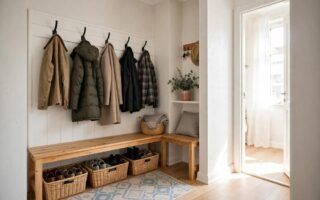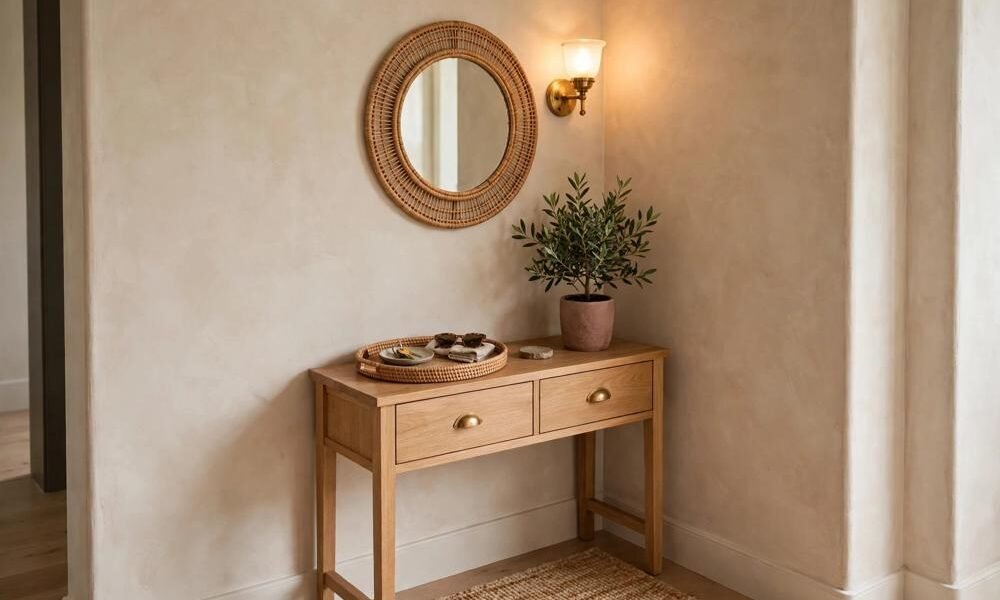
Entryway corner decor works at small scale, because a corner is not a whole room, and a console, a mirror, a light, and a plant, each at the right size, will make it feel intentional, while large, dark, or many items will make it feel cramped, cluttered, and hard to use. The rule for a small corner is simple: one console or bench, one mirror, one light, one plant, and one tray, each in its place, with the bench top and console top mostly clear, so coats, shoes, and keys still have a place, and the corner still works as an entryway, not just as a display. All measurements in this guide are approximate ranges only, and sizes vary by home, so measure your corner and check listings before you buy.
Key takeaways
- Decorate at small scale: one console or bench, one mirror, one light, one plant, and one tray, not many items.
- Keep the bench top and console top mostly clear, so keys, coats, and shoes still have a place.
- Use a mirror to make a small corner feel wider, with a size that fits the corner, fixed safely.
- Use light colours and a slim light to brighten a dark corner, without blocking the walkway.
- Use a plant only if it gets enough light and is not in the walkway, with a pot that fits the corner.
- Anchor tall units, check adhesive hook weight limits, keep the exit route and door swing clear, and get landlord permission before drilling if you rent.
Start With Function, Then Decor
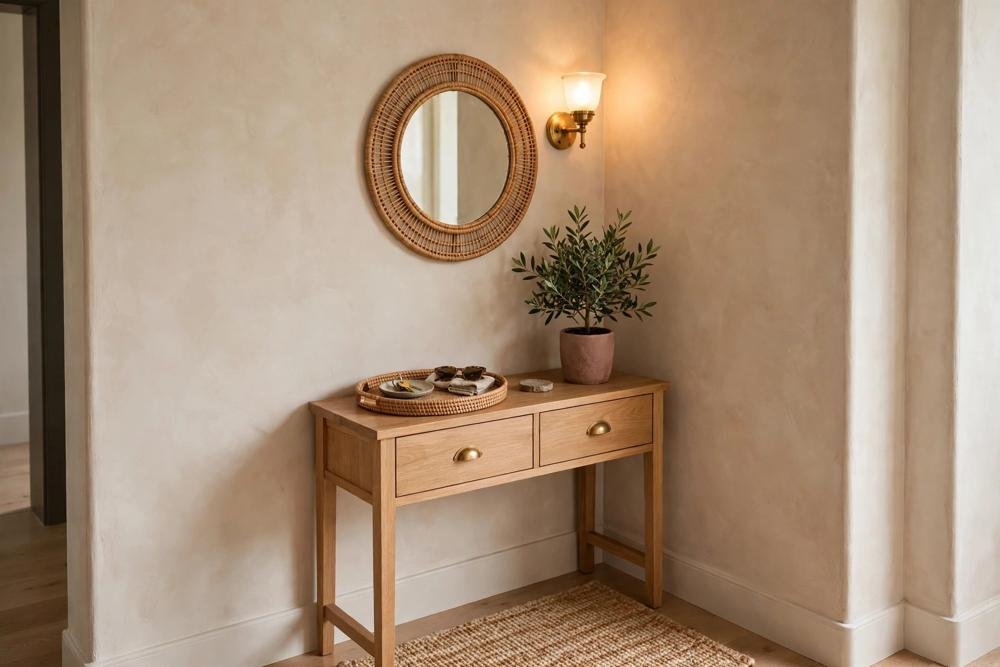
Decor should come after function, because a corner that looks good but has no place for coats, shoes, and keys will fill up again, and a corner that works but looks bare can be decorated in one afternoon, without moving furniture. Start with the zones guide: drop for keys, hang for coats, sit for shoes, store for shoes, and check for a mirror, all in a shallow corner, approximately 30 to 40 cm deep for a bench or console, with the walkway clear, approximately 75 to 90 cm as a comfort guide, and with a rug to mark the zone, as in the open entryway guide. Once zones work, add decor one item at a time, and live with each item for a few days, before you add the next, so you can see what the corner needs, rather than buying a full set on day one.
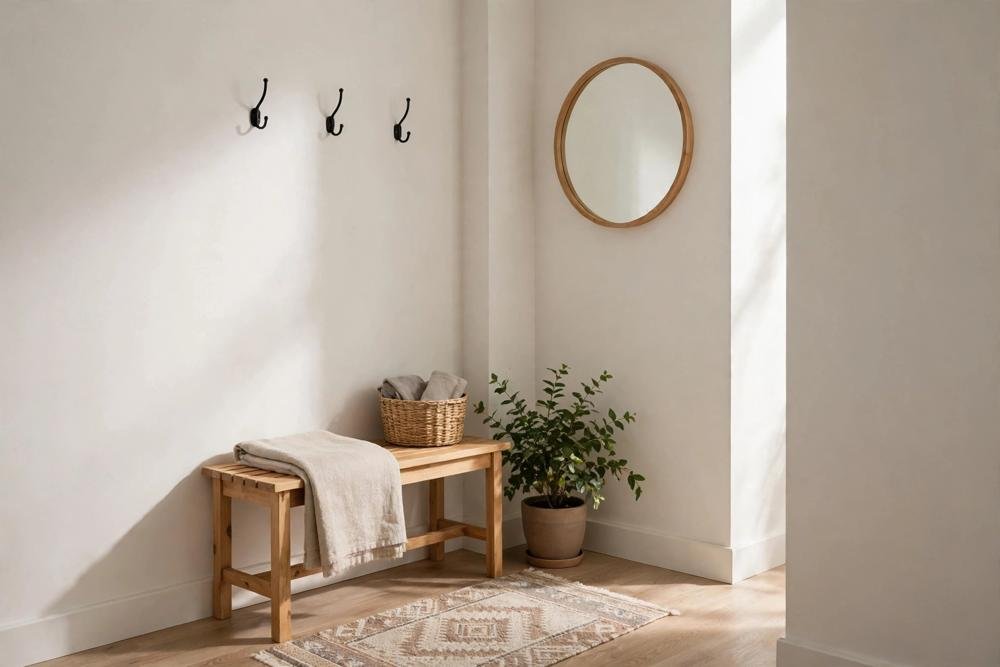
Choose a style for the corner, in one sentence, before you buy decor, such as light and simple, warm and wooden, or modern and slim, and keep all decor to that style, with similar colours, materials, and shapes, so the corner feels intentional, rather than a collection of unrelated items. A light and simple corner might use a light bench, a round mirror, a plant, and a tray, all in light wood and white, while a warm and wooden corner might use a wooden bench, a wooden mirror frame, a basket, and a plant, all in warm wood and natural tones. A modern and slim corner might use a slim console, a black mirror frame, a slim light, and a small plant, all in black, white, and wood, with clean lines and no clutter.
Keep decor to items you love and use, not items you bought because they were on sale, or because they looked good in a photograph, because a corner that is decorated with items you love will feel personal, and a corner that is decorated with items you do not love will feel like a shop display, and it will be cleared away when the corner fills up again. One plant you water, one mirror you check, one tray you use for keys, and one light you switch on at night, are better than ten items you ignore, because they are used every day, and they make the corner feel alive, not just decorated.
Console, Mirror, Light, and Plant at Small Scale
Console: choose a console or bench that fits your corner measurements, approximately 25 to 35 cm deep for a console, approximately 30 to 40 cm deep for a bench, with a width that leaves a walkway clear, and with a surface that is mostly clear, except for a tray for keys, so the console works as a drop zone, not just as a display. A slim console, with a shelf underneath for baskets, can work in a very tight corner, because it gives you a surface and a place for shoes, without pushing far into the room, and a bench, with storage underneath, can work in a wider corner, because it gives you a place to sit and a place for shoes, in one piece.
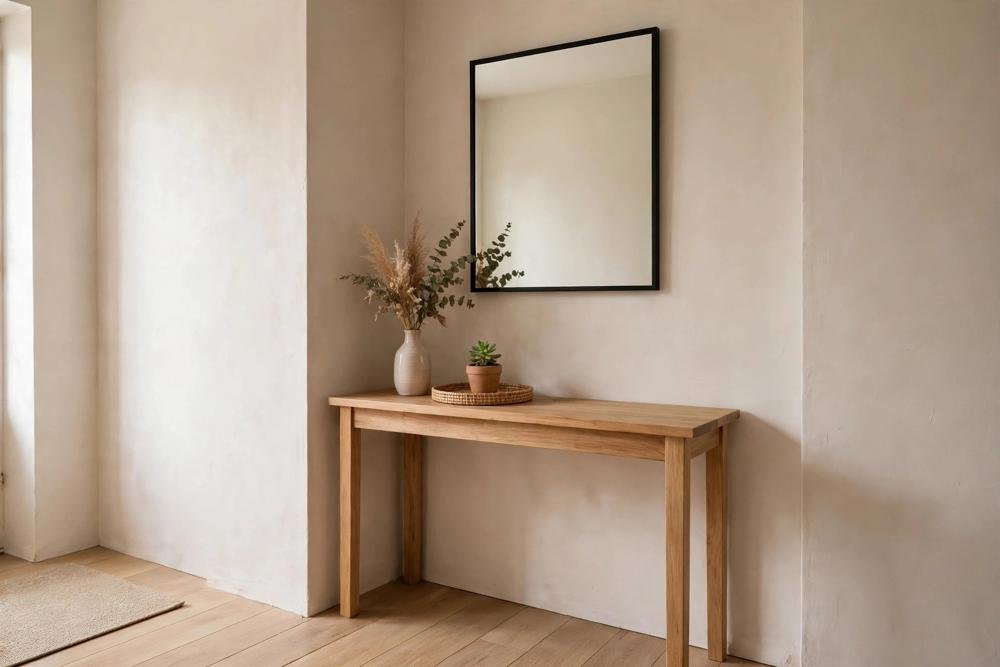
Mirror: choose a mirror that is the right size for the corner, approximately 40 to 60 cm wide for a small corner, with a frame that matches your style, fixed safely, or leaning safely if it is small and stable, above a console or bench, so you can check yourself before leaving, and so the corner feels wider, because a mirror reflects light and the room, and makes a small space feel larger. Avoid a mirror that is too large for the corner, because it will dominate the wall and make the corner feel like a mirror shop, and avoid a mirror that is too small, because it will be useless for checking yourself, and it will look like an afterthought, rather than a deliberate choice.
Light: choose a light that is slim, safe, and allowed, with a profile that does not stick far out from the wall, so it does not block the walkway, and with a warm light, if you want the corner to feel welcoming, rather than a cold light that makes it feel like a corridor. A small wall light, or a plug in light, if you can add lighting safely and are allowed to, with a slim profile, will light the corner at night, without electrical work, and it will make the mirror useful at night, because a mirror in a dark corner is useless, and a light in a dark corner makes the whole corner feel safer and more welcoming. Avoid a light that is too large, too bright, or that sticks far out, because it will block the path and dominate the corner, and avoid a light that is not safe for the wall type, or that you are not allowed to install, because a light that is unsafe is not decor, it is a risk.
Plant: choose a plant that fits the corner, gets enough light, and is not in the walkway, with a pot that fits the corner and does not block the path, and with a plant that you will water, because a plant that dies will make the corner feel neglected, not alive. A small plant, on a console, or a larger plant, in a pot on the floor beside a bench, can work, provided it gets light, is not in the walkway, and does not block the door swing, and provided you check that it is safe for pets and children if you have them, because some plants are toxic if eaten. Avoid a plant that is too large for the corner, because it will block the path and make the corner feel cramped, and avoid a plant that does not get enough light, because it will die, and it will make the corner feel neglected, rather than alive.
Dark Corners: Light, Mirror, and Colour
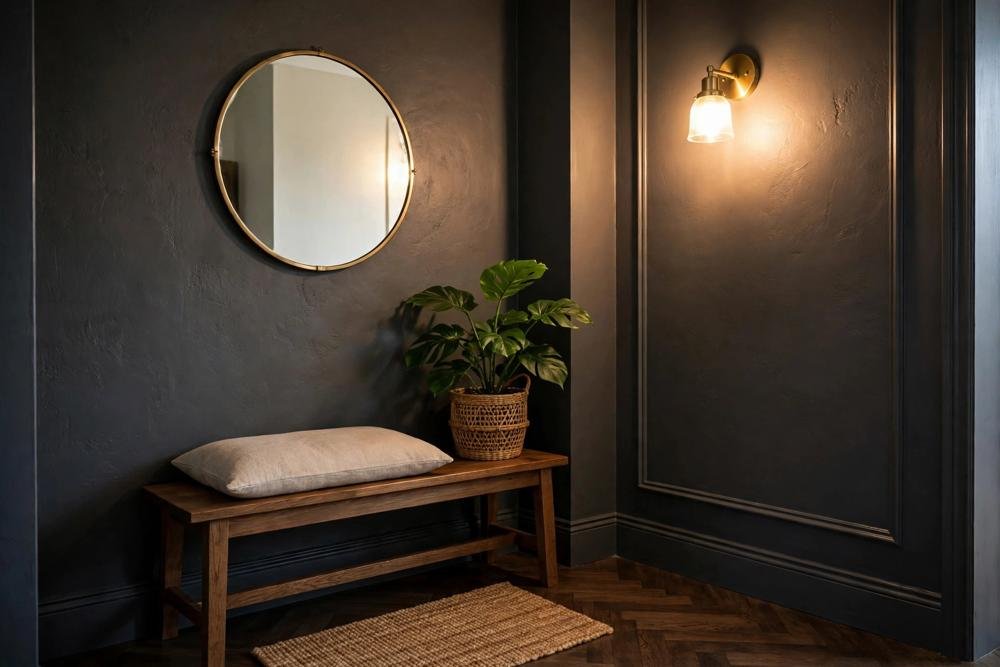
Dark corners are common in entryways, because a corner by a door often gets little natural light, especially if the door is solid, or if the corner is on the north side, or if the hallway is narrow, and a dark corner will feel smaller, colder, and less welcoming, however tidy it is. Brighten a dark corner with light, mirror, and colour, in that order, because light makes the corner usable, mirror makes it feel wider, and colour makes it feel warmer, and all three together will make a dark corner feel like a welcome, not a cave.
Light first: use a slim wall light, or a plug in light, if you can add lighting safely and are allowed to, with a warm light, and with a slim profile that does not block the walkway, so the corner is lit at night, and so the mirror is useful at night. If you cannot add a wall light, use a small lamp on a console, if you have a socket nearby, with a slim base that does not take up the whole console top, and with a warm bulb, so the corner is lit, without electrical work, and without blocking the path. Avoid a light that is too bright, too cold, or that sticks far out, because it will make the corner feel like a corridor, not a welcome, and it will block the path.
Mirror second: use a mirror, above a console or bench, with a size that fits the corner, approximately 40 to 60 cm wide, fixed safely, so it reflects light from the room, the door, or the light, and makes the corner feel wider, because a mirror in a dark corner will reflect whatever light there is, and it will make the corner feel larger, even if the light is small. Place the mirror so it reflects a window, a light, or a light coloured wall, not a dark wall or a cluttered corner, because a mirror that reflects clutter will make the corner feel more cluttered, not wider, and a mirror that reflects light will make it feel brighter.
Colour third: use light colours in a dark corner, as in the hallway guide, because a light wall, a light rug, and light furniture will make a small corner feel wider, while a dark wall or dark furniture will make it feel narrower, especially in a corner that gets little natural light. If you can paint, and you are allowed to, use a light colour, with a washable paint suitable for the wall type, and if you cannot paint, use a light rug, a light bench, a light mirror frame, and a light plant pot, to make the corner feel lighter, without changing the wall. Avoid dark colours, dark furniture, and dark decor in a dark corner, because they will absorb light and make the corner feel smaller, darker, and colder, however stylish they look in a photograph.
Styling Rules: One Tray, One Plant, One Mirror
Styling a small corner is about restraint, not about buying more, because a small corner that is styled with many items will feel cluttered, however expensive the items are, and a small corner that is styled with few items, each in its place, will feel intentional, however cheap the items are. Use the one tray, one plant, one mirror rule: one tray for keys, on a console or bench, one plant, on a console or on the floor beside a bench, and one mirror, above a console or bench, plus a light if you need one, and nothing else on the console or bench top, except for keys in the tray, so the corner stays clear, tidy, and easy to clean.
Tray: choose a tray that fits the console or bench, approximately 20 to 30 cm wide, with a material that matches your style, such as wood, rattan, or ceramic, and use it only for keys, sunglasses, and small daily items, so it stays a drop zone, not a storage pile, and so it is easy to clean, by lifting the tray and wiping underneath. Avoid a tray that is too large, because it will take up the whole console top, and avoid a tray that is too small, because it will not hold keys, and it will be ignored, and keys will end up elsewhere.
Plant: choose one plant, as above, with a pot that fits the corner and matches your style, and place it where it gets light, is not in the walkway, and does not block the door swing, so it feels alive, not cluttered. Avoid many plants in a small corner, because they will block the path, compete for light, and make the corner feel like a jungle, not an entryway, and avoid a plant that is too large, because it will dominate the corner and block the mirror, the light, or the walkway.
Mirror: choose one mirror, as above, with a size and frame that matches your style, fixed safely, above a console or bench, so it is useful and makes the corner feel wider, and avoid many mirrors, or a mirror that is too large, because they will dominate the wall and make the corner feel like a mirror shop, not an entryway. Keep the mirror clean, by wiping it once a week, so it reflects light and the room, not dust and fingerprints, because a dirty mirror will make the corner feel neglected, however tidy it is otherwise.
Seasonal and Renter Friendly Decor
Seasonal decor can make a small corner feel fresh, without buying many items, by changing one item at a time, such as a plant, a tray, or a rug, with the season, rather than decorating the whole corner for each season, which will make it feel cluttered and expensive. In winter, use a washable runner, a boot tray, and a basket for gloves, as in the winter guide, with a plant that tolerates low light, and a warm light, so the corner feels cosy, not cold, and in summer, use a lighter rug, a lighter plant, and a lighter tray, so the corner feels fresh, not heavy. Change one item, live with it for a week, then change another, if you want to, rather than changing everything at once, because a corner that changes slowly will feel intentional, and a corner that changes all at once will feel like a shop display.
Renter friendly decor uses freestanding, adhesive, and over door pieces, as in the renter guide, with a freestanding console or bench, a mirror that leans safely, or hangs from an over door hook, a plant in a pot on the floor, and a tray on a console, all without drilling or painting, unless you have permission in writing. Check your lease, get permission if needed, and use a rug, a light plant pot, and a light mirror frame, to make the corner feel fresh, without changing the wall or floor, and use a plug in light, if you can add lighting safely and are allowed to, rather than electrical work, for lighting at night. A renter friendly corner that is freestanding, slim, and tidy will work as well as a fixed corner, and it will move with you to your next home, which is a benefit, not a compromise.
Avoid seasonal decor that blocks the walkway, door swing, or exit route, because a seasonal item that blocks the path is a safety problem, not decor, and it must be moved, however festive it looks. Avoid renter decor that damages the wall or floor, because a decor item that leaves damage behind is not decor, it is a repair bill, and avoid decor that is too large, too dark, or too many, because it will make a small corner feel cramped, dark, and cluttered, however stylish it looks in a photograph.
What to Avoid in Entryway Decor
Avoid many items in a small corner, because a small corner that is decorated with many items will feel cluttered, however expensive the items are, and a small corner that is decorated with few items, each in its place, will feel intentional, however cheap the items are. Avoid large items in a small corner, because a large console, a large mirror, or a large plant will block the walkway, door swing, or exit route, and it will make the corner feel cramped, even if it is tidy. Avoid dark items in a dark corner, because they will absorb light and make the corner feel smaller, darker, and colder, however stylish they look.
Avoid decor that blocks function, because a console top that is covered with decor cannot hold keys, a bench that is covered with cushions cannot be sat on, and a mirror that is blocked by a plant cannot be used, and decor that blocks function will be moved, ignored, or resented, rather than loved. Avoid decor that is unsafe, because a mirror that is not fixed safely, a light that is not safe for the wall type, or a plant that is toxic for pets or children, is not decor, it is a risk, and it must be fixed or removed, however good it looks. Avoid decor that you do not love or use, because a corner that is decorated with items you do not love will feel like a shop display, and it will be cleared away when the corner fills up again, while a corner that is decorated with items you love and use will feel personal, and it will be kept tidy, because you care about it.
Checklist: Entryway Corner Decor Without Clutter
- Start with function: zones, walkway, door swing, and exit route, before you add decor.
- Choose a style in one sentence, and keep all decor to that style, with similar colours and materials.
- Use one console or bench, one mirror, one light, one plant, and one tray, each at small scale.
- Measure the corner, and choose decor that fits, with a console approximately 25 to 35 cm deep, a bench approximately 30 to 40 cm deep, and a mirror approximately 40 to 60 cm wide.
- Keep the bench top and console top mostly clear, except for keys in the tray.
- Brighten a dark corner with light first, mirror second, and light colours third.
- Use a plant only if it gets enough light, is not in the walkway, and is safe for pets and children if you have them.
- Anchor tall units, check adhesive hook weight limits, keep the exit route and door swing clear.
- Get landlord permission before drilling or painting if you rent, or use freestanding pieces.
- Change seasonal decor one item at a time, and live with each change for a week before you add more.
- Clean the mirror once a week, wipe the tray, and shake out the rug, so the corner feels fresh.
Conclusion
Entryway corner decor works at small scale, with one console or bench, one mirror, one light, one plant, and one tray, each in its place, with the bench top and console top mostly clear, so coats, shoes, and keys still have a place, and the corner still works as an entryway, not just as a display. Measure first, choose a style in one sentence, keep decor to that style, brighten a dark corner with light, mirror, and light colours, and use a plant only if it gets enough light and is not in the walkway, with anchoring for tall units, weight limits for adhesive hooks, and landlord permission before drilling or painting if you rent.
Done that way, a small corner entryway will feel intentional, welcoming, and easy to use, without clutter, darkness, or a large piece that blocks the room, and without decor that blocks function, safety, or the exit route. A few items, each loved and used, each at the right size, and each in its place, will do more than many items, however expensive, because they make the corner feel like a home, not a shop, and they keep it tidy, because you care about it.
Related reading
- Corner Entryway Ideas for a Tight Corner
- Mini Mudroom Entryway Ideas for Apartments and Small Homes
- Corner Storage Ideas for Entryways
- Winter Entryway Organization Ideas for a Tidy Corner
- Hallway Corner Ideas for Narrow Hallways
- Renter Friendly Entryway Ideas Without Drilling
- Bench and Hall Tree Size Guide for Entryways
- Budget Entryway Makeover Ideas for a Small Corner
- Open Entryway Ideas for Homes With No Hallway
- Functional Entryway Zones for a Tidy Corner
- Rug Calculator
- Entryway Storage for Kids and Pets, in this series, to follow.
Frequently Asked Questions
How do I decorate a small entryway corner without clutter?
Use one console or bench, one mirror, one light, one plant, and one tray, each at small scale, with the bench top and console top mostly clear, so keys, coats, and shoes still have a place. Choose a style in one sentence, keep all decor to that style, and add decor one item at a time, living with each item for a few days before you add the next.
What size mirror should I use in a small entryway corner?
Use a mirror approximately 40 to 60 cm wide for a small corner, with a frame that matches your style, fixed safely, or leaning safely if it is small and stable, above a console or bench. Avoid a mirror that is too large, because it will dominate the wall, and avoid a mirror that is too small, because it will be useless for checking yourself.
How do I brighten a dark entryway corner?
Use light first, with a slim wall light or plug in light, if safe and allowed, with a warm light and a slim profile that does not block the walkway, then a mirror to reflect light and make the corner feel wider, then light colours for walls, rug, and furniture, if you can paint or choose light items. Avoid dark colours and dark furniture in a dark corner, because they absorb light and make it feel smaller.
Can I decorate an entryway corner if I rent and cannot drill?
Yes, use freestanding, adhesive, and over door pieces, as in the renter guide, with a freestanding console or bench, a mirror that leans safely, or hangs from an over door hook, a plant in a pot, and a tray on a console, all without drilling or painting, unless you have permission in writing. Check your lease, and use a plug in light, if safe and allowed, rather than electrical work.
Should I put a plant in an entryway corner?
Use a plant only if it gets enough light, is not in the walkway, and does not block the door swing, with a pot that fits the corner, and with a plant that is safe for pets and children if you have them. A small plant on a console, or a larger plant in a pot on the floor beside a bench, can make a corner feel alive, but a plant that does not get light will die, and a plant that blocks the path will be knocked over.
What decor should I avoid in a small entryway corner?
Avoid many items, large items, and dark items in a small or dark corner, because they will make it feel cluttered, cramped, and darker, however stylish they look. Avoid decor that blocks function, such as a console top covered with decor that cannot hold keys, a bench covered with cushions that cannot be sat on, or a mirror blocked by a plant, and avoid decor that is unsafe, such as a mirror not fixed safely, or a plant toxic for pets or children.